Nike and Starbucks: CEO Changes Amid Market Challenges
Written by Emily J. Thompson, Senior Investment Analyst
Updated: Jan 15 2026
0mins


Should l Buy NKE?
Source: Fool
- CEO Change Impact: Starbucks appointed Brian Niccol as CEO in September 2024, focusing on menu simplification and customer experience enhancement, which boosted stock prices and reflected market confidence in new leadership.
- Nike's Leadership Strategy: Nike appointed Elliott Hill as CEO in October 2024, emphasizing improved relationships with wholesale partners; despite tariff pressures, its gross margin decline is less severe than Starbucks, indicating a relatively stable market position.
- Market Competition Pressure: Starbucks announced the sale of 60% of its stake in its China business, facing fierce competition from Luckin Coffee, which could exacerbate challenges in the U.S. market, highlighting brand vulnerability.
- Brand Influence Comparison: Despite economic pressures, Nike maintains a leading position in the youth market, with Piper Sandler's survey showing it ranks first in apparel and footwear brands, indicating stronger brand influence and greater turnaround potential.
Trade with 70% Backtested Accuracy
Stop guessing "Should I Buy NKE?" and start using high-conviction signals backed by rigorous historical data.
Sign up today to access powerful investing tools and make smarter, data-driven decisions.
Analyst Views on NKE
Wall Street analysts forecast NKE stock price to rise
21 Analyst Rating
14 Buy
7 Hold
0 Sell
Moderate Buy
Current: 55.700

Low
62.00
Averages
76.11
High
110.00
Current: 55.700
Low
62.00
Averages
76.11
High
110.00
About NKE
NIKE, Inc. is engaged in the designing, marketing and distributing of athletic footwear, apparel, equipment and accessories and services for sports and fitness activities. The Company's operating segments include North America; Europe, Middle East & Africa (EMEA); Greater China; and Asia Pacific & Latin America (APLA). It sells a line of equipment and accessories under the NIKE Brand name, including bags, socks, sport balls, eyewear, timepieces, digital devices, bats, gloves, protective equipment and other equipment designed for sports activities. It also designs products specifically for the Jordan Brand and Converse. The Jordan Brand designs, distributes and licenses athletic and casual footwear, apparel and accessories predominantly focused on basketball performance and culture using the Jumpman trademark. The Company also designs, distributes and licenses casual sneakers, apparel and accessories under the Chuck Taylor, All Star, One Star, Star Chevron and Jack Purcell trademarks.
About the author

Emily J. Thompson
Emily J. Thompson, a Chartered Financial Analyst (CFA) with 12 years in investment research, graduated with honors from the Wharton School. Specializing in industrial and technology stocks, she provides in-depth analysis for Intellectia’s earnings and market brief reports.
Nike Secures $1 Billion Credit Line to Enhance Financial Flexibility

- Credit Line Expansion: On March 6, Nike entered a 364-day credit agreement with Bank of America, providing up to $1 billion in unsecured revolving credit, aimed at supporting working capital and general corporate purposes, which is expected to enhance the company's financial flexibility.
- Restructuring Plan Approved: In a filing dated February 27, Nike disclosed that management approved a restructuring plan expected to generate approximately $300 million in pre-tax charges for the nine months ended February 28, primarily related to employee severance costs, aimed at optimizing operational efficiency.
- Analyst Ratings Remain Positive: RBC Capital analyst Piral Dadhania reiterated an Outperform rating on Nike, maintaining a price target of $78, indicating market confidence in Nike's future performance despite current challenges.
- Earnings Outlook Declines: Nike's upcoming earnings report on March 31 is expected to show earnings per share dropping to 30 cents (down 44% year-over-year) and revenue estimates at $11.25 billion (down 0.2% year-over-year), reflecting the challenges the company faces in the market.
See More
Nike CEO Elliott Hill's Strategic Turnaround Efforts

- Management Restructuring: Since taking over, Nike CEO Elliott Hill has restructured the management team and streamlined the organization to refocus the company on sports, aiming to reverse the largest decline in its history.
- Sales Recovery: In its latest earnings report, Nike's second-quarter sales rose 1% year-over-year to $12.4 billion, indicating a recovery in its running category, although overall margins continue to compress.
- Investment in Innovation: Hill has increased investments in innovation, reduced reliance on legacy styles, and reestablished relationships with key wholesale partners to address challenges from over-investment in direct-to-consumer channels.
- Positive Market Response: Barclays upgraded Nike's stock rating from neutral to buy and raised its price target from $64 to $73, reflecting confidence in improving inventory levels and the recovery in the running segment.
See More

Market Oversold, Investment Opportunities Arise


- Oversold Market Signal: The market selloff accelerated as U.S. crude prices surged approximately 8%, pushing the S&P Short Range Oscillator down to -5.48%, significantly below the -4% oversold threshold, indicating a potential rebound opportunity in the near term.
- Impact of Trading Restrictions: Due to trading restrictions, we are unable to trade any stocks mentioned by Jim Cramer on Thursday; despite the oversold market, we must carefully select stocks and recommend gradual purchases to maintain flexibility.
- Potential Buy Stocks: The five stocks we are interested in include Boeing, Alphabet, Goldman Sachs, Nike, and Cardinal Health; while Boeing faces challenges from rising fuel prices, its new jets' fuel efficiency remains attractive over time.
- Market Volatility and Strategy: Given the current market environment, if oil prices continue to rise, it could lead to further market declines, hence we advise keeping some cash on hand to seize future buying opportunities.
See More

Major Averages Decline Amid Oil Price Volatility


- Market Impact from Oil Prices: The major averages, including the Dow, fell over 400 points as oil prices surged above $100 earlier in the week, reflecting traders' concerns over volatile energy prices and geopolitical tensions in the Middle East.
- IEA's Strategic Release: The International Energy Agency's decision to release approximately 400 million barrels from strategic reserves aims to stabilize energy markets following supply shocks due to conflicts, which could help mitigate extreme oil price fluctuations.
- Inflation Data Reaction: Recent inflation data showed a 0.3% month-over-month increase in the consumer price index and a 2.4% year-over-year rise, both aligning with consensus expectations, indicating persistent inflationary pressures that may influence future monetary policy decisions.
- Escalating Geopolitical Risks: U.S. forces sunk several Iranian ships near the Strait of Hormuz, heightening the fragility of global energy supply routes and contributing to unstable market sentiment, prompting investors to adopt a cautious stance regarding future market movements.
See More
Dick's Sporting Goods Exceeds Holiday Expectations but Issues Weak Guidance
- Holiday Performance Exceeds Expectations: Dick's Sporting Goods reported an adjusted EPS of $3.45 for the holiday quarter, surpassing the $2.87 expected by analysts, with revenue reaching $6.23 billion, a significant increase from $3.89 billion a year earlier, indicating strong sales during the holiday season.
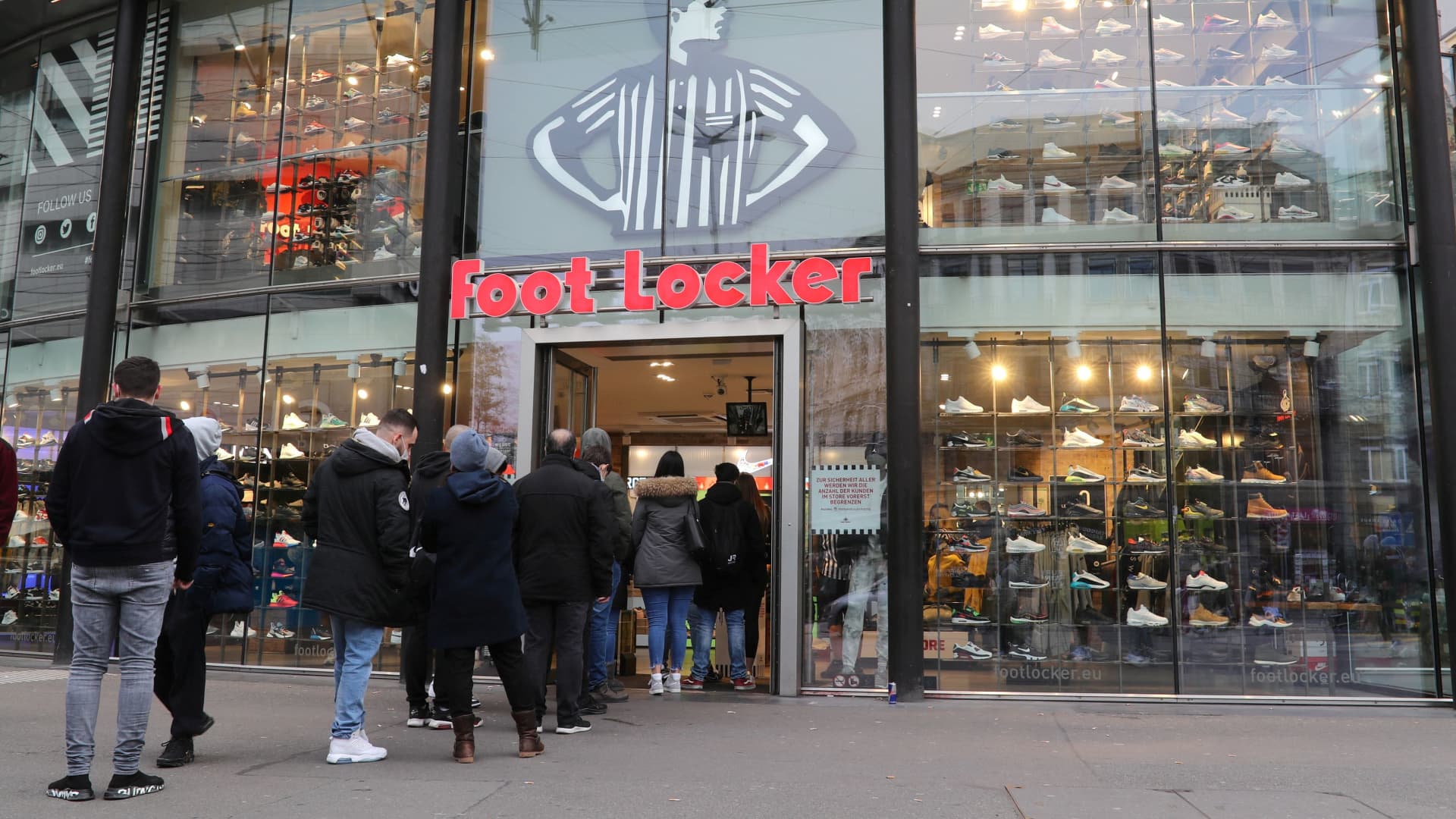
- Weak Profit Guidance: Despite the strong holiday performance, Dick's expects adjusted EPS for fiscal 2026 to be between $13.50 and $14.50, below the $14.67 anticipated by analysts, reflecting ongoing cost pressures from the Foot Locker acquisition.
- Acquisition Cost Impact: The company anticipates costs associated with the Foot Locker merger to range between $500 million and $750 million, with approximately $390 million already recorded in fiscal 2025, indicating that the integration process will negatively affect future financial performance.
- Store Adjustment Plan: Following the acquisition, Dick's has closed 57 underperforming Foot Locker stores and initiated a pilot program with 11
See More

Dick's Sporting Goods Exceeds Holiday Sales Expectations but Sees 57% Profit Decline
- Holiday Sales Performance: Dick's Sporting Goods exceeded expectations during the holiday shopping season, reporting adjusted earnings per share of $3.45, surpassing the $2.87 expected by analysts, with revenue reaching $6.23 billion, a significant increase from $3.89 billion a year earlier, indicating strong market demand.
- Profit Guidance Downgrade: Despite robust holiday sales, Dick's expects adjusted earnings per share for fiscal 2026 to be between $13.50 and $14.50, lower than the $14.67 anticipated by analysts, reflecting ongoing cost pressures from the Foot Locker acquisition that are likely to negatively impact profitability.
- Acquisition Cost Impact: Following the Foot Locker acquisition, Dick's anticipates additional costs between $500 million and $750 million, with $390 million already recorded in fiscal 2025, highlighting the challenges of integration and inventory clearance that may affect future profitability.
- Store Transformation Plans: Dick's has closed 57 underperforming Foot Locker stores and launched a pilot program called
See More
Nike Secures $1 Billion Credit Line to Enhance Financial Flexibility
- Credit Line Expansion: On March 6, Nike entered a 364-day credit agreement with Bank of America, providing up to $1 billion in unsecured revolving credit, aimed at supporting working capital and general corporate purposes, which is expected to enhance the company's financial flexibility.
- Restructuring Plan Approved: In a filing dated February 27, Nike disclosed that management approved a restructuring plan expected to generate approximately $300 million in pre-tax charges for the nine months ended February 28, primarily related to employee severance costs, aimed at optimizing operational efficiency.
- Analyst Ratings Remain Positive: RBC Capital analyst Piral Dadhania reiterated an Outperform rating on Nike, maintaining a price target of $78, indicating market confidence in Nike's future performance despite current challenges.
- Earnings Outlook Declines: Nike's upcoming earnings report on March 31 is expected to show earnings per share dropping to 30 cents (down 44% year-over-year) and revenue estimates at $11.25 billion (down 0.2% year-over-year), reflecting the challenges the company faces in the market.
See More
Nike CEO Elliott Hill's Strategic Turnaround Efforts
- Management Restructuring: Since taking over, Nike CEO Elliott Hill has restructured the management team and streamlined the organization to refocus the company on sports, aiming to reverse the largest decline in its history.
- Sales Recovery: In its latest earnings report, Nike's second-quarter sales rose 1% year-over-year to $12.4 billion, indicating a recovery in its running category, although overall margins continue to compress.
- Investment in Innovation: Hill has increased investments in innovation, reduced reliance on legacy styles, and reestablished relationships with key wholesale partners to address challenges from over-investment in direct-to-consumer channels.
- Positive Market Response: Barclays upgraded Nike's stock rating from neutral to buy and raised its price target from $64 to $73, reflecting confidence in improving inventory levels and the recovery in the running segment.
See More
Market Oversold, Investment Opportunities Arise
- Oversold Market Signal: The market selloff accelerated as U.S. crude prices surged approximately 8%, pushing the S&P Short Range Oscillator down to -5.48%, significantly below the -4% oversold threshold, indicating a potential rebound opportunity in the near term.
- Impact of Trading Restrictions: Due to trading restrictions, we are unable to trade any stocks mentioned by Jim Cramer on Thursday; despite the oversold market, we must carefully select stocks and recommend gradual purchases to maintain flexibility.
- Potential Buy Stocks: The five stocks we are interested in include Boeing, Alphabet, Goldman Sachs, Nike, and Cardinal Health; while Boeing faces challenges from rising fuel prices, its new jets' fuel efficiency remains attractive over time.
- Market Volatility and Strategy: Given the current market environment, if oil prices continue to rise, it could lead to further market declines, hence we advise keeping some cash on hand to seize future buying opportunities.
See More
Major Averages Decline Amid Oil Price Volatility
- Market Impact from Oil Prices: The major averages, including the Dow, fell over 400 points as oil prices surged above $100 earlier in the week, reflecting traders' concerns over volatile energy prices and geopolitical tensions in the Middle East.
- IEA's Strategic Release: The International Energy Agency's decision to release approximately 400 million barrels from strategic reserves aims to stabilize energy markets following supply shocks due to conflicts, which could help mitigate extreme oil price fluctuations.
- Inflation Data Reaction: Recent inflation data showed a 0.3% month-over-month increase in the consumer price index and a 2.4% year-over-year rise, both aligning with consensus expectations, indicating persistent inflationary pressures that may influence future monetary policy decisions.
- Escalating Geopolitical Risks: U.S. forces sunk several Iranian ships near the Strait of Hormuz, heightening the fragility of global energy supply routes and contributing to unstable market sentiment, prompting investors to adopt a cautious stance regarding future market movements.
See More
Dick's Sporting Goods Exceeds Holiday Expectations but Issues Weak Guidance
- Holiday Performance Exceeds Expectations: Dick's Sporting Goods reported an adjusted EPS of $3.45 for the holiday quarter, surpassing the $2.87 expected by analysts, with revenue reaching $6.23 billion, a significant increase from $3.89 billion a year earlier, indicating strong sales during the holiday season.
- Weak Profit Guidance: Despite the strong holiday performance, Dick's expects adjusted EPS for fiscal 2026 to be between $13.50 and $14.50, below the $14.67 anticipated by analysts, reflecting ongoing cost pressures from the Foot Locker acquisition.
- Acquisition Cost Impact: The company anticipates costs associated with the Foot Locker merger to range between $500 million and $750 million, with approximately $390 million already recorded in fiscal 2025, indicating that the integration process will negatively affect future financial performance.
- Store Adjustment Plan: Following the acquisition, Dick's has closed 57 underperforming Foot Locker stores and initiated a pilot program with 11
See More
Dick's Sporting Goods Exceeds Holiday Sales Expectations but Sees 57% Profit Decline
- Holiday Sales Performance: Dick's Sporting Goods exceeded expectations during the holiday shopping season, reporting adjusted earnings per share of $3.45, surpassing the $2.87 expected by analysts, with revenue reaching $6.23 billion, a significant increase from $3.89 billion a year earlier, indicating strong market demand.
- Profit Guidance Downgrade: Despite robust holiday sales, Dick's expects adjusted earnings per share for fiscal 2026 to be between $13.50 and $14.50, lower than the $14.67 anticipated by analysts, reflecting ongoing cost pressures from the Foot Locker acquisition that are likely to negatively impact profitability.
- Acquisition Cost Impact: Following the Foot Locker acquisition, Dick's anticipates additional costs between $500 million and $750 million, with $390 million already recorded in fiscal 2025, highlighting the challenges of integration and inventory clearance that may affect future profitability.
- Store Transformation Plans: Dick's has closed 57 underperforming Foot Locker stores and launched a pilot program called
See More