Stocks Plunge as Oil Prices Surge Amid Geopolitical Tensions
Written by Emily J. Thompson, Senior Investment Analyst
Updated: Mar 05 2026
0mins


Should l Buy CRM?
Source: CNBC
- Market Decline: On Thursday, the Dow Jones Industrial Average plummeted over 800 points, primarily due to rising oil prices, with U.S. crude briefly exceeding $79 per barrel, marking the highest level since June 2025, indicating the market's sensitivity to geopolitical tensions.
- Oil Price Volatility: Iran's missile strike on an oil tanker and subsequent closure of the Strait of Hormuz, along with threats to attack vessels in the area, have heightened market anxiety, prompting investors to navigate this volatile environment with caution.
- Costco Membership Concerns: Costco shares fell nearly 2.5% ahead of its earnings report, despite strong same-store sales momentum; however, declining membership renewal rates, particularly among online sign-ups, pose a challenge to the company's long-term growth prospects.
- Salesforce Stock Recovery: Salesforce shares rose nearly 5.5%, potentially signaling a rotation back into software stocks; while its core business faces pressure, Jim Cramer emphasized the positive outlook for Agentforce in the AI sector, suggesting a glass-half-full perspective on the company's future.
Trade with 70% Backtested Accuracy
Stop guessing "Should I Buy CRM?" and start using high-conviction signals backed by rigorous historical data.
Sign up today to access powerful investing tools and make smarter, data-driven decisions.
Analyst Views on CRM
Wall Street analysts forecast CRM stock price to rise
39 Analyst Rating
29 Buy
9 Hold
1 Sell
Moderate Buy
Current: 182.140

Low
223.00
Averages
326.40
High
405.00
Current: 182.140
Low
223.00
Averages
326.40
High
405.00
About CRM
Salesforce, Inc. is a customer relationship management (CRM) technology company. Its artificial intelligence (AI) powered Agentforce 360 Platform offers sales, service, marketing, commerce, collaboration, data management, integration, analytics, and information technology (IT) service solutions. It enables customers to build and deploy digital labor for employees and customers, leveraging autonomous AI agents across business functions. Its service offerings include Agentforce Sales, Agentforce Service, Agentforce 360 Platform, Slack and Others. The Agentforce Sales provides sales capabilities and tools built for organizations across prospecting, sales engagement, team collaboration, sales analytics and AI, sales programs, sales performance, partner management, and revenue and orders. The Agentforce Service provides field service solutions that enable companies to connect service agents, dispatchers and mobile employees through platform to schedule, dispatch and manage jobs.
About the author

Emily J. Thompson
Emily J. Thompson, a Chartered Financial Analyst (CFA) with 12 years in investment research, graduated with honors from the Wharton School. Specializing in industrial and technology stocks, she provides in-depth analysis for Intellectia’s earnings and market brief reports.
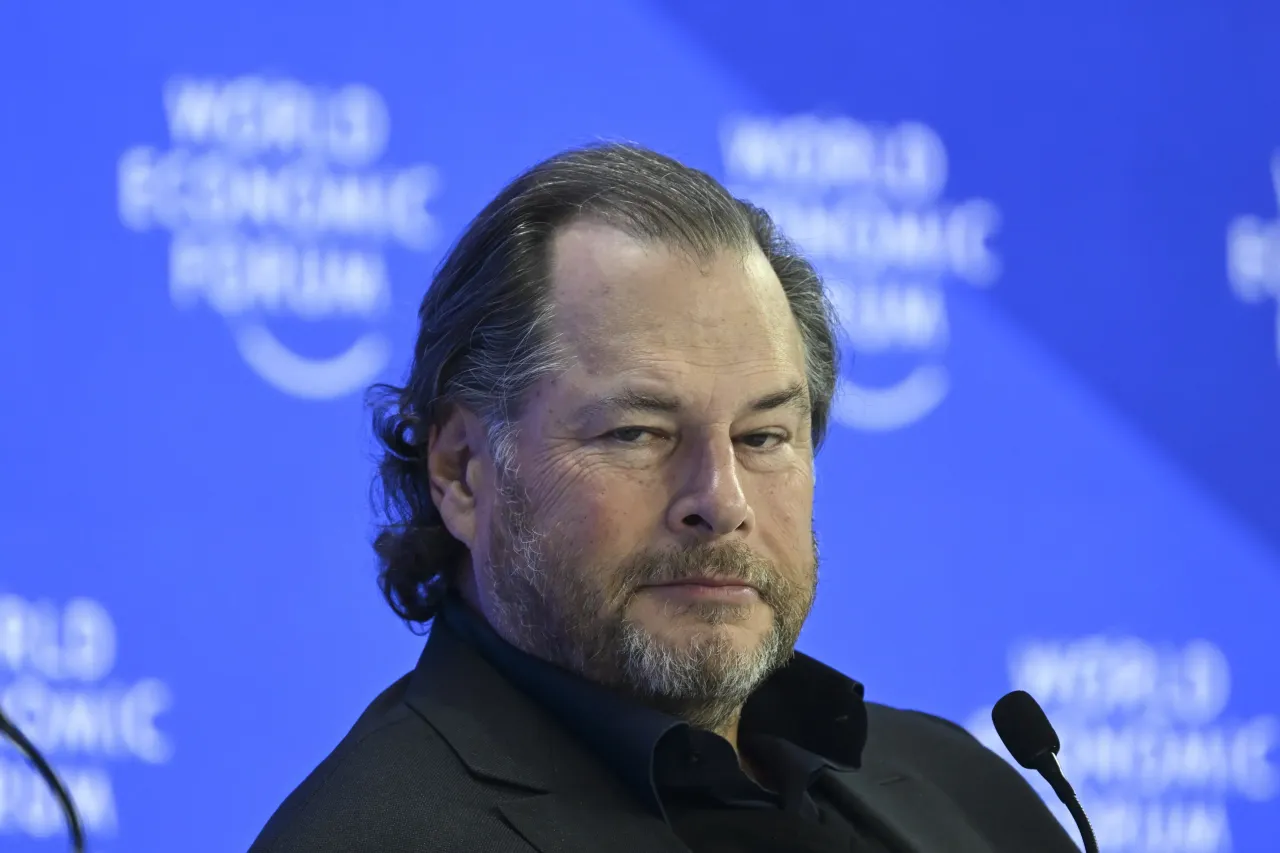
Salesforce CEO Benioff Rebuts AI Disruption Fears
- Sales Growth: Salesforce's recent quarterly sales increased by 12% to $11.2 billion, exceeding Wall Street expectations, although a soft fiscal first-quarter forecast has created cautious sentiment regarding the company's future performance.
- Agentforce Platform Progress: Since its launch in late 2024, Salesforce's Agentforce platform is now utilized by 23,000 of its 150,000 customers, indicating its potential in automating workflows and possibly generating new revenue streams for the company.
- AI Investment Strategy: Salesforce has invested over $300 million in AI startup Anthropic since 2023, which was recently valued at $380 billion and plans to go public later this year, a strategy that could support Salesforce's long-term growth.
- Analyst Optimism: Despite CRM shares declining over 30% in 2026, 35 out of 46 analysts recommend 'Buy' or higher, with an average price target of $268.87, implying a 48% upside, reflecting market confidence in a potential rebound.
See More

Salesforce CEO Embraces AI Amid Stock Decline
- Stock Decline: Salesforce CEO Marc Benioff noted a 30% drop in the company's stock year-to-date, primarily driven by concerns over AI disrupting the SaaS sector, which has also seen the iShares Expanded Tech-Software Sector ETF fall by 20%.
- AI Investment Strategy: Salesforce invested in Anthropic in 2023 and leverages models from OpenAI and Anthropic to enhance its Agentforce offering, demonstrating the company's swift adaptation to new technologies to improve client service capabilities.
- Customer Base Expansion: Agentforce is currently utilized by 23,000 of Salesforce's 150,000 customers, proving effective in handling issues like order statuses and refunds, although it still requires human intervention for more complex tasks.
- Pricing Model Adjustment: Salesforce introduced a hybrid pricing model allowing customers to purchase seat licenses while also paying per action for Agentforce usage, addressing potential reductions in seat demand as AI applications enable companies to operate with fewer employees.
See More
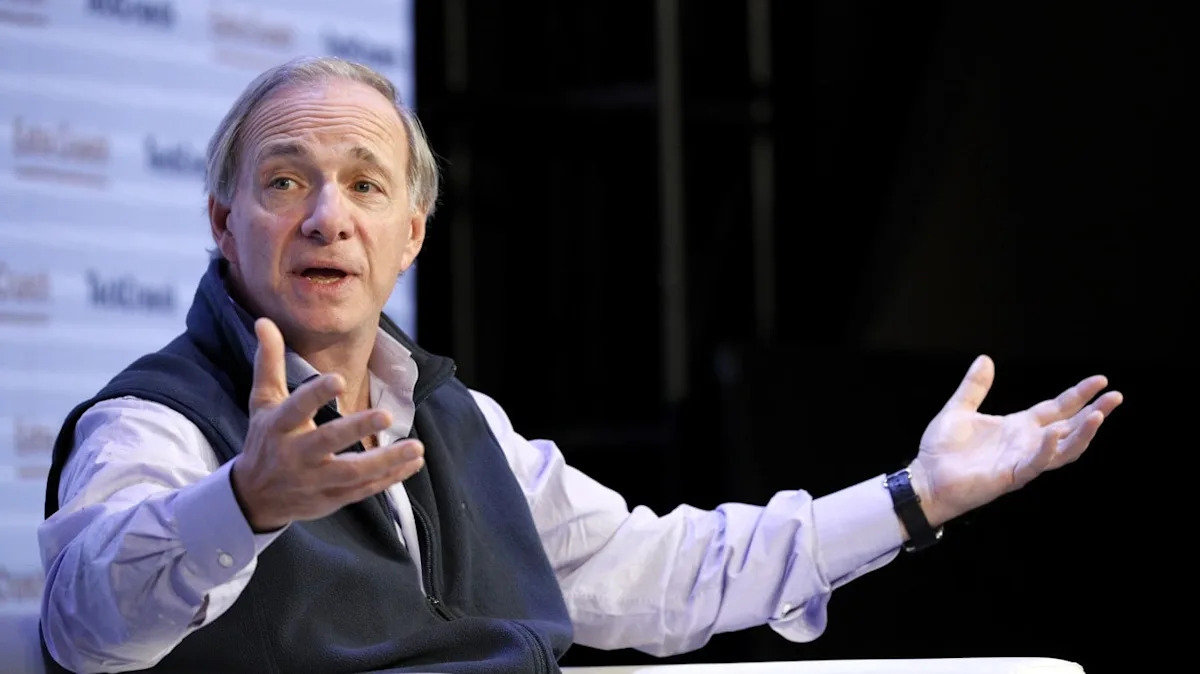
Bridgewater Increases NVIDIA Stake, Signaling Strong AI Confidence


- NVIDIA Stake Increase: Bridgewater increased its position in NVIDIA by over 54% last quarter, making it approximately 2.6% of the portfolio, reflecting strong confidence in AI chip infrastructure as the company reported a 73% year-over-year revenue increase to $68.13 billion, suggesting robust future demand.
- Semiconductor Supply Chain Investment: Bridgewater's second-largest tech holding is Lam Research, accounting for about 1.9% of the portfolio, and despite a modest 12% reduction last quarter, the company reported a 22% year-over-year revenue increase to $5.34 billion, indicating significant long-term growth potential driven by rising AI demand.
- Salesforce Software Positioning: Bridgewater holds approximately 1.8% in Salesforce, which saw a slight reduction, yet its Agentforce platform's annual recurring revenue surged 169% year-over-year to $800 million, showcasing strong growth in enterprise AI software, with management raising the FY30 revenue target to $63 billion.
- Alphabet Cloud Investment: Bridgewater maintains a significant position in Alphabet, representing about 1.8% of the portfolio, and despite a 40% reduction last quarter, Google Cloud's revenue jumped 48% year-over-year to $17.66 billion, indicating strong long-term benefits in AI and cloud computing, with planned capital expenditures of $175 billion to $185 billion in 2026.
See More
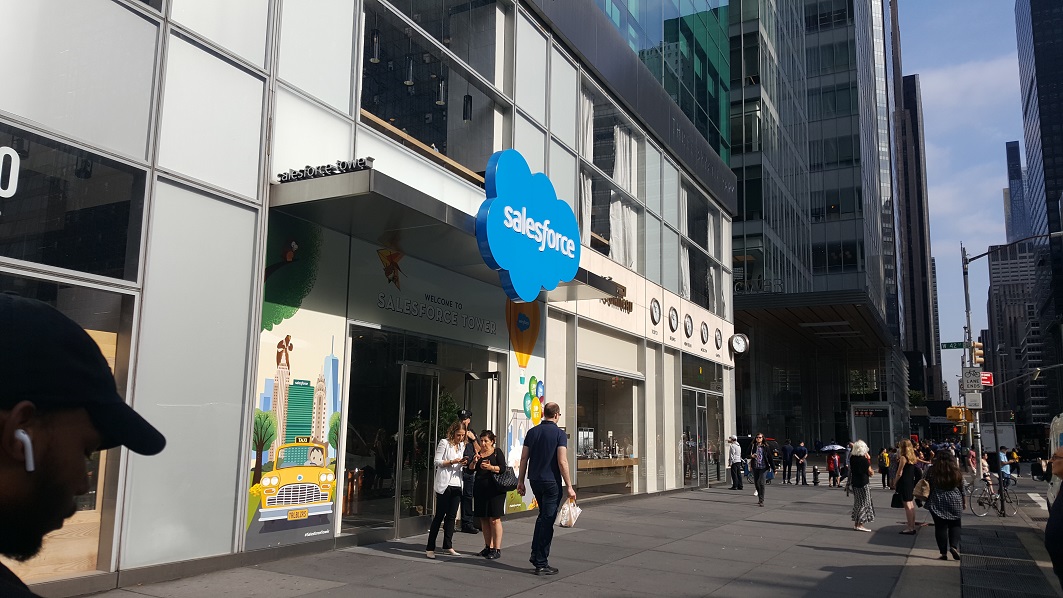
Salesforce Rated as One of the Top Stocks for Next 5 Years

- Buy Rating Reaffirmed: On April 10, Truist Securities reaffirmed its Buy rating on Salesforce, Inc. (NYSE:CRM) with a price target of $280, reflecting confidence in the company's growth prospects, particularly in the second half of fiscal year 2027.
- Growth Potential Analysis: Truist highlighted that Salesforce is poised to benefit from the agentic AI innovation cycle, new customer opportunities, and changes in pricing and packaging related to AI agents, which will drive accelerated growth and strengthen its market position.
- Share Repurchase Program: Salesforce recently announced a $25 billion accelerated share repurchase program, indicating confidence in its own valuation, while also reflecting its strong competitive position in the agentic AI space, with the stock trading at about 9.5 times its estimated free cash flow for calendar year 2027, suggesting significant undervaluation.
- Slackbot Innovation Potential: Truist also pointed out the potential of agentic AI within Slackbot, which it believes is not fully recognized, and expects further updates and innovations related to Agentforce at the upcoming TDX developer conference, which could further propel the company's business development.
See More

Stocks Surge to Record Highs on Iran Peace Deal Hopes


- Market Rebound: The S&P 500 surged 4% last week, closing above 7,100 for the first time, while the Nasdaq achieved its longest winning streak since 1992 with 13 consecutive days of gains, reflecting optimism over a potential peace deal with Iran.
- Rapid Recovery: The S&P 500 rebounded from near correction territory (down about 9%) to an all-time high in just 11 trading days, marking the fastest recovery since at least 1990, indicating strong investor sentiment amid geopolitical developments.
- Software Stock Comeback: Beaten-down software stocks like Microsoft, CrowdStrike, and Salesforce emerged as top gainers, with Microsoft up 14% week-to-date, CrowdStrike gaining 11.9%, and Salesforce rising 10.4%, suggesting a renewed confidence in the software sector.
- Strong Consumer Spending: JPMorgan reported consumer spending growth exceeding 2025 levels, with credit card spending volume up 9% year-over-year, showcasing resilience among consumers and small businesses despite market volatility driven by the war.
See More

Anthropic Adjusts Pricing to Address AI Demand Uncertainty


- Distorted Demand Signals: While AI demand appears explosive, CEO Dario Amodei of Anthropic highlights that data centers take 1-2 years to build, leading companies to commit billions without verified demand, risking customer loss or delayed revenues, which could impact financial stability.
- Pricing Model Shift: Anthropic is transitioning from flat-rate enterprise pricing to per-token billing, ensuring that revenue reflects actual usage, a strategy aimed at addressing the economic imbalance caused by changes in agentic AI usage patterns, thereby enhancing the company's competitive position in the market.
- Increasing Industry Pressure: As the AI industry gradually accepts per-token billing models, companies like OpenAI face similar transformation pressures, potentially leading their customers to reassess AI usage efficiency, which could affect future market performance and investor confidence.
- Investor Focus: Anthropic and OpenAI are expected to pursue IPOs this year, with investors likely to first scrutinize the authenticity of demand; Anthropic's per-token billing provides clearer data on customer value, while OpenAI may face greater challenges in proving the authenticity of its growth figures.
See More
Salesforce CEO Benioff Rebuts AI Disruption Fears
- Sales Growth: Salesforce's recent quarterly sales increased by 12% to $11.2 billion, exceeding Wall Street expectations, although a soft fiscal first-quarter forecast has created cautious sentiment regarding the company's future performance.
- Agentforce Platform Progress: Since its launch in late 2024, Salesforce's Agentforce platform is now utilized by 23,000 of its 150,000 customers, indicating its potential in automating workflows and possibly generating new revenue streams for the company.
- AI Investment Strategy: Salesforce has invested over $300 million in AI startup Anthropic since 2023, which was recently valued at $380 billion and plans to go public later this year, a strategy that could support Salesforce's long-term growth.
- Analyst Optimism: Despite CRM shares declining over 30% in 2026, 35 out of 46 analysts recommend 'Buy' or higher, with an average price target of $268.87, implying a 48% upside, reflecting market confidence in a potential rebound.
See More
Salesforce CEO Embraces AI Amid Stock Decline
- Stock Decline: Salesforce CEO Marc Benioff noted a 30% drop in the company's stock year-to-date, primarily driven by concerns over AI disrupting the SaaS sector, which has also seen the iShares Expanded Tech-Software Sector ETF fall by 20%.
- AI Investment Strategy: Salesforce invested in Anthropic in 2023 and leverages models from OpenAI and Anthropic to enhance its Agentforce offering, demonstrating the company's swift adaptation to new technologies to improve client service capabilities.
- Customer Base Expansion: Agentforce is currently utilized by 23,000 of Salesforce's 150,000 customers, proving effective in handling issues like order statuses and refunds, although it still requires human intervention for more complex tasks.
- Pricing Model Adjustment: Salesforce introduced a hybrid pricing model allowing customers to purchase seat licenses while also paying per action for Agentforce usage, addressing potential reductions in seat demand as AI applications enable companies to operate with fewer employees.
See More
Bridgewater Increases NVIDIA Stake, Signaling Strong AI Confidence
- NVIDIA Stake Increase: Bridgewater increased its position in NVIDIA by over 54% last quarter, making it approximately 2.6% of the portfolio, reflecting strong confidence in AI chip infrastructure as the company reported a 73% year-over-year revenue increase to $68.13 billion, suggesting robust future demand.
- Semiconductor Supply Chain Investment: Bridgewater's second-largest tech holding is Lam Research, accounting for about 1.9% of the portfolio, and despite a modest 12% reduction last quarter, the company reported a 22% year-over-year revenue increase to $5.34 billion, indicating significant long-term growth potential driven by rising AI demand.
- Salesforce Software Positioning: Bridgewater holds approximately 1.8% in Salesforce, which saw a slight reduction, yet its Agentforce platform's annual recurring revenue surged 169% year-over-year to $800 million, showcasing strong growth in enterprise AI software, with management raising the FY30 revenue target to $63 billion.
- Alphabet Cloud Investment: Bridgewater maintains a significant position in Alphabet, representing about 1.8% of the portfolio, and despite a 40% reduction last quarter, Google Cloud's revenue jumped 48% year-over-year to $17.66 billion, indicating strong long-term benefits in AI and cloud computing, with planned capital expenditures of $175 billion to $185 billion in 2026.
See More
Salesforce Rated as One of the Top Stocks for Next 5 Years
- Buy Rating Reaffirmed: On April 10, Truist Securities reaffirmed its Buy rating on Salesforce, Inc. (NYSE:CRM) with a price target of $280, reflecting confidence in the company's growth prospects, particularly in the second half of fiscal year 2027.
- Growth Potential Analysis: Truist highlighted that Salesforce is poised to benefit from the agentic AI innovation cycle, new customer opportunities, and changes in pricing and packaging related to AI agents, which will drive accelerated growth and strengthen its market position.
- Share Repurchase Program: Salesforce recently announced a $25 billion accelerated share repurchase program, indicating confidence in its own valuation, while also reflecting its strong competitive position in the agentic AI space, with the stock trading at about 9.5 times its estimated free cash flow for calendar year 2027, suggesting significant undervaluation.
- Slackbot Innovation Potential: Truist also pointed out the potential of agentic AI within Slackbot, which it believes is not fully recognized, and expects further updates and innovations related to Agentforce at the upcoming TDX developer conference, which could further propel the company's business development.
See More
Stocks Surge to Record Highs on Iran Peace Deal Hopes
- Market Rebound: The S&P 500 surged 4% last week, closing above 7,100 for the first time, while the Nasdaq achieved its longest winning streak since 1992 with 13 consecutive days of gains, reflecting optimism over a potential peace deal with Iran.
- Rapid Recovery: The S&P 500 rebounded from near correction territory (down about 9%) to an all-time high in just 11 trading days, marking the fastest recovery since at least 1990, indicating strong investor sentiment amid geopolitical developments.
- Software Stock Comeback: Beaten-down software stocks like Microsoft, CrowdStrike, and Salesforce emerged as top gainers, with Microsoft up 14% week-to-date, CrowdStrike gaining 11.9%, and Salesforce rising 10.4%, suggesting a renewed confidence in the software sector.
- Strong Consumer Spending: JPMorgan reported consumer spending growth exceeding 2025 levels, with credit card spending volume up 9% year-over-year, showcasing resilience among consumers and small businesses despite market volatility driven by the war.
See More
Anthropic Adjusts Pricing to Address AI Demand Uncertainty
- Distorted Demand Signals: While AI demand appears explosive, CEO Dario Amodei of Anthropic highlights that data centers take 1-2 years to build, leading companies to commit billions without verified demand, risking customer loss or delayed revenues, which could impact financial stability.
- Pricing Model Shift: Anthropic is transitioning from flat-rate enterprise pricing to per-token billing, ensuring that revenue reflects actual usage, a strategy aimed at addressing the economic imbalance caused by changes in agentic AI usage patterns, thereby enhancing the company's competitive position in the market.
- Increasing Industry Pressure: As the AI industry gradually accepts per-token billing models, companies like OpenAI face similar transformation pressures, potentially leading their customers to reassess AI usage efficiency, which could affect future market performance and investor confidence.
- Investor Focus: Anthropic and OpenAI are expected to pursue IPOs this year, with investors likely to first scrutinize the authenticity of demand; Anthropic's per-token billing provides clearer data on customer value, while OpenAI may face greater challenges in proving the authenticity of its growth figures.
See More