Third time lucky? Citi changes its S&P target once more after index hits 6,000.
Written by Emily J. Thompson, Senior Investment Analyst
Updated: Jun 09 2025
0mins

Should l Buy TSM?
Source: MarketWatch
S&P 500 Performance: The S&P 500 closed above the 6,000 mark last week, with a potential for a record territory if it advances another 2.4%.
Analysts Adjust Predictions: Following a 20.4% surge since mid-April, analysts are revising their S&P 500 targets for 2025 upwards after previously cutting them.
Trade with 70% Backtested Accuracy
Stop guessing "Should I Buy TSM?" and start using high-conviction signals backed by rigorous historical data.
Sign up today to access powerful investing tools and make smarter, data-driven decisions.
Analyst Views on TSM
Wall Street analysts forecast TSM stock price to fall
8 Analyst Rating
7 Buy
1 Hold
0 Sell
Strong Buy
Current: 326.740

Low
63.24
Averages
313.46
High
390.00
Current: 326.740
Low
63.24
Averages
313.46
High
390.00
About TSM
Taiwan Semiconductor Manufacturing Co Ltd is a Taiwan-based integrated circuit foundry service provider. The Company is primarily engaged in integrated circuit manufacturing services. It offers advanced process technologies, specialised process solutions, advanced photomask and silicon stacking, and packaging-related technologies, while supporting a comprehensive design ecosystem. The Company's products serve diverse electronic sectors including artificial intelligence, high-performance computing, wired and wireless communications, automotive and industrial equipment, personal computing, information applications, consumer electronics, smart internet of things, and wearable devices.
About the author

Emily J. Thompson
Emily J. Thompson, a Chartered Financial Analyst (CFA) with 12 years in investment research, graduated with honors from the Wharton School. Specializing in industrial and technology stocks, she provides in-depth analysis for Intellectia’s earnings and market brief reports.
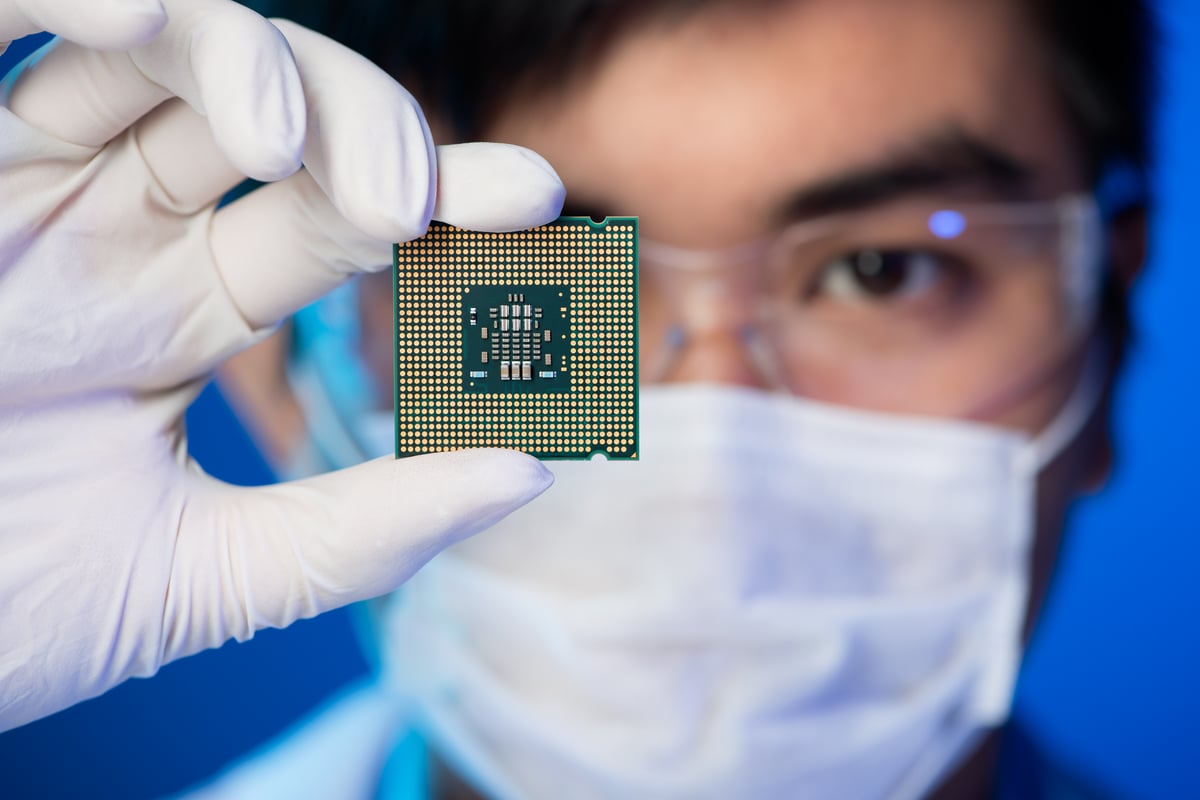
Taiwan Semiconductor: Surge in AI Chip Demand

- AI Chip Market Growth: Taiwan Semiconductor expects the AI chip market to grow at a mid- to high-50% CAGR from 2024 to 2029, representing a massive growth opportunity that will drive significant capital expenditures to increase chip production capacity, thereby solidifying its market leadership.
- Diverse Demand Support: As technologies like humanoid robots, autonomous driving, and drone delivery become more prevalent, chip demand will continue to rise, placing Taiwan Semiconductor at the heart of this growth trend as the world's largest chip foundry, ensuring future revenue growth.
- Sustained Innovation Advantage: Taiwan Semiconductor's ongoing innovation in AI computing hardware will drive demand for more efficient and advanced hardware; although AI hardware has a relatively short lifespan, the need for replacements will always exist, providing a stable market foundation for the company.
- Attractive Valuation for Investment: With a PE ratio of 23.6, slightly above the market average, Taiwan Semiconductor remains a compelling investment option given its strong long-term AI growth potential, and is expected to outperform the market over the next decade.
See More
Druckenmiller Increases Holdings in Alphabet and Amazon Stocks


- Stock Accumulation: In the fourth quarter, Druckenmiller increased his holdings by 282,800 shares of Alphabet (GOOGL) and 300,870 shares of Amazon (AMZN), boosting his stakes by 277% and 69% respectively, indicating strong confidence in both companies.
- AI Investment Surge: Druckenmiller's interest in Alphabet and Amazon stems from their integration of generative AI solutions into cloud infrastructure, which has driven growth, particularly with Google Cloud achieving a 48% revenue increase in Q4.
- Market Valuation Advantage: Alphabet and Amazon are trading at 14.3 times and 9.7 times their projected cash flows respectively, both significantly below their average multiples over the past five years, highlighting a valuation discount that has attracted Druckenmiller's attention.
- Industry Influence: Druckenmiller's investment strategy underscores the importance of AI technology, with projections indicating that AI will create over $15 trillion in global economic value by 2030, further solidifying Alphabet and Amazon's leadership positions in the market.
See More

Druckenmiller Increases Holdings in Google and Amazon
- Increased Google Holdings: Druckenmiller added 282,800 shares of Alphabet's Class A stock in Q4, boosting his stake by 277%, which reflects strong confidence in the company's growth potential, particularly driven by AI advancements.
- Amazon Investment Growth: He also increased his holdings in Amazon by 300,870 shares, a 69% rise, indicating optimism about Amazon's continued growth in cloud computing and e-commerce, especially with the integration of AI solutions.
- AI Market Potential: Druckenmiller's investment choices highlight AI as the biggest technological leap since the internet, with projections of over $15 trillion in global economic value by 2030, further solidifying Google's and Amazon's market leadership.
- Valuation Attractiveness: Both Google and Amazon are trading at relatively low valuations of 14.3 times and 9.7 times their projected future cash flows, respectively, which are below their historical averages, indicating significant potential for returns on AI investments that have caught Druckenmiller's attention.
See More

TSMC Poised to Join $3 Trillion Club
- Market Share Dominance: TSMC currently holds a 71% share of the global chip market and produces over 90% of advanced semiconductors, positioning itself to benefit significantly from the surging demand for AI chips, thereby reinforcing its market leadership.
- Strong Financial Performance: In Q4, TSMC reported revenue of $33.7 billion, a 26% year-over-year increase, with earnings per share rising 35% to $3.14, and gross margin improving to 62.3%, showcasing the company's exceptional ability to scale production and leverage its assets effectively.
- Future Growth Outlook: Management anticipates Q1 revenue of $35.2 billion, up 38%, and operating income of $19.36 billion, up 56%, indicating that the company is set to maintain robust growth momentum in the coming quarters.
- Expansive Market Potential: The semiconductor market is projected to reach nearly $1.6 trillion by 2030, and as an industry leader, TSMC is expected to continue benefiting from this long-term growth trend due to its cutting-edge process technology and strong customer base.
See More

TSMC: Potential to Join the $3 Trillion Club
- Market Leadership: TSMC currently has a market capitalization of $1.6 trillion and commands a 71% share of the global chip market, positioning itself to benefit significantly from the rapid growth in artificial intelligence and data centers, thereby solidifying its leadership in the semiconductor industry.
- Strong Financial Performance: In the fourth quarter, TSMC reported revenue of $33.7 billion, a 26% year-over-year increase, with earnings per American Depository share rising 35% to $3.14, and gross margin improving to 62.3%, indicating sustained profitability as the company scales its production.
- Optimistic Future Outlook: Management forecasts first-quarter revenue of $35.2 billion, up 38%, and operating income of $19.36 billion, up 56%, suggesting that the company will continue to maintain robust growth momentum in the coming quarters.
- Broad Industry Prospects: The semiconductor market is projected to reach nearly $1.6 trillion by 2030, and with TSMC's advanced process technology and strong customer base, it is expected to capture a significant share of this growth, further driving its market capitalization towards the $3 trillion target.
See More
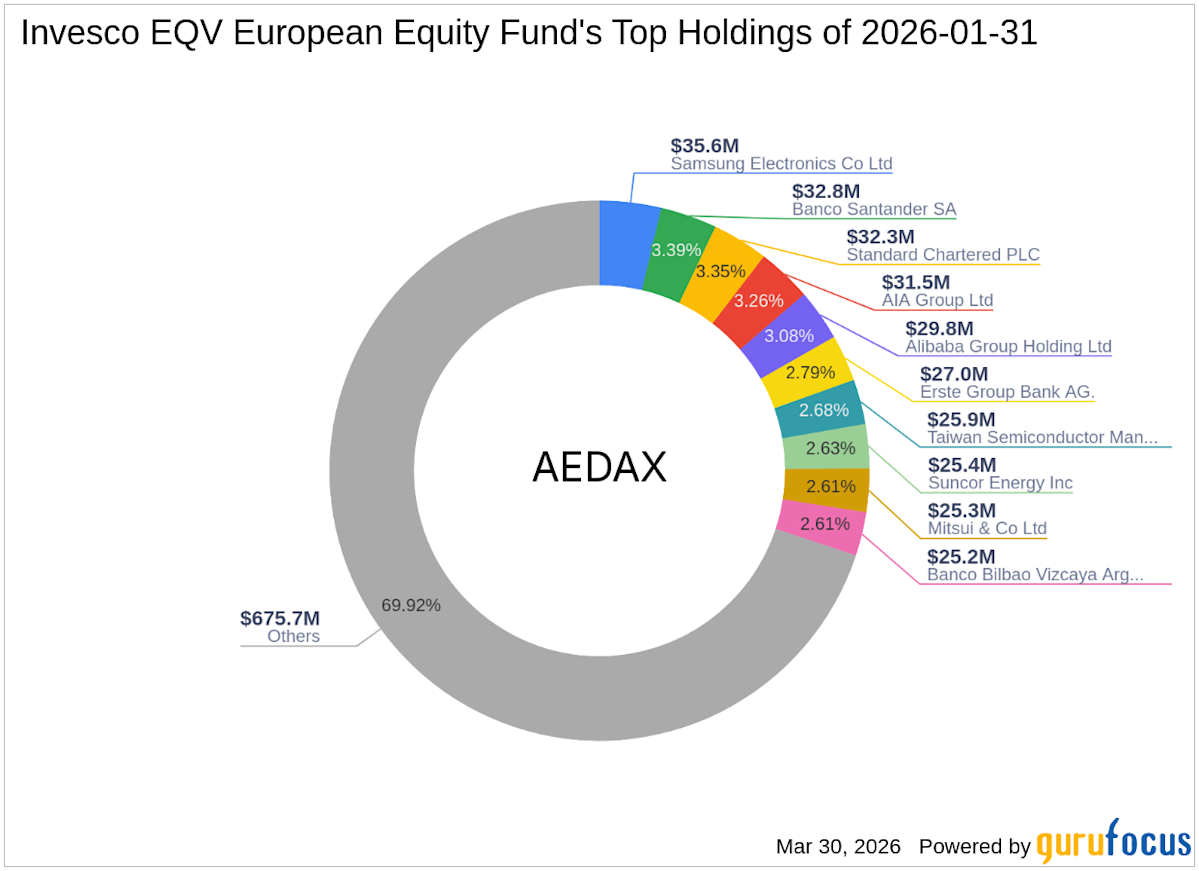
Invesco EQV European Equity Fund's Q1 2026 Portfolio Adjustments

- New Additions: In Q1 2026, Invesco EQV European Equity Fund added 11 stocks, with Taiwan Semiconductor Manufacturing Co Ltd (TPE:2330) being the largest at 469,000 shares, representing 2.68% of the portfolio and valued at NT$25.93 billion, indicating strong confidence in the semiconductor sector.
- Key Position Increases: The fund increased stakes in 9 stocks, notably in Contemporary Amperex Technology Co Ltd (HKSE:03750) by 89,000 shares, a 45.66% increase impacting the portfolio by 0.57%, valued at HK$17.71 million, reflecting a focus on battery technology.
- Complete Exits: In Q1 2026, the fund completely exited 9 holdings, including Prosus NV (XAMS:PRX) and Sumitomo Forestry Co Ltd (TSE:1911), resulting in -2.26% and -1.66% impacts on the portfolio respectively, showcasing a cautious stance on these investments.
- Position Reductions: The fund reduced positions in 35 stocks, with Alibaba Group Holding Ltd (HKSE:09988) seeing a reduction of 386,600 shares, a 21.64% decrease impacting the portfolio by -0.9%, reflecting a strategic response to market volatility.
See More
Taiwan Semiconductor: Surge in AI Chip Demand
- AI Chip Market Growth: Taiwan Semiconductor expects the AI chip market to grow at a mid- to high-50% CAGR from 2024 to 2029, representing a massive growth opportunity that will drive significant capital expenditures to increase chip production capacity, thereby solidifying its market leadership.
- Diverse Demand Support: As technologies like humanoid robots, autonomous driving, and drone delivery become more prevalent, chip demand will continue to rise, placing Taiwan Semiconductor at the heart of this growth trend as the world's largest chip foundry, ensuring future revenue growth.
- Sustained Innovation Advantage: Taiwan Semiconductor's ongoing innovation in AI computing hardware will drive demand for more efficient and advanced hardware; although AI hardware has a relatively short lifespan, the need for replacements will always exist, providing a stable market foundation for the company.
- Attractive Valuation for Investment: With a PE ratio of 23.6, slightly above the market average, Taiwan Semiconductor remains a compelling investment option given its strong long-term AI growth potential, and is expected to outperform the market over the next decade.
See More
Druckenmiller Increases Holdings in Alphabet and Amazon Stocks
- Stock Accumulation: In the fourth quarter, Druckenmiller increased his holdings by 282,800 shares of Alphabet (GOOGL) and 300,870 shares of Amazon (AMZN), boosting his stakes by 277% and 69% respectively, indicating strong confidence in both companies.
- AI Investment Surge: Druckenmiller's interest in Alphabet and Amazon stems from their integration of generative AI solutions into cloud infrastructure, which has driven growth, particularly with Google Cloud achieving a 48% revenue increase in Q4.
- Market Valuation Advantage: Alphabet and Amazon are trading at 14.3 times and 9.7 times their projected cash flows respectively, both significantly below their average multiples over the past five years, highlighting a valuation discount that has attracted Druckenmiller's attention.
- Industry Influence: Druckenmiller's investment strategy underscores the importance of AI technology, with projections indicating that AI will create over $15 trillion in global economic value by 2030, further solidifying Alphabet and Amazon's leadership positions in the market.
See More
Druckenmiller Increases Holdings in Google and Amazon
- Increased Google Holdings: Druckenmiller added 282,800 shares of Alphabet's Class A stock in Q4, boosting his stake by 277%, which reflects strong confidence in the company's growth potential, particularly driven by AI advancements.
- Amazon Investment Growth: He also increased his holdings in Amazon by 300,870 shares, a 69% rise, indicating optimism about Amazon's continued growth in cloud computing and e-commerce, especially with the integration of AI solutions.
- AI Market Potential: Druckenmiller's investment choices highlight AI as the biggest technological leap since the internet, with projections of over $15 trillion in global economic value by 2030, further solidifying Google's and Amazon's market leadership.
- Valuation Attractiveness: Both Google and Amazon are trading at relatively low valuations of 14.3 times and 9.7 times their projected future cash flows, respectively, which are below their historical averages, indicating significant potential for returns on AI investments that have caught Druckenmiller's attention.
See More
TSMC Poised to Join $3 Trillion Club
- Market Share Dominance: TSMC currently holds a 71% share of the global chip market and produces over 90% of advanced semiconductors, positioning itself to benefit significantly from the surging demand for AI chips, thereby reinforcing its market leadership.
- Strong Financial Performance: In Q4, TSMC reported revenue of $33.7 billion, a 26% year-over-year increase, with earnings per share rising 35% to $3.14, and gross margin improving to 62.3%, showcasing the company's exceptional ability to scale production and leverage its assets effectively.
- Future Growth Outlook: Management anticipates Q1 revenue of $35.2 billion, up 38%, and operating income of $19.36 billion, up 56%, indicating that the company is set to maintain robust growth momentum in the coming quarters.
- Expansive Market Potential: The semiconductor market is projected to reach nearly $1.6 trillion by 2030, and as an industry leader, TSMC is expected to continue benefiting from this long-term growth trend due to its cutting-edge process technology and strong customer base.
See More
TSMC: Potential to Join the $3 Trillion Club
- Market Leadership: TSMC currently has a market capitalization of $1.6 trillion and commands a 71% share of the global chip market, positioning itself to benefit significantly from the rapid growth in artificial intelligence and data centers, thereby solidifying its leadership in the semiconductor industry.
- Strong Financial Performance: In the fourth quarter, TSMC reported revenue of $33.7 billion, a 26% year-over-year increase, with earnings per American Depository share rising 35% to $3.14, and gross margin improving to 62.3%, indicating sustained profitability as the company scales its production.
- Optimistic Future Outlook: Management forecasts first-quarter revenue of $35.2 billion, up 38%, and operating income of $19.36 billion, up 56%, suggesting that the company will continue to maintain robust growth momentum in the coming quarters.
- Broad Industry Prospects: The semiconductor market is projected to reach nearly $1.6 trillion by 2030, and with TSMC's advanced process technology and strong customer base, it is expected to capture a significant share of this growth, further driving its market capitalization towards the $3 trillion target.
See More
Invesco EQV European Equity Fund's Q1 2026 Portfolio Adjustments
- New Additions: In Q1 2026, Invesco EQV European Equity Fund added 11 stocks, with Taiwan Semiconductor Manufacturing Co Ltd (TPE:2330) being the largest at 469,000 shares, representing 2.68% of the portfolio and valued at NT$25.93 billion, indicating strong confidence in the semiconductor sector.
- Key Position Increases: The fund increased stakes in 9 stocks, notably in Contemporary Amperex Technology Co Ltd (HKSE:03750) by 89,000 shares, a 45.66% increase impacting the portfolio by 0.57%, valued at HK$17.71 million, reflecting a focus on battery technology.
- Complete Exits: In Q1 2026, the fund completely exited 9 holdings, including Prosus NV (XAMS:PRX) and Sumitomo Forestry Co Ltd (TSE:1911), resulting in -2.26% and -1.66% impacts on the portfolio respectively, showcasing a cautious stance on these investments.
- Position Reductions: The fund reduced positions in 35 stocks, with Alibaba Group Holding Ltd (HKSE:09988) seeing a reduction of 386,600 shares, a 21.64% decrease impacting the portfolio by -0.9%, reflecting a strategic response to market volatility.
See More