ASML Shares Surge on Iran Ceasefire News
Written by Emily J. Thompson, Senior Investment Analyst
Updated: 1 day ago
0mins
Should l Buy ASML?
Source: Fool
- Stock Surge: ASML shares rose 8.5% to $110.96 today, primarily driven by news of a ceasefire in Iran, reflecting investor optimism as the market reacts positively to reduced global economic threats.
- Market Dependency: With 60%-70% of ASML's revenue coming from Asia, the ceasefire has led to a surge in stock prices across Japan, South Korea, China, and Taiwan, reinforcing ASML's market position in these regions heavily reliant on the Strait of Hormuz.
- Stable Customer Base: Major clients like Taiwan Semiconductor Manufacturing Co. and Samsung Electronics have yet to feel the direct impact of the energy crisis, but prolonged closure of the Strait could negatively affect ASML, highlighting the vulnerability of its business model.
- Future Growth Potential: With SK Hynix agreeing to purchase $8 billion worth of equipment from ASML through 2027, the potential for growth in the AI sector is becoming apparent, and if the ceasefire leads to lasting peace, it is expected to drive revenue growth for the company.
Trade with 70% Backtested Accuracy
Stop guessing "Should I Buy ASML?" and start using high-conviction signals backed by rigorous historical data.
Sign up today to access powerful investing tools and make smarter, data-driven decisions.
Analyst Views on ASML
Wall Street analysts forecast ASML stock price to rise
12 Analyst Rating
12 Buy
0 Hold
0 Sell
Strong Buy
Current: 1421.050

Low
1385
Averages
1583
High
1911
Current: 1421.050
Low
1385
Averages
1583
High
1911
About ASML
ASML Holding N.V. is a holding company based in the Netherlands. The Company operates through its subsidiaries in the Netherlands, the United States, Italy, France, Germany, the United Kingdom, Ireland, Belgium, South Korea, Taiwan, Singapore, China, Hong Kong, Japan, Malaysia and Israel. The Company operates through one business segment which is engage in development, production, marketing, sales, upgrading and servicing of advanced semiconductor equipment systems, consisting of lithography, metrology and inspection systems. The Company offers TWINSCAN systems, equipped with lithography system with a mercury lamp as light source (i-line), Krypton Fluoride (KrF) and Argon Fluoride (ArF) light sources for processing wafers for manufacturing environments for which imaging at a small resolution is required. TWINSCAN systems also include immersion lithography systems (TWINSCAN immersion systems).
About the author

Emily J. Thompson
Emily J. Thompson, a Chartered Financial Analyst (CFA) with 12 years in investment research, graduated with honors from the Wharton School. Specializing in industrial and technology stocks, she provides in-depth analysis for Intellectia’s earnings and market brief reports.

ASML's Crucial Role in the AI Supercycle
- Surge in Orders: ASML secured €28 billion in bookings last year, a significant increase from €19 billion in 2024, highlighting its pivotal role in the surging demand for AI hardware, with expectations for further order growth in the coming years.
- Increased Capital Expenditure: Taiwan Semiconductor Manufacturing Company plans to boost its capital expenditures by 33% in 2026, allocating 70% to 80% of its budget to advanced process nodes, indicating a substantial rise in demand for ASML's extreme ultraviolet (EUV) machines, which will drive future revenue growth.
- Technological Edge: ASML is the sole manufacturer of EUV lithography machines, essential for producing high-performance advanced chips, and as AI workloads increase, the demand for ASML's technology is expected to rise, further solidifying its market leadership.
- Stock Performance: ASML's stock has surged 117% over the past year, with earnings projected to increase by 20% in 2026 and 27% in 2027, indicating strong growth potential that is likely to attract investor interest.
See More
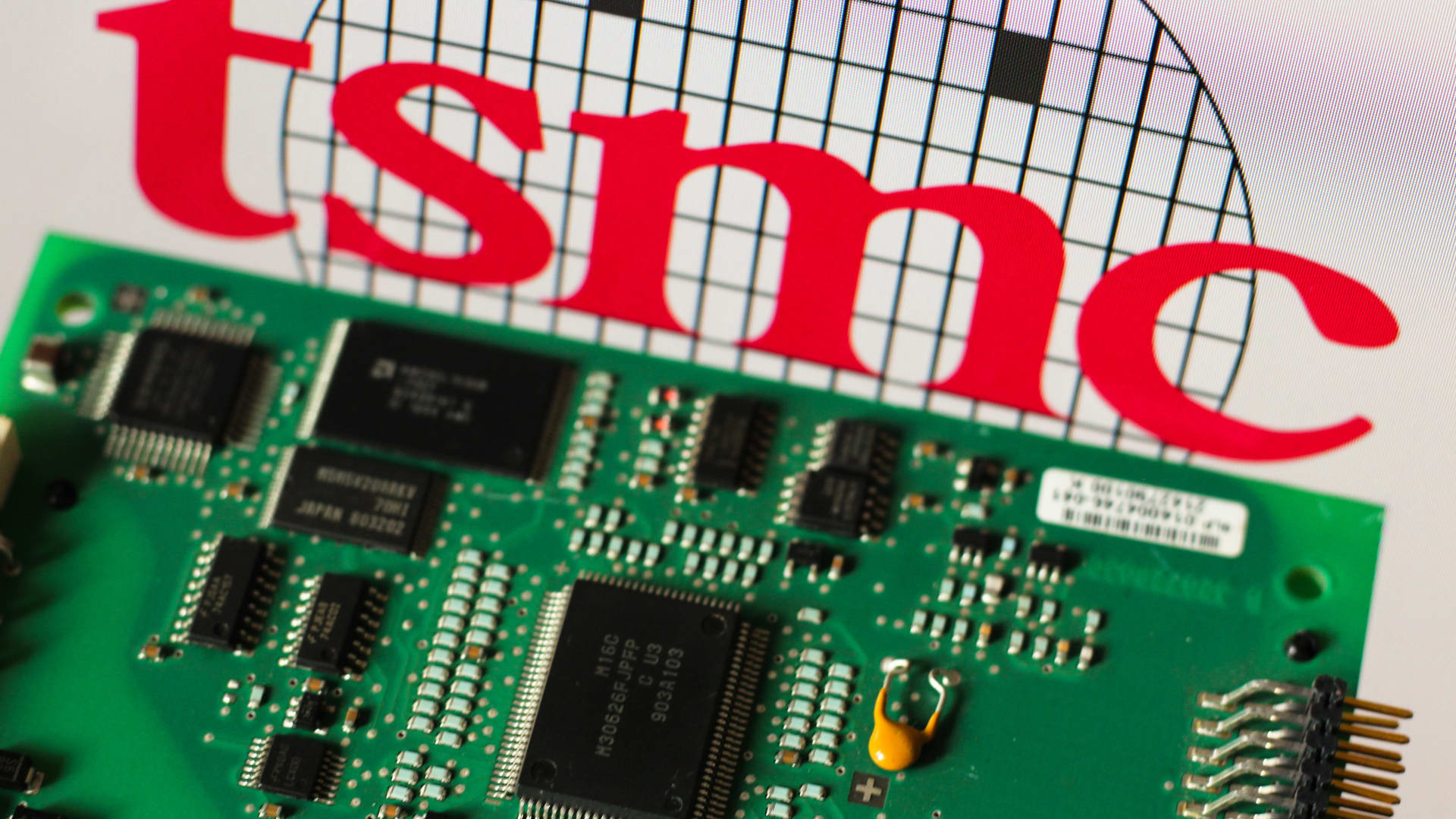
TSMC Reports Record Revenue in Q1 Driven by AI Chip Demand

- Record Revenue: TSMC reported a record revenue of NT$1.13 trillion (approximately $35.6 billion) for Q1 2023, surpassing analyst expectations of NT$1.12 trillion, reflecting a robust 35% year-on-year growth driven by strong market demand.
- AI Chip Demand: Despite challenges in the smartphone and PC markets due to memory shortages, the sustained demand for AI chips has been a key driver of TSMC's performance, with analysts predicting the company will easily exceed its 30% annual growth target.
- Price Increases Impact Sales: TSMC's decision to raise prices for its most advanced chips is seen as a significant factor behind the first-quarter sales beat, with analysts forecasting gross margins of 64% for the quarter, indicating strong profitability.
- Intensifying Market Competition: As more companies begin designing their own chips, TSMC, being one of the few capable of manufacturing cutting-edge chips, is poised to benefit from the substantial investments in AI infrastructure, solidifying its competitive position in the market.
See More

TSMC Reports Record Q1 Revenue Driven by AI Demand

- Significant Revenue Growth: TSMC reported Q1 revenue of NT$1.13 trillion ($35.6 billion), a 35% year-on-year increase that surpassed analyst expectations of NT$1.12 trillion, highlighting the company's robust performance in the semiconductor market.
- Strong AI Chip Demand: Despite challenges in the smartphone and PC markets due to memory shortages, demand for AI chips has driven TSMC's performance, with analysts predicting it will easily exceed its 30% annual growth target, indicating that ongoing investments in AI are yielding returns.
- Price Increases Boost Performance: TSMC has raised prices for its most advanced chips, which is seen as a key factor behind the first-quarter sales beat, with analysts forecasting a gross margin of 64% for Q1, further solidifying its market position.
- Intensifying Market Competition: As more companies begin designing their own chips, TSMC's role as a manufacturer becomes increasingly critical, particularly in the AI inference space, and it is expected to continue benefiting from rising investments and demand in the industry.
See More

Global Stock Markets Surge on Iran Ceasefire Agreement


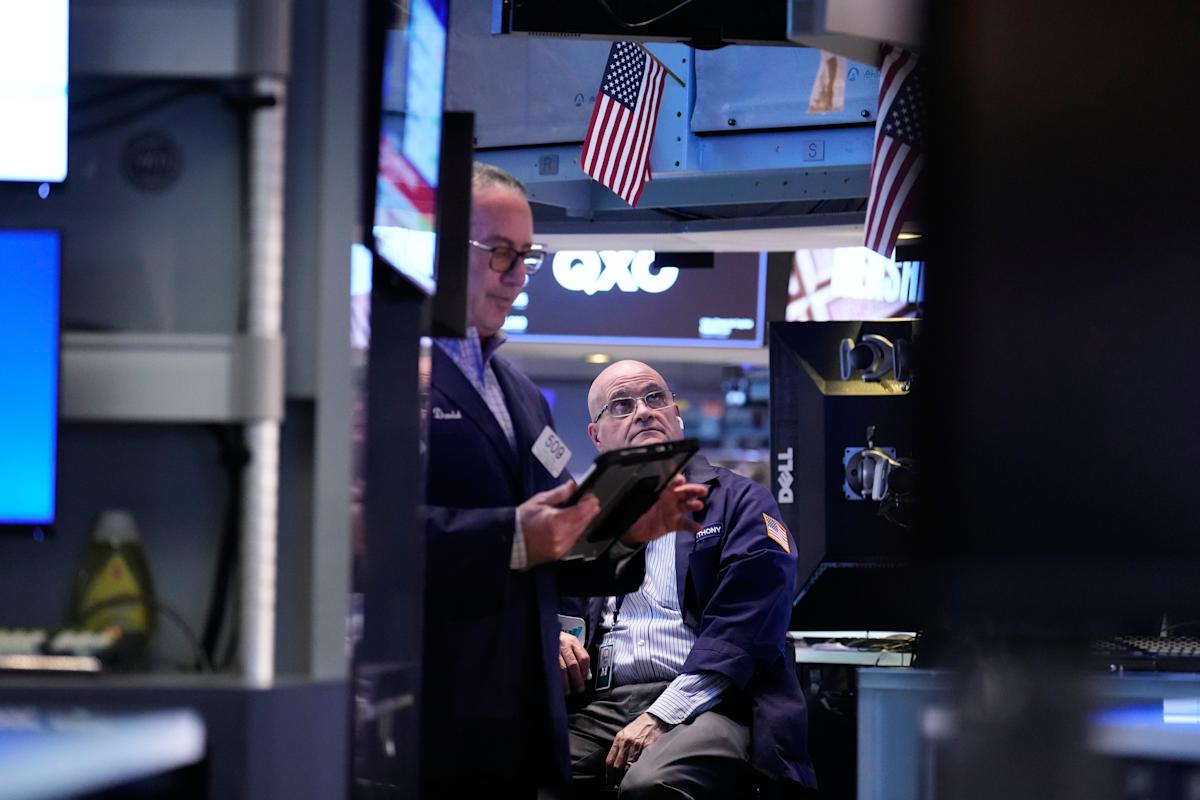
- Market Sentiment Rebound: Global stock markets surged on Wednesday as the US and Iran agreed to a two-week ceasefire, with the S&P 500 rising 2.51%, the Dow Jones up 2.85%, and the Nasdaq 100 increasing by 2.90%, reflecting a positive market response to easing geopolitical tensions.
- Crude Oil Price Plunge: The ceasefire news led to a more than 15% drop in crude oil prices to a 1.5-week low, alleviating inflation concerns and sparking a rally in global government bond markets, with the German 10-year Bund yield falling to a 3-week low, indicating a more optimistic outlook for the economy.
- Fed Policy Expectations: Although the market discounts only a 1% chance of a 25 bp rate hike at the upcoming April 28-29 FOMC meeting, the minutes from the March FOMC indicated heightened concerns among participants regarding upside risks to inflation and downside risks to employment, suggesting a more cautious approach to future monetary policy.
- Strong Tech Stock Performance: Chipmakers and AI infrastructure stocks saw significant gains on Wednesday, with Intel rising over 11%, driving the Nasdaq 100's increase, highlighting the tech sector's crucial role in the market recovery and further boosting investor confidence in technology stocks.
See More

ASML Shares Surge on Iran Ceasefire News

- Stock Surge: ASML shares rose 8.5% to $110.96 today, primarily driven by news of a ceasefire in Iran, reflecting investor optimism as the market reacts positively to reduced global economic threats.
- Market Dependency: With 60%-70% of ASML's revenue coming from Asia, the ceasefire has led to a surge in stock prices across Japan, South Korea, China, and Taiwan, reinforcing ASML's market position in these regions heavily reliant on the Strait of Hormuz.
- Stable Customer Base: Major clients like Taiwan Semiconductor Manufacturing Co. and Samsung Electronics have yet to feel the direct impact of the energy crisis, but prolonged closure of the Strait could negatively affect ASML, highlighting the vulnerability of its business model.
- Future Growth Potential: With SK Hynix agreeing to purchase $8 billion worth of equipment from ASML through 2027, the potential for growth in the AI sector is becoming apparent, and if the ceasefire leads to lasting peace, it is expected to drive revenue growth for the company.
See More

Global Stock Markets Surge on Iran Ceasefire Agreement
- Market Sentiment Rebounds: Global stock markets surged as the US and Iran agreed to a two-week ceasefire, with the S&P 500 rising 2.04%, the Dow Jones up 2.25%, and the Nasdaq 100 increasing by 2.52%, indicating a renewed investor confidence in risk assets.
- Crude Oil Price Plunge: The ceasefire news led to a more than 15% drop in crude oil prices to a 1.5-week low, alleviating inflation concerns and sparking a rally in global government bond markets, with the German 10-year Bund yield falling to a 3-week low, reflecting market expectations of a potential economic slowdown.
- US Treasury Yields Decline: The 10-year US Treasury yield fell to 4.228%, a 3-week low, as concerns over inflation eased, indicating increased demand for safe-haven assets, while also supporting the upcoming $39 billion auction of 10-year notes.
- Strong Performance in Tech Stocks: Amid the positive market sentiment, technology stocks performed strongly, with Amazon, Meta, and Alphabet all rising over 3%, showcasing sustained investor confidence in the tech sector, which may drive future investment inflows.
See More
ASML's Crucial Role in the AI Supercycle
- Surge in Orders: ASML secured €28 billion in bookings last year, a significant increase from €19 billion in 2024, highlighting its pivotal role in the surging demand for AI hardware, with expectations for further order growth in the coming years.
- Increased Capital Expenditure: Taiwan Semiconductor Manufacturing Company plans to boost its capital expenditures by 33% in 2026, allocating 70% to 80% of its budget to advanced process nodes, indicating a substantial rise in demand for ASML's extreme ultraviolet (EUV) machines, which will drive future revenue growth.
- Technological Edge: ASML is the sole manufacturer of EUV lithography machines, essential for producing high-performance advanced chips, and as AI workloads increase, the demand for ASML's technology is expected to rise, further solidifying its market leadership.
- Stock Performance: ASML's stock has surged 117% over the past year, with earnings projected to increase by 20% in 2026 and 27% in 2027, indicating strong growth potential that is likely to attract investor interest.
See More
TSMC Reports Record Revenue in Q1 Driven by AI Chip Demand
- Record Revenue: TSMC reported a record revenue of NT$1.13 trillion (approximately $35.6 billion) for Q1 2023, surpassing analyst expectations of NT$1.12 trillion, reflecting a robust 35% year-on-year growth driven by strong market demand.
- AI Chip Demand: Despite challenges in the smartphone and PC markets due to memory shortages, the sustained demand for AI chips has been a key driver of TSMC's performance, with analysts predicting the company will easily exceed its 30% annual growth target.
- Price Increases Impact Sales: TSMC's decision to raise prices for its most advanced chips is seen as a significant factor behind the first-quarter sales beat, with analysts forecasting gross margins of 64% for the quarter, indicating strong profitability.
- Intensifying Market Competition: As more companies begin designing their own chips, TSMC, being one of the few capable of manufacturing cutting-edge chips, is poised to benefit from the substantial investments in AI infrastructure, solidifying its competitive position in the market.
See More
TSMC Reports Record Q1 Revenue Driven by AI Demand
- Significant Revenue Growth: TSMC reported Q1 revenue of NT$1.13 trillion ($35.6 billion), a 35% year-on-year increase that surpassed analyst expectations of NT$1.12 trillion, highlighting the company's robust performance in the semiconductor market.
- Strong AI Chip Demand: Despite challenges in the smartphone and PC markets due to memory shortages, demand for AI chips has driven TSMC's performance, with analysts predicting it will easily exceed its 30% annual growth target, indicating that ongoing investments in AI are yielding returns.
- Price Increases Boost Performance: TSMC has raised prices for its most advanced chips, which is seen as a key factor behind the first-quarter sales beat, with analysts forecasting a gross margin of 64% for Q1, further solidifying its market position.
- Intensifying Market Competition: As more companies begin designing their own chips, TSMC's role as a manufacturer becomes increasingly critical, particularly in the AI inference space, and it is expected to continue benefiting from rising investments and demand in the industry.
See More
Global Stock Markets Surge on Iran Ceasefire Agreement
- Market Sentiment Rebound: Global stock markets surged on Wednesday as the US and Iran agreed to a two-week ceasefire, with the S&P 500 rising 2.51%, the Dow Jones up 2.85%, and the Nasdaq 100 increasing by 2.90%, reflecting a positive market response to easing geopolitical tensions.
- Crude Oil Price Plunge: The ceasefire news led to a more than 15% drop in crude oil prices to a 1.5-week low, alleviating inflation concerns and sparking a rally in global government bond markets, with the German 10-year Bund yield falling to a 3-week low, indicating a more optimistic outlook for the economy.
- Fed Policy Expectations: Although the market discounts only a 1% chance of a 25 bp rate hike at the upcoming April 28-29 FOMC meeting, the minutes from the March FOMC indicated heightened concerns among participants regarding upside risks to inflation and downside risks to employment, suggesting a more cautious approach to future monetary policy.
- Strong Tech Stock Performance: Chipmakers and AI infrastructure stocks saw significant gains on Wednesday, with Intel rising over 11%, driving the Nasdaq 100's increase, highlighting the tech sector's crucial role in the market recovery and further boosting investor confidence in technology stocks.
See More
ASML Shares Surge on Iran Ceasefire News
- Stock Surge: ASML shares rose 8.5% to $110.96 today, primarily driven by news of a ceasefire in Iran, reflecting investor optimism as the market reacts positively to reduced global economic threats.
- Market Dependency: With 60%-70% of ASML's revenue coming from Asia, the ceasefire has led to a surge in stock prices across Japan, South Korea, China, and Taiwan, reinforcing ASML's market position in these regions heavily reliant on the Strait of Hormuz.
- Stable Customer Base: Major clients like Taiwan Semiconductor Manufacturing Co. and Samsung Electronics have yet to feel the direct impact of the energy crisis, but prolonged closure of the Strait could negatively affect ASML, highlighting the vulnerability of its business model.
- Future Growth Potential: With SK Hynix agreeing to purchase $8 billion worth of equipment from ASML through 2027, the potential for growth in the AI sector is becoming apparent, and if the ceasefire leads to lasting peace, it is expected to drive revenue growth for the company.
See More
Global Stock Markets Surge on Iran Ceasefire Agreement
- Market Sentiment Rebounds: Global stock markets surged as the US and Iran agreed to a two-week ceasefire, with the S&P 500 rising 2.04%, the Dow Jones up 2.25%, and the Nasdaq 100 increasing by 2.52%, indicating a renewed investor confidence in risk assets.
- Crude Oil Price Plunge: The ceasefire news led to a more than 15% drop in crude oil prices to a 1.5-week low, alleviating inflation concerns and sparking a rally in global government bond markets, with the German 10-year Bund yield falling to a 3-week low, reflecting market expectations of a potential economic slowdown.
- US Treasury Yields Decline: The 10-year US Treasury yield fell to 4.228%, a 3-week low, as concerns over inflation eased, indicating increased demand for safe-haven assets, while also supporting the upcoming $39 billion auction of 10-year notes.
- Strong Performance in Tech Stocks: Amid the positive market sentiment, technology stocks performed strongly, with Amazon, Meta, and Alphabet all rising over 3%, showcasing sustained investor confidence in the tech sector, which may drive future investment inflows.
See More