Morgan Stanley Reports Strong Q1 Earnings, Beats Estimates
Written by Emily J. Thompson, Senior Investment Analyst
Updated: 3 days ago
0mins
Should l Buy MS?
Source: Fool
- Earnings Beat: Morgan Stanley's Q1 net revenue reached nearly $20.6 billion, reflecting a 16% year-over-year increase, significantly surpassing analysts' expectations of $19.7 billion, showcasing the company's robust performance in capital markets.
- Profit Growth: The bank's net income under GAAP rose 29% to almost $5.6 billion ($3.43 per share), indicating strong results from its wealth management and institutional securities divisions.
- Capital Markets Performance: The institutional securities division achieved record net revenue of $10.7 billion, primarily driven by substantial increases in equity and fixed income trading, further solidifying Morgan Stanley's leadership in capital markets.
- Positive Market Outlook: With the capital markets thriving, Morgan Stanley's two leading business units are performing well, and barring any significant global economic downturn, they are expected to continue this growth trajectory.
Trade with 70% Backtested Accuracy
Stop guessing "Should I Buy MS?" and start using high-conviction signals backed by rigorous historical data.
Sign up today to access powerful investing tools and make smarter, data-driven decisions.
Analyst Views on MS
Wall Street analysts forecast MS stock price to fall
14 Analyst Rating
7 Buy
7 Hold
0 Sell
Moderate Buy
Current: 187.320

Low
132.00
Averages
185.00
High
219.00
Current: 187.320
Low
132.00
Averages
185.00
High
219.00
About MS
Morgan Stanley is a global financial services company. The Company is engaged in providing a range of investment banking, securities, wealth management and investment management services. Its segments include Institutional Securities, Wealth Management and Investment Management. Its Institutional Securities segment provides a variety of products and services to corporations, governments, financial institutions and ultra-high net worth clients. Its Wealth Management segment provides an array of financial services and solutions to individual investors and small to medium-sized businesses and institutions. Its Investment Management segment provides a range of investment strategies and products that span geographies, asset classes, and public and private markets to a diverse group of clients across institutional and intermediary channels. Its investment banking services consist of capital raising and financial advisory services, including the underwriting of debt and other products.
About the author

Emily J. Thompson
Emily J. Thompson, a Chartered Financial Analyst (CFA) with 12 years in investment research, graduated with honors from the Wharton School. Specializing in industrial and technology stocks, she provides in-depth analysis for Intellectia’s earnings and market brief reports.

Morgan Stanley Q1 Earnings Beat Estimates

- Earnings Beat: Morgan Stanley reported Q1 EPS of $3.43, exceeding analyst expectations, which demonstrates the company's robust performance amidst market volatility and boosts investor confidence.
- Sales Growth: The firm achieved sales of $20.580 billion, reflecting sustained growth in its wealth management and investment banking segments, further solidifying its market position.
- Analyst Target Increases: Following the strong earnings report, analysts have raised their price targets for Morgan Stanley's stock, indicating a positive outlook for the company's future growth.
- Positive Market Reaction: The favorable response from investors to the earnings report may drive the stock price higher, enhancing the company's market capitalization and competitive position, thereby attracting more investor interest.
See More

Stocks Surge to Record Highs on Iran Peace Deal Hopes


- Market Rebound: The S&P 500 surged 4% last week, closing above 7,100 for the first time, while the Nasdaq achieved its longest winning streak since 1992 with 13 consecutive days of gains, reflecting optimism over a potential peace deal with Iran.
- Rapid Recovery: The S&P 500 rebounded from near correction territory (down about 9%) to an all-time high in just 11 trading days, marking the fastest recovery since at least 1990, indicating strong investor sentiment amid geopolitical developments.
- Software Stock Comeback: Beaten-down software stocks like Microsoft, CrowdStrike, and Salesforce emerged as top gainers, with Microsoft up 14% week-to-date, CrowdStrike gaining 11.9%, and Salesforce rising 10.4%, suggesting a renewed confidence in the software sector.
- Strong Consumer Spending: JPMorgan reported consumer spending growth exceeding 2025 levels, with credit card spending volume up 9% year-over-year, showcasing resilience among consumers and small businesses despite market volatility driven by the war.
See More
Banking Sector Shows Resilience Amid Geopolitical Turmoil

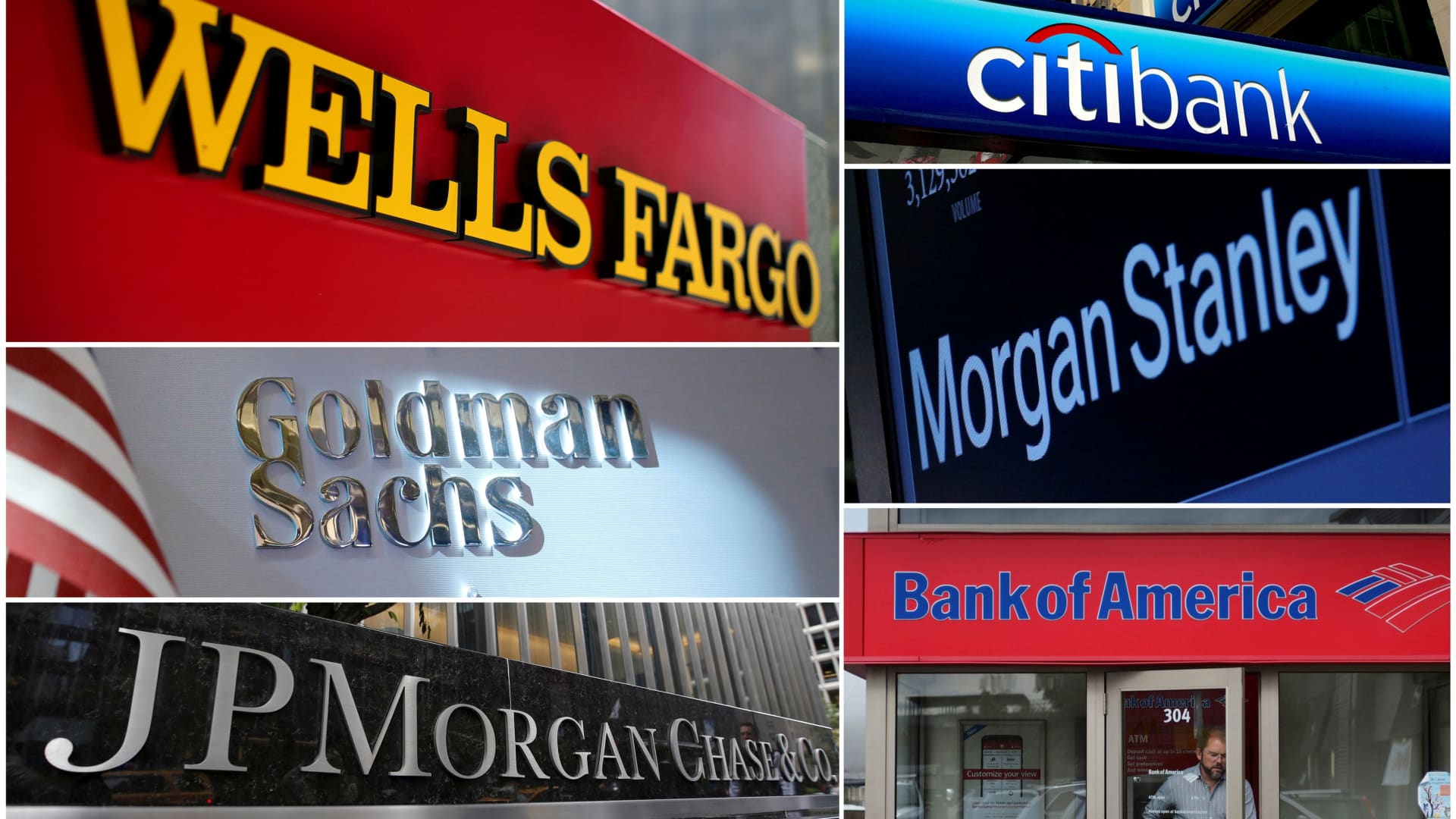
- Investment Banking Surge: Goldman Sachs reported a 48% year-over-year increase in investment banking revenue to $2.48 billion, with CEO David Solomon noting a robust investment banking environment, which significantly contributes to advisory fees and capital market revenues, showcasing the firm's strength in M&A and IPOs.
- Credit Card Growth: Despite a slight overall revenue miss, Wells Fargo's new credit card account openings surged nearly 60% year-over-year, with the consumer banking and lending division seeing a 6.6% revenue increase in Q1, indicating strong consumer spending resilience even amid rising oil prices, enhancing the bank's profitability.
- Trading Desk Performance: The volatility from the Iran-U.S. conflict led to a 27% year-over-year increase in Goldman’s equities revenue, reaching a record $5.33 billion, as clients actively repositioned portfolios, reflecting the firm's execution capabilities and risk management in a dynamic environment.
- Market Adaptability: While geopolitical uncertainty affected some deals, Morgan Stanley and Bank of America saw trading revenues rise by 29% and 30% respectively, demonstrating that banks can still capitalize on market fluctuations, highlighting their ability to adapt to changing market conditions.
See More
Apple's iPhone Shipments in China Surge 20% Amid Market Challenges


- Market Share Growth: Apple achieved a 20% increase in iPhone shipments in China during Q1, demonstrating robust growth despite challenges such as supply chain disruptions and high memory costs, which underscores its competitive strength in a challenging market.
- Close to Market Leader: With a 19% market share in China, Apple is just 1% behind Huawei, positioning the company favorably for future competition and strategic initiatives aimed at reclaiming the top spot.
- Overall Market Decline: While Apple excelled, the overall smartphone shipments in China fell by 4%, indicating a tough market backdrop, and highlighting Apple's ability to grow in a declining sector.
- Executive Transition Impact: The impending retirement of long-time marketing chief Stan Ng after 31 years may influence Apple's branding strategy and market outreach, necessitating close observation of the successor's impact on the company's direction.
See More
Morgan Stanley Optimistic on Affirm's Future Prospects

- Upward Growth Revisions: Morgan Stanley has named Affirm as its top pick, projecting upward revisions to growth estimates with a price target of $76, indicating a 26% upside from Thursday's close, reflecting strong market confidence in its future performance.
- Investor Day Catalyst: Affirm is set to hold its Investor Day in May, which is expected to raise targets for gross merchandise value (GMV), margins, and earnings per share (EPS), further enhancing market expectations for its growth potential.
- Overblown Market Fears: While investors have expressed concerns about Affirm's links to private credit, Morgan Stanley believes these fears are exaggerated, as Affirm's asset-backed securities (ABS) spreads remain stable, indicating strong forward demand.
- Attractive Valuation: Morgan Stanley highlights that Affirm's valuation remains compelling, with expectations to raise several estimates linked to its financial outlook, driving up shares in line with Wall Street consensus, where 23 out of 31 analysts rate the stock as a buy or strong buy.
See More

Israel and Lebanon Reach Historic Ceasefire Agreement


- Historic Ceasefire Agreement: Israel and Lebanon have reached a 10-day ceasefire agreement in Washington, marking the first meaningful talks between the two nations since 1983, potentially paving the way for a broader peace agreement in the Middle East.
- Positive Market Reaction: Israel's central bank governor noted that markets are responding positively to the latest peace developments, with major markets holding near record highs, reflecting investor optimism for stability in the region despite ongoing geopolitical uncertainties.
- U.S. Diplomatic Efforts: President Trump plans to invite Israeli Prime Minister Netanyahu and Lebanese President Aoun for talks, further advancing the improvement of relations between the two countries and highlighting the U.S.'s active role in the Middle East peace process.
- Impact of Iranian Situation: Trump mentioned that the war in Iran is progressing well and is expected to end soon, a statement that could influence regional security dynamics and market reactions, prompting investors to monitor future military and diplomatic developments.
See More
Morgan Stanley Q1 Earnings Beat Estimates
- Earnings Beat: Morgan Stanley reported Q1 EPS of $3.43, exceeding analyst expectations, which demonstrates the company's robust performance amidst market volatility and boosts investor confidence.
- Sales Growth: The firm achieved sales of $20.580 billion, reflecting sustained growth in its wealth management and investment banking segments, further solidifying its market position.
- Analyst Target Increases: Following the strong earnings report, analysts have raised their price targets for Morgan Stanley's stock, indicating a positive outlook for the company's future growth.
- Positive Market Reaction: The favorable response from investors to the earnings report may drive the stock price higher, enhancing the company's market capitalization and competitive position, thereby attracting more investor interest.
See More
Stocks Surge to Record Highs on Iran Peace Deal Hopes
- Market Rebound: The S&P 500 surged 4% last week, closing above 7,100 for the first time, while the Nasdaq achieved its longest winning streak since 1992 with 13 consecutive days of gains, reflecting optimism over a potential peace deal with Iran.
- Rapid Recovery: The S&P 500 rebounded from near correction territory (down about 9%) to an all-time high in just 11 trading days, marking the fastest recovery since at least 1990, indicating strong investor sentiment amid geopolitical developments.
- Software Stock Comeback: Beaten-down software stocks like Microsoft, CrowdStrike, and Salesforce emerged as top gainers, with Microsoft up 14% week-to-date, CrowdStrike gaining 11.9%, and Salesforce rising 10.4%, suggesting a renewed confidence in the software sector.
- Strong Consumer Spending: JPMorgan reported consumer spending growth exceeding 2025 levels, with credit card spending volume up 9% year-over-year, showcasing resilience among consumers and small businesses despite market volatility driven by the war.
See More
Banking Sector Shows Resilience Amid Geopolitical Turmoil
- Investment Banking Surge: Goldman Sachs reported a 48% year-over-year increase in investment banking revenue to $2.48 billion, with CEO David Solomon noting a robust investment banking environment, which significantly contributes to advisory fees and capital market revenues, showcasing the firm's strength in M&A and IPOs.
- Credit Card Growth: Despite a slight overall revenue miss, Wells Fargo's new credit card account openings surged nearly 60% year-over-year, with the consumer banking and lending division seeing a 6.6% revenue increase in Q1, indicating strong consumer spending resilience even amid rising oil prices, enhancing the bank's profitability.
- Trading Desk Performance: The volatility from the Iran-U.S. conflict led to a 27% year-over-year increase in Goldman’s equities revenue, reaching a record $5.33 billion, as clients actively repositioned portfolios, reflecting the firm's execution capabilities and risk management in a dynamic environment.
- Market Adaptability: While geopolitical uncertainty affected some deals, Morgan Stanley and Bank of America saw trading revenues rise by 29% and 30% respectively, demonstrating that banks can still capitalize on market fluctuations, highlighting their ability to adapt to changing market conditions.
See More
Apple's iPhone Shipments in China Surge 20% Amid Market Challenges
- Market Share Growth: Apple achieved a 20% increase in iPhone shipments in China during Q1, demonstrating robust growth despite challenges such as supply chain disruptions and high memory costs, which underscores its competitive strength in a challenging market.
- Close to Market Leader: With a 19% market share in China, Apple is just 1% behind Huawei, positioning the company favorably for future competition and strategic initiatives aimed at reclaiming the top spot.
- Overall Market Decline: While Apple excelled, the overall smartphone shipments in China fell by 4%, indicating a tough market backdrop, and highlighting Apple's ability to grow in a declining sector.
- Executive Transition Impact: The impending retirement of long-time marketing chief Stan Ng after 31 years may influence Apple's branding strategy and market outreach, necessitating close observation of the successor's impact on the company's direction.
See More
Morgan Stanley Optimistic on Affirm's Future Prospects
- Upward Growth Revisions: Morgan Stanley has named Affirm as its top pick, projecting upward revisions to growth estimates with a price target of $76, indicating a 26% upside from Thursday's close, reflecting strong market confidence in its future performance.
- Investor Day Catalyst: Affirm is set to hold its Investor Day in May, which is expected to raise targets for gross merchandise value (GMV), margins, and earnings per share (EPS), further enhancing market expectations for its growth potential.
- Overblown Market Fears: While investors have expressed concerns about Affirm's links to private credit, Morgan Stanley believes these fears are exaggerated, as Affirm's asset-backed securities (ABS) spreads remain stable, indicating strong forward demand.
- Attractive Valuation: Morgan Stanley highlights that Affirm's valuation remains compelling, with expectations to raise several estimates linked to its financial outlook, driving up shares in line with Wall Street consensus, where 23 out of 31 analysts rate the stock as a buy or strong buy.
See More
Israel and Lebanon Reach Historic Ceasefire Agreement
- Historic Ceasefire Agreement: Israel and Lebanon have reached a 10-day ceasefire agreement in Washington, marking the first meaningful talks between the two nations since 1983, potentially paving the way for a broader peace agreement in the Middle East.
- Positive Market Reaction: Israel's central bank governor noted that markets are responding positively to the latest peace developments, with major markets holding near record highs, reflecting investor optimism for stability in the region despite ongoing geopolitical uncertainties.
- U.S. Diplomatic Efforts: President Trump plans to invite Israeli Prime Minister Netanyahu and Lebanese President Aoun for talks, further advancing the improvement of relations between the two countries and highlighting the U.S.'s active role in the Middle East peace process.
- Impact of Iranian Situation: Trump mentioned that the war in Iran is progressing well and is expected to end soon, a statement that could influence regional security dynamics and market reactions, prompting investors to monitor future military and diplomatic developments.
See More