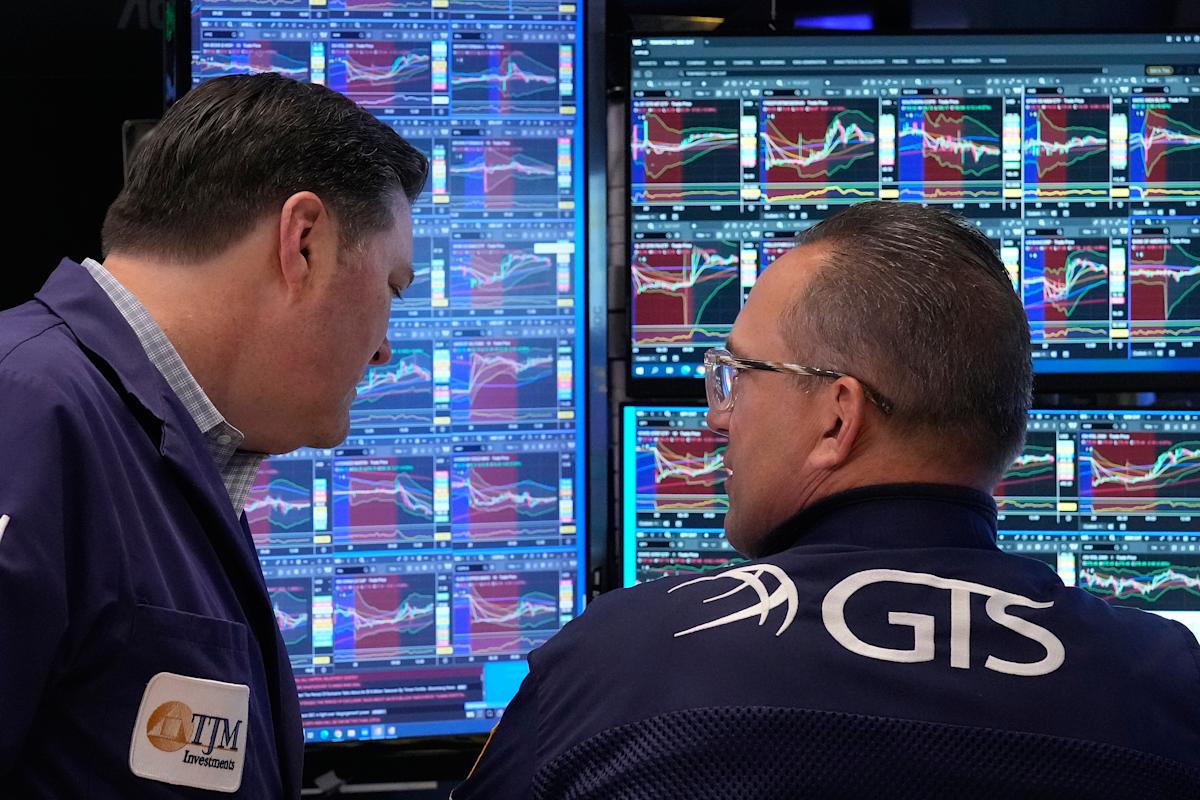
Dow Futures Decline as Nvidia Shares Retreat Despite Strong Earnings
Written by Emily J. Thompson, Senior Investment Analyst
Updated: Feb 26 2026
0mins


Should l Buy NVDA?
Source: Yahoo Finance
- Nvidia Earnings Reaction: Nvidia reported strong earnings and guidance, yet its shares fell in after-hours trading, indicating market concerns over high valuations that could undermine investor confidence.
- Market Trend Shift: The S&P 500 has regained its position above the 50-day moving average, suggesting a short-term improvement in market sentiment; however, overall market uncertainty remains, necessitating cautious investor strategies.
- Dow Futures Movement: Dow futures are declining, reflecting investor caution towards tech stocks, particularly following a pullback in shares of leading companies like Nvidia, which may trigger broader market volatility.
- Investor Strategy Adjustment: As market sentiment shifts, investors may need to reassess their portfolios, especially in light of the unstable performance of tech stocks, seeking more stable investment opportunities.
Trade with 70% Backtested Accuracy
Stop guessing "Should I Buy NVDA?" and start using high-conviction signals backed by rigorous historical data.
Sign up today to access powerful investing tools and make smarter, data-driven decisions.
Analyst Views on NVDA
Wall Street analysts forecast NVDA stock price to rise
41 Analyst Rating
39 Buy
1 Hold
1 Sell
Strong Buy
Current: 199.880

Low
200.00
Averages
264.97
High
352.00
Current: 199.880
Low
200.00
Averages
264.97
High
352.00
About NVDA
NVIDIA Corporation is an artificial intelligence (AI) infrastructure company. The Company is engaged in accelerated computing to help solve the challenging computational problems. Its segments include Compute & Networking and Graphics. The Compute & Networking segment includes its Data Center accelerated computing and networking platforms and AI solutions and software, and automotive platforms and autonomous and electric vehicle solutions, including software. The Graphics segment includes GeForce GPUs for gaming and personal computers (PCs), and Quadro/NVIDIA RTX GPUs for enterprise workstation graphics. Its technology stack includes the foundational NVIDIA CUDA development platform that runs on all NVIDIA GPUs, as well as hundreds of domain-specific software libraries, frameworks, algorithms, software development kits (SDKs), and application programming interfaces (APIs). Its platforms address four markets, which include Data Center, Gaming, Professional Visualization, and Automotive.
About the author

Emily J. Thompson
Emily J. Thompson, a Chartered Financial Analyst (CFA) with 12 years in investment research, graduated with honors from the Wharton School. Specializing in industrial and technology stocks, she provides in-depth analysis for Intellectia’s earnings and market brief reports.

SpaceX to Acquire AI Startup Cursor for $60 Billion

- Acquisition Agreement: SpaceX has struck a deal with AI startup Cursor to acquire the company for $60 billion or pay $10 billion for collaborative work, indicating SpaceX's strategic expansion into the AI sector.
- Funding Plans: Cursor is in talks to raise $2 billion at a valuation exceeding $50 billion, with participation from investors like Andreessen Horowitz, Nvidia, and Thrive Capital, reflecting strong market interest and investment enthusiasm in AI technologies.
- Technical Collaboration: The partnership aims to develop the world's best coding and knowledge work AI, with Cursor's CEO highlighting this as a significant step in enhancing their AI model, Composer, which could transform software development practices.
- IPO Prospects: Elon Musk plans to take SpaceX public after merging it with his AI startup xAI, which is expected to be a record-setting IPO, further solidifying his leadership position in the tech industry.
See More

TSMC: The Core of AI Investment

- AI Market Share Growth: TSMC holds approximately 72% of the advanced chip manufacturing market, benefiting from surging demand for high-performance computing chips as AI infrastructure spending is expected to reach $660 billion by 2026, driving its revenue to nearly $35.9 billion in Q1 2024, a 39% year-over-year increase.
- Margin Improvement: TSMC's gross margin rose to 66.2% in the latest quarter, up 3.9 percentage points from the previous year, reflecting its pricing power and market control, which further solidifies its leadership position in the AI sector.
- Capital Expenditure Plans: TSMC anticipates capital expenditures between $52 billion and $56 billion in 2026, focusing on expanding advanced nodes and packaging capabilities, which will enhance its competitive edge in the rapidly evolving AI market.
- Doubling Revenue Expectations: Analysts project TSMC's revenue will grow from $163.9 billion in 2026 to $311.5 billion by 2030, nearly doubling in four years, indicating strong growth potential amid the ongoing expansion of AI infrastructure.
See More

TSMC's Crucial Role in AI Infrastructure Development
- Significant Revenue Growth: TSMC reported a revenue of $35.9 billion in Q1 2024, reflecting a nearly 39% year-over-year increase, with gross margin rising to 66.2%, indicating strong demand and profitability in high-performance chip manufacturing.
- Expanding AI Market Share: The revenue share from high-performance computing (HPC) chips has increased from 46% in Q1 2024 to approximately 61% in the latest quarter, highlighting AI's central role in TSMC's business and driving ongoing growth.
- Capital Expenditure Plans: TSMC expects capital expenditures to range between $52 billion and $56 billion in 2026, primarily directed towards expanding leading-edge nodes and advanced packaging capabilities, ensuring its leadership in advanced chip manufacturing.
- Market Dominance: With control over about 72% of the pure-play foundry market and over 90% of leading-edge chip production, TSMC's strong pricing power and market demand are projected to drive revenues to $311.5 billion by 2030, nearly doubling within four years.
See More

Google Unveils Next-Gen TPU Chips for AI


- TPU Chip Separation: Google announced the division of its eighth-generation Tensor Processing Unit (TPU) into distinct chips for training and inference, set to launch later this year, aiming to enhance the efficiency and responsiveness of AI models, thereby strengthening its competitive position in the AI hardware market.
- Significant Performance Boost: The new training chip boasts a 2.8 times performance increase over the seventh-generation Ironwood TPU, while the inference processor shows an 80% improvement, enabling companies using Google Cloud services to achieve greater computational efficiency at the same cost, further driving TPU adoption.
- Growing Market Demand: Google's AI chips utilize 384MB of SRAM, tripling the amount in Ironwood, and are designed to support the concurrent operation of millions of AI agents, addressing the increasing demand for AI applications and showcasing Google's forward-looking strategy in the AI sector.
- Expanded Partnerships: Google's TPUs have been adopted by key clients, including Citadel Securities and all 17 U.S. Department of Energy national laboratories, demonstrating their broad application potential in AI and further solidifying Google's leadership in the AI hardware market.
See More
Latest Rating Changes on Wall Street


- Airbnb Upgrade: Wells Fargo upgraded Airbnb from equal weight to overweight, projecting revenue growth of 6% to 11% and EPS growth of 7% to 12% by 2027, indicating strong innovation and market potential.
- Positive Outlook for SharonAI: Compass Point initiated coverage on SharonAI with a buy rating, highlighting that its first major contract will drive scale and that its Australian capacity build provides a credible market base for deployment.
- Biogen's Multiple Catalysts: UBS upgraded Biogen to buy with a price target of $225, citing increasing confidence in several pipeline catalysts expected to drive stock price higher over the next 12-15 months.
- Twilio's Strategic Improvement: Bank of America upgraded Twilio from underperform to buy with a price target of $190, believing its strategic positioning in AI will lead to positive growth inflections for the company.
See More

Google Launches Dedicated AI Chips to Compete with Nvidia
- Dedicated Chip Development: Google announced the launch of its eighth-generation Tensor Processing Unit (TPU), which separates training and inference tasks to enhance the efficiency of AI model operations, expected to be available later this year, thereby strengthening its competitive position in the AI hardware market.
- Performance Enhancement: The new training chip boasts a 2.8 times performance increase over the seventh-generation Ironwood TPU, while the inference processor sees an 80% performance boost, making Google more attractive in providing cloud services, especially in the context of competition with Nvidia.
- Growing Market Demand: Google's AI chips feature 384MB of static random access memory (SRAM), tripling that of Ironwood, designed to support the concurrent operation of millions of AI agents, addressing the increasing market demand, particularly in applications within the energy sector.
- Industry Collaboration Expansion: Google's TPUs have been adopted by all 17 U.S. Department of Energy national laboratories, and Anthropic has committed to using multiple gigawatts of Google TPUs, indicating that Google's influence in the AI field is expanding, further solidifying its market position.
See More
SpaceX to Acquire AI Startup Cursor for $60 Billion
- Acquisition Agreement: SpaceX has struck a deal with AI startup Cursor to acquire the company for $60 billion or pay $10 billion for collaborative work, indicating SpaceX's strategic expansion into the AI sector.
- Funding Plans: Cursor is in talks to raise $2 billion at a valuation exceeding $50 billion, with participation from investors like Andreessen Horowitz, Nvidia, and Thrive Capital, reflecting strong market interest and investment enthusiasm in AI technologies.
- Technical Collaboration: The partnership aims to develop the world's best coding and knowledge work AI, with Cursor's CEO highlighting this as a significant step in enhancing their AI model, Composer, which could transform software development practices.
- IPO Prospects: Elon Musk plans to take SpaceX public after merging it with his AI startup xAI, which is expected to be a record-setting IPO, further solidifying his leadership position in the tech industry.
See More
TSMC: The Core of AI Investment
- AI Market Share Growth: TSMC holds approximately 72% of the advanced chip manufacturing market, benefiting from surging demand for high-performance computing chips as AI infrastructure spending is expected to reach $660 billion by 2026, driving its revenue to nearly $35.9 billion in Q1 2024, a 39% year-over-year increase.
- Margin Improvement: TSMC's gross margin rose to 66.2% in the latest quarter, up 3.9 percentage points from the previous year, reflecting its pricing power and market control, which further solidifies its leadership position in the AI sector.
- Capital Expenditure Plans: TSMC anticipates capital expenditures between $52 billion and $56 billion in 2026, focusing on expanding advanced nodes and packaging capabilities, which will enhance its competitive edge in the rapidly evolving AI market.
- Doubling Revenue Expectations: Analysts project TSMC's revenue will grow from $163.9 billion in 2026 to $311.5 billion by 2030, nearly doubling in four years, indicating strong growth potential amid the ongoing expansion of AI infrastructure.
See More
TSMC's Crucial Role in AI Infrastructure Development
- Significant Revenue Growth: TSMC reported a revenue of $35.9 billion in Q1 2024, reflecting a nearly 39% year-over-year increase, with gross margin rising to 66.2%, indicating strong demand and profitability in high-performance chip manufacturing.
- Expanding AI Market Share: The revenue share from high-performance computing (HPC) chips has increased from 46% in Q1 2024 to approximately 61% in the latest quarter, highlighting AI's central role in TSMC's business and driving ongoing growth.
- Capital Expenditure Plans: TSMC expects capital expenditures to range between $52 billion and $56 billion in 2026, primarily directed towards expanding leading-edge nodes and advanced packaging capabilities, ensuring its leadership in advanced chip manufacturing.
- Market Dominance: With control over about 72% of the pure-play foundry market and over 90% of leading-edge chip production, TSMC's strong pricing power and market demand are projected to drive revenues to $311.5 billion by 2030, nearly doubling within four years.
See More
Google Unveils Next-Gen TPU Chips for AI
- TPU Chip Separation: Google announced the division of its eighth-generation Tensor Processing Unit (TPU) into distinct chips for training and inference, set to launch later this year, aiming to enhance the efficiency and responsiveness of AI models, thereby strengthening its competitive position in the AI hardware market.
- Significant Performance Boost: The new training chip boasts a 2.8 times performance increase over the seventh-generation Ironwood TPU, while the inference processor shows an 80% improvement, enabling companies using Google Cloud services to achieve greater computational efficiency at the same cost, further driving TPU adoption.
- Growing Market Demand: Google's AI chips utilize 384MB of SRAM, tripling the amount in Ironwood, and are designed to support the concurrent operation of millions of AI agents, addressing the increasing demand for AI applications and showcasing Google's forward-looking strategy in the AI sector.
- Expanded Partnerships: Google's TPUs have been adopted by key clients, including Citadel Securities and all 17 U.S. Department of Energy national laboratories, demonstrating their broad application potential in AI and further solidifying Google's leadership in the AI hardware market.
See More
Latest Rating Changes on Wall Street
- Airbnb Upgrade: Wells Fargo upgraded Airbnb from equal weight to overweight, projecting revenue growth of 6% to 11% and EPS growth of 7% to 12% by 2027, indicating strong innovation and market potential.
- Positive Outlook for SharonAI: Compass Point initiated coverage on SharonAI with a buy rating, highlighting that its first major contract will drive scale and that its Australian capacity build provides a credible market base for deployment.
- Biogen's Multiple Catalysts: UBS upgraded Biogen to buy with a price target of $225, citing increasing confidence in several pipeline catalysts expected to drive stock price higher over the next 12-15 months.
- Twilio's Strategic Improvement: Bank of America upgraded Twilio from underperform to buy with a price target of $190, believing its strategic positioning in AI will lead to positive growth inflections for the company.
See More
Google Launches Dedicated AI Chips to Compete with Nvidia
- Dedicated Chip Development: Google announced the launch of its eighth-generation Tensor Processing Unit (TPU), which separates training and inference tasks to enhance the efficiency of AI model operations, expected to be available later this year, thereby strengthening its competitive position in the AI hardware market.
- Performance Enhancement: The new training chip boasts a 2.8 times performance increase over the seventh-generation Ironwood TPU, while the inference processor sees an 80% performance boost, making Google more attractive in providing cloud services, especially in the context of competition with Nvidia.
- Growing Market Demand: Google's AI chips feature 384MB of static random access memory (SRAM), tripling that of Ironwood, designed to support the concurrent operation of millions of AI agents, addressing the increasing market demand, particularly in applications within the energy sector.
- Industry Collaboration Expansion: Google's TPUs have been adopted by all 17 U.S. Department of Energy national laboratories, and Anthropic has committed to using multiple gigawatts of Google TPUs, indicating that Google's influence in the AI field is expanding, further solidifying its market position.
See More