Dimon Warns of Stagflation Risk Amid Inflation Concerns
Written by Emily J. Thompson, Senior Investment Analyst
Updated: 1 day ago
0mins
Should l Buy JPM?
Source: Newsfilter
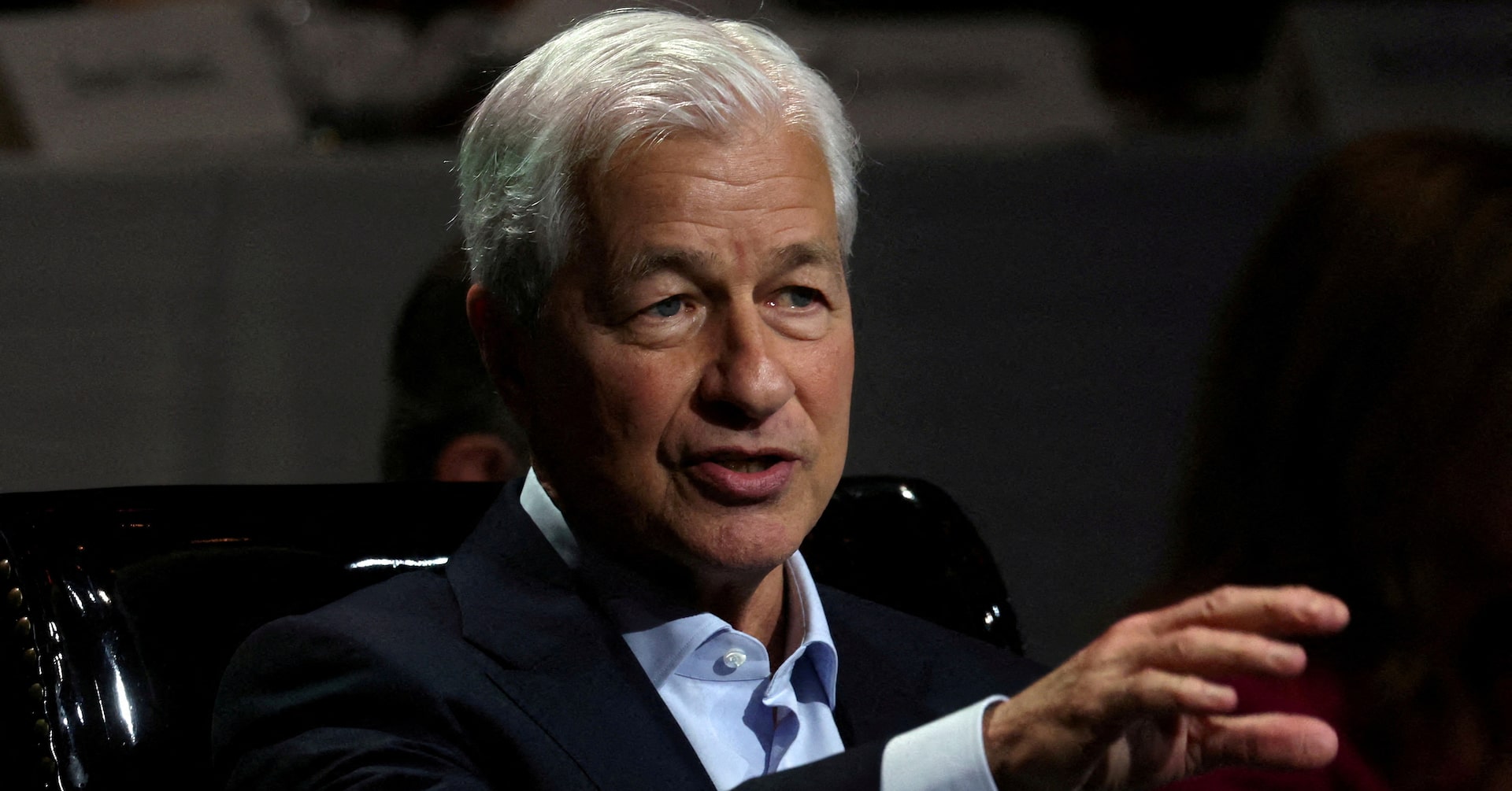
- Stagflation Warning: JPMorgan CEO Jamie Dimon expressed during a conference that while he is not concerned about inflation, the risk of stagflation remains a significant consideration, indicating potential challenges that could affect market confidence.
- Inflation Factors Analysis: Dimon highlighted that factors such as the Iran War, global remilitarization, infrastructure needs, and fiscal deficits could lead to persistent inflation, pushing interest rates above market expectations, which would impact corporate financing costs and consumer spending.
- Cyber Attack Risks: He emphasized that cyber attacks and geopolitical risks, particularly the wars in Iran and Ukraine, are two major threats facing the economy, which could have significant repercussions on financial markets and business operations.
- Presidential Run Joke: When asked about a potential future presidential run, Dimon joked that it is too late for him, although speculation about his candidacy has existed in the past, he remains focused on his leadership role at JPMorgan.
Trade with 70% Backtested Accuracy
Stop guessing "Should I Buy JPM?" and start using high-conviction signals backed by rigorous historical data.
Sign up today to access powerful investing tools and make smarter, data-driven decisions.
Analyst Views on JPM
Wall Street analysts forecast JPM stock price to rise
19 Analyst Rating
11 Buy
7 Hold
1 Sell
Moderate Buy
Current: 309.250

Low
260.00
Averages
341.38
High
400.00
Current: 309.250
Low
260.00
Averages
341.38
High
400.00
About JPM
JPMorgan Chase & Co. is a financial holding company. The Company is engaged in investment banking, financial services for consumers and small businesses, commercial banking, financial transaction processing and asset management. The Company operates through three segments: Consumer & Community Banking (CCB), Commercial & Investment Bank (CIB), and Asset & Wealth Management (AWM). Its CCB segment offers products and services to consumers and small businesses through bank branches, ATMs, digital and telephone banking. Its CIB segment consists of banking and payments and markets and securities services, and offers a suite of investment banking, lending, payments, market-making, financing, custody and securities products and services to a global base of corporate and institutional clients. AWM segment offers investment and wealth management solutions. It offers multi-asset investment management solutions, retirement products and services, brokerage, custody, estate planning, and others.
About the author

Emily J. Thompson
Emily J. Thompson, a Chartered Financial Analyst (CFA) with 12 years in investment research, graduated with honors from the Wharton School. Specializing in industrial and technology stocks, she provides in-depth analysis for Intellectia’s earnings and market brief reports.
Canada to Host Proposed Multilateral Defence Bank for Geopolitical Risks

- Establishment of Multilateral Bank: Canada's finance ministry announced plans to establish a multilateral defence bank aimed at funding nations facing geopolitical risks, with an expected raise of £100 billion (approximately $135 billion) for defense projects, significantly enhancing the defense capabilities of participating countries.
- Headquarters and Support: Participating countries unanimously agreed that Canada will serve as the host country for the bank's future headquarters, underscoring its pivotal role in international defense financing cooperation and further solidifying ties with allies.
- High-Level Support and Challenges: Canadian Prime Minister Mark Carney has publicly backed the initiative, although Britain and Germany have distanced themselves, highlighting the complexities and challenges of international collaboration in defense financing.
- Banking Partnerships: The DSRB is collaborating with several prominent banks, including JPMorgan, Deutsche Bank, and the Royal Bank of Canada, to ensure its successful launch and secure the necessary financial backing.
See More
Asian Banks Tighten AI Tool Checks Amid Cybersecurity Concerns

- Escalating Cybersecurity Risks: As the latest AI models raise concerns about hackers exploiting vulnerabilities for larger cyberattacks, major banks across Asia, including those in Singapore, are tightening checks on these tools, reflecting a heightened focus on cybersecurity.
- New Model Launch: Anthropic's Claude Mythos Preview has garnered attention in the cybersecurity space, with major banks like JPMorgan Chase participating as launch partners, indicating a balance between exploring new technologies and managing associated risks.
- Market Response: The CEO of DBS Group noted that while AI tools could accelerate attackers' ability to find system weaknesses, banks can also leverage these tools to enhance their defenses, emphasizing the positive role of AI in banking operations.
- Responsible AI Use: Banks like OCBC and UOB are committed to rigorous assessments before deploying AI solutions, ensuring compliance with existing cybersecurity controls, which reflects a cautious and responsible approach to technological innovation in the financial sector.
See More

India's IT Sector Faces Employment Crisis Amid AI Disruption


- Deepening Employment Crisis: Bernstein warns that the rise of AI may lead to a reduction in high-quality jobs in India's IT sector, affecting the income and consumption capacity of 10 to 15 million employees in IT services and outsourcing, thereby threatening the foundation of national economic growth.
- Shifting Hiring Trends: Net hiring by India's top five IT companies dropped by around 7,000 in FY26, with TCS planning to hire only 25,000 fresh graduates compared to an average of 40,000 over the past three years, indicating a diminishing reliance on large-scale recruitment in the industry.
- Skills Gap Challenge: While the Indian government emphasizes
See More
Jamie Dimon Warns of Potential Bond Crisis
- Debt Crisis Warning: Jamie Dimon, CEO of JPMorgan Chase, warned at a conference in Norway that rising global government debt levels could lead to a bond crisis, with the U.S. debt reaching $39.2 trillion, or 124% of GDP, which threatens market liquidity and borrowing costs.
- Rising Yield Risks: Dimon emphasized that if investors lose confidence in government bonds, it could result in falling bond prices and soaring yields, increasing borrowing costs for governments and corporations, ultimately impacting stock market performance.
- Investor Strategies: Investors are advised to make modest adjustments to their portfolios in anticipation of a potential debt crisis by reducing bond duration and increasing allocations to Treasury Inflation-Protected Securities (TIPS) and high-quality corporate bonds to enhance resilience against market volatility.
- Gold as a Hedge: Some investment advisors recommend allocating a small portion of portfolios to gold as a hedge during crises, especially as global investors may reduce their purchases of U.S. Treasury securities, leading to increased demand and higher gold prices.
See More

Closure of Strait of Hormuz Causes Oil Market Turmoil
- Significant Oil Production Decline: The closure of the Strait of Hormuz by Iran has led to a 57% drop in global oil production, resulting in a shortfall of 900 million barrels, forcing the market to rely on emergency stockpiles, thereby impacting global oil prices and supply chain stability.
- Sustained High Oil Price Expectations: Goldman Sachs forecasts that oil prices will reach $90 by year-end, with a potential rise to $100 in adverse scenarios, reflecting a consensus that prices will remain elevated for the coming months, impacting oil companies' profitability.
- Increased Company Cash Flows: With oil prices expected to stay above $90, companies like ConocoPhillips will see additional cash flows, with every $1 increase in oil price boosting annualized cash flows by over $200 million, which is likely to be returned to shareholders through buybacks and dividends.
- Slow Market Recovery: The prolonged closure of the Strait of Hormuz will delay the normalization of the oil market, with prices potentially remaining high until 2027, providing oil companies with sustained cash flows that attract investor interest in oil stocks and related ETFs.
See More
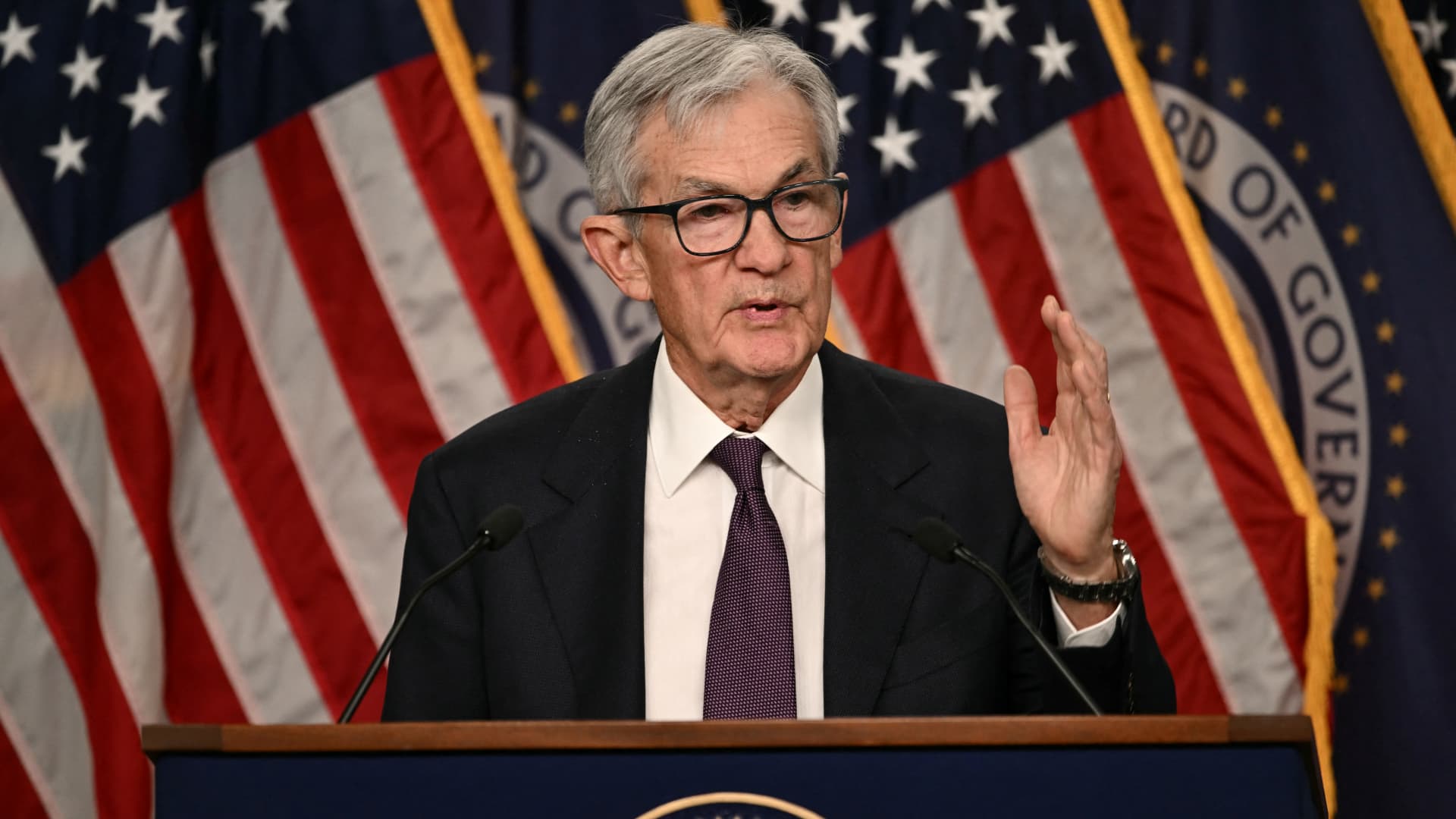
Fed's Policy Decision and Market Dynamics

- Fed's Policy Decision: The Federal Reserve is expected to announce a steady interest rate decision at 2 PM ET today, with Chair Powell likely adopting a cautious tone during the press conference, reflecting ongoing concerns about labor market health and inflation trajectories, which could influence market expectations for future rate movements.
- Tech Stock Pullback: The S&P 500 and Nasdaq Composite closed lower yesterday as OpenAI missed internal growth targets, impacting semiconductor stocks like Oracle and AMD, indicating market concerns regarding the growth outlook for the tech sector.
- UAE Exits OPEC: The United Arab Emirates announced its departure from OPEC and OPEC+ this week, a move that may weaken the cartel's influence over the oil market and challenge Saudi Arabia's management capabilities, highlighting the potential impact of geopolitical risks on energy markets.
- Starbucks Beats Expectations: Starbucks reported second-quarter results that exceeded expectations, leading to a roughly 5% increase in its stock price, while also raising its outlook for full-year comparable earnings and same-store sales growth, demonstrating strong sales momentum in the U.S. market driven by new product offerings.
See More
Canada to Host Proposed Multilateral Defence Bank for Geopolitical Risks
- Establishment of Multilateral Bank: Canada's finance ministry announced plans to establish a multilateral defence bank aimed at funding nations facing geopolitical risks, with an expected raise of £100 billion (approximately $135 billion) for defense projects, significantly enhancing the defense capabilities of participating countries.
- Headquarters and Support: Participating countries unanimously agreed that Canada will serve as the host country for the bank's future headquarters, underscoring its pivotal role in international defense financing cooperation and further solidifying ties with allies.
- High-Level Support and Challenges: Canadian Prime Minister Mark Carney has publicly backed the initiative, although Britain and Germany have distanced themselves, highlighting the complexities and challenges of international collaboration in defense financing.
- Banking Partnerships: The DSRB is collaborating with several prominent banks, including JPMorgan, Deutsche Bank, and the Royal Bank of Canada, to ensure its successful launch and secure the necessary financial backing.
See More
Asian Banks Tighten AI Tool Checks Amid Cybersecurity Concerns
- Escalating Cybersecurity Risks: As the latest AI models raise concerns about hackers exploiting vulnerabilities for larger cyberattacks, major banks across Asia, including those in Singapore, are tightening checks on these tools, reflecting a heightened focus on cybersecurity.
- New Model Launch: Anthropic's Claude Mythos Preview has garnered attention in the cybersecurity space, with major banks like JPMorgan Chase participating as launch partners, indicating a balance between exploring new technologies and managing associated risks.
- Market Response: The CEO of DBS Group noted that while AI tools could accelerate attackers' ability to find system weaknesses, banks can also leverage these tools to enhance their defenses, emphasizing the positive role of AI in banking operations.
- Responsible AI Use: Banks like OCBC and UOB are committed to rigorous assessments before deploying AI solutions, ensuring compliance with existing cybersecurity controls, which reflects a cautious and responsible approach to technological innovation in the financial sector.
See More
India's IT Sector Faces Employment Crisis Amid AI Disruption
- Deepening Employment Crisis: Bernstein warns that the rise of AI may lead to a reduction in high-quality jobs in India's IT sector, affecting the income and consumption capacity of 10 to 15 million employees in IT services and outsourcing, thereby threatening the foundation of national economic growth.
- Shifting Hiring Trends: Net hiring by India's top five IT companies dropped by around 7,000 in FY26, with TCS planning to hire only 25,000 fresh graduates compared to an average of 40,000 over the past three years, indicating a diminishing reliance on large-scale recruitment in the industry.
- Skills Gap Challenge: While the Indian government emphasizes
See More
Jamie Dimon Warns of Potential Bond Crisis
- Debt Crisis Warning: Jamie Dimon, CEO of JPMorgan Chase, warned at a conference in Norway that rising global government debt levels could lead to a bond crisis, with the U.S. debt reaching $39.2 trillion, or 124% of GDP, which threatens market liquidity and borrowing costs.
- Rising Yield Risks: Dimon emphasized that if investors lose confidence in government bonds, it could result in falling bond prices and soaring yields, increasing borrowing costs for governments and corporations, ultimately impacting stock market performance.
- Investor Strategies: Investors are advised to make modest adjustments to their portfolios in anticipation of a potential debt crisis by reducing bond duration and increasing allocations to Treasury Inflation-Protected Securities (TIPS) and high-quality corporate bonds to enhance resilience against market volatility.
- Gold as a Hedge: Some investment advisors recommend allocating a small portion of portfolios to gold as a hedge during crises, especially as global investors may reduce their purchases of U.S. Treasury securities, leading to increased demand and higher gold prices.
See More
Closure of Strait of Hormuz Causes Oil Market Turmoil
- Significant Oil Production Decline: The closure of the Strait of Hormuz by Iran has led to a 57% drop in global oil production, resulting in a shortfall of 900 million barrels, forcing the market to rely on emergency stockpiles, thereby impacting global oil prices and supply chain stability.
- Sustained High Oil Price Expectations: Goldman Sachs forecasts that oil prices will reach $90 by year-end, with a potential rise to $100 in adverse scenarios, reflecting a consensus that prices will remain elevated for the coming months, impacting oil companies' profitability.
- Increased Company Cash Flows: With oil prices expected to stay above $90, companies like ConocoPhillips will see additional cash flows, with every $1 increase in oil price boosting annualized cash flows by over $200 million, which is likely to be returned to shareholders through buybacks and dividends.
- Slow Market Recovery: The prolonged closure of the Strait of Hormuz will delay the normalization of the oil market, with prices potentially remaining high until 2027, providing oil companies with sustained cash flows that attract investor interest in oil stocks and related ETFs.
See More
Fed's Policy Decision and Market Dynamics
- Fed's Policy Decision: The Federal Reserve is expected to announce a steady interest rate decision at 2 PM ET today, with Chair Powell likely adopting a cautious tone during the press conference, reflecting ongoing concerns about labor market health and inflation trajectories, which could influence market expectations for future rate movements.
- Tech Stock Pullback: The S&P 500 and Nasdaq Composite closed lower yesterday as OpenAI missed internal growth targets, impacting semiconductor stocks like Oracle and AMD, indicating market concerns regarding the growth outlook for the tech sector.
- UAE Exits OPEC: The United Arab Emirates announced its departure from OPEC and OPEC+ this week, a move that may weaken the cartel's influence over the oil market and challenge Saudi Arabia's management capabilities, highlighting the potential impact of geopolitical risks on energy markets.
- Starbucks Beats Expectations: Starbucks reported second-quarter results that exceeded expectations, leading to a roughly 5% increase in its stock price, while also raising its outlook for full-year comparable earnings and same-store sales growth, demonstrating strong sales momentum in the U.S. market driven by new product offerings.
See More