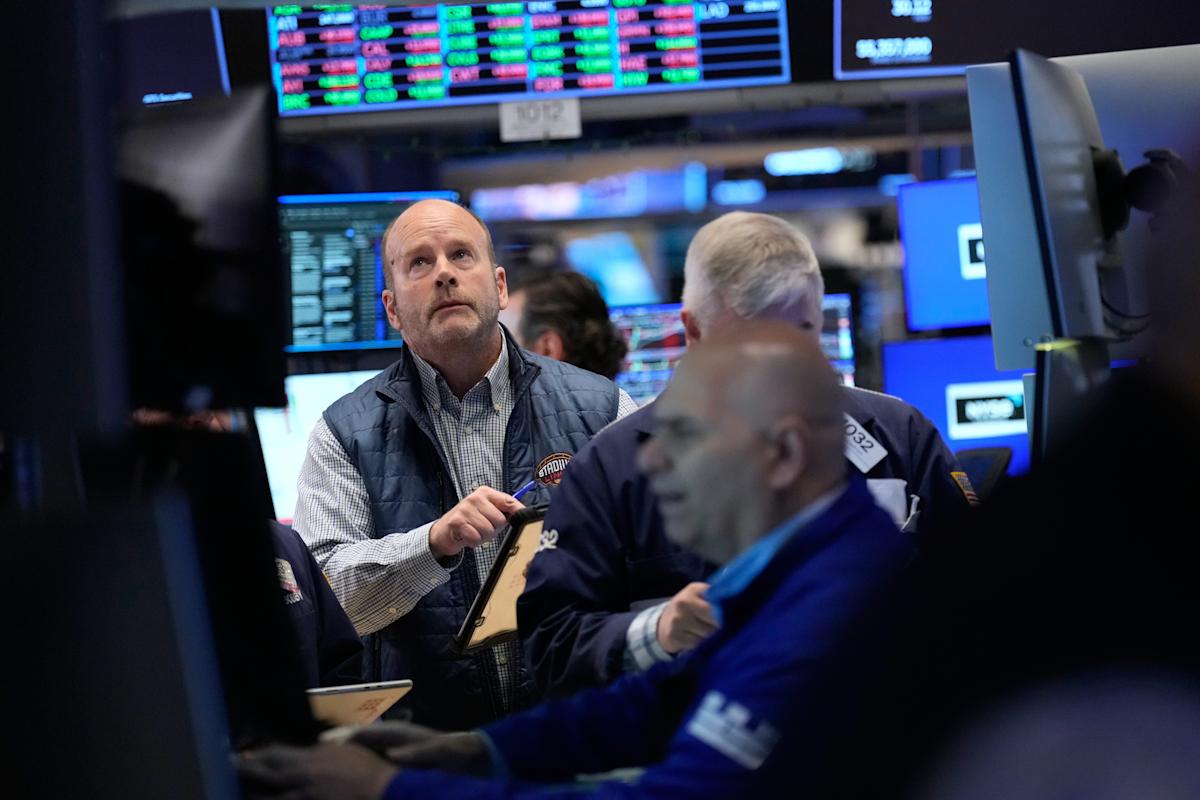
Costco Attracts Shoppers Amid Rising Oil Prices
Written by Emily J. Thompson, Senior Investment Analyst
Updated: 1 day ago
0mins
Should l Buy COST?
Source: Fool
- Significant Sales Growth: Costco reported a 17.9% increase in comparable sales for March, indicating a rise in customer traffic amid rising oil prices, although the growth rate excluding gas and foreign exchange impacts showed a slight decline, suggesting customers may primarily be visiting for gas.
- Oil Price Impact Analysis: The spike in oil prices due to the war in Iran and uncertainty in the Middle East has made Costco's gas stations a key draw for customers, although this has also led to increased costs for the company, potentially offsetting some profit benefits.
- Cautious Market Outlook: Despite the increase in traffic, analysts note that the growth in in-store shopping has not significantly improved, indicating that customers may be filling up and leaving quickly, which affects the sustainability of overall sales.
- Stock Investment Advice: Given Costco's price-to-earnings ratio exceeding 50, analysts advise caution regarding the stock amid high oil prices, as its high valuation may limit future upside potential.
Trade with 70% Backtested Accuracy
Stop guessing "Should I Buy COST?" and start using high-conviction signals backed by rigorous historical data.
Sign up today to access powerful investing tools and make smarter, data-driven decisions.
Analyst Views on COST
Wall Street analysts forecast COST stock price to rise
24 Analyst Rating
19 Buy
4 Hold
1 Sell
Strong Buy
Current: 974.800

Low
769.00
Averages
1061
High
1205
Current: 974.800
Low
769.00
Averages
1061
High
1205
About COST
Costco Wholesale Corporation (Costco) operates membership warehouses and e-commerce sites that offer a selection of nationally branded and private-label products in a wide range of categories. The Company buys the majority of its merchandise directly from suppliers and route it to cross-docking consolidation points (depots) or directly to its warehouses. It operates 891 warehouses, including 614 in the United States and Puerto Rico, 108 in Canada, 40 in Mexico, 35 in Japan, 29 in the United Kingdom, 19 in Korea, 15 in Australia, 14 in Taiwan, seven in China, five in Spain, two in France, and one each in Iceland, New Zealand and Sweden. It also operates e-commerce sites in the United States, Canada, the United Kingdom, Mexico, Korea, Taiwan, Japan and Australia. The Company provides wide selection of merchandise, plus the convenience of specialty departments and exclusive member services.
About the author

Emily J. Thompson
Emily J. Thompson, a Chartered Financial Analyst (CFA) with 12 years in investment research, graduated with honors from the Wharton School. Specializing in industrial and technology stocks, she provides in-depth analysis for Intellectia’s earnings and market brief reports.

Costco Reports Over 9% Sales Growth in March
- Sales Growth Overview: Costco's comparable sales for March increased by over 9%, but when excluding the impacts of gas prices and foreign exchange, the actual growth rate was slightly lower than earlier months this year, indicating that consumers are more inclined to fill up rather than shop amid rising oil prices.
- Impact of Oil Prices: The spike in oil prices due to the war in Iran and uncertainty in the Middle East has incentivized consumers to visit Costco for cheaper gas, potentially driving additional foot traffic; however, actual in-store sales have not increased in tandem, suggesting that shopping behavior may be limited to fueling up.
- Stock Valuation: Costco's stock is currently trading at over 50 times earnings, indicating a premium valuation, and analysts recommend caution in purchasing the stock unless there is a significant price decline, as it remains expensive relative to its earnings.
- Market Outlook: While Costco may benefit from higher oil prices, its rising costs could offset some of the profit gains, and with rapidly changing geopolitical conditions, predicting future market performance remains challenging.
See More
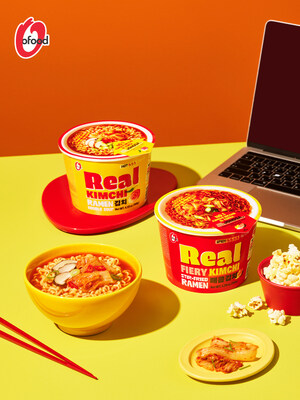
Ofood Kimchi Ramyun Surpasses 1 Million Units Sold in Canada
- Strong Market Performance: Since its launch in Canada last October, Ofood's 'Real Kimchi Ramyun' has surpassed 1 million units in cumulative sales, quickly capturing market share due to its authentic Korean kimchi flavor, indicating robust consumer demand and brand recognition.
- Product Differentiation Advantage: Unlike traditional ramyun, Ofood uses fresh kimchi from Korea's top kimchi brand Jongga, offering a unique texture and deep fermented flavor that appeals to a wide consumer base, particularly among younger demographics.
- Effective Marketing Strategy: Ofood successfully attracted a large Gen Z audience through active marketing efforts, including outdoor advertising in major cities and social media campaigns on platforms like Instagram and TikTok, complemented by large-scale sampling events at universities that enhanced brand awareness and purchase conversion rates.
- Channel Expansion Plans: Ofood plans to expand the availability of 'Real Kimchi Ramyun' at FreshCo from 70 to 150 locations nationwide in the second half of the year, further strengthening its distribution capabilities in the Canadian market, which is expected to drive sales growth and enhance brand influence.
See More

Investment Opportunities in Costco and Walmart


- Five-Year Return Comparison: Walmart and Costco have delivered nearly identical five-year total returns of 191% and 190%, respectively, significantly outperforming the S&P 500's 77.6% and Nasdaq's 71%, highlighting their strong performance in the consumer staples sector.
- Valuation and Dividend Yield: With forward P/E ratios of 43.4 for Walmart and 48.7 for Costco, both exceed the S&P 500's 21.2, while their low dividend yields of 0.8% and 0.5% respectively put pressure on their attractiveness to value investors.
- Supply Chain Advantages: Walmart and Costco leverage their efficient supply chains to achieve staggering sales figures of $713 billion and $286 billion, converting just four cents of every sales dollar into operating income, which enhances their competitive positioning in the market.
- Kimberly-Clark's Strategic Shift: Kimberly-Clark's planned acquisition of Kenvue aims to bolster its household and personal care product portfolio, potentially increasing margins and driving free cash flow growth, demonstrating its proactive strategy in response to private label competition.
See More

Investment Value Analysis of Walmart and Costco
- Valuation Metrics: Walmart and Costco have forward P/E ratios of 43.4 and 48.7, respectively, both significantly higher than the S&P 500's 21.2, indicating that their stock prices may be overvalued and less appealing to new investors.
- Low Dividend Yields: Walmart's dividend yield stands at just 0.8%, while Costco's is at 0.5%; although Costco occasionally pays special dividends, the overall low yields limit their attractiveness for passive income investors.
- Private Label Strategy: Walmart and Costco leverage their robust supply chains and marketing prowess to drive sales of private label products, with Walmart's Member's Mark and Costco's Kirkland Signature brands performing well in the market, enhancing customer loyalty.
- Kimberly-Clark's Strategic Shift: Kimberly-Clark's planned acquisition of Kenvue is expected to enhance its brand portfolio and improve margins; while short-term performance may decline, this move is anticipated to lead to higher free cash flow and dividend growth in the long run.
See More
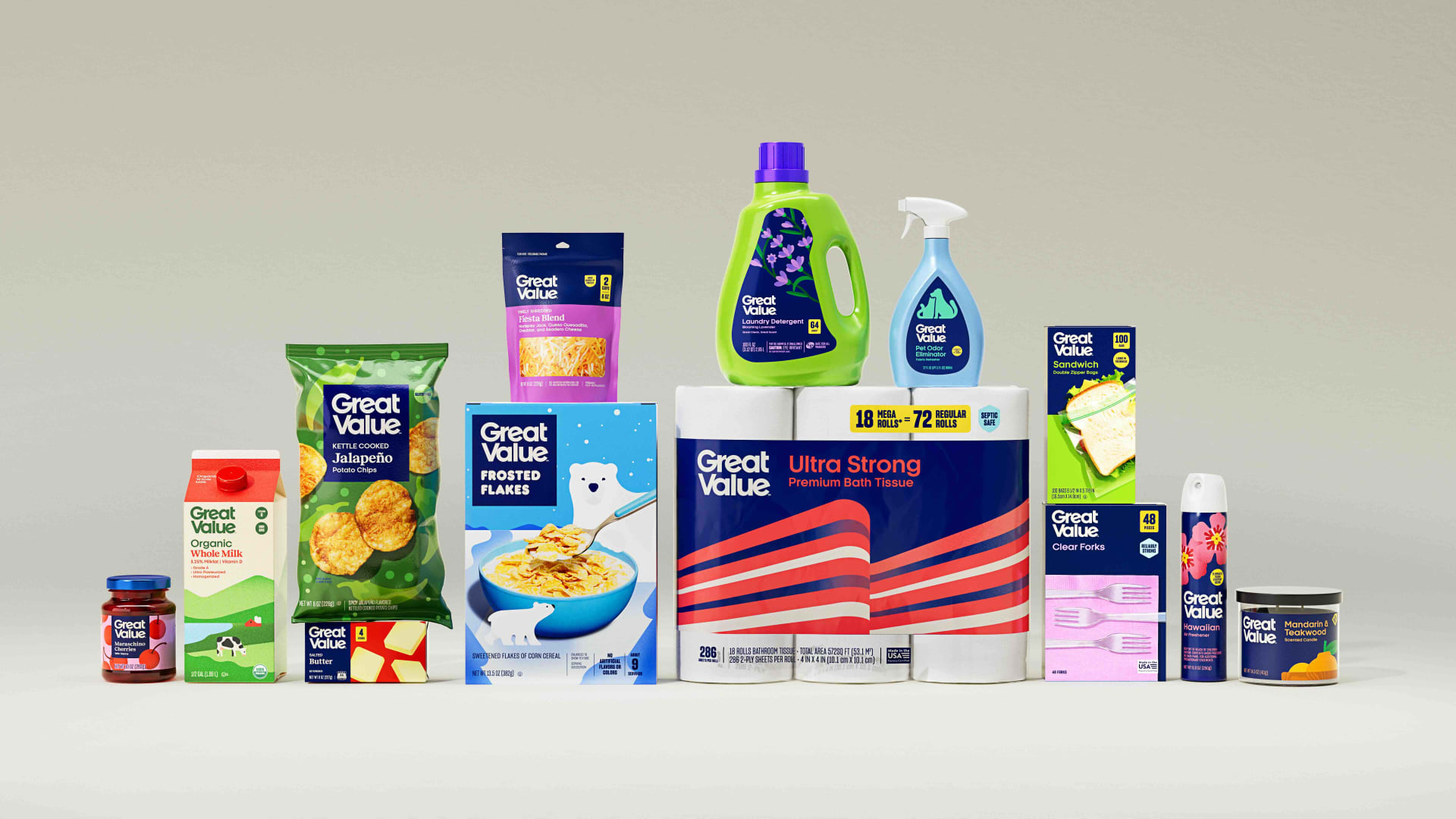
Walmart's Great Value Brand Gets a Revamp
- Brand Image Refresh: Walmart announced that starting in May, it will revamp the packaging of approximately 10,000 Great Value products, maintaining the same prices and contents, which aims to enhance consumer brand recognition and pride.
- Leading Market Penetration: According to market researcher Numerator, Great Value boasts an 87% household penetration rate in the U.S., showcasing its strong influence in the retail market, particularly in the increasingly competitive private label sector.
- Competitive Pressure Response: This packaging update represents an offensive strategy by Walmart to counter the rise of competitors like Amazon, whose grocery brand has become the fastest-growing private label since its launch, with Walmart aiming to attract more high-income consumers through improved brand image.
- Evolving Consumer Demands: Walmart executives noted that consumer expectations for private brands are rising, especially among younger generations who prefer private labels, and the update aims to meet this trend and enhance the brand's market competitiveness.
See More
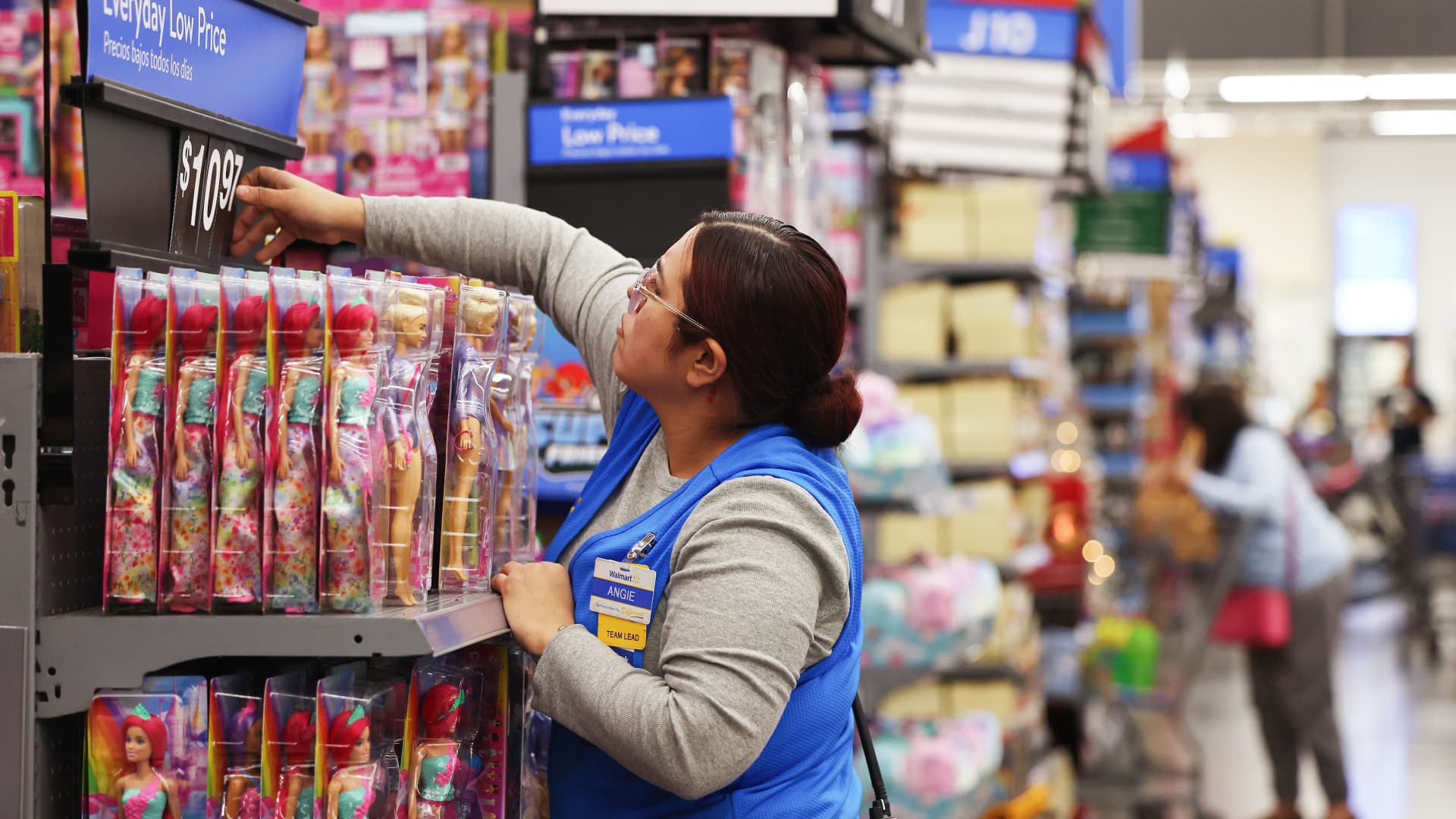
Walmart's Great Value Brand to Unveil New Packaging
- Brand Image Revamp: Walmart's Great Value brand will launch new packaging in May for approximately 10,000 items, including snacks and frozen foods, aimed at enhancing consumer pride and brand visibility in homes, which is expected to increase its market appeal.
- Leading Market Penetration: According to market researcher Numerator, Great Value boasts an 87% penetration rate among U.S. households, highlighting its significant influence in the retail market and solidifying its position as Walmart's largest private brand asset.
- Competitive Strategy Shift: This packaging overhaul represents Walmart's strategic response to competitors like Amazon and Costco, who are enhancing their private label quality, aiming to attract more high-income households and further solidify its market leadership.
- Evolving Consumer Demands: As consumer expectations for private brands rise, Walmart is modernizing its brand image and expanding market share by offering clearer packaging and appealing product assortments that cater to the preferences of younger generations.
See More
Costco Reports Over 9% Sales Growth in March
- Sales Growth Overview: Costco's comparable sales for March increased by over 9%, but when excluding the impacts of gas prices and foreign exchange, the actual growth rate was slightly lower than earlier months this year, indicating that consumers are more inclined to fill up rather than shop amid rising oil prices.
- Impact of Oil Prices: The spike in oil prices due to the war in Iran and uncertainty in the Middle East has incentivized consumers to visit Costco for cheaper gas, potentially driving additional foot traffic; however, actual in-store sales have not increased in tandem, suggesting that shopping behavior may be limited to fueling up.
- Stock Valuation: Costco's stock is currently trading at over 50 times earnings, indicating a premium valuation, and analysts recommend caution in purchasing the stock unless there is a significant price decline, as it remains expensive relative to its earnings.
- Market Outlook: While Costco may benefit from higher oil prices, its rising costs could offset some of the profit gains, and with rapidly changing geopolitical conditions, predicting future market performance remains challenging.
See More
Ofood Kimchi Ramyun Surpasses 1 Million Units Sold in Canada
- Strong Market Performance: Since its launch in Canada last October, Ofood's 'Real Kimchi Ramyun' has surpassed 1 million units in cumulative sales, quickly capturing market share due to its authentic Korean kimchi flavor, indicating robust consumer demand and brand recognition.
- Product Differentiation Advantage: Unlike traditional ramyun, Ofood uses fresh kimchi from Korea's top kimchi brand Jongga, offering a unique texture and deep fermented flavor that appeals to a wide consumer base, particularly among younger demographics.
- Effective Marketing Strategy: Ofood successfully attracted a large Gen Z audience through active marketing efforts, including outdoor advertising in major cities and social media campaigns on platforms like Instagram and TikTok, complemented by large-scale sampling events at universities that enhanced brand awareness and purchase conversion rates.
- Channel Expansion Plans: Ofood plans to expand the availability of 'Real Kimchi Ramyun' at FreshCo from 70 to 150 locations nationwide in the second half of the year, further strengthening its distribution capabilities in the Canadian market, which is expected to drive sales growth and enhance brand influence.
See More
Investment Opportunities in Costco and Walmart
- Five-Year Return Comparison: Walmart and Costco have delivered nearly identical five-year total returns of 191% and 190%, respectively, significantly outperforming the S&P 500's 77.6% and Nasdaq's 71%, highlighting their strong performance in the consumer staples sector.
- Valuation and Dividend Yield: With forward P/E ratios of 43.4 for Walmart and 48.7 for Costco, both exceed the S&P 500's 21.2, while their low dividend yields of 0.8% and 0.5% respectively put pressure on their attractiveness to value investors.
- Supply Chain Advantages: Walmart and Costco leverage their efficient supply chains to achieve staggering sales figures of $713 billion and $286 billion, converting just four cents of every sales dollar into operating income, which enhances their competitive positioning in the market.
- Kimberly-Clark's Strategic Shift: Kimberly-Clark's planned acquisition of Kenvue aims to bolster its household and personal care product portfolio, potentially increasing margins and driving free cash flow growth, demonstrating its proactive strategy in response to private label competition.
See More
Investment Value Analysis of Walmart and Costco
- Valuation Metrics: Walmart and Costco have forward P/E ratios of 43.4 and 48.7, respectively, both significantly higher than the S&P 500's 21.2, indicating that their stock prices may be overvalued and less appealing to new investors.
- Low Dividend Yields: Walmart's dividend yield stands at just 0.8%, while Costco's is at 0.5%; although Costco occasionally pays special dividends, the overall low yields limit their attractiveness for passive income investors.
- Private Label Strategy: Walmart and Costco leverage their robust supply chains and marketing prowess to drive sales of private label products, with Walmart's Member's Mark and Costco's Kirkland Signature brands performing well in the market, enhancing customer loyalty.
- Kimberly-Clark's Strategic Shift: Kimberly-Clark's planned acquisition of Kenvue is expected to enhance its brand portfolio and improve margins; while short-term performance may decline, this move is anticipated to lead to higher free cash flow and dividend growth in the long run.
See More
Walmart's Great Value Brand Gets a Revamp
- Brand Image Refresh: Walmart announced that starting in May, it will revamp the packaging of approximately 10,000 Great Value products, maintaining the same prices and contents, which aims to enhance consumer brand recognition and pride.
- Leading Market Penetration: According to market researcher Numerator, Great Value boasts an 87% household penetration rate in the U.S., showcasing its strong influence in the retail market, particularly in the increasingly competitive private label sector.
- Competitive Pressure Response: This packaging update represents an offensive strategy by Walmart to counter the rise of competitors like Amazon, whose grocery brand has become the fastest-growing private label since its launch, with Walmart aiming to attract more high-income consumers through improved brand image.
- Evolving Consumer Demands: Walmart executives noted that consumer expectations for private brands are rising, especially among younger generations who prefer private labels, and the update aims to meet this trend and enhance the brand's market competitiveness.
See More
Walmart's Great Value Brand to Unveil New Packaging
- Brand Image Revamp: Walmart's Great Value brand will launch new packaging in May for approximately 10,000 items, including snacks and frozen foods, aimed at enhancing consumer pride and brand visibility in homes, which is expected to increase its market appeal.
- Leading Market Penetration: According to market researcher Numerator, Great Value boasts an 87% penetration rate among U.S. households, highlighting its significant influence in the retail market and solidifying its position as Walmart's largest private brand asset.
- Competitive Strategy Shift: This packaging overhaul represents Walmart's strategic response to competitors like Amazon and Costco, who are enhancing their private label quality, aiming to attract more high-income households and further solidify its market leadership.
- Evolving Consumer Demands: As consumer expectations for private brands rise, Walmart is modernizing its brand image and expanding market share by offering clearer packaging and appealing product assortments that cater to the preferences of younger generations.
See More