Energy Stocks Unexpectedly Surge, Market Outlook Optimistic
Written by Emily J. Thompson, Senior Investment Analyst
Updated: Feb 14 2026
0mins


Source: Fool
- Oil Price Recovery: As of February 2026, West Texas Intermediate (WTI) prices have rebounded to $57 per barrel, down $15 from early 2025, indicating renewed investor interest in energy stocks amidst a backdrop of previously declining oil prices.
- Energy Sector Leadership: The State Street Energy Select Sector SPDR ETF has surged 23% year-to-date, significantly outperforming the S&P 500's 2% increase, reflecting a resurgence of investor confidence in the energy sector and suggesting potential future investment opportunities.
- Impact of U.S. Foreign Policy: U.S. military actions in Venezuela have sparked optimistic expectations for major oil companies like Chevron and ExxonMobil, which may gain access to the world's largest oil reserves, further driving their stock prices higher.
- Shift in Investor Sentiment: As interest in AI-related stocks wanes, investors are turning to energy stocks as a reliable long-term investment choice, although the market must remain cautious of potential geopolitical risks.
Trade with 70% Backtested Accuracy
Stop guessing "Should I Buy XOM?" and start using high-conviction signals backed by rigorous historical data.
Sign up today to access powerful investing tools and make smarter, data-driven decisions.
Analyst Views on XOM
Wall Street analysts forecast XOM stock price to fall
19 Analyst Rating
12 Buy
7 Hold
0 Sell
Moderate Buy
Current: 155.040

Low
114.00
Averages
132.17
High
158.00
Current: 155.040
Low
114.00
Averages
132.17
High
158.00
About XOM
Exxon Mobil Corporation is an energy provider and chemical manufacturer. The Company’s principal business involves exploration for, and production of, crude oil and natural gas; the manufacture, trade, transport and sale of crude oil, natural gas, petroleum products, petrochemicals and a wide variety of specialty products; and pursuit of lower-emission and other new business opportunities, including carbon capture and storage, hydrogen, lower-emission fuels, Proxxima systems, carbon materials, and lithium. Its Upstream segment explores for and produces crude oil and natural gas. The Energy Products, Chemical Products, and Specialty Products segments manufacture and sell petroleum products and petrochemicals. Energy Products segment includes fuels, aromatics, and catalysts and licensing. Chemical Products segment consists of olefins, polyolefins, and intermediates. Specialty Products segment includes finished lubricants, basestocks and waxes, synthetics, and elastomers and resins.
About the author

Emily J. Thompson
Emily J. Thompson, a Chartered Financial Analyst (CFA) with 12 years in investment research, graduated with honors from the Wharton School. Specializing in industrial and technology stocks, she provides in-depth analysis for Intellectia’s earnings and market brief reports.

Goldman Sachs Earnings Beat Expectations Yet Shares Decline


- Goldman Sachs Earnings: Goldman Sachs reported Q1 earnings of $17.55 per share and $17.23 billion in revenue, exceeding expectations, yet shares fell over 2%, indicating market disappointment over fixed income, currencies, and commodities trading performance.
- Williams-Sonoma Upgrade: Williams-Sonoma shares rose more than 2% after Goldman Sachs upgraded the stock to buy, with analysts highlighting the company's strong brand portfolio in retail, reflecting market confidence in its growth potential.
- Best Buy Downgrade: Goldman Sachs downgraded Best Buy to sell, resulting in a 4% drop in shares, as analysts warned that while Q1 may benefit from a pull-forward in PC demand, sales risks loom due to rising memory costs impacting future pricing.
- Energy Stocks Surge: Energy stocks rallied as oil prices climbed above $103 following the U.S. Navy's blockade announcement on the Strait of Hormuz, showcasing market optimism regarding energy demand amidst geopolitical tensions.
See More

Investment Opportunities Amid Inflation Pressures

- ExxonMobil's Diverse Profit Model: As the second-largest oil and gas company globally, ExxonMobil leverages its integrated upstream, downstream, and chemicals operations to profit in multiple ways when oil and gas prices rise, with its total addressable market projected to double to around $8 trillion by 2050, indicating robust growth potential.
- Copper as an Inflation Hedge: Freeport-McMoRan, a top copper producer, is expected to see copper demand increase by 50% by 2040, driven by accelerating electrification and data center construction, further solidifying its investment value in an inflationary environment.
- Berkshire Hathaway's Inflation Resistance: While not as overtly inflation-resistant as ExxonMobil and Freeport-McMoRan, Berkshire Hathaway's diversification and pricing power allow it to perform well during high inflation periods, particularly as its energy and railroad businesses can pass costs onto consumers.
- Strategic Importance of Cash Reserves: As of the end of 2025, Berkshire Hathaway's cash and short-term investments exceeded $373 billion, positioning it to benefit from potential interest rate hikes, which would significantly boost its interest income and enhance its inflation resilience.
See More
OECD Predicts U.S. Inflation Will Exceed Fed's Projections
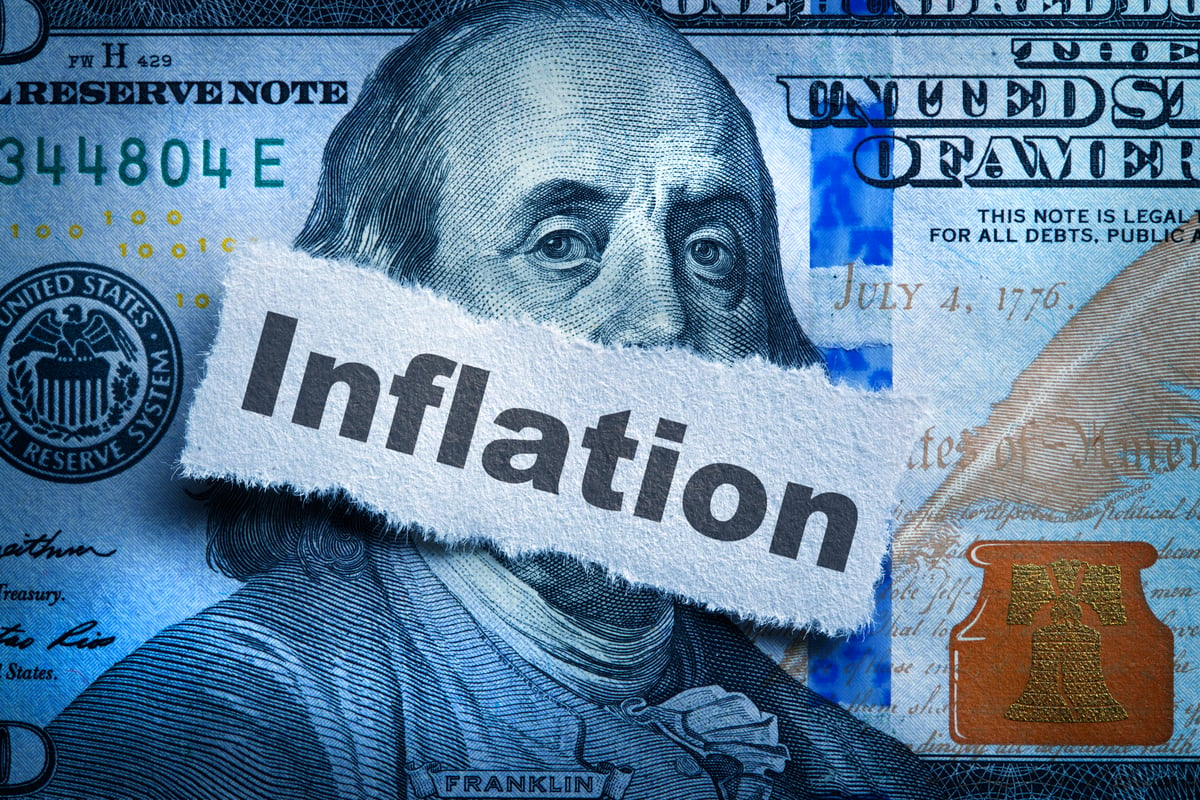
- Inflation Forecast Adjustment: The OECD's April 2026 report predicts U.S. inflation will reach 4.2%, significantly higher than the Fed's 2.7% estimate, which could lead to reduced consumer spending and negatively impact corporate revenues and earnings.
- Strong Energy Stock Performance: ExxonMobil (XOM), the world's second-largest oil and gas company, is expected to thrive in a high-inflation environment, with its total addressable market projected to double to around $8 trillion by 2050, and a dividend yield of 2.5% indicating robust financial stability.
- Copper Price Growth Potential: Freeport-McMoRan (FCX), one of the largest copper producers globally, anticipates a 50% increase in copper demand by 2040, driven by accelerating electrification, with additional growth from data center construction and energy transition.
- Diversification Investment Advantage: Berkshire Hathaway (BRK.B) is well-positioned during high inflation due to its diversified business model and pricing power, with utilities and railroads able to pass costs to customers, and a cash reserve exceeding $373 billion that could yield additional income if interest rates rise.
See More

Trump's Weekend Activities and Surge in Oil Prices
- Surge in Oil Prices: Crude oil futures jumped over 8% on Monday as the U.S. Navy prepares to blockade Iranian ports, with U.S. crude surpassing $100 per barrel and Brent also rising over 8%, indicating significant implications for the global energy market.
- Military Blockade Announcement: U.S. Central Command stated that it will begin blocking all maritime traffic entering and exiting Iranian ports at 10 a.m. ET on Monday, a move that could disrupt international supply chains related to Iran and significantly impact global oil prices.
- Trump's Dispute with the Pope: Trump criticized Pope Leo XIV on social media for his stance on the U.S. war in Iran, asserting he does not want a Pope who criticizes him, reflecting a hardline approach in both domestic and foreign policy that may affect his supporters' confidence.
- Hungarian Election Results: The election results in Hungary indicate a victory for the opposition Tisza party, marking the first new government in 16 years, which poses a challenge to Trump and his allies in Europe and may lead to future policy adjustments.
See More

Trump Orders Complete Blockade of Strait of Hormuz Amidst Stalled U.S.-Iran Talks


- Blockade Order: President Trump has ordered a complete blockade of the Strait of Hormuz, prohibiting all vessels from passing, aimed at pressuring Iran to abandon its nuclear weapons pursuit, which could lead to a tightening of global energy supplies.
- Surge in Oil Prices: Trump's announcement of the blockade caused oil prices to surge over 8%, reflecting market concerns over a potential energy crisis while exacerbating investor anxiety and impacting global market performance.
- Market Reaction: Following the blockade news, Asian markets fell in early Monday trading, and U.S. futures also tumbled, with Dow Jones Industrial Average futures losing 517 points, indicating a pessimistic sentiment among investors regarding the economic outlook.
- Decline in Consumer Confidence: American consumer confidence plunged to a record low in April, reflecting the domestic economic impact of the ongoing conflict, further intensifying market uncertainty.
See More

CF Industries Stock Dip Presents Buying Opportunity

- Strong Financial Performance: CF Industries reported full-year revenue of $7.08 billion in 2025, a 19% increase, with earnings per share of $8.97, up 32.6%, indicating robust competitiveness in the agricultural fertilizer market, while gross margin improved to 38.5%, laying a solid foundation for future growth.
- Generous Shareholder Returns: The company repurchased $1.34 billion in stock in 2025 and has paid quarterly dividends for 21 consecutive years, with a current yield of approximately 1.59% and over 66% dividend growth in the past five years, reflecting its commitment to shareholders and financial health.
- Market Share Growth: CF Industries gained market share during the spring planting season as Middle Eastern competitors were blocked due to conflict, with Agriculture Secretary noting that about 25% of farmers had not secured their full fertilizer needs, forcing them to purchase at a premium from domestic producers, further solidifying CF's market position.
- Green Energy Transition: CF Industries is pivoting towards high-margin green energy sectors, operating North America's only commercial-scale green ammonia plant and partnering with ExxonMobil on carbon capture projects, expected to produce 1.9 million metric tons of low-carbon ammonia annually, enhancing long-term competitive advantages and market share.
See More
Goldman Sachs Earnings Beat Expectations Yet Shares Decline
- Goldman Sachs Earnings: Goldman Sachs reported Q1 earnings of $17.55 per share and $17.23 billion in revenue, exceeding expectations, yet shares fell over 2%, indicating market disappointment over fixed income, currencies, and commodities trading performance.
- Williams-Sonoma Upgrade: Williams-Sonoma shares rose more than 2% after Goldman Sachs upgraded the stock to buy, with analysts highlighting the company's strong brand portfolio in retail, reflecting market confidence in its growth potential.
- Best Buy Downgrade: Goldman Sachs downgraded Best Buy to sell, resulting in a 4% drop in shares, as analysts warned that while Q1 may benefit from a pull-forward in PC demand, sales risks loom due to rising memory costs impacting future pricing.
- Energy Stocks Surge: Energy stocks rallied as oil prices climbed above $103 following the U.S. Navy's blockade announcement on the Strait of Hormuz, showcasing market optimism regarding energy demand amidst geopolitical tensions.
See More
Investment Opportunities Amid Inflation Pressures
- ExxonMobil's Diverse Profit Model: As the second-largest oil and gas company globally, ExxonMobil leverages its integrated upstream, downstream, and chemicals operations to profit in multiple ways when oil and gas prices rise, with its total addressable market projected to double to around $8 trillion by 2050, indicating robust growth potential.
- Copper as an Inflation Hedge: Freeport-McMoRan, a top copper producer, is expected to see copper demand increase by 50% by 2040, driven by accelerating electrification and data center construction, further solidifying its investment value in an inflationary environment.
- Berkshire Hathaway's Inflation Resistance: While not as overtly inflation-resistant as ExxonMobil and Freeport-McMoRan, Berkshire Hathaway's diversification and pricing power allow it to perform well during high inflation periods, particularly as its energy and railroad businesses can pass costs onto consumers.
- Strategic Importance of Cash Reserves: As of the end of 2025, Berkshire Hathaway's cash and short-term investments exceeded $373 billion, positioning it to benefit from potential interest rate hikes, which would significantly boost its interest income and enhance its inflation resilience.
See More
OECD Predicts U.S. Inflation Will Exceed Fed's Projections
- Inflation Forecast Adjustment: The OECD's April 2026 report predicts U.S. inflation will reach 4.2%, significantly higher than the Fed's 2.7% estimate, which could lead to reduced consumer spending and negatively impact corporate revenues and earnings.
- Strong Energy Stock Performance: ExxonMobil (XOM), the world's second-largest oil and gas company, is expected to thrive in a high-inflation environment, with its total addressable market projected to double to around $8 trillion by 2050, and a dividend yield of 2.5% indicating robust financial stability.
- Copper Price Growth Potential: Freeport-McMoRan (FCX), one of the largest copper producers globally, anticipates a 50% increase in copper demand by 2040, driven by accelerating electrification, with additional growth from data center construction and energy transition.
- Diversification Investment Advantage: Berkshire Hathaway (BRK.B) is well-positioned during high inflation due to its diversified business model and pricing power, with utilities and railroads able to pass costs to customers, and a cash reserve exceeding $373 billion that could yield additional income if interest rates rise.
See More
Trump's Weekend Activities and Surge in Oil Prices
- Surge in Oil Prices: Crude oil futures jumped over 8% on Monday as the U.S. Navy prepares to blockade Iranian ports, with U.S. crude surpassing $100 per barrel and Brent also rising over 8%, indicating significant implications for the global energy market.
- Military Blockade Announcement: U.S. Central Command stated that it will begin blocking all maritime traffic entering and exiting Iranian ports at 10 a.m. ET on Monday, a move that could disrupt international supply chains related to Iran and significantly impact global oil prices.
- Trump's Dispute with the Pope: Trump criticized Pope Leo XIV on social media for his stance on the U.S. war in Iran, asserting he does not want a Pope who criticizes him, reflecting a hardline approach in both domestic and foreign policy that may affect his supporters' confidence.
- Hungarian Election Results: The election results in Hungary indicate a victory for the opposition Tisza party, marking the first new government in 16 years, which poses a challenge to Trump and his allies in Europe and may lead to future policy adjustments.
See More
Trump Orders Complete Blockade of Strait of Hormuz Amidst Stalled U.S.-Iran Talks
- Blockade Order: President Trump has ordered a complete blockade of the Strait of Hormuz, prohibiting all vessels from passing, aimed at pressuring Iran to abandon its nuclear weapons pursuit, which could lead to a tightening of global energy supplies.
- Surge in Oil Prices: Trump's announcement of the blockade caused oil prices to surge over 8%, reflecting market concerns over a potential energy crisis while exacerbating investor anxiety and impacting global market performance.
- Market Reaction: Following the blockade news, Asian markets fell in early Monday trading, and U.S. futures also tumbled, with Dow Jones Industrial Average futures losing 517 points, indicating a pessimistic sentiment among investors regarding the economic outlook.
- Decline in Consumer Confidence: American consumer confidence plunged to a record low in April, reflecting the domestic economic impact of the ongoing conflict, further intensifying market uncertainty.
See More
CF Industries Stock Dip Presents Buying Opportunity
- Strong Financial Performance: CF Industries reported full-year revenue of $7.08 billion in 2025, a 19% increase, with earnings per share of $8.97, up 32.6%, indicating robust competitiveness in the agricultural fertilizer market, while gross margin improved to 38.5%, laying a solid foundation for future growth.
- Generous Shareholder Returns: The company repurchased $1.34 billion in stock in 2025 and has paid quarterly dividends for 21 consecutive years, with a current yield of approximately 1.59% and over 66% dividend growth in the past five years, reflecting its commitment to shareholders and financial health.
- Market Share Growth: CF Industries gained market share during the spring planting season as Middle Eastern competitors were blocked due to conflict, with Agriculture Secretary noting that about 25% of farmers had not secured their full fertilizer needs, forcing them to purchase at a premium from domestic producers, further solidifying CF's market position.
- Green Energy Transition: CF Industries is pivoting towards high-margin green energy sectors, operating North America's only commercial-scale green ammonia plant and partnering with ExxonMobil on carbon capture projects, expected to produce 1.9 million metric tons of low-carbon ammonia annually, enhancing long-term competitive advantages and market share.
See More