The Steady Retail Compounder That Investors Continue to Purchase During Market Dips
Company Overview: Casey's General Stores (NASDAQ: CASY) is a long-term retail holding that has successfully implemented a buy-the-dips strategy, generating strong cash flow and returning capital to investors, reflected in a steady upward trend in share prices.
Financial Performance: Despite a slight revenue growth of 0.5% in the third quarter, Casey's demonstrated strong fiscal management with increased margins and cash flow, leading to significant increases in EBITDA and net income.
Market Position: The company has surpassed 10 million rewards club memberships, indicating robust business momentum, and is expected to maintain strong margins and cash flow, supporting its ability to return capital to shareholders.
Investment Outlook: Analysts are bullish on Casey's stock, with a majority rating it as a "Moderate Buy" and projecting upward price targets, suggesting continued institutional interest and potential for price appreciation in the near future.
Trade with 70% Backtested Accuracy
Analyst Views on CASY

About CASY
About the author

Analysis of Retail Sector Impact from Rising Oil Prices


- Impact of Rising Oil Prices: Brent crude futures have surged above $110 per barrel due to the ongoing Middle East conflict, with diesel prices exceeding $5 per gallon for the first time since 2022, potentially imposing secondary effects on the U.S. retail sector and increasing household budget pressures.
- Advantage of Higher-Income Customers: Deutsche Bank analysts noted that retailers like Ulta Beauty and Costco, which cater to higher-income demographics, have historically shown a positive correlation between sales and rising oil prices, indicating better sales performance in such environments.
- Pressure on Lower-Income Customers: Conversely, retailers like BJ's Wholesale Club and Burlington Stores, which primarily serve lower-income customers, exhibit negative sales correlations with rising gas prices, highlighting a trend where lower-income consumers reduce spending as fuel costs increase.
- Inventory Management Strategy: Despite the risks associated with rising input costs, many global brands, including Amer Sports and Birkenstock, maintain over 200 days of finished goods inventory, which helps mitigate near-term margin pressures and ensures market stability amid supply chain disruptions.
Casey's Q3 Earnings Exceed Expectations with 49.8% EPS Growth
- Earnings Beat: Casey's Q3 earnings report reveals a remarkable 49.8% year-over-year increase in EPS, showcasing the company's robust performance and bolstering investor confidence.
- Quality Rank Surge: The strong earnings growth has propelled Casey's Quality Rank to 90.63, indicating enhanced competitiveness and market recognition within the industry.
- Strong Stock Momentum: Following the earnings report, Casey's stock has demonstrated strong momentum, attracting increased investor interest and potentially driving further price appreciation.
- Optimistic Market Outlook: The significant improvement in earnings not only enhances short-term stock performance but also lays a solid foundation for future growth, highlighting Casey's sustained competitive advantage in the industry.

Three Long-Term Growth Stocks to Consider


- MercadoLibre's Growth Potential: Since 2007, MercadoLibre has achieved an annualized total return of 25%, with 100 million active buyers and 61 million monthly active users significantly impacting the Latin American market; despite a 30% short-term stock price pullback, its extensive ecosystem in e-commerce and fintech offers substantial growth opportunities.
- Casey's General Stores Expansion: With an 18% annual return since 1990, Casey's has doubled its store count to nearly 3,000 since 2010, and plans to open at least 80 new stores by 2026, with two-thirds of its gross profits coming from inside sales, indicating strong growth momentum in the convenience store sector.
- Wingstop's Market Outlook: Since its IPO in 2015, Wingstop has generated a 23% annualized total return; despite facing its first decline in same-store sales, it plans to increase its store count by 15% in 2026, with average unit volumes rising from $1.1 million to $2.1 million, showcasing significant profitability improvements.
- Long-Term Investment Opportunities: Although these three stocks have experienced short-term volatility, their long-term growth potential and market positions make them attractive investment choices, especially during current market adjustments, providing investors with opportunities to buy quality stocks.

U.S. Stocks Decline as Oil Prices Surge


- Market Downward Pressure: As of March 19, 2026, all three major U.S. indices fell below their 200-day moving averages, indicating investor concerns about economic prospects, particularly as oil prices surged due to strikes on Gulf energy hubs, leading to accelerated equity sell-offs.
- High Leverage Risks: With the Fed's hawkish dot plot signaling only one rate cut this year, investor confidence in high-beta growth stocks has waned, prompting a shift towards low-leverage stocks that are better positioned to withstand interest rate volatility and geopolitical shocks.
- Low-Leverage Stock Recommendations: Analysts recommend low-leverage stocks such as Nu Holdings, Casey’s General Stores, Astec Industries, HNI Corp, and Blue Bird, which are more resilient in the current economic climate and capable of providing stable investment returns.
- Financial Health Metrics: Investors should focus on financial metrics like the debt-to-equity ratio to identify low-leverage stocks, ensuring they can maintain profitability during economic downturns and avoid financial crises associated with high leverage.
Growth Potential of Casey's General Stores

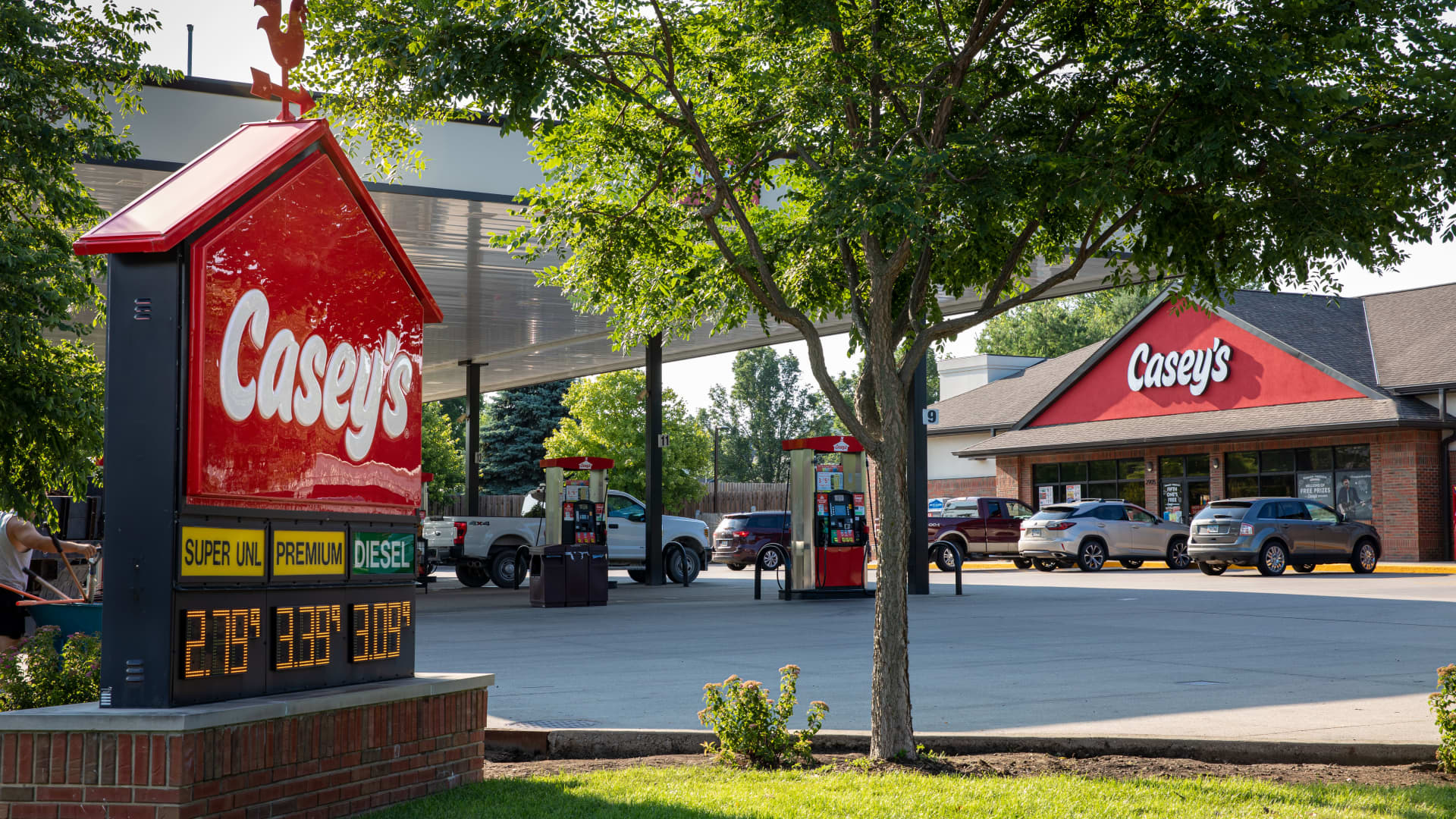
- Significant Sales Growth: Casey's General Stores reported a 4% increase in same-store sales for the last quarter, with an impressive 8% growth on a two-year stacked basis, indicating strong customer appeal in a competitive convenience store market.
- Optimized Profit Structure: While fuel sales yield a gross margin of only 14%-15%, in-store food and beverage sales boast a 58% margin, allowing internal sales to account for 38% of revenue yet contribute 62% of gross profit, showcasing the efficiency of its business model.
- Strong Market Demand: Management noted that in-store demand destruction does not occur until pump prices hit $5 per gallon, with the current national average at $3.82, placing the company in a favorable market environment that further drives customer traffic and sales growth.
- Clear Expansion Plans: Casey's aims to open 80 new stores in 2026, with expectations of achieving 8%-10% annual EBITDA growth, demonstrating its commitment to sustainable growth through enhanced operational efficiency while maintaining same-store sales growth.
CASEYS GENERAL STORES INC: JEFFERIES INCREASES TARGET PRICE FROM $700 TO $780
- Price Increase Announcement: Jeffries has raised the target price for Casey's General Stores from $700 to $780.
- Market Implications: This adjustment reflects a positive outlook on Casey's performance in the market.
Analysis of Retail Sector Impact from Rising Oil Prices
- Impact of Rising Oil Prices: Brent crude futures have surged above $110 per barrel due to the ongoing Middle East conflict, with diesel prices exceeding $5 per gallon for the first time since 2022, potentially imposing secondary effects on the U.S. retail sector and increasing household budget pressures.
- Advantage of Higher-Income Customers: Deutsche Bank analysts noted that retailers like Ulta Beauty and Costco, which cater to higher-income demographics, have historically shown a positive correlation between sales and rising oil prices, indicating better sales performance in such environments.
- Pressure on Lower-Income Customers: Conversely, retailers like BJ's Wholesale Club and Burlington Stores, which primarily serve lower-income customers, exhibit negative sales correlations with rising gas prices, highlighting a trend where lower-income consumers reduce spending as fuel costs increase.
- Inventory Management Strategy: Despite the risks associated with rising input costs, many global brands, including Amer Sports and Birkenstock, maintain over 200 days of finished goods inventory, which helps mitigate near-term margin pressures and ensures market stability amid supply chain disruptions.
Casey's Q3 Earnings Exceed Expectations with 49.8% EPS Growth
- Earnings Beat: Casey's Q3 earnings report reveals a remarkable 49.8% year-over-year increase in EPS, showcasing the company's robust performance and bolstering investor confidence.
- Quality Rank Surge: The strong earnings growth has propelled Casey's Quality Rank to 90.63, indicating enhanced competitiveness and market recognition within the industry.
- Strong Stock Momentum: Following the earnings report, Casey's stock has demonstrated strong momentum, attracting increased investor interest and potentially driving further price appreciation.
- Optimistic Market Outlook: The significant improvement in earnings not only enhances short-term stock performance but also lays a solid foundation for future growth, highlighting Casey's sustained competitive advantage in the industry.
Three Long-Term Growth Stocks to Consider
- MercadoLibre's Growth Potential: Since 2007, MercadoLibre has achieved an annualized total return of 25%, with 100 million active buyers and 61 million monthly active users significantly impacting the Latin American market; despite a 30% short-term stock price pullback, its extensive ecosystem in e-commerce and fintech offers substantial growth opportunities.
- Casey's General Stores Expansion: With an 18% annual return since 1990, Casey's has doubled its store count to nearly 3,000 since 2010, and plans to open at least 80 new stores by 2026, with two-thirds of its gross profits coming from inside sales, indicating strong growth momentum in the convenience store sector.
- Wingstop's Market Outlook: Since its IPO in 2015, Wingstop has generated a 23% annualized total return; despite facing its first decline in same-store sales, it plans to increase its store count by 15% in 2026, with average unit volumes rising from $1.1 million to $2.1 million, showcasing significant profitability improvements.
- Long-Term Investment Opportunities: Although these three stocks have experienced short-term volatility, their long-term growth potential and market positions make them attractive investment choices, especially during current market adjustments, providing investors with opportunities to buy quality stocks.
U.S. Stocks Decline as Oil Prices Surge
- Market Downward Pressure: As of March 19, 2026, all three major U.S. indices fell below their 200-day moving averages, indicating investor concerns about economic prospects, particularly as oil prices surged due to strikes on Gulf energy hubs, leading to accelerated equity sell-offs.
- High Leverage Risks: With the Fed's hawkish dot plot signaling only one rate cut this year, investor confidence in high-beta growth stocks has waned, prompting a shift towards low-leverage stocks that are better positioned to withstand interest rate volatility and geopolitical shocks.
- Low-Leverage Stock Recommendations: Analysts recommend low-leverage stocks such as Nu Holdings, Casey’s General Stores, Astec Industries, HNI Corp, and Blue Bird, which are more resilient in the current economic climate and capable of providing stable investment returns.
- Financial Health Metrics: Investors should focus on financial metrics like the debt-to-equity ratio to identify low-leverage stocks, ensuring they can maintain profitability during economic downturns and avoid financial crises associated with high leverage.
Growth Potential of Casey's General Stores
- Significant Sales Growth: Casey's General Stores reported a 4% increase in same-store sales for the last quarter, with an impressive 8% growth on a two-year stacked basis, indicating strong customer appeal in a competitive convenience store market.
- Optimized Profit Structure: While fuel sales yield a gross margin of only 14%-15%, in-store food and beverage sales boast a 58% margin, allowing internal sales to account for 38% of revenue yet contribute 62% of gross profit, showcasing the efficiency of its business model.
- Strong Market Demand: Management noted that in-store demand destruction does not occur until pump prices hit $5 per gallon, with the current national average at $3.82, placing the company in a favorable market environment that further drives customer traffic and sales growth.
- Clear Expansion Plans: Casey's aims to open 80 new stores in 2026, with expectations of achieving 8%-10% annual EBITDA growth, demonstrating its commitment to sustainable growth through enhanced operational efficiency while maintaining same-store sales growth.
CASEYS GENERAL STORES INC: JEFFERIES INCREASES TARGET PRICE FROM $700 TO $780
- Price Increase Announcement: Jeffries has raised the target price for Casey's General Stores from $700 to $780.
- Market Implications: This adjustment reflects a positive outlook on Casey's performance in the market.