Asia-Pacific Markets Rebound as Oil Prices Fall
Written by Emily J. Thompson, Senior Investment Analyst
Updated: 19 hours ago
0mins

Source: CNBC
- Market Rebound: Asia-Pacific markets are set to rise at open on Tuesday, with Australia's S&P/ASX 200 up 1.55% in early trade, indicating a strong rebound from Monday's rout and suggesting improved investor sentiment.
- Japanese Stocks Recovery: Japan's Nikkei 225 futures are at 54,575, up from the previous close of 52,728.72, reflecting a positive response to the recovery in U.S. stocks, which may attract more investors into the market.
- Oil Price Decline: Oil prices fell by 6.49% to $88.66 per barrel as Trump considers seizing control of the Strait of Hormuz, which could alleviate global inflationary pressures and impact earnings expectations in related sectors.
- U.S. Stock Market Bounce: U.S. stocks rebounded after significant declines, with the S&P 500 rising 0.83% to 6,795.99, demonstrating market resilience and potentially generating positive spillover effects for the Asia-Pacific markets.
Trade with 70% Backtested Accuracy
Stop guessing "Should I Buy MPC?" and start using high-conviction signals backed by rigorous historical data.
Sign up today to access powerful investing tools and make smarter, data-driven decisions.
Analyst Views on MPC
Wall Street analysts forecast MPC stock price to fall
14 Analyst Rating
9 Buy
5 Hold
0 Sell
Moderate Buy
Current: 215.700

Low
184.00
Averages
201.50
High
213.00
Current: 215.700
Low
184.00
Averages
201.50
High
213.00
About MPC
Marathon Petroleum Corporation is an integrated, downstream energy company. The Company’s segments include Refining & Marketing, Midstream and Renewable Diesel. The Refining & Marketing segment refines crude oil and other feedstocks at its refineries in the Gulf Coast, Mid-Continent and West Coast regions of the United States. It sells refined products to wholesale marketing customers domestically and internationally, to buyers on the spot market, and to independent entrepreneurs who operate primarily Marathon branded outlets. The Midstream segment gathers, transports, stores and distributes crude oil, refined products, including renewable diesel, and other hydrocarbon-based products, principally for the Refining & Marketing segment via refining logistics assets, pipelines, terminals, and others. The Renewable Diesel segment processes renewable feedstocks into renewable diesel, markets renewable diesel and distributes renewable products through its Midstream segment and third parties.
About the author

Emily J. Thompson
Emily J. Thompson, a Chartered Financial Analyst (CFA) with 12 years in investment research, graduated with honors from the Wharton School. Specializing in industrial and technology stocks, she provides in-depth analysis for Intellectia’s earnings and market brief reports.
Iran War Triggers Extreme Oil Price Volatility

- Extreme Oil Price Volatility: WTI crude futures surged to $119 per barrel due to fears of a prolonged closure of the Strait of Hormuz, but plummeted nearly 30% within 48 hours after President Trump declared the campaign 'pretty well complete', highlighting market sensitivity to supply disruptions.
- Saudi Transport Adjustments: Saudi Aramco confirmed it has rerouted crude shipments through the East-West pipeline to the Red Sea in response to the conflict, ensuring stable supply for customers and reflecting its critical role in the global energy market amid geopolitical tensions.
- Rising Retail Gas Prices: Despite a 30% drop in crude oil and an 18% decline in wholesale gasoline prices, U.S. retail gasoline prices continue to rise, with the AAA national average reaching $3.539 per gallon, up 43 cents from a week ago, indicating a lagging response of retail markets to wholesale price fluctuations.
- Refiners Benefit: Amid falling oil prices, shares of refiners Valero, Marathon, and Phillips rose by 1.7%, 1.9%, and 1% respectively, as elevated retail prices allow refiners to capture additional margins, demonstrating the disconnect between wholesale price drops and retail price stability.
See More

U.S. Gas Prices Surge to Highest Level Since 2024

- Price Surge: The average price of unleaded gas in the U.S. has climbed to about $3.54 per gallon, marking the highest level since 2024 and a 21% increase from a month ago, directly impacting consumer living costs.
- Supply Chain Crisis: The conflict between the U.S. and Iran has disrupted the crucial Strait of Hormuz, leading to the largest three-day price jump since Hurricane Katrina in 2005, highlighting the vulnerability of the global oil market.
- Political Ramifications: The rise in gas prices threatens Trump's commitment to lowering living costs, a key pillar of his reelection campaign, which could influence the outcomes of the upcoming midterm elections.
- Market Volatility: U.S. crude oil prices are fluctuating around $84 per barrel after surpassing $100 earlier this week, with analysts indicating that future price movements will depend on the duration of market disruptions.
See More
US Gas Prices Surge to Highest Level in Over a Year and a Half


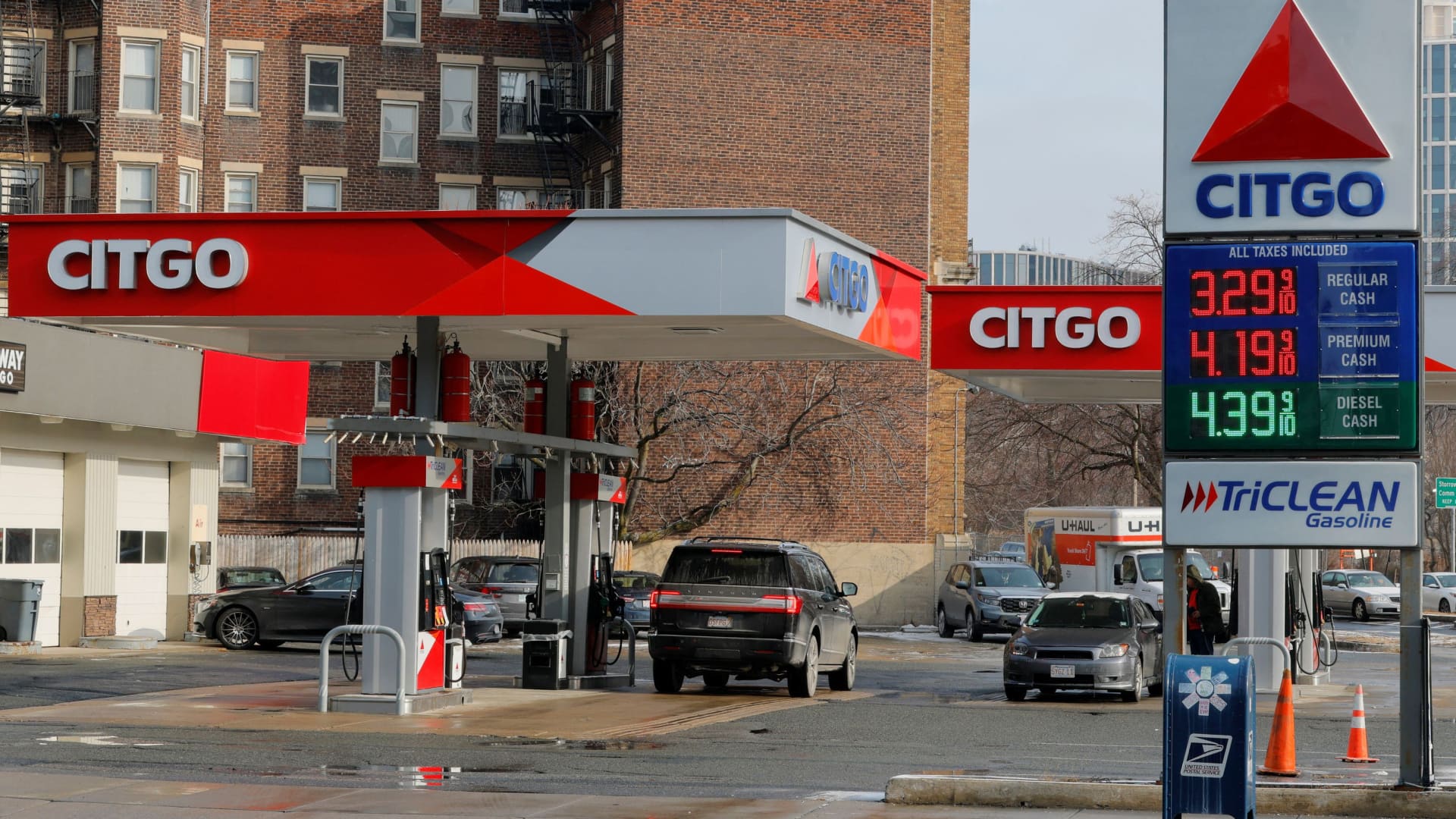
- Surge in Gas Prices: The average price of unleaded gasoline in the U.S. has risen to approximately $3.54 per gallon, marking a 21% increase from a month ago and the highest level since mid-2024, indicating severe disruptions in global oil trade due to the U.S.-Iran conflict.
- Supply Chain Crisis: The U.S.-Israeli strikes on Iran have crippled the crucial Strait of Hormuz, leading to the largest oil supply disruption in history, with gas prices experiencing their biggest three-day jump since Hurricane Katrina in 2005, further exacerbating market uncertainty.
- Political Ramifications: The rise in gas prices threatens Trump's commitment to lowering living costs, a key pillar of his reelection campaign, especially as affordability remains a top concern for voters ahead of the upcoming midterm elections.
- Market Volatility: Despite significant fluctuations, U.S. crude oil prices hover around $84 per barrel, and analysts indicate that future consumer prices will depend on the duration of market disruptions, with retailers potentially needing to raise prices to mitigate margin pressures.
See More

Trump Hints at Imminent End to U.S.-Iran War, Boosting Market Confidence


- Market Recovery: Following President Trump's indication that the U.S.-Iran war could soon end, the Dow Jones Industrial Average rose over 230 points, marking a more than 1,100-point rebound from session lows, reflecting a restoration of investor confidence.
- Oil Price Volatility: Despite the boost in market confidence from Trump's remarks, U.S. crude oil prices closed lower after surging above $100 per barrel, indicating ongoing concerns about the oil supply disruption.
- New Investment Opportunities: Billionaire investor Bill Ackman's hedge fund, Pershing Square, has filed to list on the New York Stock Exchange, with $2.8 billion in secured commitments expected, enhancing public confidence in its investment platform.
- Economic Outlook Warning: Rising oil prices and a weak jobs report have led economists to warn of potential stagflation in the U.S., with prediction markets showing recession odds rising above 34%, reflecting growing concerns about future economic growth.
See More
Impact of Iran War on Global Supply Chain

- Surge in Oil Prices: The U.S. and Israel's attack on Iran caused the largest oil supply disruption in history, leading to a more than 35% increase in U.S. crude prices, which hit $119.50 on Monday, significantly straining household budgets.
- Inflation Concerns Intensify: Economist Mark Zandi warns that if oil prices remain around $100 per barrel, gasoline could approach $4 per gallon by next week, exacerbating the decline in consumer purchasing power and negatively impacting consumer spending and GDP.
- Rising Unemployment Rate: The U.S. economy lost jobs in February, with the unemployment rate rising to 4.4%, indicating a softening labor market that intensifies the affordability crisis and places greater economic pressure on consumers.
- Interest Rates Climb: Due to rising oil prices and inflationary pressures, the yield on the benchmark 10-year Treasury rose over 4 basis points, with mortgage rates increasing to 6.14%, further burdening households and impacting consumer confidence.
See More

U.S. Treasury Yields Decline as Oil Prices Plummet
- Treasury Yield Changes: U.S. Treasury yields fell as the 10-year yield dropped nearly 2 basis points to 4.117%, the 30-year bond yield decreased to 4.734%, and the 2-year note yield declined by almost 3 basis points to 3.563%, reflecting market uncertainty about future economic conditions.
- Oil Price Fluctuations: President Trump warned that Iran would face 'TWENTY TIMES HARDER' consequences if it attempted to halt shipments through the Strait of Hormuz, causing market panic and leading to a temporary 10% drop in oil prices.
- G7 Emergency Meeting: G7 energy ministers are set to meet virtually to discuss a potential release of emergency oil reserves to address supply disruptions caused by the Iran conflict, with previous finance ministers' discussions deemed 'positive' despite no concrete decisions made.
- Role of IEA: The International Energy Agency's Executive Director participated in the G7 finance ministers' meeting to discuss the global economic outlook and the intensifying Middle East conflict, noting that IEA member countries hold over 1.2 billion barrels of public emergency oil stocks that could be released to alleviate supply pressures.
See More
Iran War Triggers Extreme Oil Price Volatility
- Extreme Oil Price Volatility: WTI crude futures surged to $119 per barrel due to fears of a prolonged closure of the Strait of Hormuz, but plummeted nearly 30% within 48 hours after President Trump declared the campaign 'pretty well complete', highlighting market sensitivity to supply disruptions.
- Saudi Transport Adjustments: Saudi Aramco confirmed it has rerouted crude shipments through the East-West pipeline to the Red Sea in response to the conflict, ensuring stable supply for customers and reflecting its critical role in the global energy market amid geopolitical tensions.
- Rising Retail Gas Prices: Despite a 30% drop in crude oil and an 18% decline in wholesale gasoline prices, U.S. retail gasoline prices continue to rise, with the AAA national average reaching $3.539 per gallon, up 43 cents from a week ago, indicating a lagging response of retail markets to wholesale price fluctuations.
- Refiners Benefit: Amid falling oil prices, shares of refiners Valero, Marathon, and Phillips rose by 1.7%, 1.9%, and 1% respectively, as elevated retail prices allow refiners to capture additional margins, demonstrating the disconnect between wholesale price drops and retail price stability.
See More
U.S. Gas Prices Surge to Highest Level Since 2024
- Price Surge: The average price of unleaded gas in the U.S. has climbed to about $3.54 per gallon, marking the highest level since 2024 and a 21% increase from a month ago, directly impacting consumer living costs.
- Supply Chain Crisis: The conflict between the U.S. and Iran has disrupted the crucial Strait of Hormuz, leading to the largest three-day price jump since Hurricane Katrina in 2005, highlighting the vulnerability of the global oil market.
- Political Ramifications: The rise in gas prices threatens Trump's commitment to lowering living costs, a key pillar of his reelection campaign, which could influence the outcomes of the upcoming midterm elections.
- Market Volatility: U.S. crude oil prices are fluctuating around $84 per barrel after surpassing $100 earlier this week, with analysts indicating that future price movements will depend on the duration of market disruptions.
See More
US Gas Prices Surge to Highest Level in Over a Year and a Half
- Surge in Gas Prices: The average price of unleaded gasoline in the U.S. has risen to approximately $3.54 per gallon, marking a 21% increase from a month ago and the highest level since mid-2024, indicating severe disruptions in global oil trade due to the U.S.-Iran conflict.
- Supply Chain Crisis: The U.S.-Israeli strikes on Iran have crippled the crucial Strait of Hormuz, leading to the largest oil supply disruption in history, with gas prices experiencing their biggest three-day jump since Hurricane Katrina in 2005, further exacerbating market uncertainty.
- Political Ramifications: The rise in gas prices threatens Trump's commitment to lowering living costs, a key pillar of his reelection campaign, especially as affordability remains a top concern for voters ahead of the upcoming midterm elections.
- Market Volatility: Despite significant fluctuations, U.S. crude oil prices hover around $84 per barrel, and analysts indicate that future consumer prices will depend on the duration of market disruptions, with retailers potentially needing to raise prices to mitigate margin pressures.
See More
Trump Hints at Imminent End to U.S.-Iran War, Boosting Market Confidence
- Market Recovery: Following President Trump's indication that the U.S.-Iran war could soon end, the Dow Jones Industrial Average rose over 230 points, marking a more than 1,100-point rebound from session lows, reflecting a restoration of investor confidence.
- Oil Price Volatility: Despite the boost in market confidence from Trump's remarks, U.S. crude oil prices closed lower after surging above $100 per barrel, indicating ongoing concerns about the oil supply disruption.
- New Investment Opportunities: Billionaire investor Bill Ackman's hedge fund, Pershing Square, has filed to list on the New York Stock Exchange, with $2.8 billion in secured commitments expected, enhancing public confidence in its investment platform.
- Economic Outlook Warning: Rising oil prices and a weak jobs report have led economists to warn of potential stagflation in the U.S., with prediction markets showing recession odds rising above 34%, reflecting growing concerns about future economic growth.
See More
Impact of Iran War on Global Supply Chain
- Surge in Oil Prices: The U.S. and Israel's attack on Iran caused the largest oil supply disruption in history, leading to a more than 35% increase in U.S. crude prices, which hit $119.50 on Monday, significantly straining household budgets.
- Inflation Concerns Intensify: Economist Mark Zandi warns that if oil prices remain around $100 per barrel, gasoline could approach $4 per gallon by next week, exacerbating the decline in consumer purchasing power and negatively impacting consumer spending and GDP.
- Rising Unemployment Rate: The U.S. economy lost jobs in February, with the unemployment rate rising to 4.4%, indicating a softening labor market that intensifies the affordability crisis and places greater economic pressure on consumers.
- Interest Rates Climb: Due to rising oil prices and inflationary pressures, the yield on the benchmark 10-year Treasury rose over 4 basis points, with mortgage rates increasing to 6.14%, further burdening households and impacting consumer confidence.
See More
U.S. Treasury Yields Decline as Oil Prices Plummet
- Treasury Yield Changes: U.S. Treasury yields fell as the 10-year yield dropped nearly 2 basis points to 4.117%, the 30-year bond yield decreased to 4.734%, and the 2-year note yield declined by almost 3 basis points to 3.563%, reflecting market uncertainty about future economic conditions.
- Oil Price Fluctuations: President Trump warned that Iran would face 'TWENTY TIMES HARDER' consequences if it attempted to halt shipments through the Strait of Hormuz, causing market panic and leading to a temporary 10% drop in oil prices.
- G7 Emergency Meeting: G7 energy ministers are set to meet virtually to discuss a potential release of emergency oil reserves to address supply disruptions caused by the Iran conflict, with previous finance ministers' discussions deemed 'positive' despite no concrete decisions made.
- Role of IEA: The International Energy Agency's Executive Director participated in the G7 finance ministers' meeting to discuss the global economic outlook and the intensifying Middle East conflict, noting that IEA member countries hold over 1.2 billion barrels of public emergency oil stocks that could be released to alleviate supply pressures.
See More