Soleno Shares Surge 30% Amid Acquisition Talks
Written by Emily J. Thompson, Senior Investment Analyst
Updated: 1 day ago
0mins


Source: Fool
- Acquisition Talk Boosts Stock: Neurocrine Biosciences is reportedly close to acquiring Soleno Therapeutics for over $2.5 billion, causing Soleno's stock to surge over 30% overnight, with expectations of a share price exceeding $50, reflecting strong market optimism about the deal.
- New Drug Approval Drives Profitability: Soleno's first approved treatment for hyperphagia due to Prader-Willi syndrome has achieved profitability in Q4, marking a significant success in the rapidly growing genetic obesity treatment market.
- Market Rebound Trend: The S&P 500 rose 3.4% and the Nasdaq 4.4% in a trading week shortened by Good Friday, driven by a positive jobs report showing 178,000 new jobs added in March, boosting confidence in economic recovery.
- Coinbase Seeks Banking Charter: Coinbase has received conditional approval to establish a national trust bank, despite regulatory scrutiny, aiming to provide cryptocurrency custody services, indicating its strategic expansion in the fintech sector.
Trade with 70% Backtested Accuracy
Stop guessing "Should I Buy DAL?" and start using high-conviction signals backed by rigorous historical data.
Sign up today to access powerful investing tools and make smarter, data-driven decisions.
Analyst Views on DAL
Wall Street analysts forecast DAL stock price to rise
18 Analyst Rating
18 Buy
0 Hold
0 Sell
Strong Buy
Current: 66.780

Low
77.00
Averages
83.50
High
90.00
Current: 66.780
Low
77.00
Averages
83.50
High
90.00
About DAL
Delta Air Lines, Inc. provides scheduled air transportation for passengers and cargo throughout the United States and around the world. The Company has hubs and markets in Amsterdam, Atlanta, Bogota, Boston, Detroit, Lima, London-Heathrow, Los Angeles, Mexico City, Minneapolis-St. Paul, New York-JFK and LaGuardia, Paris-Charles de Gaulle, Salt Lake City, Santiago (Chile), Sao Paulo, Seattle, Seoul-Incheon, and Tokyo. Its segments include Airline and Refinery. Its airline segment is managed as a single business unit that provides scheduled air transportation for passengers and cargo throughout the United States and around the world and includes its loyalty program, as well as other ancillary businesses. Its refinery segment operates for the benefit of the airline segment by providing jet fuel to the airline segment from its own production and through jet fuel obtained through agreements with third parties. The refinery's production consists of jet fuel as well as non-jet fuel products.
About the author

Emily J. Thompson
Emily J. Thompson, a Chartered Financial Analyst (CFA) with 12 years in investment research, graduated with honors from the Wharton School. Specializing in industrial and technology stocks, she provides in-depth analysis for Intellectia’s earnings and market brief reports.
Delta Air Lines Set to Release Earnings Amid Mixed Market Sentiment

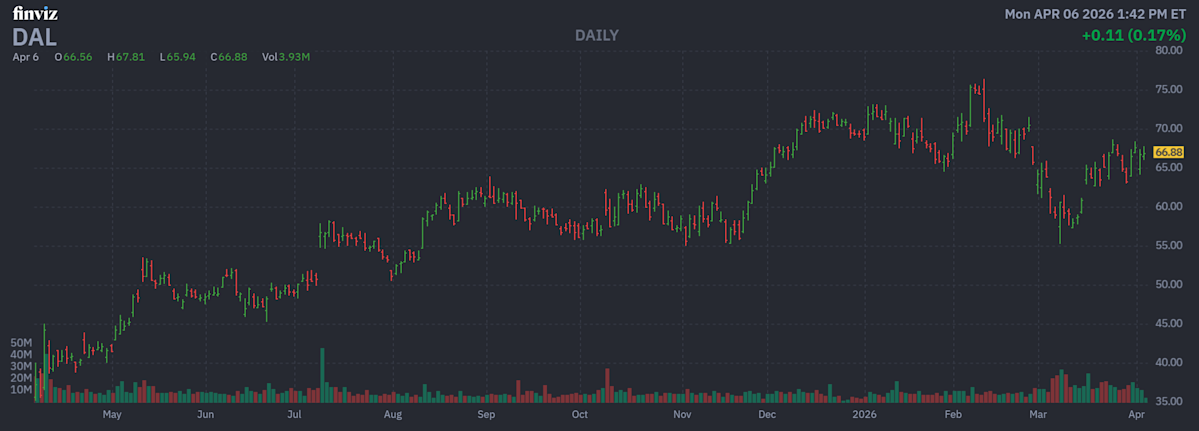
- Upcoming Earnings Release: Delta Air Lines is set to announce its fiscal Q1 results before the market opens on April 8, with expectations for a rebound following its first quarterly loss since March 2025, although the stock is currently trading around $66.88, down 12% from its February 11 high of $76.39.
- Price Volatility Expectations: The options market is pricing in a 9.4% move for Delta's stock, significantly higher than the 7.3% average over the past two years, indicating cautious sentiment among investors regarding the upcoming earnings report and its potential impact on stock performance.
- Historical Performance Review: Delta has experienced declines in four of its last eight earnings reports, including a 2.4% drop following its most recent report in January, suggesting uncertainty in market reactions to its financial disclosures, which could affect investor confidence.
- Options Trading Trends: Data from the International Securities Exchange, Chicago Board Options Exchange, and NASDAQ shows a 50-day put/call volume ratio of 1.59 for Delta, indicating that investors are anticipating downside risk, which is higher than 94% of annual readings, reflecting concerns about future performance.
See More
Delta Air Lines Raises Baggage Fees Amid Rising Fuel Costs
- Baggage Fee Increase: Delta Air Lines has raised the fees for the first and second checked bags on domestic and select short-haul international routes from $35 to $45, while the fee for the third checked bag has surged from $150 to $200, indicating the airline's strategic response to rising fuel costs.
- Industry Trend: This marks Delta's first baggage fee increase in two years, following similar moves by United Airlines and JetBlue, reflecting the broader pressure on the airline industry to manage soaring fuel expenses, which are typically easier to pass on to consumers than fare hikes.
- Competitor Response: JetBlue was the first to increase baggage fees, with United Airlines subsequently implementing a $10 increase for the first and second checked bags starting April 3, highlighting a growing trend of price adjustments across the industry.
- Market Impact: As airlines raise ancillary fees to offset fuel costs, consumers are likely to face higher travel expenses, which could impact demand for air travel and alter overall market dynamics.
See More
Delta Air Lines Raises Baggage Fees Amid Rising Fuel Costs

- Earnings Season Kickoff: Delta Air Lines is set to release its earnings report on Wednesday morning, marking the start of the earnings season for major airlines, which is expected to significantly impact market sentiment.
- Baggage Fee Increase: In response to rising fuel prices, Delta has announced an increase in checked baggage fees, a move that could affect customer travel choices and potentially boost company revenues amid cost pressures.
- Competitive Comparison: Delta's stock is down 5.5% in 2026, which is relatively better compared to American Airlines and United Airlines, which have seen declines of nearly 30% and 20% respectively, highlighting the intense competition in the airline industry.
- Chinese Tech Stocks Struggling: The KraneShares CSI China Internet ETF (KWEB) has dropped over 17% year-to-date, with notable laggards like Tencent Music, Trip.com, and NetEase facing significant losses, reflecting the challenges within the Chinese tech sector.
See More

US Stocks Fluctuate Slightly as Oil Prices Rise Impact Market


- Market Fluctuations: The S&P 500 Index rose by 0.08%, while the Dow Jones Industrial Average fell by 0.18%, and the Nasdaq 100 Index increased by 0.04%, indicating a cautious market response amid rising oil prices and geopolitical tensions.
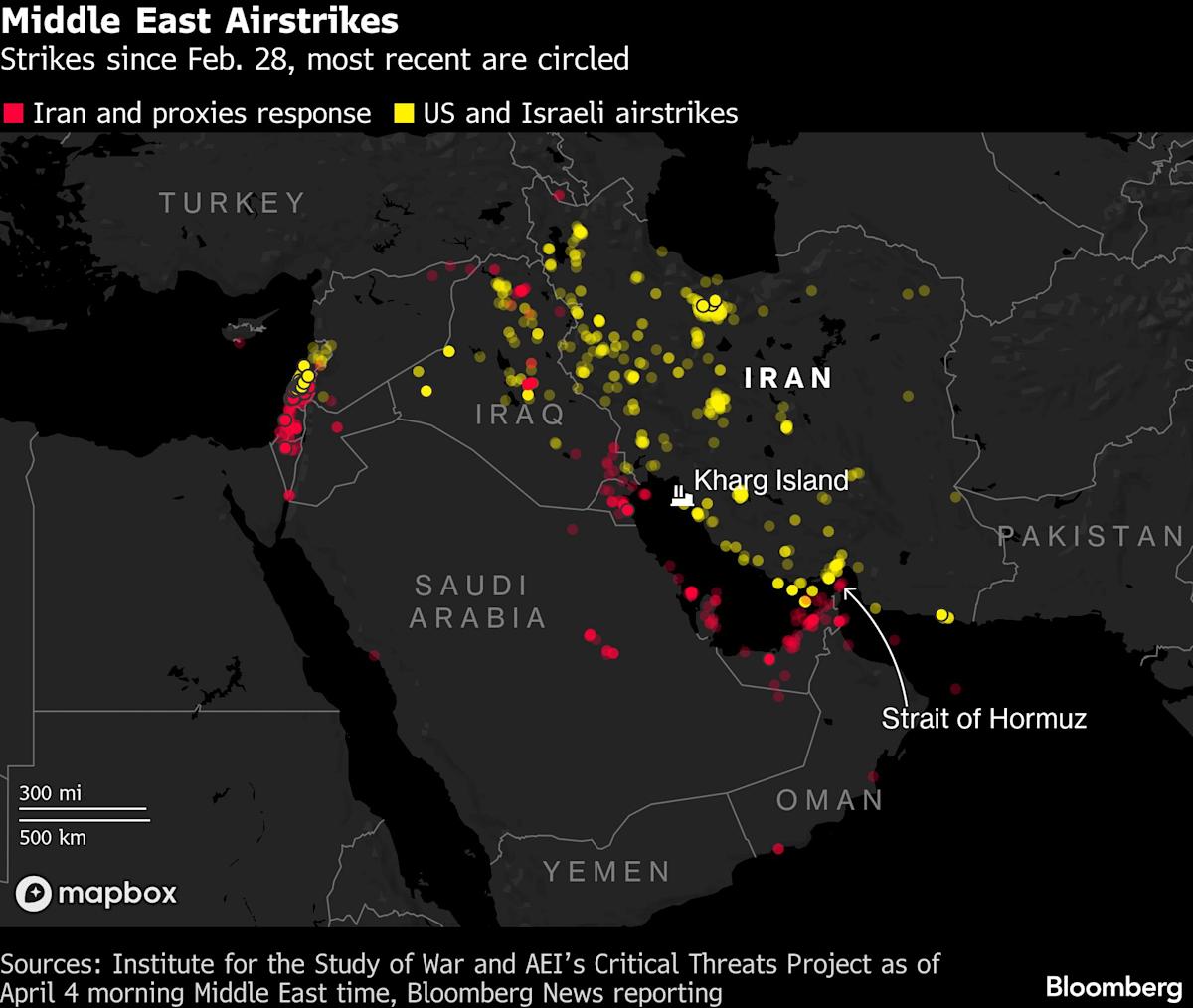
- Oil Price Impact: Crude oil prices surged to a four-week high due to escalating tensions with Iran, leading to declines in airline and cruise line stocks, with Norwegian Cruise Line Holdings, Carnival, and Royal Caribbean all dropping over 3%.
- Economic Data: February's non-defense capital goods new orders rose by 0.6% month-over-month, surpassing the expected 0.5%, indicating an improvement in capital spending, although consumer credit growth fell short of expectations, potentially affecting consumer confidence.
- Fed Policy Expectations: The market is pricing in only a 3% chance of a 25 basis point rate hike at the Fed's April meeting, reflecting investor caution regarding future monetary policy, especially in light of rising oil prices that could drive inflation.
See More

Trump Extends Iran Deadline by Two Weeks


- Futures Market Surge: Futures jumped as President Trump agreed to extend the Iran deadline by two weeks, reflecting investor optimism about future market stability, which may encourage short-term investment inflows.
- Oil Price Plunge: Oil prices dived in response to the news, likely due to market expectations of stable supply, alleviating upward pressure on prices and impacting the earnings outlook for related energy companies.
- Market Reaction Analysis: Investors welcomed Trump's decision, believing it could help avoid escalating tensions with Iran, thereby potentially stabilizing the global economy, particularly in energy-intensive sectors.
- Policy Impact Assessment: This move not only delays potential economic sanctions but may also create space for future diplomatic negotiations, influencing international relations and global market dynamics.
See More
U.S. Transportation Secretary Sees Room for Airline M&A Activity
- M&A Potential: U.S. Transportation Secretary Sean Duffy indicated that there is room for more mergers and acquisitions in the airline industry, suggesting a potential trend towards market consolidation despite the lack of specific pairings.
- Regulatory Review: Duffy emphasized that any proposed mergers would need to undergo scrutiny by the Transportation and Justice Departments to ensure they do not negatively impact consumers or hinder competition, highlighting regulatory concerns regarding industry consolidation.
- Market Share: Duffy noted that Delta, American, Southwest, and United each hold about 20% of the U.S. passenger airline market, indicating the significant positions of major airlines and the potential impact of mergers on market structure.
- Trump's Support: Duffy mentioned that President Trump “loves to see big deals happen,” suggesting potential governmental support for airline mergers, which could facilitate consolidation activities within the industry.
See More
Delta Air Lines Set to Release Earnings Amid Mixed Market Sentiment
- Upcoming Earnings Release: Delta Air Lines is set to announce its fiscal Q1 results before the market opens on April 8, with expectations for a rebound following its first quarterly loss since March 2025, although the stock is currently trading around $66.88, down 12% from its February 11 high of $76.39.
- Price Volatility Expectations: The options market is pricing in a 9.4% move for Delta's stock, significantly higher than the 7.3% average over the past two years, indicating cautious sentiment among investors regarding the upcoming earnings report and its potential impact on stock performance.
- Historical Performance Review: Delta has experienced declines in four of its last eight earnings reports, including a 2.4% drop following its most recent report in January, suggesting uncertainty in market reactions to its financial disclosures, which could affect investor confidence.
- Options Trading Trends: Data from the International Securities Exchange, Chicago Board Options Exchange, and NASDAQ shows a 50-day put/call volume ratio of 1.59 for Delta, indicating that investors are anticipating downside risk, which is higher than 94% of annual readings, reflecting concerns about future performance.
See More
Delta Air Lines Raises Baggage Fees Amid Rising Fuel Costs
- Baggage Fee Increase: Delta Air Lines has raised the fees for the first and second checked bags on domestic and select short-haul international routes from $35 to $45, while the fee for the third checked bag has surged from $150 to $200, indicating the airline's strategic response to rising fuel costs.
- Industry Trend: This marks Delta's first baggage fee increase in two years, following similar moves by United Airlines and JetBlue, reflecting the broader pressure on the airline industry to manage soaring fuel expenses, which are typically easier to pass on to consumers than fare hikes.
- Competitor Response: JetBlue was the first to increase baggage fees, with United Airlines subsequently implementing a $10 increase for the first and second checked bags starting April 3, highlighting a growing trend of price adjustments across the industry.
- Market Impact: As airlines raise ancillary fees to offset fuel costs, consumers are likely to face higher travel expenses, which could impact demand for air travel and alter overall market dynamics.
See More
Delta Air Lines Raises Baggage Fees Amid Rising Fuel Costs
- Earnings Season Kickoff: Delta Air Lines is set to release its earnings report on Wednesday morning, marking the start of the earnings season for major airlines, which is expected to significantly impact market sentiment.
- Baggage Fee Increase: In response to rising fuel prices, Delta has announced an increase in checked baggage fees, a move that could affect customer travel choices and potentially boost company revenues amid cost pressures.
- Competitive Comparison: Delta's stock is down 5.5% in 2026, which is relatively better compared to American Airlines and United Airlines, which have seen declines of nearly 30% and 20% respectively, highlighting the intense competition in the airline industry.
- Chinese Tech Stocks Struggling: The KraneShares CSI China Internet ETF (KWEB) has dropped over 17% year-to-date, with notable laggards like Tencent Music, Trip.com, and NetEase facing significant losses, reflecting the challenges within the Chinese tech sector.
See More
US Stocks Fluctuate Slightly as Oil Prices Rise Impact Market
- Market Fluctuations: The S&P 500 Index rose by 0.08%, while the Dow Jones Industrial Average fell by 0.18%, and the Nasdaq 100 Index increased by 0.04%, indicating a cautious market response amid rising oil prices and geopolitical tensions.
- Oil Price Impact: Crude oil prices surged to a four-week high due to escalating tensions with Iran, leading to declines in airline and cruise line stocks, with Norwegian Cruise Line Holdings, Carnival, and Royal Caribbean all dropping over 3%.
- Economic Data: February's non-defense capital goods new orders rose by 0.6% month-over-month, surpassing the expected 0.5%, indicating an improvement in capital spending, although consumer credit growth fell short of expectations, potentially affecting consumer confidence.
- Fed Policy Expectations: The market is pricing in only a 3% chance of a 25 basis point rate hike at the Fed's April meeting, reflecting investor caution regarding future monetary policy, especially in light of rising oil prices that could drive inflation.
See More
Trump Extends Iran Deadline by Two Weeks
- Futures Market Surge: Futures jumped as President Trump agreed to extend the Iran deadline by two weeks, reflecting investor optimism about future market stability, which may encourage short-term investment inflows.
- Oil Price Plunge: Oil prices dived in response to the news, likely due to market expectations of stable supply, alleviating upward pressure on prices and impacting the earnings outlook for related energy companies.
- Market Reaction Analysis: Investors welcomed Trump's decision, believing it could help avoid escalating tensions with Iran, thereby potentially stabilizing the global economy, particularly in energy-intensive sectors.
- Policy Impact Assessment: This move not only delays potential economic sanctions but may also create space for future diplomatic negotiations, influencing international relations and global market dynamics.
See More
U.S. Transportation Secretary Sees Room for Airline M&A Activity
- M&A Potential: U.S. Transportation Secretary Sean Duffy indicated that there is room for more mergers and acquisitions in the airline industry, suggesting a potential trend towards market consolidation despite the lack of specific pairings.
- Regulatory Review: Duffy emphasized that any proposed mergers would need to undergo scrutiny by the Transportation and Justice Departments to ensure they do not negatively impact consumers or hinder competition, highlighting regulatory concerns regarding industry consolidation.
- Market Share: Duffy noted that Delta, American, Southwest, and United each hold about 20% of the U.S. passenger airline market, indicating the significant positions of major airlines and the potential impact of mergers on market structure.
- Trump's Support: Duffy mentioned that President Trump “loves to see big deals happen,” suggesting potential governmental support for airline mergers, which could facilitate consolidation activities within the industry.
See More