Should WisdomTree U.S. High Dividend ETF (DHS) Be on Your Investing Radar?
Written by Emily J. Thompson, Senior Investment Analyst
Updated: Oct 11 2024
0mins


Source: NASDAQ.COM
Overview of WisdomTree U.S. High Dividend ETF (DHS): DHS is a passively managed ETF focusing on large-cap value stocks, with assets over $1.15 billion and an annual expense ratio of 0.38%. It has a 12-month trailing dividend yield of 3.69% and aims to match the performance of the WisdomTree U.S. High Dividend Index.
Performance and Comparison: The ETF has shown a year-to-date increase of approximately 16.89% and a one-year gain of about 24.89%. It is considered a medium-risk investment with a Zacks ETF Rank of 3 (Hold) and is compared to other ETFs like Schwab U.S. Dividend Equity ETF and Vanguard Value ETF, which have lower expense ratios but larger asset bases.
Trade with 70% Backtested Accuracy
Stop guessing "Should I Buy XOM?" and start using high-conviction signals backed by rigorous historical data.
Sign up today to access powerful investing tools and make smarter, data-driven decisions.
Analyst Views on XOM
Wall Street analysts forecast XOM stock price to fall
19 Analyst Rating
12 Buy
7 Hold
0 Sell
Moderate Buy
Current: 141.690

Low
114.00
Averages
132.17
High
158.00
Current: 141.690
Low
114.00
Averages
132.17
High
158.00
About XOM
Exxon Mobil Corporation is an integrated fuels, lubricants and chemical company. Its principal business involves exploration for, and production of, crude oil and natural gas; the manufacture, trade, transport and sale of crude oil, natural gas, petroleum products, petrochemicals and a wide variety of specialty products; and pursuit of lower-emission and other new business opportunities, including carbon capture and storage, hydrogen, lower-emission fuels, Proxxima systems, carbon materials, and lithium. Its Upstream segment explores for and produces crude oil and natural gas. The Energy Products, Chemical Products, and Specialty Products segments manufacture and sell petroleum products and petrochemicals. The Energy Products segment includes fuels, aromatics, and catalysts and licensing. The Chemical Products segment consists of olefins, polyolefins, and intermediates. Specialty Products segment includes finished lubricants, basestocks and waxes, synthetics, and elastomers and resins.
About the author

Emily J. Thompson
Emily J. Thompson, a Chartered Financial Analyst (CFA) with 12 years in investment research, graduated with honors from the Wharton School. Specializing in industrial and technology stocks, she provides in-depth analysis for Intellectia’s earnings and market brief reports.
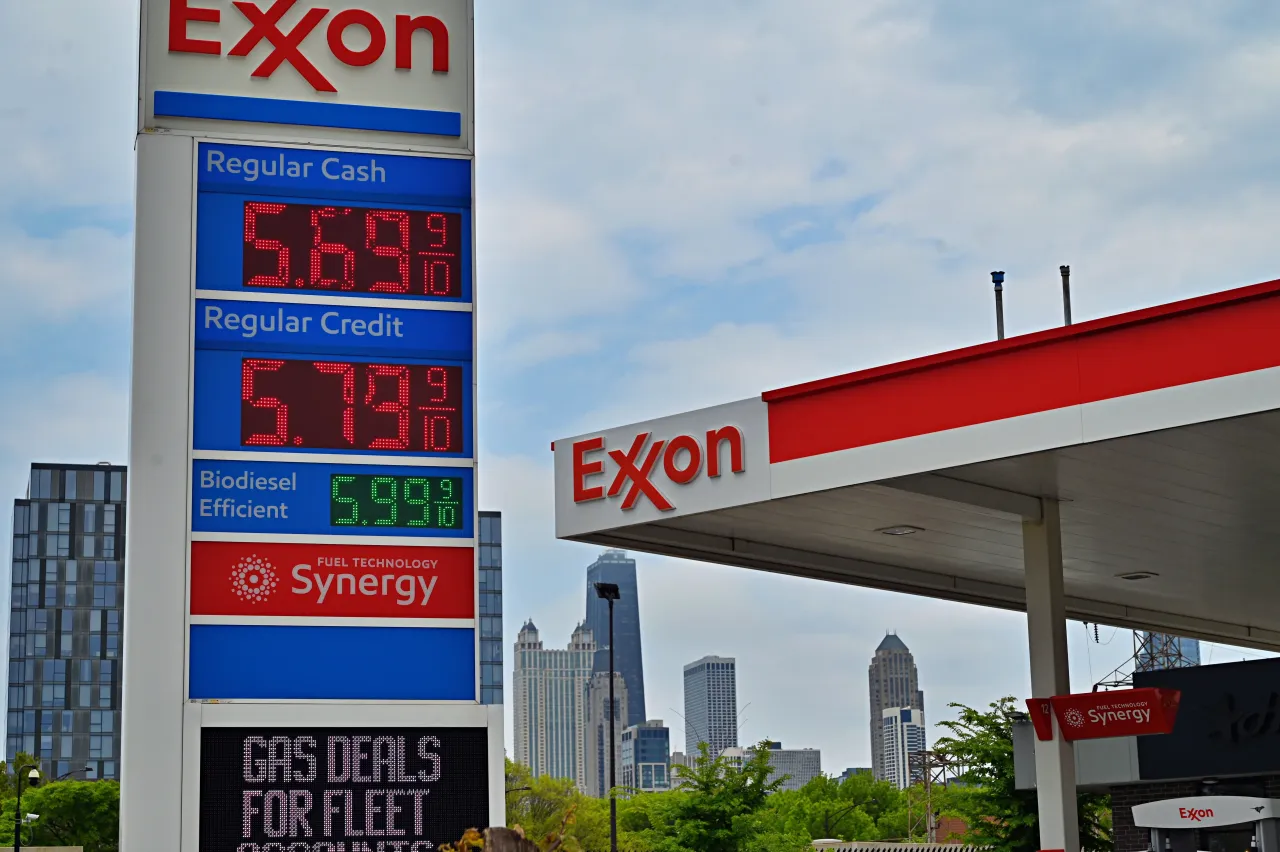
Exxon Mobil's Q2 Upstream Income Outlook Hits $9.6 Billion

- Upstream Income Forecast: Exxon Mobil anticipates upstream income of $9.6 billion for Q2 2026, marking its highest since September 2022, significantly up from $5.7 billion in Q1, indicating robust profitability amid rising global oil prices.
- Oil Price Volatility Impact: The outbreak of the U.S.-Iran war has caused historic volatility in global oil prices, with Brent crude surging from $70 to $113, prompting Exxon to raise its upstream income outlook by $3.5 billion to $3.9 billion, reflecting the company's agile response to market dynamics.
- Market Sentiment Shift: Retail sentiment on Stocktwits remains neutral, yet discussions surged by 240% from the previous session, indicating heightened market interest in Exxon’s outlook, which could drive further stock price increases.
- Earnings Report Preview: Exxon is set to release its complete earnings report on July 31, with Q1 earnings per share at $1.16, surpassing the $1.03 consensus estimate, and revenues reaching $85.14 billion, showcasing the company's resilience and profitability in challenging conditions.
See More

Oil Prices Surge Amid Tech Stock Volatility

- Oil Price Surge: Brent crude futures surpassed $80 on Wednesday, primarily driven by U.S. military actions against Iran, with the energy sector being the top performer of the day, up 1.45%, indicating strong market reactions to energy demand.
- Tech Stock Volatility: Nvidia's stock is down 14% from its May high, while AMD, Applied Materials, and Micron Technology have seen declines of 11.5%, 22%, and 24% respectively, reflecting investor caution towards tech stocks that may influence future investment decisions.
- PepsiCo Earnings Preview: PepsiCo is set to report earnings on Thursday, with its stock down about 8% over the past three months and 17% from its 52-week high, which could affect market perceptions of its future growth potential.
- Blue Origin Funding: Jeff Bezos' Blue Origin secured a $4 billion investment from Coatue Management as part of a new $10 billion fundraising round, expected to value the company at $130 billion, showcasing the investment enthusiasm and growth potential in the space industry.
See More

Broadcom and Apple Expand Partnership Deal Exceeding $30 Billion


- Partnership Expansion: Broadcom's multiyear partnership with Apple will exceed $30 billion, leading to the production of 15 billion U.S.-made chips, significantly enhancing Broadcom's position in the semiconductor market and driving future growth.
- Facility Expansion Plans: The deal includes an expansion of Broadcom's facility in Fort Collins, Colorado, aimed at increasing production capacity to meet Apple's growing demand, thereby further solidifying their strategic partnership.
- Positive Market Reaction: Broadcom's shares rose 6%, reflecting investor optimism regarding the partnership, while Apple's stock also saw a modest increase of 1%, indicating market confidence in its future performance.
- Vaccine Market Impact: Morgan Stanley reiterated its equal-weight rating on Moderna and raised its price target to $39, despite a 7% drop in the stock, as analysts believe vaccines and individualized neoantigen therapy will be key valuation drivers for the company.
See More

U.S. and Iran Ceasefire Leads to Oil Prices Falling to $70

- Oil Price Impact: The recent ceasefire between the U.S. and Iran has led to Brent crude oil prices falling to around $70 per barrel, creating an opportunity for investors to increase their positions in energy stocks amidst a recent sell-off.
- ExxonMobil vs. Chevron: Following its $60 billion acquisition of Pioneer Natural Resources in 2024, ExxonMobil is targeting a production cost of $35 per barrel in 2023, with plans to reduce it to $30 by 2030, showcasing its strong production capabilities in the resource-rich Permian Basin.
- Chevron's Growth Strategy: While Chevron holds 2.2 million acres in the Permian, its production is approximately 1 million BOE/d, significantly lower than Exxon's 1.6 million BOE/d, as Chevron has opted to invest in other projects, capping its growth in the region.
- Future Outlook: Looking ahead to 2030, ExxonMobil expects to increase its production to 5.5 million BOE/d and achieve $25 billion in earnings growth, while Chevron anticipates a 10% annual growth in adjusted free cash flow and earnings per share, reflecting their differing strategic directions for future growth.
See More

Energy Stocks Surge as Oil Prices Rise Following Iran Ceasefire End
- Energy Stocks Surge: Energy stocks saw significant gains as President Trump announced the end of the ceasefire with Iran, leading to a surge in U.S. oil prices; Diamondback Energy rose over 3%, while APA Corporation and Occidental Petroleum increased by more than 2.5%, indicating strong market confidence in the energy sector.
- Airlines and Cruise Lines Decline: Companies heavily exposed to fuel prices, such as Carnival Corporation and Norwegian Cruise Line, fell by 3.5% and 3% respectively, while United Airlines and Delta Air Lines dropped 3% and nearly 2%, reflecting the negative impact of rising oil prices on these industries.
- Memory Stocks Continue to Drop: The memory sector faced ongoing sell-offs, with Sandisk down over 5.5%, Western Digital falling 5%, and Micron Technology and Seagate Technology declining by 4.5% and 3.5% respectively, highlighting market concerns about the industry's outlook.
- Bath & Body Works Downgraded: Following a downgrade from Goldman Sachs from neutral to sell, Bath & Body Works saw its stock drop over 4%, as analysts warned that its expansion into third-party distribution could cannibalize its retail business, reflecting market apprehension about its future growth prospects.
See More
Exxon Mobil Q2 Earnings Forecast Raised
- Earnings Growth Expectation: Exxon Mobil anticipates a profit increase of approximately $3.7 billion in Q2, primarily driven by soaring oil prices during the U.S.-Iran conflict, demonstrating the company's resilience in uncertain market conditions.
- Refining Profit Improvement: The company expects an additional $3.3 billion in earnings from refining and chemicals, which not only enhances overall profitability but also reflects its competitive advantage in a high oil price environment.
- Derivative Gains: Exxon Mobil forecasts around $2.6 billion in profit from derivative positions linked to physical deliveries, indicating the company's agility in risk management and response to market volatility.
- Positive Market Reaction: Following the earnings forecast, Exxon Mobil's stock rose 0.8% in after-hours trading, reflecting investor confidence and optimism regarding the company's future performance.
See More
Exxon Mobil's Q2 Upstream Income Outlook Hits $9.6 Billion
- Upstream Income Forecast: Exxon Mobil anticipates upstream income of $9.6 billion for Q2 2026, marking its highest since September 2022, significantly up from $5.7 billion in Q1, indicating robust profitability amid rising global oil prices.
- Oil Price Volatility Impact: The outbreak of the U.S.-Iran war has caused historic volatility in global oil prices, with Brent crude surging from $70 to $113, prompting Exxon to raise its upstream income outlook by $3.5 billion to $3.9 billion, reflecting the company's agile response to market dynamics.
- Market Sentiment Shift: Retail sentiment on Stocktwits remains neutral, yet discussions surged by 240% from the previous session, indicating heightened market interest in Exxon’s outlook, which could drive further stock price increases.
- Earnings Report Preview: Exxon is set to release its complete earnings report on July 31, with Q1 earnings per share at $1.16, surpassing the $1.03 consensus estimate, and revenues reaching $85.14 billion, showcasing the company's resilience and profitability in challenging conditions.
See More
Oil Prices Surge Amid Tech Stock Volatility
- Oil Price Surge: Brent crude futures surpassed $80 on Wednesday, primarily driven by U.S. military actions against Iran, with the energy sector being the top performer of the day, up 1.45%, indicating strong market reactions to energy demand.
- Tech Stock Volatility: Nvidia's stock is down 14% from its May high, while AMD, Applied Materials, and Micron Technology have seen declines of 11.5%, 22%, and 24% respectively, reflecting investor caution towards tech stocks that may influence future investment decisions.
- PepsiCo Earnings Preview: PepsiCo is set to report earnings on Thursday, with its stock down about 8% over the past three months and 17% from its 52-week high, which could affect market perceptions of its future growth potential.
- Blue Origin Funding: Jeff Bezos' Blue Origin secured a $4 billion investment from Coatue Management as part of a new $10 billion fundraising round, expected to value the company at $130 billion, showcasing the investment enthusiasm and growth potential in the space industry.
See More
Broadcom and Apple Expand Partnership Deal Exceeding $30 Billion
- Partnership Expansion: Broadcom's multiyear partnership with Apple will exceed $30 billion, leading to the production of 15 billion U.S.-made chips, significantly enhancing Broadcom's position in the semiconductor market and driving future growth.
- Facility Expansion Plans: The deal includes an expansion of Broadcom's facility in Fort Collins, Colorado, aimed at increasing production capacity to meet Apple's growing demand, thereby further solidifying their strategic partnership.
- Positive Market Reaction: Broadcom's shares rose 6%, reflecting investor optimism regarding the partnership, while Apple's stock also saw a modest increase of 1%, indicating market confidence in its future performance.
- Vaccine Market Impact: Morgan Stanley reiterated its equal-weight rating on Moderna and raised its price target to $39, despite a 7% drop in the stock, as analysts believe vaccines and individualized neoantigen therapy will be key valuation drivers for the company.
See More
U.S. and Iran Ceasefire Leads to Oil Prices Falling to $70
- Oil Price Impact: The recent ceasefire between the U.S. and Iran has led to Brent crude oil prices falling to around $70 per barrel, creating an opportunity for investors to increase their positions in energy stocks amidst a recent sell-off.
- ExxonMobil vs. Chevron: Following its $60 billion acquisition of Pioneer Natural Resources in 2024, ExxonMobil is targeting a production cost of $35 per barrel in 2023, with plans to reduce it to $30 by 2030, showcasing its strong production capabilities in the resource-rich Permian Basin.
- Chevron's Growth Strategy: While Chevron holds 2.2 million acres in the Permian, its production is approximately 1 million BOE/d, significantly lower than Exxon's 1.6 million BOE/d, as Chevron has opted to invest in other projects, capping its growth in the region.
- Future Outlook: Looking ahead to 2030, ExxonMobil expects to increase its production to 5.5 million BOE/d and achieve $25 billion in earnings growth, while Chevron anticipates a 10% annual growth in adjusted free cash flow and earnings per share, reflecting their differing strategic directions for future growth.
See More
Energy Stocks Surge as Oil Prices Rise Following Iran Ceasefire End
- Energy Stocks Surge: Energy stocks saw significant gains as President Trump announced the end of the ceasefire with Iran, leading to a surge in U.S. oil prices; Diamondback Energy rose over 3%, while APA Corporation and Occidental Petroleum increased by more than 2.5%, indicating strong market confidence in the energy sector.
- Airlines and Cruise Lines Decline: Companies heavily exposed to fuel prices, such as Carnival Corporation and Norwegian Cruise Line, fell by 3.5% and 3% respectively, while United Airlines and Delta Air Lines dropped 3% and nearly 2%, reflecting the negative impact of rising oil prices on these industries.
- Memory Stocks Continue to Drop: The memory sector faced ongoing sell-offs, with Sandisk down over 5.5%, Western Digital falling 5%, and Micron Technology and Seagate Technology declining by 4.5% and 3.5% respectively, highlighting market concerns about the industry's outlook.
- Bath & Body Works Downgraded: Following a downgrade from Goldman Sachs from neutral to sell, Bath & Body Works saw its stock drop over 4%, as analysts warned that its expansion into third-party distribution could cannibalize its retail business, reflecting market apprehension about its future growth prospects.
See More
Exxon Mobil Q2 Earnings Forecast Raised
- Earnings Growth Expectation: Exxon Mobil anticipates a profit increase of approximately $3.7 billion in Q2, primarily driven by soaring oil prices during the U.S.-Iran conflict, demonstrating the company's resilience in uncertain market conditions.
- Refining Profit Improvement: The company expects an additional $3.3 billion in earnings from refining and chemicals, which not only enhances overall profitability but also reflects its competitive advantage in a high oil price environment.
- Derivative Gains: Exxon Mobil forecasts around $2.6 billion in profit from derivative positions linked to physical deliveries, indicating the company's agility in risk management and response to market volatility.
- Positive Market Reaction: Following the earnings forecast, Exxon Mobil's stock rose 0.8% in after-hours trading, reflecting investor confidence and optimism regarding the company's future performance.
See More