Shopify Reports 31% Revenue Growth in Q4 Amid AI Concerns
Written by Emily J. Thompson, Senior Investment Analyst
Updated: Feb 15 2026
0mins


Should l Buy SHOP?
Source: NASDAQ.COM
- Strong Revenue Growth: Shopify reported a 31% year-over-year revenue increase in Q4, reaching $3.67 billion, surpassing analyst expectations of $3.58 billion, indicating robust performance in the e-commerce software sector.
- Significant GMV Increase: The platform's gross merchandise volume (GMV) also rose by 31% to $123.84 billion, with Europe showing a 45% increase in GMV, reflecting strong demand in international markets.
- AI-Driven Innovations: Shopify is actively leveraging artificial intelligence by launching tools like Sidekick for task automation and developing a universal commerce protocol (UCP) in collaboration with Alphabet to standardize AI agent connections with brands, further driving business growth.
- Optimistic Future Outlook: The company forecasts Q1 revenue growth in the low 30% range, well above the 25.1% growth analysts expected, and has initiated a $2 billion stock buyback program, demonstrating confidence in future growth.
Trade with 70% Backtested Accuracy
Stop guessing "Should I Buy SHOP?" and start using high-conviction signals backed by rigorous historical data.
Sign up today to access powerful investing tools and make smarter, data-driven decisions.
Analyst Views on SHOP
Wall Street analysts forecast SHOP stock price to rise
31 Analyst Rating
18 Buy
13 Hold
0 Sell
Moderate Buy
Current: 117.060

Low
140.00
Averages
180.62
High
200.00
Current: 117.060
Low
140.00
Averages
180.62
High
200.00
About SHOP
Shopify Inc. (Shopify) is a Canada-based global commerce company. The Company provides essential Internet infrastructure for commerce, offering tools to start, grow, market and manage a retail business of any size. It provides platforms and services that are engineered and delivers a shopping experience for consumers online, in store and everywhere in between. Its software enables merchants to run their business across all of their sales channels, including Web and mobile storefronts, physical retail locations, social media storefronts, and marketplaces. The Company's Shopify platform provides merchants with a single view of their business across all of their sales channels and enables them to manage products and inventory, process orders and payments, fulfill and ship orders, build customer relationships, source products, leverage analytics and reporting, and access financing, all from one integrated back office. The Shopify's platform operates across 175 countries.
About the author

Emily J. Thompson
Emily J. Thompson, a Chartered Financial Analyst (CFA) with 12 years in investment research, graduated with honors from the Wharton School. Specializing in industrial and technology stocks, she provides in-depth analysis for Intellectia’s earnings and market brief reports.

Shopify Shares Surge 5.1% Amid Market Rally Following U.S.-Iran Ceasefire

- Market Rally Impact: Shopify's shares surged 5.1% in the afternoon session due to the de-escalation of the U.S.-Iran conflict, indicating a renewed investor focus on high-growth assets and enhancing confidence in corporate spending and investment.
- Volatility Analysis: Shopify has experienced 31 moves greater than 5% over the past year, and while today's increase suggests the market considers this news significant, it does not fundamentally alter perceptions of the business, highlighting its high volatility characteristics.
- Macroeconomic Environment: The easing of geopolitical tensions has lowered market volatility and reduced pressure on interest rates, creating a more favorable valuation environment for the software sector, which further drives investor interest in tech stocks.
- Long-term Investment Returns: Despite a 22% decline since the beginning of the year, investors who bought $1,000 worth of Shopify shares five years ago would now see their investment valued at $1,002, demonstrating potential stability in long-term holdings despite short-term challenges.
See More

Revolutionizing Investment Mindsets and Strategies


- Habits and Identity: David Gardner quotes James Clear, emphasizing that habits are pathways to identity change, suggesting that investors shape their self-perception through daily actions, thereby enhancing long-term investment success.
- Investing to Predict the Future: Kleiner Perkins' idea that “we invest to predict the future” highlights how investors become more observant of market dynamics when they hold stocks, improving their foresight of future trends.
- Market Uncertainty: By referencing Shakespeare, Gardner points out the “stubbornness of fortune” in investing, stressing the importance of long-term holding and regular investing to navigate the uncertainties brought by market fluctuations.
- Responsible Questioning: Gardner discusses Warren Berger's perspective, emphasizing that in an age of information overload, investors should question with curiosity rather than antagonism to improve the quality of their investment decisions.
See More

Identity and Habits of Investors Explored
- Identity and Habits: David Gardner emphasizes that habits are crucial in shaping identity, where every action serves as a vote for one's future self, enabling investors to gradually form their investment identity through consistent small habits, thereby enhancing long-term investment success.
- Investing and Observation: Gardner cites Kleiner Perkins' perspective that investing is not just about predicting the future but becoming a more astute observer through investment, paying attention to market changes and company dynamics to gain a competitive edge.
- Market Volatility Response: In the face of market fluctuations, Gardner advocates for a 'quiet and sweet style' through regular investing (like dollar-cost averaging), a strategy that helps investors remain calm amidst uncertainty and avoid emotional decision-making.
- The Art of Questioning: Gardner highlights the importance of questioning, encouraging investors to ask not just 'what should I buy' but 'why can this company succeed', thereby improving the quality of investment decisions through deeper inquiries.
See More
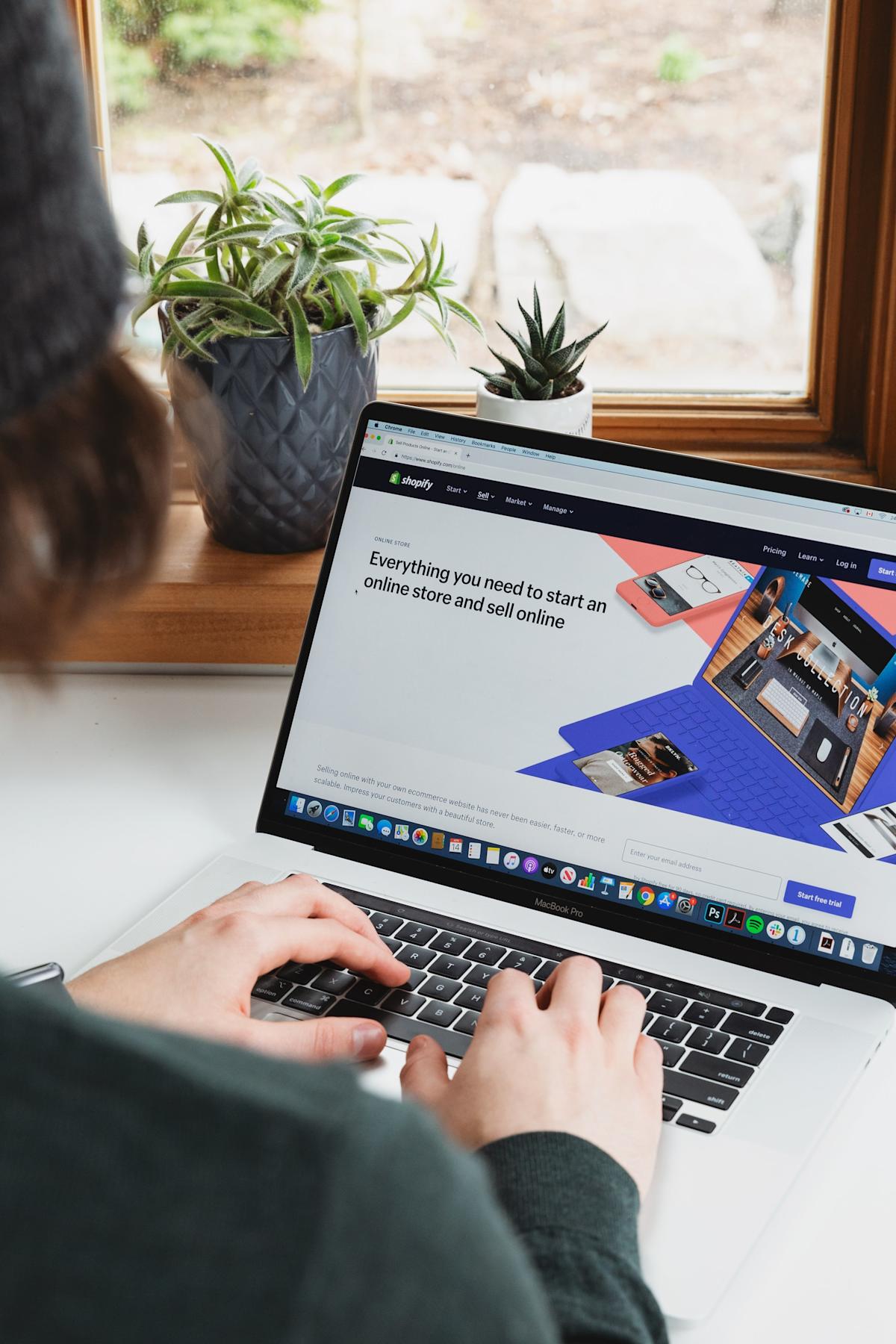
Shopify Stock Declines 26% Amid Growth Concerns

- Quarterly Performance Review: Jim Cramer highlighted that Shopify's stock fell 26% in Q1 despite demonstrating strong growth and profitability, indicating increasing market concerns over its valuation.
- Valuation Pressure: Cramer noted that Shopify's current P/E ratio stands at 64, which is considered high in the current market environment, leading to diminished investor confidence in its future growth and negatively impacting stock performance.
- Market Reaction: Although Shopify is a critical platform for small and medium-sized businesses operating online, the market's willingness to pay a premium for its stock has decreased, reflecting investor caution towards high-valuation tech stocks, which may affect its future financing capabilities.
- Holiday Outlook: Shopify President Harley Finkelstein expects strong holiday sales despite market skepticism about its outlook, potentially providing investors with an opportunity to reassess its investment value.
See More
AI Virtual Try-On Technology Boosts Fashion Retail


- Online Returns Challenge: The National Retail Federation estimates that by 2025, 15.8% of retail sales will be returned, with online returns reaching 19.3%, significantly impacting retailers' profit margins and driving the need for effective solutions to protect profitability.
- AI Technology Implementation: AI startup Catches has launched a virtual try-on platform that allows users to create a 'digital twin' for 'mirror-like realism', which is now live on luxury brand Amiri's website, aiming to reduce returns caused by fit issues.
- Enhanced Purchase Experience: Catches projects a 10% increase in conversion rates and a 20 to 30 times return on investment for brand partners, showcasing the potential of AI to boost consumer confidence and reduce return rates.
- Industry Trends: Retailers like Zara and ASOS are adopting virtual try-on tools and return fee strategies, indicating that AI technology is becoming a critical tool for the fashion retail industry to address high return rates and maintain profitability in a competitive landscape.
See More

AI Virtual Try-On Technology Boosts Retail

- Return Rate Challenge: The National Retail Federation estimates that by 2025, 15.8% of retail sales will be returned, with online sales seeing a staggering 19.3% return rate, significantly impacting retailers' profitability and driving them to seek AI solutions to mitigate returns.
- Virtual Try-On Technology: AI startup Catches has launched a virtual try-on platform that allows users to create a 'digital twin' for clothing trials, utilizing physics to simulate fabric texture, which is expected to significantly enhance online sales conversion rates for luxury brands and drive profit growth.
- Market Response: Retailers like Zara and ASOS have begun implementing virtual try-on tools and return fee policies, with Zara successfully protecting its gross margin through these measures, while ASOS reported a 160 basis point reduction in return rates, showcasing the potential of AI technology in improving profitability.
- Industry Outlook: As AI technology continues to advance, it is expected to drive transformation across the retail sector, with Catches projecting a 10% increase in conversion rates and a 20 to 30 times return on investment for brand partners, indicating the growing significance of AI in retail.
See More
Shopify Shares Surge 5.1% Amid Market Rally Following U.S.-Iran Ceasefire
- Market Rally Impact: Shopify's shares surged 5.1% in the afternoon session due to the de-escalation of the U.S.-Iran conflict, indicating a renewed investor focus on high-growth assets and enhancing confidence in corporate spending and investment.
- Volatility Analysis: Shopify has experienced 31 moves greater than 5% over the past year, and while today's increase suggests the market considers this news significant, it does not fundamentally alter perceptions of the business, highlighting its high volatility characteristics.
- Macroeconomic Environment: The easing of geopolitical tensions has lowered market volatility and reduced pressure on interest rates, creating a more favorable valuation environment for the software sector, which further drives investor interest in tech stocks.
- Long-term Investment Returns: Despite a 22% decline since the beginning of the year, investors who bought $1,000 worth of Shopify shares five years ago would now see their investment valued at $1,002, demonstrating potential stability in long-term holdings despite short-term challenges.
See More
Revolutionizing Investment Mindsets and Strategies
- Habits and Identity: David Gardner quotes James Clear, emphasizing that habits are pathways to identity change, suggesting that investors shape their self-perception through daily actions, thereby enhancing long-term investment success.
- Investing to Predict the Future: Kleiner Perkins' idea that “we invest to predict the future” highlights how investors become more observant of market dynamics when they hold stocks, improving their foresight of future trends.
- Market Uncertainty: By referencing Shakespeare, Gardner points out the “stubbornness of fortune” in investing, stressing the importance of long-term holding and regular investing to navigate the uncertainties brought by market fluctuations.
- Responsible Questioning: Gardner discusses Warren Berger's perspective, emphasizing that in an age of information overload, investors should question with curiosity rather than antagonism to improve the quality of their investment decisions.
See More
Identity and Habits of Investors Explored
- Identity and Habits: David Gardner emphasizes that habits are crucial in shaping identity, where every action serves as a vote for one's future self, enabling investors to gradually form their investment identity through consistent small habits, thereby enhancing long-term investment success.
- Investing and Observation: Gardner cites Kleiner Perkins' perspective that investing is not just about predicting the future but becoming a more astute observer through investment, paying attention to market changes and company dynamics to gain a competitive edge.
- Market Volatility Response: In the face of market fluctuations, Gardner advocates for a 'quiet and sweet style' through regular investing (like dollar-cost averaging), a strategy that helps investors remain calm amidst uncertainty and avoid emotional decision-making.
- The Art of Questioning: Gardner highlights the importance of questioning, encouraging investors to ask not just 'what should I buy' but 'why can this company succeed', thereby improving the quality of investment decisions through deeper inquiries.
See More
Shopify Stock Declines 26% Amid Growth Concerns
- Quarterly Performance Review: Jim Cramer highlighted that Shopify's stock fell 26% in Q1 despite demonstrating strong growth and profitability, indicating increasing market concerns over its valuation.
- Valuation Pressure: Cramer noted that Shopify's current P/E ratio stands at 64, which is considered high in the current market environment, leading to diminished investor confidence in its future growth and negatively impacting stock performance.
- Market Reaction: Although Shopify is a critical platform for small and medium-sized businesses operating online, the market's willingness to pay a premium for its stock has decreased, reflecting investor caution towards high-valuation tech stocks, which may affect its future financing capabilities.
- Holiday Outlook: Shopify President Harley Finkelstein expects strong holiday sales despite market skepticism about its outlook, potentially providing investors with an opportunity to reassess its investment value.
See More
AI Virtual Try-On Technology Boosts Fashion Retail
- Online Returns Challenge: The National Retail Federation estimates that by 2025, 15.8% of retail sales will be returned, with online returns reaching 19.3%, significantly impacting retailers' profit margins and driving the need for effective solutions to protect profitability.
- AI Technology Implementation: AI startup Catches has launched a virtual try-on platform that allows users to create a 'digital twin' for 'mirror-like realism', which is now live on luxury brand Amiri's website, aiming to reduce returns caused by fit issues.
- Enhanced Purchase Experience: Catches projects a 10% increase in conversion rates and a 20 to 30 times return on investment for brand partners, showcasing the potential of AI to boost consumer confidence and reduce return rates.
- Industry Trends: Retailers like Zara and ASOS are adopting virtual try-on tools and return fee strategies, indicating that AI technology is becoming a critical tool for the fashion retail industry to address high return rates and maintain profitability in a competitive landscape.
See More
AI Virtual Try-On Technology Boosts Retail
- Return Rate Challenge: The National Retail Federation estimates that by 2025, 15.8% of retail sales will be returned, with online sales seeing a staggering 19.3% return rate, significantly impacting retailers' profitability and driving them to seek AI solutions to mitigate returns.
- Virtual Try-On Technology: AI startup Catches has launched a virtual try-on platform that allows users to create a 'digital twin' for clothing trials, utilizing physics to simulate fabric texture, which is expected to significantly enhance online sales conversion rates for luxury brands and drive profit growth.
- Market Response: Retailers like Zara and ASOS have begun implementing virtual try-on tools and return fee policies, with Zara successfully protecting its gross margin through these measures, while ASOS reported a 160 basis point reduction in return rates, showcasing the potential of AI technology in improving profitability.
- Industry Outlook: As AI technology continues to advance, it is expected to drive transformation across the retail sector, with Catches projecting a 10% increase in conversion rates and a 20 to 30 times return on investment for brand partners, indicating the growing significance of AI in retail.
See More