Sempra Divests Stake to Support Growth of US Utility Operations
Written by Emily J. Thompson, Senior Investment Analyst
Updated: Sep 23 2025
0mins

Source: Benzinga
Sempra's Major Stake Sale: Sempra announced a $10 billion deal to sell a 45% stake in Sempra Infrastructure Partners to KKR & Co and the Canada Pension Plan Investment Board, aiming to strengthen its balance sheet and focus on U.S. regulated utilities.
Port Arthur LNG Expansion: Sempra Infrastructure Partners has approved a $14 billion expansion of the Port Arthur LNG project, which includes new liquefaction trains and is backed by significant equity financing from major investors, with operations expected to start in 2030 and 2031.
Trade with 70% Backtested Accuracy
Stop guessing "Should I Buy COP?" and start using high-conviction signals backed by rigorous historical data.
Sign up today to access powerful investing tools and make smarter, data-driven decisions.
Analyst Views on COP
Wall Street analysts forecast COP stock price to rise
19 Analyst Rating
15 Buy
3 Hold
1 Sell
Moderate Buy
Current: 103.580

Low
98.00
Averages
115.67
High
133.00
Current: 103.580
Low
98.00
Averages
115.67
High
133.00
About COP
ConocoPhillips is an exploration and production company. The Companies segments include Alaska; Lower 48 (L48); Canada; Europe, Middle East and North Africa (EMENA); and Asia Pacific (AP). Its Alaska segment primarily explores for, produces, transports and markets crude oil, natural gas and natural gas liquids (NGLs). The Lower 48 segment consists of operations located in the 48 contiguous states in the United States. Canadian operations consist of the Surmont oil sands development in Alberta, the liquids-rich Montney unconventional play in British Columbia and commercial operations. The Europe, Middle East and North Africa segment consists of operations principally located in the Norwegian sector of the North Sea, the Norwegian Sea, Qatar, Libya, Equatorial Guinea and commercial and terminalling operations in the United Kingdom. Asia Pacific segment has exploration and production operations in China, Malaysia, Australia and commercial operations in China, Singapore and Japan.
About the author

Emily J. Thompson
Emily J. Thompson, a Chartered Financial Analyst (CFA) with 12 years in investment research, graduated with honors from the Wharton School. Specializing in industrial and technology stocks, she provides in-depth analysis for Intellectia’s earnings and market brief reports.

US Stocks Close Lower as Chipmakers Weigh on Market


- Market Decline: On Tuesday, the S&P 500 index fell by 0.45%, the Dow Jones Industrial Average dropped by 0.25%, and the Nasdaq 100 index decreased by 1.77%, indicating a broader market decline under pressure from a selloff in chipmakers, reflecting investor concerns over high valuations.
- Samsung's Earnings Disappointment: Despite Samsung Electronics reporting a 19-fold profit surge, its stock plummeted over 8% in South Korea, suggesting market skepticism regarding the future profitability of the semiconductor sector, which could impact investor confidence in related companies.
- Geopolitical Risks Heightened: Crude oil prices surged to a 1.5-week high due to attacks on shipping in the Strait of Hormuz, raising inflation expectations and pushing bond yields higher, with the 10-year T-note yield reaching a 3.5-week high of 4.54%, adding uncertainty to the market.
- Strength in Software Stocks: Despite the overall market pressure, strong performance in software stocks indicates a rotation of funds into other sectors, with companies like Workday seeing stock price increases of over 4%, providing some support for the market.
See More
Six Institutional Investors Urge EU to Oppose Arctic Oil and Gas Expansion


- Investor Coalition: Six institutional investors, including Swedbank Robur Fonder AB and French pension fund Ircantec, have united to urge the EU to maintain its opposition to Arctic oil and gas expansion, demonstrating a strong commitment to the green transition with total assets under management exceeding €1 trillion, highlighting their significant influence on EU policy.
- Increased Policy Pressure: The total number of investors opposing Arctic oil and gas expansion has now reached 200, including businesses, scientists, trade unions, and NGOs, indicating growing pressure on the EU as it prepares to revise its Arctic policy over the summer.
- Norway's Position: Norway, as Western Europe's largest oil and gas producer, is advocating for the EU to lift the current ban on Arctic oil and gas production, arguing that extensive activities are already taking place in the Barents Sea, which could sway EU policy decisions.
- Sustainability Signal: Jacob Ehlerth Jorgensen, Head of ESG at Sampension, stated that the EU's stance on the Arctic sends an extremely important signal regarding its commitment to the green transition, emphasizing that companies and investors rely on clear and predictable policy signals for strategic planning.
See More

Analysis of Energy Stocks Performance and Future Outlook


- Price Volatility Impact: As crude oil prices fell from $114.58 to $78.94, Exxon Mobil (XOM) dropped 6%, Chevron (CVX) fell 8%, and ConocoPhillips (COP) slid 9%, indicating the market's sensitivity and volatility regarding energy stocks.
- Earnings Beat Expectations: Despite the stock declines, all three companies exceeded Q1 earnings expectations, with Exxon Mobil reporting an adjusted EPS of $1.16 against an expected $1.01, showcasing strong profitability and market confidence.
- Dividend Growth Continues: Exxon Mobil and Chevron have achieved 43 and 39 consecutive years of dividend increases, respectively, with Exxon’s quarterly dividend at $1.03, reflecting stable cash flow and commitment to shareholders.
- Future Growth Potential: ConocoPhillips targets $7 billion in incremental free cash flow by 2029, driven by the Willow and Port Arthur LNG projects, indicating its growth potential and strategic positioning in the future market.
See More
ConocoPhillips Shares Rebound After Six-Day Decline
- Stock Rebound: ConocoPhillips (COP) shares rose 1.4% to $104.63 on Thursday after six consecutive days of losses, despite an 11% decline over the past month, while the stock has gained over 11% year-to-date, outperforming the broader market.
- Contract Signing Outlook: The company is set to sign a contract with Syria to revive gas production, making it the first U.S. oil major to engage with the new Syrian government, potentially opening new revenue streams for the firm.
- Financial Resilience: ConocoPhillips maintains a strong balance sheet with minimal leverage and a disciplined capital return policy, returning 45% of cash flow to shareholders, demonstrating resilience in uncertain market conditions.
- Market Analysis: According to Seeking Alpha, COP has a Hold rating of 3.3, with an A+ in profitability prospects but only a C in growth factors, indicating cautious sentiment regarding its future growth potential.
See More
Gasoline Inventories Tighten, Keeping Prices Elevated
- Current Gas Prices: The average U.S. gasoline price stands at $3.83 per gallon, down from $4.29 a month ago but still significantly higher than last year, indicating that consumers are facing elevated costs at the pump despite falling crude prices.
- Refinery Operations: U.S. refiners are operating at maximum capacity, leading to tight gasoline supplies that prevent the quick conversion of cheaper crude into finished gasoline, thereby keeping retail prices high and reflecting a supply-demand imbalance in the market.
- Geopolitical Risks: Croft noted that ship traffic through the Strait of Hormuz remains below normal levels, averaging about 40 vessels per day compared to over 100 pre-tension, suggesting that geopolitical uncertainties may continue to impact energy prices.
- Market Outlook: Croft believes that mid-August will be a critical turning point for energy prices, contingent on shipping activity through the Strait of Hormuz, the progress of nuclear negotiations, and whether refinery utilization and gasoline inventories begin to normalize.
See More
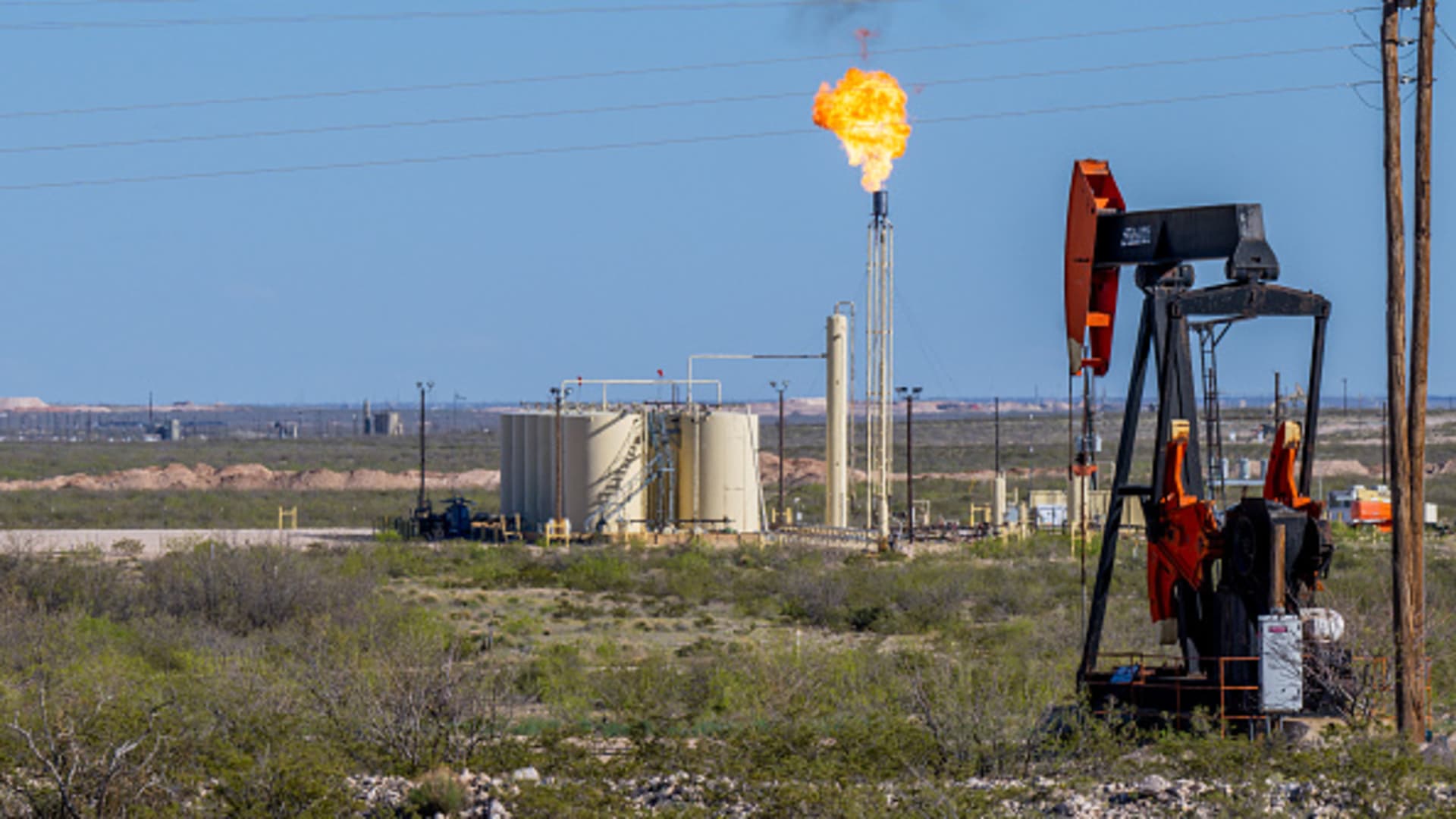
Investment Comparison: ConocoPhillips vs Occidental Petroleum
- ConocoPhillips Financial Performance: In FY 2025, ConocoPhillips generated nearly $58.9 billion in revenue, reflecting a year-over-year growth of approximately 7.5%, with a net income of $8 billion and a net margin of around 13.6%, indicating strong profitability and stable cash flow.
- Occidental Petroleum Transformation Strategy: Occidental Petroleum reported nearly $22 billion in revenue for FY 2025, down about 2% from the previous year, yet maintained a net income of $2.4 billion with a net margin of 11%, demonstrating its ability to remain profitable amid a shift towards low-carbon initiatives.
- Debt and Liquidity Analysis: ConocoPhillips boasts a debt-to-equity ratio of approximately 0.4 and a current ratio of 1.3, indicating robust financial health; in contrast, Occidental's debt-to-equity ratio stands at 0.7 with a current ratio of 0.9, suggesting a slight liquidity risk as short-term liabilities exceed short-term assets.
- Future Cash Flow Expectations: ConocoPhillips anticipates generating $7 billion in incremental free cash flow by 2029, including $1 billion annually from 2026 to 2028, reflecting its strong commitment to shareholder returns and appealing to income-focused investors.
See More
US Stocks Close Lower as Chipmakers Weigh on Market
- Market Decline: On Tuesday, the S&P 500 index fell by 0.45%, the Dow Jones Industrial Average dropped by 0.25%, and the Nasdaq 100 index decreased by 1.77%, indicating a broader market decline under pressure from a selloff in chipmakers, reflecting investor concerns over high valuations.
- Samsung's Earnings Disappointment: Despite Samsung Electronics reporting a 19-fold profit surge, its stock plummeted over 8% in South Korea, suggesting market skepticism regarding the future profitability of the semiconductor sector, which could impact investor confidence in related companies.
- Geopolitical Risks Heightened: Crude oil prices surged to a 1.5-week high due to attacks on shipping in the Strait of Hormuz, raising inflation expectations and pushing bond yields higher, with the 10-year T-note yield reaching a 3.5-week high of 4.54%, adding uncertainty to the market.
- Strength in Software Stocks: Despite the overall market pressure, strong performance in software stocks indicates a rotation of funds into other sectors, with companies like Workday seeing stock price increases of over 4%, providing some support for the market.
See More
Six Institutional Investors Urge EU to Oppose Arctic Oil and Gas Expansion
- Investor Coalition: Six institutional investors, including Swedbank Robur Fonder AB and French pension fund Ircantec, have united to urge the EU to maintain its opposition to Arctic oil and gas expansion, demonstrating a strong commitment to the green transition with total assets under management exceeding €1 trillion, highlighting their significant influence on EU policy.
- Increased Policy Pressure: The total number of investors opposing Arctic oil and gas expansion has now reached 200, including businesses, scientists, trade unions, and NGOs, indicating growing pressure on the EU as it prepares to revise its Arctic policy over the summer.
- Norway's Position: Norway, as Western Europe's largest oil and gas producer, is advocating for the EU to lift the current ban on Arctic oil and gas production, arguing that extensive activities are already taking place in the Barents Sea, which could sway EU policy decisions.
- Sustainability Signal: Jacob Ehlerth Jorgensen, Head of ESG at Sampension, stated that the EU's stance on the Arctic sends an extremely important signal regarding its commitment to the green transition, emphasizing that companies and investors rely on clear and predictable policy signals for strategic planning.
See More
Analysis of Energy Stocks Performance and Future Outlook
- Price Volatility Impact: As crude oil prices fell from $114.58 to $78.94, Exxon Mobil (XOM) dropped 6%, Chevron (CVX) fell 8%, and ConocoPhillips (COP) slid 9%, indicating the market's sensitivity and volatility regarding energy stocks.
- Earnings Beat Expectations: Despite the stock declines, all three companies exceeded Q1 earnings expectations, with Exxon Mobil reporting an adjusted EPS of $1.16 against an expected $1.01, showcasing strong profitability and market confidence.
- Dividend Growth Continues: Exxon Mobil and Chevron have achieved 43 and 39 consecutive years of dividend increases, respectively, with Exxon’s quarterly dividend at $1.03, reflecting stable cash flow and commitment to shareholders.
- Future Growth Potential: ConocoPhillips targets $7 billion in incremental free cash flow by 2029, driven by the Willow and Port Arthur LNG projects, indicating its growth potential and strategic positioning in the future market.
See More
ConocoPhillips Shares Rebound After Six-Day Decline
- Stock Rebound: ConocoPhillips (COP) shares rose 1.4% to $104.63 on Thursday after six consecutive days of losses, despite an 11% decline over the past month, while the stock has gained over 11% year-to-date, outperforming the broader market.
- Contract Signing Outlook: The company is set to sign a contract with Syria to revive gas production, making it the first U.S. oil major to engage with the new Syrian government, potentially opening new revenue streams for the firm.
- Financial Resilience: ConocoPhillips maintains a strong balance sheet with minimal leverage and a disciplined capital return policy, returning 45% of cash flow to shareholders, demonstrating resilience in uncertain market conditions.
- Market Analysis: According to Seeking Alpha, COP has a Hold rating of 3.3, with an A+ in profitability prospects but only a C in growth factors, indicating cautious sentiment regarding its future growth potential.
See More
Gasoline Inventories Tighten, Keeping Prices Elevated
- Current Gas Prices: The average U.S. gasoline price stands at $3.83 per gallon, down from $4.29 a month ago but still significantly higher than last year, indicating that consumers are facing elevated costs at the pump despite falling crude prices.
- Refinery Operations: U.S. refiners are operating at maximum capacity, leading to tight gasoline supplies that prevent the quick conversion of cheaper crude into finished gasoline, thereby keeping retail prices high and reflecting a supply-demand imbalance in the market.
- Geopolitical Risks: Croft noted that ship traffic through the Strait of Hormuz remains below normal levels, averaging about 40 vessels per day compared to over 100 pre-tension, suggesting that geopolitical uncertainties may continue to impact energy prices.
- Market Outlook: Croft believes that mid-August will be a critical turning point for energy prices, contingent on shipping activity through the Strait of Hormuz, the progress of nuclear negotiations, and whether refinery utilization and gasoline inventories begin to normalize.
See More
Investment Comparison: ConocoPhillips vs Occidental Petroleum
- ConocoPhillips Financial Performance: In FY 2025, ConocoPhillips generated nearly $58.9 billion in revenue, reflecting a year-over-year growth of approximately 7.5%, with a net income of $8 billion and a net margin of around 13.6%, indicating strong profitability and stable cash flow.
- Occidental Petroleum Transformation Strategy: Occidental Petroleum reported nearly $22 billion in revenue for FY 2025, down about 2% from the previous year, yet maintained a net income of $2.4 billion with a net margin of 11%, demonstrating its ability to remain profitable amid a shift towards low-carbon initiatives.
- Debt and Liquidity Analysis: ConocoPhillips boasts a debt-to-equity ratio of approximately 0.4 and a current ratio of 1.3, indicating robust financial health; in contrast, Occidental's debt-to-equity ratio stands at 0.7 with a current ratio of 0.9, suggesting a slight liquidity risk as short-term liabilities exceed short-term assets.
- Future Cash Flow Expectations: ConocoPhillips anticipates generating $7 billion in incremental free cash flow by 2029, including $1 billion annually from 2026 to 2028, reflecting its strong commitment to shareholder returns and appealing to income-focused investors.
See More