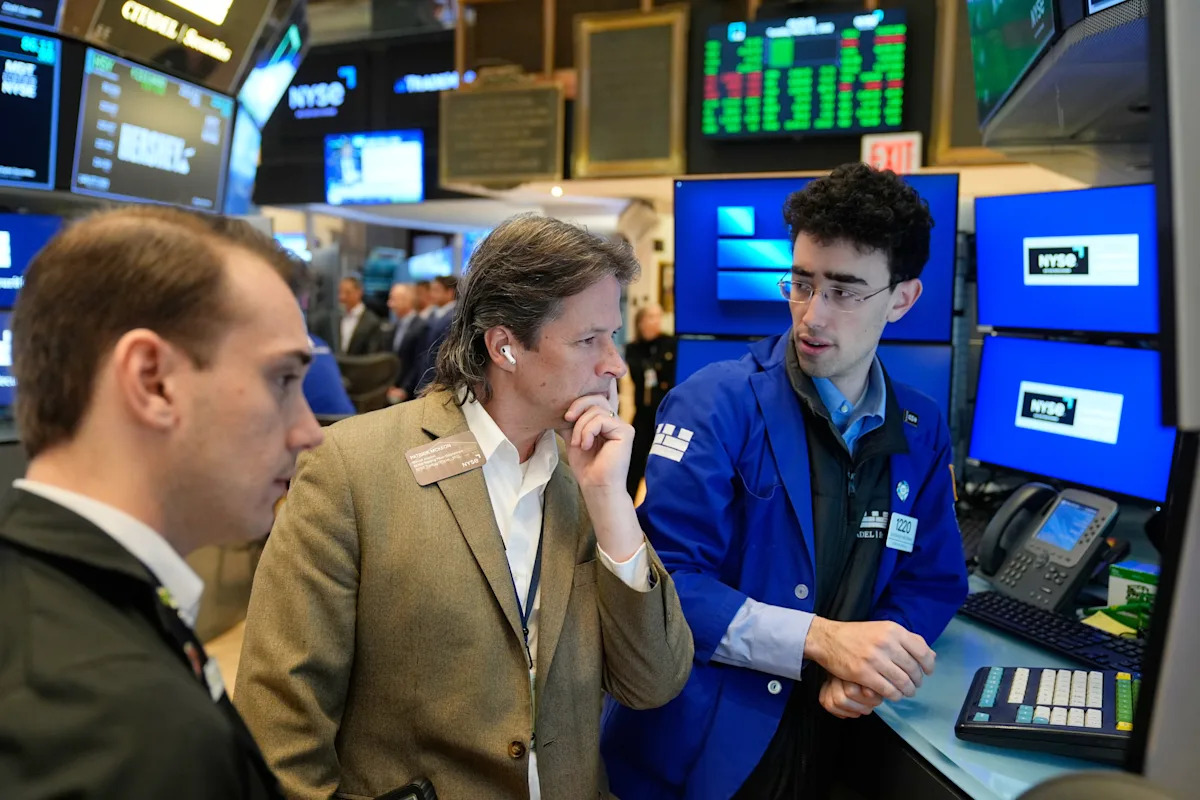
Safe Investment Choices Amid Economic Recession
Written by Emily J. Thompson, Senior Investment Analyst
Updated: 2 days ago
0mins
Source: Fool
- CVS Health's Resilience: With a vast network of pharmacies and a strong insurance business, CVS Health is well-positioned to perform relatively well during recessions, boasting a market cap of $100 billion and a dividend yield of 3.37%, providing investors with stable cash flow.
- Long-Term Growth Potential: As the aging population increases demand for medical services, CVS Health is expected to benefit from long-term growth, currently trading at a price-to-earnings ratio of 10.3, significantly lower than the healthcare sector average of 16.8, indicating its attractiveness.
- Valuation Advantage for Bristol Myers: Bristol Myers Squibb's shares are currently trading at a low price-to-earnings ratio of 9.5, suggesting undervaluation; despite facing patent cliffs, the launch of new products is expected to drive recovery and growth.
- Stable Dividend Policy: Bristol Myers has maintained its dividend without cuts for the past 20 years, with a dividend yield of 4.20%, demonstrating financial resilience during downturns, making it appealing to income-seeking investors.
Trade with 70% Backtested Accuracy
Stop guessing "Should I Buy CVS?" and start using high-conviction signals backed by rigorous historical data.
Sign up today to access powerful investing tools and make smarter, data-driven decisions.
Analyst Views on CVS
Wall Street analysts forecast CVS stock price to rise
17 Analyst Rating
16 Buy
1 Hold
0 Sell
Strong Buy
Current: 78.840

Low
91.00
Averages
96.71
High
105.00
Current: 78.840
Low
91.00
Averages
96.71
High
105.00
About CVS
CVS Health Corporation is a health solutions company. The Company's segments include Health Care Benefits, Health Services, Pharmacy & Consumer Wellness and Corporate/Other. The Health Care Benefits segment offers a broad range of traditional, voluntary and consumer-directed health insurance products and related services, including medical, pharmacy, dental and behavioral health plans, PDPs and Medicaid health care management services. The Health Services segment provides a full range of pharmacy benefit management (PBM) solutions through its CVS Caremark operations and delivers health care services in its medical clinics, virtually, and in the home. The Pharmacy & Consumer Wellness segment dispenses prescriptions in its CVS Pharmacy retail locations and, through its infusion operations, provides ancillary pharmacy services including pharmacy patient care programs, and vaccination administration, and sells a wide assortment of health and wellness products and general merchandise.
About the author

Emily J. Thompson
Emily J. Thompson, a Chartered Financial Analyst (CFA) with 12 years in investment research, graduated with honors from the Wharton School. Specializing in industrial and technology stocks, she provides in-depth analysis for Intellectia’s earnings and market brief reports.

Major U.S. Indices Post Significant Weekly Gains

- Weekly Gains: Major U.S. indices posted significant weekly gains, with the S&P 500 up 3.6%, the Nasdaq Composite rising 4.7%, and the Dow Jones increasing by 3.0%, reflecting investor optimism regarding a potential ceasefire deal between the U.S. and Israel and Iran.
- Semiconductor Innovation: Applied Materials (AMAT) shares surged 8% on Wednesday after unveiling new chipmaking tools designed for atomic-level precision, catering to the skyrocketing demand for AI chips, which could enhance its competitive edge in the semiconductor market.
- Acquisition News: Organon (OGN) closed 28% higher on Friday following reports that Mumbai-based Sun Pharmaceutical Industries submitted a binding bid of approximately $12 billion for the company, indicating strong market confidence in its growth prospects.
- Medicare Payment Increase: The Centers for Medicare & Medicaid Services announced a 2.48% increase in average Medicare Advantage payments for 2027, translating to over $13 billion in additional funding, which boosted insurer stocks like Elevance Health (ELV) and UnitedHealth Group (UNH).
See More

Safe Investment Choices Amid Economic Recession

- CVS Health's Resilience: With a vast network of pharmacies and a strong insurance business, CVS Health is well-positioned to perform relatively well during recessions, boasting a market cap of $100 billion and a dividend yield of 3.37%, providing investors with stable cash flow.
- Long-Term Growth Potential: As the aging population increases demand for medical services, CVS Health is expected to benefit from long-term growth, currently trading at a price-to-earnings ratio of 10.3, significantly lower than the healthcare sector average of 16.8, indicating its attractiveness.
- Valuation Advantage for Bristol Myers: Bristol Myers Squibb's shares are currently trading at a low price-to-earnings ratio of 9.5, suggesting undervaluation; despite facing patent cliffs, the launch of new products is expected to drive recovery and growth.
- Stable Dividend Policy: Bristol Myers has maintained its dividend without cuts for the past 20 years, with a dividend yield of 4.20%, demonstrating financial resilience during downturns, making it appealing to income-seeking investors.
See More

CVS Health and Bristol Myers Squibb Positioned for Economic Resilience
- Recession Resilience: CVS Health has maintained or increased its dividends over the past 20 years, demonstrating stability during economic downturns, particularly after experiencing multiple shocks like the 2008 financial crisis and the pandemic, indicating its business model can perform well across economic cycles.
- Dividend Appeal: CVS's dividend program provides investors with stable income, helping to mitigate losses during market downturns, with its current stock trading at a forward P/E of 10.3, which is attractive compared to the healthcare sector average of 16.8.
- New Product Drivers: Bristol Myers Squibb's shares are currently trading at a forward P/E of 9.5, and despite facing patent expirations, its newly launched subcutaneous version of the oncology drug Opdivo is expected to support future revenue growth, showcasing its strong portfolio across multiple therapeutic areas.
- Stable Dividend Policy: Bristol Myers Squibb has not suspended or reduced its dividend in the past two decades, further proving its resilience during economic downturns, making it a top choice for income-seeking investors preparing their portfolios for a recession.
See More

CVS Stock Faces Regulatory Headwinds
- Regulatory Pressure Intensifies: CVS stock experienced a decline in afternoon trading on April 7, 2026, reflecting market concerns over the regulatory challenges the company faces, which could impact its future profitability and market performance.
- Market Reaction Evident: Although CVS saw a slight increase of 0.06% in stock price on the same day, the overall trend indicates that investors are cautious about the company's ability to adapt to the regulatory environment, potentially leading to a decrease in investor confidence.
- Uncertain Future Outlook: As regulatory policies continue to evolve, CVS must implement effective strategies to address these challenges in order to maintain its market position and ensure sustained growth, particularly in the highly competitive healthcare sector.
- Investor Focus: The intensifying regulatory issues have made CVS a focal point for investors, and analysts may reassess its stock ratings and price targets, which could affect the company's future financing capabilities and market valuation.
See More

Health Insurance Stocks Surge Following Medicare Payment Increase

- Payment Increase Impact: The Trump administration's announcement of a 2.48% increase in Medicare Advantage payments for 2027, translating to over $13 billion, led to a significant surge in major insurers' stock prices, with UnitedHealth Group (UNH) rising 9.4%, reflecting market optimism about the healthcare sector's outlook.
- Strong Market Reaction: This payment increase starkly contrasts with the proposed 0.09% hike in January, which had previously caused a sharp decline in insurance stocks, indicating the market's sensitivity to policy changes and their substantial impact on the industry.
- Divergent Analyst Views: While the payment increase is seen as a positive signal, analysts remain cautious about its ability to sustain a long-term rally, noting that medical cost inflation remains between 8-10%, which may lead to ongoing margin pressures.
- Future Outlook: Analysts expect insurers to submit more competitive bids by the June deadline, leveraging this revenue windfall to restore supplemental benefits and recapture lost market share, showcasing the industry's potential recovery capability under supportive policies.
See More

GLP-1 Drugs Drive Growth in U.S. Apparel Spending


- Surge in Apparel Demand: Approximately 80% of GLP-1 users anticipate needing new clothing due to size changes, with a Circana survey revealing that 55% of active users have already purchased new items, indicating a fresh wave of consumer spending in the apparel market.
- Significant Market Potential: Bernstein estimates that GLP-1 users could purchase between 150 million and 700 million apparel items due to weight loss, translating to an additional $13 billion in annual spending in the U.S. apparel sector, highlighting robust market demand.
- Brands Adapting to Change: Retailers like Stitch Fix have launched targeted marketing campaigns for weight loss users, with client mentions of weight loss requests tripling over the past two years, demonstrating brands' proactive adaptation to this emerging trend.
- Shift in Consumer Behavior: An increasing number of consumers are opting for more affordable clothing during their weight loss journey, with Destination XL's CEO noting that about 25% of their customers are using GLP-1 drugs, leading to a preference for cost-effective options.
See More
Major U.S. Indices Post Significant Weekly Gains
- Weekly Gains: Major U.S. indices posted significant weekly gains, with the S&P 500 up 3.6%, the Nasdaq Composite rising 4.7%, and the Dow Jones increasing by 3.0%, reflecting investor optimism regarding a potential ceasefire deal between the U.S. and Israel and Iran.
- Semiconductor Innovation: Applied Materials (AMAT) shares surged 8% on Wednesday after unveiling new chipmaking tools designed for atomic-level precision, catering to the skyrocketing demand for AI chips, which could enhance its competitive edge in the semiconductor market.
- Acquisition News: Organon (OGN) closed 28% higher on Friday following reports that Mumbai-based Sun Pharmaceutical Industries submitted a binding bid of approximately $12 billion for the company, indicating strong market confidence in its growth prospects.
- Medicare Payment Increase: The Centers for Medicare & Medicaid Services announced a 2.48% increase in average Medicare Advantage payments for 2027, translating to over $13 billion in additional funding, which boosted insurer stocks like Elevance Health (ELV) and UnitedHealth Group (UNH).
See More
Safe Investment Choices Amid Economic Recession
- CVS Health's Resilience: With a vast network of pharmacies and a strong insurance business, CVS Health is well-positioned to perform relatively well during recessions, boasting a market cap of $100 billion and a dividend yield of 3.37%, providing investors with stable cash flow.
- Long-Term Growth Potential: As the aging population increases demand for medical services, CVS Health is expected to benefit from long-term growth, currently trading at a price-to-earnings ratio of 10.3, significantly lower than the healthcare sector average of 16.8, indicating its attractiveness.
- Valuation Advantage for Bristol Myers: Bristol Myers Squibb's shares are currently trading at a low price-to-earnings ratio of 9.5, suggesting undervaluation; despite facing patent cliffs, the launch of new products is expected to drive recovery and growth.
- Stable Dividend Policy: Bristol Myers has maintained its dividend without cuts for the past 20 years, with a dividend yield of 4.20%, demonstrating financial resilience during downturns, making it appealing to income-seeking investors.
See More
CVS Health and Bristol Myers Squibb Positioned for Economic Resilience
- Recession Resilience: CVS Health has maintained or increased its dividends over the past 20 years, demonstrating stability during economic downturns, particularly after experiencing multiple shocks like the 2008 financial crisis and the pandemic, indicating its business model can perform well across economic cycles.
- Dividend Appeal: CVS's dividend program provides investors with stable income, helping to mitigate losses during market downturns, with its current stock trading at a forward P/E of 10.3, which is attractive compared to the healthcare sector average of 16.8.
- New Product Drivers: Bristol Myers Squibb's shares are currently trading at a forward P/E of 9.5, and despite facing patent expirations, its newly launched subcutaneous version of the oncology drug Opdivo is expected to support future revenue growth, showcasing its strong portfolio across multiple therapeutic areas.
- Stable Dividend Policy: Bristol Myers Squibb has not suspended or reduced its dividend in the past two decades, further proving its resilience during economic downturns, making it a top choice for income-seeking investors preparing their portfolios for a recession.
See More
CVS Stock Faces Regulatory Headwinds
- Regulatory Pressure Intensifies: CVS stock experienced a decline in afternoon trading on April 7, 2026, reflecting market concerns over the regulatory challenges the company faces, which could impact its future profitability and market performance.
- Market Reaction Evident: Although CVS saw a slight increase of 0.06% in stock price on the same day, the overall trend indicates that investors are cautious about the company's ability to adapt to the regulatory environment, potentially leading to a decrease in investor confidence.
- Uncertain Future Outlook: As regulatory policies continue to evolve, CVS must implement effective strategies to address these challenges in order to maintain its market position and ensure sustained growth, particularly in the highly competitive healthcare sector.
- Investor Focus: The intensifying regulatory issues have made CVS a focal point for investors, and analysts may reassess its stock ratings and price targets, which could affect the company's future financing capabilities and market valuation.
See More
Health Insurance Stocks Surge Following Medicare Payment Increase
- Payment Increase Impact: The Trump administration's announcement of a 2.48% increase in Medicare Advantage payments for 2027, translating to over $13 billion, led to a significant surge in major insurers' stock prices, with UnitedHealth Group (UNH) rising 9.4%, reflecting market optimism about the healthcare sector's outlook.
- Strong Market Reaction: This payment increase starkly contrasts with the proposed 0.09% hike in January, which had previously caused a sharp decline in insurance stocks, indicating the market's sensitivity to policy changes and their substantial impact on the industry.
- Divergent Analyst Views: While the payment increase is seen as a positive signal, analysts remain cautious about its ability to sustain a long-term rally, noting that medical cost inflation remains between 8-10%, which may lead to ongoing margin pressures.
- Future Outlook: Analysts expect insurers to submit more competitive bids by the June deadline, leveraging this revenue windfall to restore supplemental benefits and recapture lost market share, showcasing the industry's potential recovery capability under supportive policies.
See More
GLP-1 Drugs Drive Growth in U.S. Apparel Spending
- Surge in Apparel Demand: Approximately 80% of GLP-1 users anticipate needing new clothing due to size changes, with a Circana survey revealing that 55% of active users have already purchased new items, indicating a fresh wave of consumer spending in the apparel market.
- Significant Market Potential: Bernstein estimates that GLP-1 users could purchase between 150 million and 700 million apparel items due to weight loss, translating to an additional $13 billion in annual spending in the U.S. apparel sector, highlighting robust market demand.
- Brands Adapting to Change: Retailers like Stitch Fix have launched targeted marketing campaigns for weight loss users, with client mentions of weight loss requests tripling over the past two years, demonstrating brands' proactive adaptation to this emerging trend.
- Shift in Consumer Behavior: An increasing number of consumers are opting for more affordable clothing during their weight loss journey, with Destination XL's CEO noting that about 25% of their customers are using GLP-1 drugs, leading to a preference for cost-effective options.
See More