Qualcomm Completes Alphawave Semi Acquisition One Quarter Early
Written by Emily J. Thompson, Senior Investment Analyst
Updated: Dec 18 2025
0mins
Should l Buy QCOM?
Source: Newsfilter
- Accelerated Acquisition: Qualcomm has completed its acquisition of Alphawave Semi one quarter ahead of schedule, aiming to accelerate its expansion into data centers, which is expected to significantly enhance its market position in AI compute and connectivity solutions.
- Leadership Change: Tony Pialis, CEO of Alphawave Semi, will lead Qualcomm's data center business, a move that not only enhances Qualcomm's expertise in the data center sector but also drives technological integration and innovation.
- Technological Synergy: The combination of Alphawave's high-speed connectivity technologies with Qualcomm's Oryon CPU and Hexagon NPU processors is expected to optimize performance for next-generation AI data centers, improving overall computing efficiency and energy efficiency.
- Market Outlook: This acquisition positions Qualcomm to gain a stronger competitive advantage in core infrastructure across high-growth areas such as data centers, AI, and data storage, further advancing its strategic footprint in the global market.
Trade with 70% Backtested Accuracy
Stop guessing "Should I Buy QCOM?" and start using high-conviction signals backed by rigorous historical data.
Sign up today to access powerful investing tools and make smarter, data-driven decisions.
Analyst Views on QCOM
Wall Street analysts forecast QCOM stock price to rise
16 Analyst Rating
10 Buy
5 Hold
1 Sell
Moderate Buy
Current: 127.280

Low
165.00
Averages
197.14
High
225.00
Current: 127.280
Low
165.00
Averages
197.14
High
225.00
About QCOM
Qualcomm Incorporated is engaged in the development and commercialization of foundational technologies for the wireless industry, including third generation (3G), fourth generation (4G) and fifth generation (5G) wireless connectivity, and high-performance and low-power computing, including on-device artificial intelligence. Its segments include Qualcomm CDMA Technologies (QCT), Qualcomm Technology Licensing (QTL) and Qualcomm Strategic Initiatives. QCT develops and supplies integrated circuits and system software based on 3G/4G/5G and other technologies, including radio frequency front-end, digital cockpit and advanced driver assistance and automated driving, Internet of things including consumer electronic devices, industrial devices and edge networking products. QTL grants licenses or otherwise provides rights to use portions of its intellectual property portfolio that includes certain patent rights essential to and/or useful in the manufacture and sale of certain wireless products.
About the author

Emily J. Thompson
Emily J. Thompson, a Chartered Financial Analyst (CFA) with 12 years in investment research, graduated with honors from the Wharton School. Specializing in industrial and technology stocks, she provides in-depth analysis for Intellectia’s earnings and market brief reports.

Stock Markets Pressured by Soaring Oil Prices


- Oil Price Surge Pressures Markets: Stock indexes are under pressure as crude oil prices soar over 8% following President Trump's aggressive stance on Iran, leading to a 0.06% drop in the S&P 500, a 0.23% decline in the Dow, and a 0.20% fall in the Nasdaq 100, indicating heightened inflation concerns among investors.
- Unexpected Jobless Claims Drop: Despite market pressures, initial jobless claims fell by 9,000 to 202,000, indicating a stronger labor market than anticipated, which may provide some support for stocks and alleviate investor fears of an economic slowdown.
- Divergent Energy Sector Performance: Energy producers like Diamondback Energy rose over 2% due to soaring WTI prices, while airline stocks such as American Airlines and Carnival fell more than 4% as rising fuel costs cut into profits, highlighting a clear divergence across sectors.
- Tech Stocks Decline: Chipmakers and AI infrastructure stocks retreated, with ARM Holdings leading the Nasdaq 100 down over 5%, reflecting waning confidence in tech stocks and potentially impacting future investment decisions.
See More

Analysts Upgrade Rocket Lab and Sandisk Amid Market Changes


- Rocket Lab Upgrade: Analyst David B. McMillan upgraded Rocket Lab from Sell to Hold, noting that a 40% stock decline has created a more favorable risk-reward profile, supported by a backlog exceeding $2 billion and high-margin HASTE contracts, although long-term valuation remains contingent on the success of the Neutron rocket.
- Sandisk Strong Performance: Analyst Gary Alexander upgraded Sandisk from Sell to Neutral, reporting a 61% year-over-year revenue increase to $3.03 billion in 2026, significantly surpassing Wall Street's expectations of $2.69 billion, reflecting robust demand for storage chips that has elevated gross margins to over 60%.
- Qualcomm Downgrade: Analyst JR Research downgraded Qualcomm, citing weak smartphone demand and memory constraints leading to a sharp stock decline, with recovery unlikely before FY2027 as smartphone chipset revenue constitutes over 62% of the company's base.
- BJ’s Wholesale Club Cautious Outlook: Redfox Capital downgraded BJ from Buy to Hold, indicating a shift in FY2026 focus towards SG&A investments over earnings growth, which will slow adjusted EPS growth to low-to-mid-single digits despite strong membership quality, reflecting market caution in BJ's near-term valuation adjustments.
See More

Volkswagen Partners with Xpeng to Accelerate Tech Transformation


- Intensified Market Competition: Volkswagen's profits in China fell approximately 45% in 2025, from $2 billion to $1.1 billion, highlighting fierce competition from local firms that forces a reassessment of market strategies to maintain share.
- Deepened Technological Collaboration: The partnership with Xpeng enables Volkswagen to rapidly build hardware and software architecture in China, particularly the CEA architecture completed in 18 months, significantly shortening new vehicle development cycles and enhancing market responsiveness.
- Product Innovation Speed: The jointly developed ID.UNYX 08 vehicle was produced in 24 months, a speed deemed 'unheard of' in the Western automotive industry, reflecting the high efficiency of Chinese manufacturing capabilities.
- Global Expansion Strategy: Xpeng's launch of new models in Mexico indicates its intent to compete globally, potentially posing a greater threat to Volkswagen and other non-Chinese automakers, especially in the competition for high-value technology components.
See More

Marvell Technology Shares Surge 12.84% Following Nvidia Investment


- Significant Stock Surge: Marvell Technology's shares rose 12.84% to $99.05, primarily driven by Nvidia's announcement of a $2 billion investment and expanded AI infrastructure partnership, reflecting strong market confidence in future growth.
- Surge in Trading Volume: Today's trading volume reached 50.9 million shares, about 194% above the three-month average of 17.3 million shares, indicating heightened investor interest in Marvell's future performance and suggesting sustained market momentum.
- Strategic Partnership Impact: The strategic partnership between Nvidia and Marvell will integrate Marvell's data center connectivity solutions with Nvidia's AI factory offerings, expected to significantly enhance Marvell's role in AI infrastructure and drive sales growth.
- Strong Financial Performance: Marvell reported a 42% year-over-year revenue increase for fiscal 2026, supported by robust AI demand, and today's investment news further strengthens market expectations for continued growth.
See More

Semiconductor Market Approaching Bottom


- Market Sentiment Analysis: The current market sentiment is heavily bearish, with investors adopting a cautious outlook; however, historical trends indicate that market lows often precede improvements in sentiment and fundamentals, suggesting potential rebound opportunities.
- Semiconductor ETF Performance: The VanEck Semiconductor ETF (SMH) has shown a standard A-B-C corrective pattern since its February highs, currently trading in the $360 to $370 range, which may act as a support zone, indicating that selling pressure could be nearing exhaustion.
- Relative Strength Indicator: The ratio chart of SMH to the S&P 500 indicates a more tempered performance of the semiconductor sector relative to the broader market, with a triangle consolidation pattern that typically suggests a potential upward breakout, further supporting a long-term bullish outlook.
- Nvidia Valuation Analysis: Nvidia (NVDA) is currently trading at a forward P/E ratio of 20.5 times, with expected earnings of $8.29 per share in 2027, highlighting its growth potential significantly surpassing the market average; investors face a choice between paying 46 times earnings for a slow-growing company or approximately 20 times for a company with nearly 70% growth.
See More
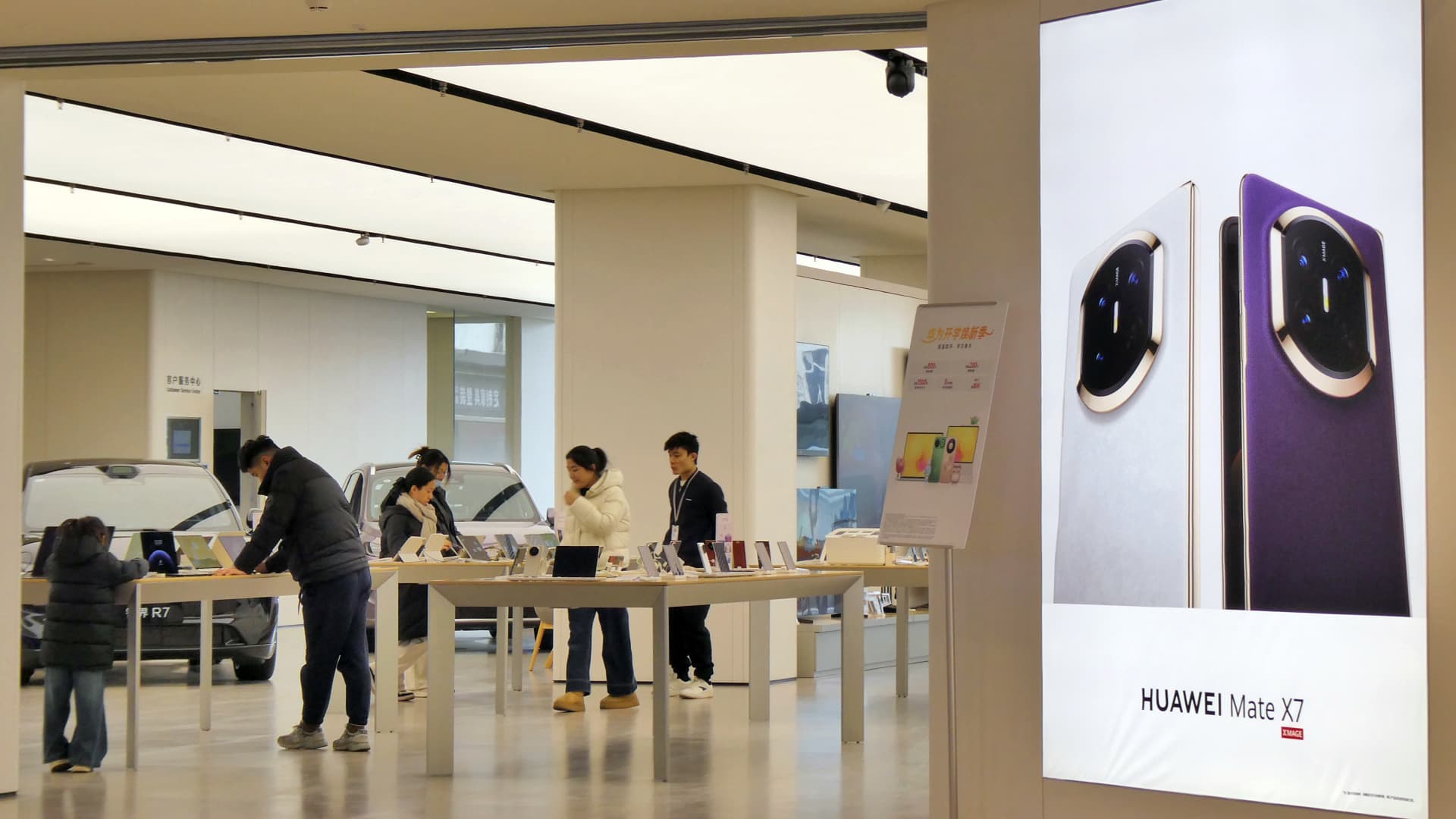
Huawei's Cloud Revenue Declines Amid AI Chip Development Challenges


- Cloud Revenue Decline: Huawei's cloud revenue from external customers fell by 3.5% to 32.16 billion yuan ($4.6 billion) in 2025, indicating significant competitive pressure, particularly from companies like ByteDance, amid global cloud service market expansion.
- Overall Revenue Growth Weakness: While Huawei's total cloud revenue, including internal customers, rose by 4.8% to 72.8 billion yuan, the main ICT infrastructure segment's growth slowed to 2.6% from 4.9% in 2024, reflecting insufficient market acceptance of its self-developed Ascend AI chip solutions.
- Consumer Business Slowdown: Huawei's consumer business revenue grew only 1.6% to 344.47 billion yuan in 2025, a stark contrast to the 38.3% growth in 2024, highlighting the ongoing impact of U.S. sanctions and a sluggish Chinese consumer market.
- Innovative R&D Investment: Huawei invested a record 192.3 billion yuan in R&D in 2025, accounting for 21.8% of total revenue, demonstrating the company's commitment to technological innovation despite challenges, aiming to maintain a competitive edge in future markets.
See More
Stock Markets Pressured by Soaring Oil Prices
- Oil Price Surge Pressures Markets: Stock indexes are under pressure as crude oil prices soar over 8% following President Trump's aggressive stance on Iran, leading to a 0.06% drop in the S&P 500, a 0.23% decline in the Dow, and a 0.20% fall in the Nasdaq 100, indicating heightened inflation concerns among investors.
- Unexpected Jobless Claims Drop: Despite market pressures, initial jobless claims fell by 9,000 to 202,000, indicating a stronger labor market than anticipated, which may provide some support for stocks and alleviate investor fears of an economic slowdown.
- Divergent Energy Sector Performance: Energy producers like Diamondback Energy rose over 2% due to soaring WTI prices, while airline stocks such as American Airlines and Carnival fell more than 4% as rising fuel costs cut into profits, highlighting a clear divergence across sectors.
- Tech Stocks Decline: Chipmakers and AI infrastructure stocks retreated, with ARM Holdings leading the Nasdaq 100 down over 5%, reflecting waning confidence in tech stocks and potentially impacting future investment decisions.
See More
Analysts Upgrade Rocket Lab and Sandisk Amid Market Changes
- Rocket Lab Upgrade: Analyst David B. McMillan upgraded Rocket Lab from Sell to Hold, noting that a 40% stock decline has created a more favorable risk-reward profile, supported by a backlog exceeding $2 billion and high-margin HASTE contracts, although long-term valuation remains contingent on the success of the Neutron rocket.
- Sandisk Strong Performance: Analyst Gary Alexander upgraded Sandisk from Sell to Neutral, reporting a 61% year-over-year revenue increase to $3.03 billion in 2026, significantly surpassing Wall Street's expectations of $2.69 billion, reflecting robust demand for storage chips that has elevated gross margins to over 60%.
- Qualcomm Downgrade: Analyst JR Research downgraded Qualcomm, citing weak smartphone demand and memory constraints leading to a sharp stock decline, with recovery unlikely before FY2027 as smartphone chipset revenue constitutes over 62% of the company's base.
- BJ’s Wholesale Club Cautious Outlook: Redfox Capital downgraded BJ from Buy to Hold, indicating a shift in FY2026 focus towards SG&A investments over earnings growth, which will slow adjusted EPS growth to low-to-mid-single digits despite strong membership quality, reflecting market caution in BJ's near-term valuation adjustments.
See More
Volkswagen Partners with Xpeng to Accelerate Tech Transformation
- Intensified Market Competition: Volkswagen's profits in China fell approximately 45% in 2025, from $2 billion to $1.1 billion, highlighting fierce competition from local firms that forces a reassessment of market strategies to maintain share.
- Deepened Technological Collaboration: The partnership with Xpeng enables Volkswagen to rapidly build hardware and software architecture in China, particularly the CEA architecture completed in 18 months, significantly shortening new vehicle development cycles and enhancing market responsiveness.
- Product Innovation Speed: The jointly developed ID.UNYX 08 vehicle was produced in 24 months, a speed deemed 'unheard of' in the Western automotive industry, reflecting the high efficiency of Chinese manufacturing capabilities.
- Global Expansion Strategy: Xpeng's launch of new models in Mexico indicates its intent to compete globally, potentially posing a greater threat to Volkswagen and other non-Chinese automakers, especially in the competition for high-value technology components.
See More
Marvell Technology Shares Surge 12.84% Following Nvidia Investment
- Significant Stock Surge: Marvell Technology's shares rose 12.84% to $99.05, primarily driven by Nvidia's announcement of a $2 billion investment and expanded AI infrastructure partnership, reflecting strong market confidence in future growth.
- Surge in Trading Volume: Today's trading volume reached 50.9 million shares, about 194% above the three-month average of 17.3 million shares, indicating heightened investor interest in Marvell's future performance and suggesting sustained market momentum.
- Strategic Partnership Impact: The strategic partnership between Nvidia and Marvell will integrate Marvell's data center connectivity solutions with Nvidia's AI factory offerings, expected to significantly enhance Marvell's role in AI infrastructure and drive sales growth.
- Strong Financial Performance: Marvell reported a 42% year-over-year revenue increase for fiscal 2026, supported by robust AI demand, and today's investment news further strengthens market expectations for continued growth.
See More
Semiconductor Market Approaching Bottom
- Market Sentiment Analysis: The current market sentiment is heavily bearish, with investors adopting a cautious outlook; however, historical trends indicate that market lows often precede improvements in sentiment and fundamentals, suggesting potential rebound opportunities.
- Semiconductor ETF Performance: The VanEck Semiconductor ETF (SMH) has shown a standard A-B-C corrective pattern since its February highs, currently trading in the $360 to $370 range, which may act as a support zone, indicating that selling pressure could be nearing exhaustion.
- Relative Strength Indicator: The ratio chart of SMH to the S&P 500 indicates a more tempered performance of the semiconductor sector relative to the broader market, with a triangle consolidation pattern that typically suggests a potential upward breakout, further supporting a long-term bullish outlook.
- Nvidia Valuation Analysis: Nvidia (NVDA) is currently trading at a forward P/E ratio of 20.5 times, with expected earnings of $8.29 per share in 2027, highlighting its growth potential significantly surpassing the market average; investors face a choice between paying 46 times earnings for a slow-growing company or approximately 20 times for a company with nearly 70% growth.
See More
Huawei's Cloud Revenue Declines Amid AI Chip Development Challenges
- Cloud Revenue Decline: Huawei's cloud revenue from external customers fell by 3.5% to 32.16 billion yuan ($4.6 billion) in 2025, indicating significant competitive pressure, particularly from companies like ByteDance, amid global cloud service market expansion.
- Overall Revenue Growth Weakness: While Huawei's total cloud revenue, including internal customers, rose by 4.8% to 72.8 billion yuan, the main ICT infrastructure segment's growth slowed to 2.6% from 4.9% in 2024, reflecting insufficient market acceptance of its self-developed Ascend AI chip solutions.
- Consumer Business Slowdown: Huawei's consumer business revenue grew only 1.6% to 344.47 billion yuan in 2025, a stark contrast to the 38.3% growth in 2024, highlighting the ongoing impact of U.S. sanctions and a sluggish Chinese consumer market.
- Innovative R&D Investment: Huawei invested a record 192.3 billion yuan in R&D in 2025, accounting for 21.8% of total revenue, demonstrating the company's commitment to technological innovation despite challenges, aiming to maintain a competitive edge in future markets.
See More