Nike Director Timothy D. Cook Buys 50,000 Shares for $2.95M
Written by Emily J. Thompson, Senior Investment Analyst
Updated: Dec 24 2025
0mins

Should l Buy NKE?
Source: NASDAQ.COM
- Insider Purchase: Nike's Director Timothy D. Cook purchased 50,000 shares at $58.97 each for a total investment of $2.95M, marking his first buy in the past twelve months, which indicates strong confidence in the company's future prospects.
- Stock Price Surge: Nike's stock rose approximately 4.8% on Wednesday, reflecting positive market sentiment towards Cook's purchase, which may bolster investor confidence and encourage further investments in the stock.
- Vestis Transaction Update: Meanwhile, Douglas A. Pertz bought 25,000 shares of Vestis at $6.90 each for a total of $172,445, marking his second purchase in the past year, demonstrating ongoing optimism about the company.
- Market Performance: Vestis saw a 3.3% increase in trading on Wednesday, indicating that the market is responding positively to Pertz's buying activity, which could further drive the company's stock price upward.
Trade with 70% Backtested Accuracy
Stop guessing "Should I Buy NKE?" and start using high-conviction signals backed by rigorous historical data.
Sign up today to access powerful investing tools and make smarter, data-driven decisions.
Analyst Views on NKE
Wall Street analysts forecast NKE stock price to rise
21 Analyst Rating
14 Buy
7 Hold
0 Sell
Moderate Buy
Current: 44.400

Low
62.00
Averages
76.11
High
110.00
Current: 44.400
Low
62.00
Averages
76.11
High
110.00
About NKE
NIKE, Inc. is engaged in the designing, marketing and distributing of athletic footwear, apparel, equipment and accessories and services for sports and fitness activities. The Company's operating segments include North America; Europe, Middle East & Africa (EMEA); Greater China; and Asia Pacific & Latin America (APLA). It sells a line of equipment and accessories under the NIKE Brand name, including bags, socks, sport balls, eyewear, timepieces, digital devices, bats, gloves, protective equipment and other equipment designed for sports activities. It also designs products specifically for the Jordan Brand and Converse. The Jordan Brand designs, distributes and licenses athletic and casual footwear, apparel and accessories predominantly focused on basketball performance and culture using the Jumpman trademark. The Company also designs, distributes and licenses casual sneakers, apparel and accessories under the Chuck Taylor, All Star, One Star, Star Chevron and Jack Purcell trademarks.
About the author

Emily J. Thompson
Emily J. Thompson, a Chartered Financial Analyst (CFA) with 12 years in investment research, graduated with honors from the Wharton School. Specializing in industrial and technology stocks, she provides in-depth analysis for Intellectia’s earnings and market brief reports.

Nike's Earnings Disappoint, Cuts 1,400 Jobs Amid Turnaround Struggles

- Disappointing Earnings: Nike's fiscal third-quarter revenue remained flat at $11.3 billion, down 3% on a currency-neutral basis, slightly exceeding estimates of $11.23 billion, while earnings per share fell from $0.54 to $0.35, indicating a significant decline in profitability.
- Job Cuts Announced: The company plans to cut 1,400 jobs, primarily in its technology department, aimed at making structural changes to address ongoing business challenges, which may impact employee morale and the company's innovation capabilities.
- Market Reaction: Despite a broader market recovery, Nike's stock fell 16% in April and is down 75% from its all-time high, with analysts widely downgrading the stock and lowering price targets, reflecting a pessimistic outlook on its recovery prospects.
- Innovation Setbacks: The departure of Nike's innovation chief Tony Bignell after less than a year raises further concerns about the company's turnaround ability, although a new collaboration with Kobe sold out quickly, indicating that the brand still possesses some market appeal.
See More

Nike Shares Continue to Decline Amidst Market Recovery
- Earnings Report Disappointment: Nike's fiscal Q3 revenue was flat at $11.3 billion, slightly above estimates but down 3% on a currency-neutral basis, indicating severe challenges in sales growth and reflecting a lack of confidence in the company's recovery prospects.
- Stock Price Plunge: Nike's stock fell sharply at the beginning of April, finishing the month down 75% from its all-time high, which not only undermines investor confidence but also places the company at a disadvantage in the highly competitive sportswear market.
- Management Changes: The departure of innovation chief Tony Bignell after less than a year highlights the challenges faced during the company's turnaround efforts, potentially delaying its path to recovery further.
- Layoff Announcement: Nike announced a plan to cut 1,400 jobs, primarily in its technology department, aimed at making structural changes; while this may impact morale in the short term, it could enhance operational efficiency in the long run.
See More
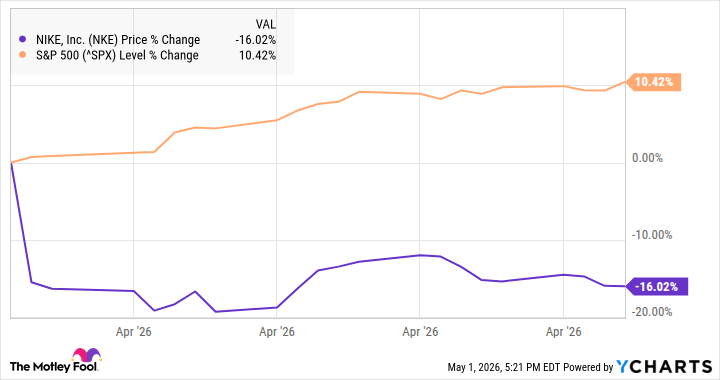
Nike Shares Drop 16% in April Amid Earnings Disappointment

- Earnings Disappointment: Nike reported third-quarter revenue of $11.3 billion, slightly above the $11.23 billion estimate, but a 3% decline on a currency-neutral basis indicates weak sales growth, undermining market confidence in its future performance.
- Stock Price Plunge: The stock fell sharply at the beginning of April due to disappointing earnings, finishing the month down 16%, and is now 75% below its all-time high, reflecting a collapse in business performance over the past five years.
- Leadership Changes: Nike's innovation chief, Tony Bignell, left the company after less than a year, highlighting challenges in its turnaround efforts, while the company announced 1,400 job cuts primarily in its technology department to implement structural changes.
- Cautious Future Outlook: Management expects revenue to decline in low single digits over the next three quarters and anticipates a return to gross margin expansion by Q2 2027, leading Wall Street analysts to downgrade their ratings, reflecting a pessimistic view on Nike's recovery.
See More

S&P 500 Hits Record Highs, AI Stocks Shine

- S&P 500 Performance: The S&P 500 is on track to close at another record high after its best month since November 2020, indicating strong market confidence in economic recovery as of Friday.
- AI Stock Surge: AI-related stocks like Arm, Broadcom, and Alphabet saw significant gains in April, with Arm surging nearly 40% and others rising over 30%, reflecting sustained investor enthusiasm and strong demand for AI technologies.
- Impact of Rising Memory Prices: Companies like Meta and Microsoft have raised their capital expenditure guidance due to surging memory prices, with Microsoft projecting $190 billion in capex for 2026, of which $25 billion is attributed to rising component costs, highlighting the tightness in the memory market.
- Multi-Year Supply Agreements: SanDisk has signed five multi-year supply agreements valued at over $11 billion, ensuring stable demand for its customers and indicating strong bargaining power for memory manufacturers, which could impact future sales and margins.
See More

Nike Stock Plummets Over 70%, Investors Must Exercise Caution
- Market Capital Decline: Nike's market capitalization has plummeted over 70% since its peak in 2021, presenting a seemingly attractive investment opportunity; however, the underlying changes in the company's fundamentals require thorough analysis.
- Inventory Buildup Issue: The company's aggressive direct-to-consumer strategy has overshadowed its wholesale business, leading to misjudged demand and significant inventory buildup, forcing Nike to offer discounts that harm its brand image and financial performance.
- Growth Slowdown: Nike is experiencing a notable slowdown in growth, particularly in high-growth markets like China, with a projected 10% revenue decline in fiscal 2025, contrasting sharply with its historical trend of sustained growth, which has shifted investor sentiment to pessimism.
- Valuation Analysis: While Nike's price-to-sales (P/S) ratio has dropped to 1.5, indicating some value, its price-to-earnings (P/E) ratio stands at 26.6, remaining within historical ranges, suggesting that the stock is not obviously cheap during this transformation phase, necessitating careful evaluation of future earnings potential.
See More

Domino's Pizza Earnings Analysis and New AI Partnership Developments


- Earnings Miss: Domino's Pizza reported Q1 2026 results with adjusted earnings of $4.13 per share, falling short of the $4.28 expected, and revenue of approximately $1.2 billion, slightly below the $1.17 billion forecast, indicating a 3.5% total revenue increase but only 0.9% growth in the U.S. market, reflecting tightening consumer spending.
- Share Buyback Initiative: The company announced an additional $1 billion for share buybacks, demonstrating management's confidence in the stock's undervaluation, with a 38% reduction in share count over the past decade contributing to a total return of 192%, although market reactions remain tepid, warranting investor attention on long-term effects.
- Operating Income Growth: Despite net income being impacted by investment losses, Domino's operating income rose by about 10% this quarter due to a more efficient supply chain and higher franchise fees, indicating strong core business profitability, even as the market reacted negatively to short-term earnings reports.
- AI Partnership Update: Microsoft has modified its partnership terms with OpenAI, eliminating revenue share payments for its own products using OpenAI models, significantly boosting Microsoft's margins, while OpenAI gains flexibility to license its models to other cloud providers, suggesting a more diversified future collaboration between the two companies.
See More
Nike's Earnings Disappoint, Cuts 1,400 Jobs Amid Turnaround Struggles
- Disappointing Earnings: Nike's fiscal third-quarter revenue remained flat at $11.3 billion, down 3% on a currency-neutral basis, slightly exceeding estimates of $11.23 billion, while earnings per share fell from $0.54 to $0.35, indicating a significant decline in profitability.
- Job Cuts Announced: The company plans to cut 1,400 jobs, primarily in its technology department, aimed at making structural changes to address ongoing business challenges, which may impact employee morale and the company's innovation capabilities.
- Market Reaction: Despite a broader market recovery, Nike's stock fell 16% in April and is down 75% from its all-time high, with analysts widely downgrading the stock and lowering price targets, reflecting a pessimistic outlook on its recovery prospects.
- Innovation Setbacks: The departure of Nike's innovation chief Tony Bignell after less than a year raises further concerns about the company's turnaround ability, although a new collaboration with Kobe sold out quickly, indicating that the brand still possesses some market appeal.
See More
Nike Shares Continue to Decline Amidst Market Recovery
- Earnings Report Disappointment: Nike's fiscal Q3 revenue was flat at $11.3 billion, slightly above estimates but down 3% on a currency-neutral basis, indicating severe challenges in sales growth and reflecting a lack of confidence in the company's recovery prospects.
- Stock Price Plunge: Nike's stock fell sharply at the beginning of April, finishing the month down 75% from its all-time high, which not only undermines investor confidence but also places the company at a disadvantage in the highly competitive sportswear market.
- Management Changes: The departure of innovation chief Tony Bignell after less than a year highlights the challenges faced during the company's turnaround efforts, potentially delaying its path to recovery further.
- Layoff Announcement: Nike announced a plan to cut 1,400 jobs, primarily in its technology department, aimed at making structural changes; while this may impact morale in the short term, it could enhance operational efficiency in the long run.
See More
Nike Shares Drop 16% in April Amid Earnings Disappointment
- Earnings Disappointment: Nike reported third-quarter revenue of $11.3 billion, slightly above the $11.23 billion estimate, but a 3% decline on a currency-neutral basis indicates weak sales growth, undermining market confidence in its future performance.
- Stock Price Plunge: The stock fell sharply at the beginning of April due to disappointing earnings, finishing the month down 16%, and is now 75% below its all-time high, reflecting a collapse in business performance over the past five years.
- Leadership Changes: Nike's innovation chief, Tony Bignell, left the company after less than a year, highlighting challenges in its turnaround efforts, while the company announced 1,400 job cuts primarily in its technology department to implement structural changes.
- Cautious Future Outlook: Management expects revenue to decline in low single digits over the next three quarters and anticipates a return to gross margin expansion by Q2 2027, leading Wall Street analysts to downgrade their ratings, reflecting a pessimistic view on Nike's recovery.
See More
S&P 500 Hits Record Highs, AI Stocks Shine
- S&P 500 Performance: The S&P 500 is on track to close at another record high after its best month since November 2020, indicating strong market confidence in economic recovery as of Friday.
- AI Stock Surge: AI-related stocks like Arm, Broadcom, and Alphabet saw significant gains in April, with Arm surging nearly 40% and others rising over 30%, reflecting sustained investor enthusiasm and strong demand for AI technologies.
- Impact of Rising Memory Prices: Companies like Meta and Microsoft have raised their capital expenditure guidance due to surging memory prices, with Microsoft projecting $190 billion in capex for 2026, of which $25 billion is attributed to rising component costs, highlighting the tightness in the memory market.
- Multi-Year Supply Agreements: SanDisk has signed five multi-year supply agreements valued at over $11 billion, ensuring stable demand for its customers and indicating strong bargaining power for memory manufacturers, which could impact future sales and margins.
See More
Nike Stock Plummets Over 70%, Investors Must Exercise Caution
- Market Capital Decline: Nike's market capitalization has plummeted over 70% since its peak in 2021, presenting a seemingly attractive investment opportunity; however, the underlying changes in the company's fundamentals require thorough analysis.
- Inventory Buildup Issue: The company's aggressive direct-to-consumer strategy has overshadowed its wholesale business, leading to misjudged demand and significant inventory buildup, forcing Nike to offer discounts that harm its brand image and financial performance.
- Growth Slowdown: Nike is experiencing a notable slowdown in growth, particularly in high-growth markets like China, with a projected 10% revenue decline in fiscal 2025, contrasting sharply with its historical trend of sustained growth, which has shifted investor sentiment to pessimism.
- Valuation Analysis: While Nike's price-to-sales (P/S) ratio has dropped to 1.5, indicating some value, its price-to-earnings (P/E) ratio stands at 26.6, remaining within historical ranges, suggesting that the stock is not obviously cheap during this transformation phase, necessitating careful evaluation of future earnings potential.
See More
Domino's Pizza Earnings Analysis and New AI Partnership Developments
- Earnings Miss: Domino's Pizza reported Q1 2026 results with adjusted earnings of $4.13 per share, falling short of the $4.28 expected, and revenue of approximately $1.2 billion, slightly below the $1.17 billion forecast, indicating a 3.5% total revenue increase but only 0.9% growth in the U.S. market, reflecting tightening consumer spending.
- Share Buyback Initiative: The company announced an additional $1 billion for share buybacks, demonstrating management's confidence in the stock's undervaluation, with a 38% reduction in share count over the past decade contributing to a total return of 192%, although market reactions remain tepid, warranting investor attention on long-term effects.
- Operating Income Growth: Despite net income being impacted by investment losses, Domino's operating income rose by about 10% this quarter due to a more efficient supply chain and higher franchise fees, indicating strong core business profitability, even as the market reacted negatively to short-term earnings reports.
- AI Partnership Update: Microsoft has modified its partnership terms with OpenAI, eliminating revenue share payments for its own products using OpenAI models, significantly boosting Microsoft's margins, while OpenAI gains flexibility to license its models to other cloud providers, suggesting a more diversified future collaboration between the two companies.
See More