JPMorgan CEO Responds to Trump's Lawsuit Over Account Closures
Written by Emily J. Thompson, Senior Investment Analyst
Updated: Mar 02 2026
0mins

Source: Newsfilter
- Lawsuit Merits Declared: JPMorgan CEO Jamie Dimon stated that Trump's $5 billion lawsuit over account closures is without merit, although he empathizes with Trump's anger, highlighting the political sensitivities involved in the case.
- Account Closure Context: JPMorgan closed dozens of accounts associated with Trump following the January 6, 2021 Capitol attack, reflecting the bank's stringent policies on reputational risk management, which could impact its relationships with clients.
- Compliance Pressures: Dimon emphasized that banks face regulatory pressures to avoid legal and reputational risks, leading them to prefer rejecting high-risk clients, which affects Trump's financial options and those of his supporters.
- Regulatory Changes in Industry: Dimon noted that the financial industry is beginning to benefit from deregulation under Trump appointees, potentially increasing bank profitability while raising further discussions on how to manage high-risk clients.
Trade with 70% Backtested Accuracy
Stop guessing "Should I Buy JPM?" and start using high-conviction signals backed by rigorous historical data.
Sign up today to access powerful investing tools and make smarter, data-driven decisions.
Analyst Views on JPM
Wall Street analysts forecast JPM stock price to rise
19 Analyst Rating
11 Buy
7 Hold
1 Sell
Moderate Buy
Current: 287.520

Low
260.00
Averages
341.38
High
400.00
Current: 287.520
Low
260.00
Averages
341.38
High
400.00
About JPM
JPMorgan Chase & Co. is a financial holding company. The Company is engaged in investment banking, financial services for consumers and small businesses, commercial banking, financial transaction processing and asset management. The Company operates through three segments: Consumer & Community Banking (CCB), Commercial & Investment Bank (CIB), and Asset & Wealth Management (AWM). Its CCB segment offers products and services to consumers and small businesses through bank branches, ATMs, digital and telephone banking. Its CIB segment consists of banking and payments and markets and securities services, and offers a suite of investment banking, lending, payments, market-making, financing, custody and securities products and services to a global base of corporate and institutional clients. AWM segment offers investment and wealth management solutions. It offers multi-asset investment management solutions, retirement products and services, brokerage, custody, estate planning, and others.
About the author

Emily J. Thompson
Emily J. Thompson, a Chartered Financial Analyst (CFA) with 12 years in investment research, graduated with honors from the Wharton School. Specializing in industrial and technology stocks, she provides in-depth analysis for Intellectia’s earnings and market brief reports.

J.P. Morgan Releases 2026 College Planning Guide

- Rising College Costs: College tuition has surged 914% since 1983, significantly outpacing other household expenses, necessitating families to make informed investment choices to cope with escalating education costs.
- Student Loan Crisis: Student loan debt has skyrocketed by 343% since 2005, causing 97% of graduates to delay or abandon life goals such as homeownership and starting families, highlighting the urgency of addressing education financing.
- Underutilization of 529 Plans: A significant 60% of families do not utilize 529 plans, with many relying on cash and taxable accounts to fund education costs, and 41% tapping into retirement funds, indicating a critical need for greater adoption of educational savings tools.
- Importance of Early Investment: The sooner families start investing, the more their college funds can grow through long-term compounding, with 83% of 529 plan users making automatic contributions, underscoring the strategic significance of early investment.
See More
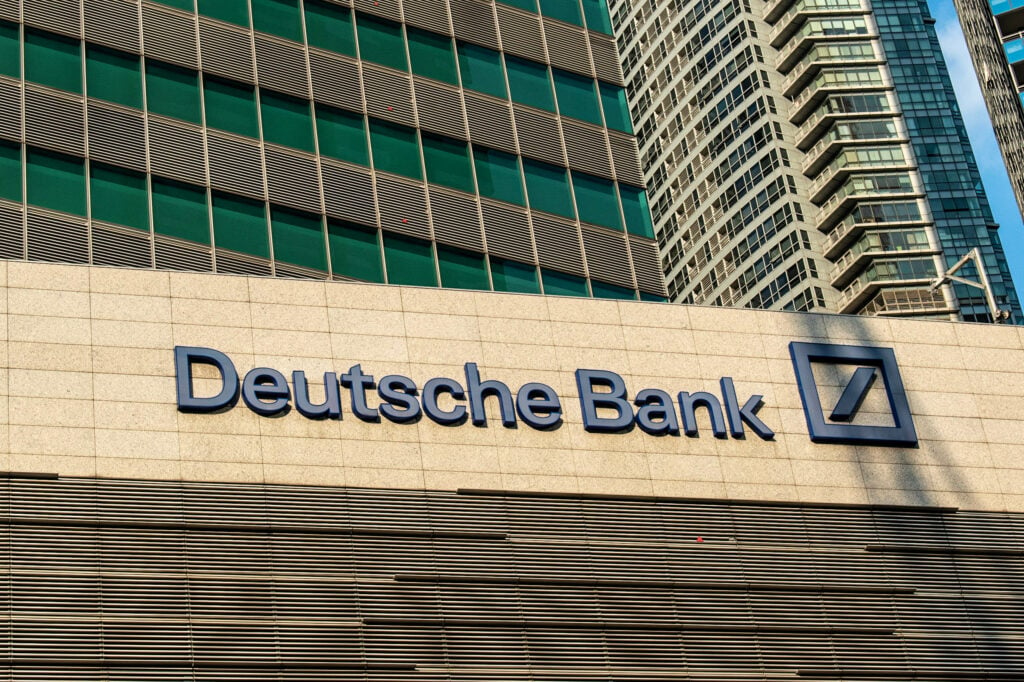
Deutsche Bank Warns of Private Credit Risks


- Private Credit Risk Warning: Deutsche Bank's annual report highlights a $30 billion exposure to private credit, indicating concerns over lofty tech valuations and the sustainability of the AI-driven capital spending cycle, which could impact business models and client credit risk.
- Increased Market Pressures: By 2025, private credit and other non-bank financial institutions are expected to face pressures from higher interest rates, refinancing risks, and weak investor sentiment, particularly as failures among U.S. subprime lenders heighten scrutiny of underwriting standards and fraud risks.
- Rising Indirect Risks: While Deutsche Bank claims limited direct exposure to non-bank financial institutions, indirect exposure through counterparties and related portfolios could arise, especially in a worsening scenario with geopolitical shocks, potentially leading to weaker portfolio quality and higher credit losses.
- Accelerated Infrastructure Investment: Despite these risks, Deutsche Bank plans to accelerate infrastructure investments and expand private credit within its corporate and investment banking divisions, while also broadening distribution through selective regional expansion.
See More
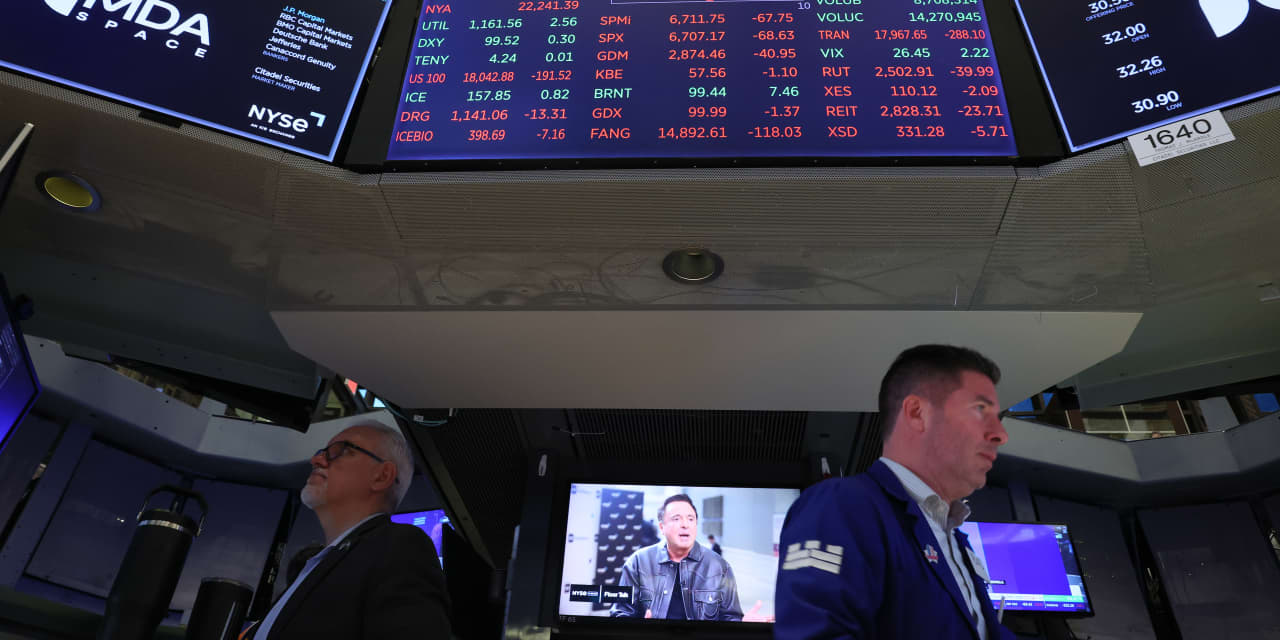
Retail Investors Are Offloading Stocks. Here's What They're Continuing to Purchase.

- Market Performance: Stocks continued to decline on Thursday, marking a poor start to March.
- Retail Trading Insights: J.P. Morgan's weekly report reveals the buying patterns of noninstitutional investors.
See More
Retail Investors Remain Pessimistic While Hedge Funds Anticipate Significant Profits; Both Are Essential for Market Recovery.

Investor Sentiment: Two distinct camps are emerging on Wall Street, reflecting the uncertainty among investors due to the ongoing war in the Middle East.
Market Reactions: The conflict is causing varied reactions in the financial markets, highlighting differing strategies and outlooks among investors.
See More
JPMorgan Positioned to Weather Private Credit Market Stress

- Risk Management Strategy: JPMorgan's proactive decision to mark down the value of certain software-related loans reflects its active risk management approach, reducing exposure to specific private credit funds and indicating no expected losses, showcasing its ability to manage underlying collateral effectively.
- Industry Growth Comparison: With revenue growth approximately double that of the industry over the past decade, JPMorgan has lessened its reliance on riskier deals, highlighting its competitive position and market strength amid increasing scrutiny in the private credit sector.
- Complexity of Credit Structures: While the private credit industry faces risks from increasingly complex loan structures, JPMorgan typically lends through senior financing structures that historically yield lower loan losses, demonstrating its superior credit management capabilities compared to smaller lenders.
- Market Performance Volatility: Despite JPMorgan's shares falling over 6% this month and declining for the third consecutive month, with a nearly 13% drop in 2026, analysts believe the bank remains well-positioned to withstand market pressures due to its robust monitoring and risk management practices.
See More

Kevin Warsh's Nomination Confirmation Prospects Dim


- Nomination Stalled: Federal Reserve chairman nominee Kevin Warsh met with several senators in Washington, and despite his comment that “things are progressing well,” the gloomy weather reflects the dim prospects for his confirmation.
- Obstruction Factors: Senator Thom Tillis from North Carolina has effectively blocked Warsh's nomination, vowing not to support any Fed nominee until the ongoing criminal investigation into current Fed Chair Jerome Powell concludes.
- Investigation Impact: Powell indicated that the DOJ's criminal probe stems from the Fed board's refusal to cut interest rates as drastically as demanded by the Trump administration, highlighting the tension between the Fed and the government, which could hinder Warsh's nomination process.
- Time Pressure: If Tillis continues his obstruction, Warsh may not receive a Senate vote before his term ends in January, which could negatively impact the stability of the Fed's leadership.
See More
J.P. Morgan Releases 2026 College Planning Guide
- Rising College Costs: College tuition has surged 914% since 1983, significantly outpacing other household expenses, necessitating families to make informed investment choices to cope with escalating education costs.
- Student Loan Crisis: Student loan debt has skyrocketed by 343% since 2005, causing 97% of graduates to delay or abandon life goals such as homeownership and starting families, highlighting the urgency of addressing education financing.
- Underutilization of 529 Plans: A significant 60% of families do not utilize 529 plans, with many relying on cash and taxable accounts to fund education costs, and 41% tapping into retirement funds, indicating a critical need for greater adoption of educational savings tools.
- Importance of Early Investment: The sooner families start investing, the more their college funds can grow through long-term compounding, with 83% of 529 plan users making automatic contributions, underscoring the strategic significance of early investment.
See More
Deutsche Bank Warns of Private Credit Risks
- Private Credit Risk Warning: Deutsche Bank's annual report highlights a $30 billion exposure to private credit, indicating concerns over lofty tech valuations and the sustainability of the AI-driven capital spending cycle, which could impact business models and client credit risk.
- Increased Market Pressures: By 2025, private credit and other non-bank financial institutions are expected to face pressures from higher interest rates, refinancing risks, and weak investor sentiment, particularly as failures among U.S. subprime lenders heighten scrutiny of underwriting standards and fraud risks.
- Rising Indirect Risks: While Deutsche Bank claims limited direct exposure to non-bank financial institutions, indirect exposure through counterparties and related portfolios could arise, especially in a worsening scenario with geopolitical shocks, potentially leading to weaker portfolio quality and higher credit losses.
- Accelerated Infrastructure Investment: Despite these risks, Deutsche Bank plans to accelerate infrastructure investments and expand private credit within its corporate and investment banking divisions, while also broadening distribution through selective regional expansion.
See More
Retail Investors Are Offloading Stocks. Here's What They're Continuing to Purchase.
- Market Performance: Stocks continued to decline on Thursday, marking a poor start to March.
- Retail Trading Insights: J.P. Morgan's weekly report reveals the buying patterns of noninstitutional investors.
See More
Retail Investors Remain Pessimistic While Hedge Funds Anticipate Significant Profits; Both Are Essential for Market Recovery.
Investor Sentiment: Two distinct camps are emerging on Wall Street, reflecting the uncertainty among investors due to the ongoing war in the Middle East.
Market Reactions: The conflict is causing varied reactions in the financial markets, highlighting differing strategies and outlooks among investors.
See More
JPMorgan Positioned to Weather Private Credit Market Stress
- Risk Management Strategy: JPMorgan's proactive decision to mark down the value of certain software-related loans reflects its active risk management approach, reducing exposure to specific private credit funds and indicating no expected losses, showcasing its ability to manage underlying collateral effectively.
- Industry Growth Comparison: With revenue growth approximately double that of the industry over the past decade, JPMorgan has lessened its reliance on riskier deals, highlighting its competitive position and market strength amid increasing scrutiny in the private credit sector.
- Complexity of Credit Structures: While the private credit industry faces risks from increasingly complex loan structures, JPMorgan typically lends through senior financing structures that historically yield lower loan losses, demonstrating its superior credit management capabilities compared to smaller lenders.
- Market Performance Volatility: Despite JPMorgan's shares falling over 6% this month and declining for the third consecutive month, with a nearly 13% drop in 2026, analysts believe the bank remains well-positioned to withstand market pressures due to its robust monitoring and risk management practices.
See More
Kevin Warsh's Nomination Confirmation Prospects Dim
- Nomination Stalled: Federal Reserve chairman nominee Kevin Warsh met with several senators in Washington, and despite his comment that “things are progressing well,” the gloomy weather reflects the dim prospects for his confirmation.
- Obstruction Factors: Senator Thom Tillis from North Carolina has effectively blocked Warsh's nomination, vowing not to support any Fed nominee until the ongoing criminal investigation into current Fed Chair Jerome Powell concludes.
- Investigation Impact: Powell indicated that the DOJ's criminal probe stems from the Fed board's refusal to cut interest rates as drastically as demanded by the Trump administration, highlighting the tension between the Fed and the government, which could hinder Warsh's nomination process.
- Time Pressure: If Tillis continues his obstruction, Warsh may not receive a Senate vote before his term ends in January, which could negatively impact the stability of the Fed's leadership.
See More