Intel Begins Production of 18A-P Chip Node, Aiming for Apple Deal
Written by Emily J. Thompson, Senior Investment Analyst
Updated: Jun 16 2026
0mins

Source: Newsfilter
- Advanced Chip Production: Intel has commenced risk production of its latest 18A-P chip node, marking a significant step in its efforts to become a chip manufacturer for other companies, which is expected to attract more customers.
- Performance and Efficiency Gains: The 18A-P chip delivers a 9% performance increase and an 18% reduction in power consumption compared to the 18A, enhancing Intel's product appeal in a competitive market.
- Positive Market Reaction: With investments from the U.S. government and Nvidia, Intel's stock has surged over 200% this year, reflecting strong market expectations for its business rebound, particularly in light of a preliminary deal with Apple.
- Packaging Technology Opportunity: Intel's advanced packaging technology, EMIB, is seen as a key factor in attracting customers, especially as TSMC faces packaging bottlenecks, providing Intel with a low-hanging opportunity to increase market share.
Trade with 70% Backtested Accuracy
Stop guessing "Should I Buy AAPL?" and start using high-conviction signals backed by rigorous historical data.
Sign up today to access powerful investing tools and make smarter, data-driven decisions.
Analyst Views on AAPL
Wall Street analysts forecast AAPL stock price to rise
27 Analyst Rating
17 Buy
9 Hold
1 Sell
Moderate Buy
Current: 297.010

Low
239.00
Averages
306.89
High
350.00
Current: 297.010
Low
239.00
Averages
306.89
High
350.00
About AAPL
Apple Inc. designs, manufactures and markets smartphones, personal computers, tablets, wearables and accessories, and sells a variety of related services. Its product categories include iPhone, Mac, iPad, Wearables, Home and Accessories. Its services include advertising, AppleCare, cloud services, digital content, and payment services. The Company operates various platforms, including the App Store, that allow customers to discover and download applications and digital content, such as books, music, video, games and podcasts. It also offers digital content through subscription-based services, including Apple Arcade, Apple Fitness+, Apple Music, Apple News+, and Apple TV+. Its wearables include smartwatches, wireless headphones, and spatial computers. Its products include iPhone 16 Pro, iPhone 16, iPhone 15, iPhone 14, iPhone SE, MacBook Air, MacBook Pro, iMac, Mac mini, Mac Studio, Mac Pro, iPad Pro, iPad Air, AirPods, AirPods Pro, AirPods Max, Apple TV, Apple Vision Pro and others.
About the author

Emily J. Thompson
Emily J. Thompson, a Chartered Financial Analyst (CFA) with 12 years in investment research, graduated with honors from the Wharton School. Specializing in industrial and technology stocks, she provides in-depth analysis for Intellectia’s earnings and market brief reports.
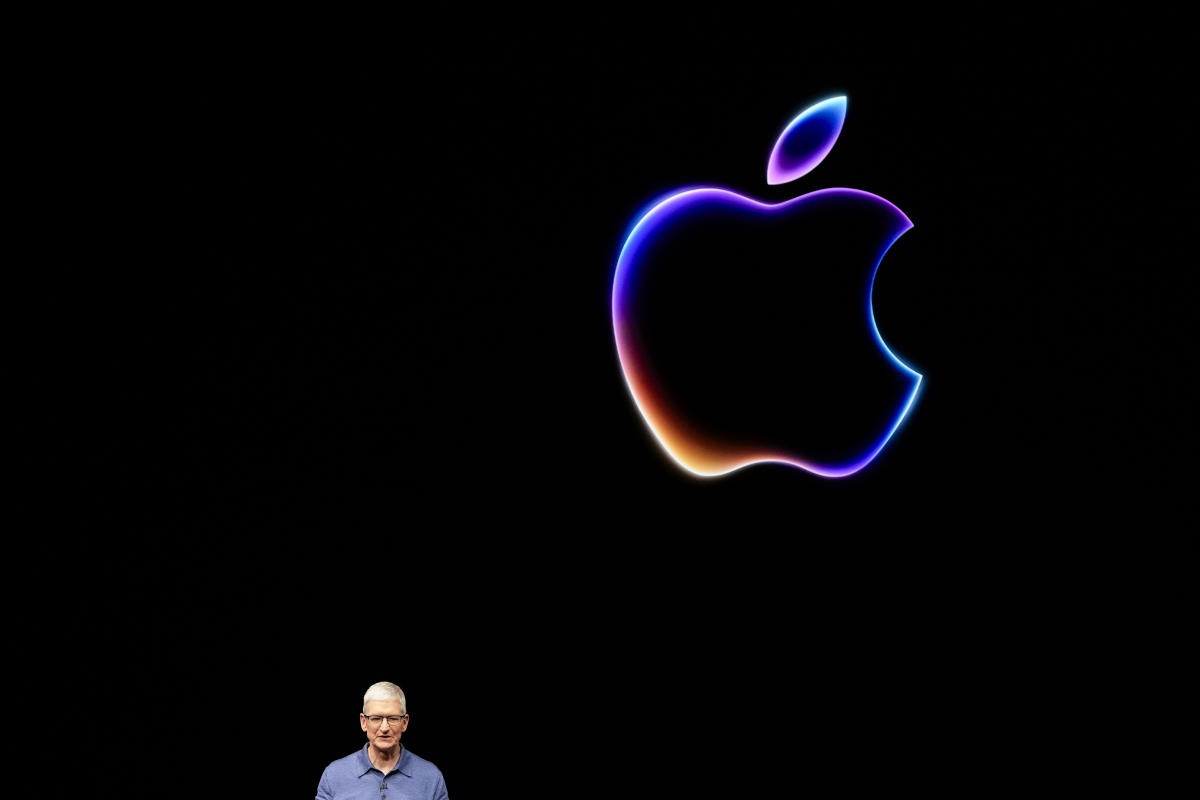
Apple Prioritizes Quality Over Quantity in Streaming Strategy

- Content Strategy Philosophy: Apple’s SVP of Services, Eddy Cue, stated at the Cannes Lions Festival that the company prioritizes quality over quantity in its content strategy, aiming to attract top creators and storytellers to build a premium platform.
- User Base Scale: Apple TV currently boasts over 45 million subscribers, providing a robust foundation for its content strategy, which starkly contrasts with the approaches of Netflix and Amazon Prime Video.
- Sequel Confirmation: Cue confirmed that a sequel to 'F1: The Movie' is in the works, stating, 'Everyone wants to see another one,' highlighting Apple’s ambition in film production, especially given the original's success.
- Box Office Performance: Released in 2025, 'F1: The Movie' became Apple’s biggest box office hit, generating $634 million in ticket sales, further solidifying Apple’s position in the entertainment industry.
See More

Netflix Stock Drops 32% Following Co-Founder Reed Hastings' Departure


- Stock Decline: Since reporting first-quarter earnings on April 16, Netflix (NASDAQ: NFLX) has seen its stock drop 32%, primarily due to weak guidance projecting only 13.5% revenue growth for Q2, which has shaken investor confidence.
- Founder Departure Impact: Co-founder Reed Hastings announced he will step down from the board on June 4, marking his first complete exit from the company after stepping down as CEO in 2023, raising concerns about future leadership stability.
- Cultural and Strategic Legacy: During his tenure, Hastings established a unique corporate culture that promoted high performers while generously severing low performers; although he previously rejected advertising and password-sharing, these policies were reversed post-pandemic, demonstrating the company's adaptability to market changes.
- Future Growth Opportunities: Despite challenges in a maturing market, Netflix still has opportunities to expand its advertising business, venture into live sports, and tap into new entertainment markets like gaming and podcasts, with the current stock pullback presenting a potential buying opportunity at a P/E ratio of around 30, while maintaining expectations for double-digit growth.
See More

Reed Hastings' Departure Sparks Stock Volatility for Netflix
- Stock Decline: Since reporting first-quarter earnings on April 16, Netflix (NFLX) shares have fallen 32%, primarily due to the company's weak guidance projecting only 13.5% revenue growth for Q2, raising concerns about its future growth prospects.
- Founder Resignation: Co-founder and long-time CEO Reed Hastings will step down from the board on June 4, marking the first time he will not hold a formal position, which may trigger investor anxiety regarding the company's future leadership.
- Cultural Impact: Hastings is known for establishing a unique corporate culture that promotes high performers while generously severing low performers, and this culture may face challenges in his absence, potentially affecting company operations.
- Market Opportunities: Despite challenges in a maturing market, Netflix still has opportunities to expand its advertising business, venture into live sports, and tap into new entertainment markets like gaming and podcasts, with the current stock pullback presenting a potential buying opportunity for investors.
See More

Financial Comparison of Mastercard and PayPal


- Mastercard's Market Advantage: Operating a global payment network in over 210 countries, Mastercard achieved nearly $33 billion in revenue in 2025, reflecting a 16% year-over-year growth and a net income of approximately $15 billion, resulting in a net margin of about 45%, showcasing its strong performance amid the digital payment shift.
- PayPal's Growth Challenges: PayPal reported total revenue of $33 billion in 2025, with a modest growth of around 4% and a net income of roughly $5 billion, leading to a net margin close to 16%, but it faces management transitions and market pressures that hinder its ability to regain double-digit growth.
- Financial Health Comparison: Mastercard's debt-to-equity ratio stands at 2.5x with a current ratio of 1.0, indicating high financial leverage; in contrast, PayPal maintains a conservative capital structure with a debt-to-equity ratio of 0.5x and a current ratio of 1.3, reflecting its ability to meet short-term obligations.
- Competitive Environment and Risks: Mastercard is under legal and regulatory scrutiny, particularly regarding interchange fees, while PayPal must navigate competition from tech giants and complex regulations surrounding stablecoins, leading to uncertainties in future growth trajectories.
See More

Investment Comparison: Mastercard vs PayPal
- Mastercard Financial Performance: As of 2025, Mastercard's revenue reached nearly $33 billion, reflecting a 16% year-over-year growth, with a net income of approximately $15 billion and a net margin of 45%, showcasing its strong performance amid the digital payment transition.
- PayPal's Slower Growth: PayPal reported total revenue of $33 billion in 2025, indicating about 4% growth over the previous year, with a net income of roughly $5 billion and a net margin close to 16%, highlighting challenges amid leadership changes and operational strategy adjustments.
- Risk Factor Comparison: Mastercard faces ongoing legal and regulatory scrutiny regarding interchange fees and no-surcharge rules, and despite preliminary approval of a $38 billion settlement in 2026, it must navigate intense market competition and data governance risks.
- Valuation Discrepancy: Mastercard's forward P/E ratio stands at 24.9x compared to PayPal's 8.0x, indicating a significant valuation gap; however, PayPal's struggle to regain double-digit revenue growth raises caution for investors considering their options.
See More

Nvidia Backs Three Strong Investment Picks


- Intel's Recovery Potential: After receiving investments from Nvidia and the U.S. government, Intel is gradually regaining its market position, with a significant deal to produce chips for Apple, which could enhance its competitive edge in the semiconductor industry.
- CoreWeave's Rapid Growth: CoreWeave achieved a remarkable 112% revenue growth in its AI cloud computing platform, with expectations of 147% growth this year, and despite currently being unprofitable, its backlog of nearly $100 billion indicates strong market demand.
- Nebius's Astonishing Growth: Nebius reported a staggering 684% revenue increase in Q1, with projections of 550% growth by 2026, highlighting its immense potential in the AI cloud computing space, further bolstered by Nvidia's investment.
- Nvidia's Investment Confidence: As a major client of Nvidia, the success of CoreWeave and Nebius not only reflects the booming AI market but also underscores Nvidia's strategic foresight in selecting investment targets, potentially yielding substantial returns for investors.
See More
Apple Prioritizes Quality Over Quantity in Streaming Strategy
- Content Strategy Philosophy: Apple’s SVP of Services, Eddy Cue, stated at the Cannes Lions Festival that the company prioritizes quality over quantity in its content strategy, aiming to attract top creators and storytellers to build a premium platform.
- User Base Scale: Apple TV currently boasts over 45 million subscribers, providing a robust foundation for its content strategy, which starkly contrasts with the approaches of Netflix and Amazon Prime Video.
- Sequel Confirmation: Cue confirmed that a sequel to 'F1: The Movie' is in the works, stating, 'Everyone wants to see another one,' highlighting Apple’s ambition in film production, especially given the original's success.
- Box Office Performance: Released in 2025, 'F1: The Movie' became Apple’s biggest box office hit, generating $634 million in ticket sales, further solidifying Apple’s position in the entertainment industry.
See More
Netflix Stock Drops 32% Following Co-Founder Reed Hastings' Departure
- Stock Decline: Since reporting first-quarter earnings on April 16, Netflix (NASDAQ: NFLX) has seen its stock drop 32%, primarily due to weak guidance projecting only 13.5% revenue growth for Q2, which has shaken investor confidence.
- Founder Departure Impact: Co-founder Reed Hastings announced he will step down from the board on June 4, marking his first complete exit from the company after stepping down as CEO in 2023, raising concerns about future leadership stability.
- Cultural and Strategic Legacy: During his tenure, Hastings established a unique corporate culture that promoted high performers while generously severing low performers; although he previously rejected advertising and password-sharing, these policies were reversed post-pandemic, demonstrating the company's adaptability to market changes.
- Future Growth Opportunities: Despite challenges in a maturing market, Netflix still has opportunities to expand its advertising business, venture into live sports, and tap into new entertainment markets like gaming and podcasts, with the current stock pullback presenting a potential buying opportunity at a P/E ratio of around 30, while maintaining expectations for double-digit growth.
See More
Reed Hastings' Departure Sparks Stock Volatility for Netflix
- Stock Decline: Since reporting first-quarter earnings on April 16, Netflix (NFLX) shares have fallen 32%, primarily due to the company's weak guidance projecting only 13.5% revenue growth for Q2, raising concerns about its future growth prospects.
- Founder Resignation: Co-founder and long-time CEO Reed Hastings will step down from the board on June 4, marking the first time he will not hold a formal position, which may trigger investor anxiety regarding the company's future leadership.
- Cultural Impact: Hastings is known for establishing a unique corporate culture that promotes high performers while generously severing low performers, and this culture may face challenges in his absence, potentially affecting company operations.
- Market Opportunities: Despite challenges in a maturing market, Netflix still has opportunities to expand its advertising business, venture into live sports, and tap into new entertainment markets like gaming and podcasts, with the current stock pullback presenting a potential buying opportunity for investors.
See More
Financial Comparison of Mastercard and PayPal
- Mastercard's Market Advantage: Operating a global payment network in over 210 countries, Mastercard achieved nearly $33 billion in revenue in 2025, reflecting a 16% year-over-year growth and a net income of approximately $15 billion, resulting in a net margin of about 45%, showcasing its strong performance amid the digital payment shift.
- PayPal's Growth Challenges: PayPal reported total revenue of $33 billion in 2025, with a modest growth of around 4% and a net income of roughly $5 billion, leading to a net margin close to 16%, but it faces management transitions and market pressures that hinder its ability to regain double-digit growth.
- Financial Health Comparison: Mastercard's debt-to-equity ratio stands at 2.5x with a current ratio of 1.0, indicating high financial leverage; in contrast, PayPal maintains a conservative capital structure with a debt-to-equity ratio of 0.5x and a current ratio of 1.3, reflecting its ability to meet short-term obligations.
- Competitive Environment and Risks: Mastercard is under legal and regulatory scrutiny, particularly regarding interchange fees, while PayPal must navigate competition from tech giants and complex regulations surrounding stablecoins, leading to uncertainties in future growth trajectories.
See More
Investment Comparison: Mastercard vs PayPal
- Mastercard Financial Performance: As of 2025, Mastercard's revenue reached nearly $33 billion, reflecting a 16% year-over-year growth, with a net income of approximately $15 billion and a net margin of 45%, showcasing its strong performance amid the digital payment transition.
- PayPal's Slower Growth: PayPal reported total revenue of $33 billion in 2025, indicating about 4% growth over the previous year, with a net income of roughly $5 billion and a net margin close to 16%, highlighting challenges amid leadership changes and operational strategy adjustments.
- Risk Factor Comparison: Mastercard faces ongoing legal and regulatory scrutiny regarding interchange fees and no-surcharge rules, and despite preliminary approval of a $38 billion settlement in 2026, it must navigate intense market competition and data governance risks.
- Valuation Discrepancy: Mastercard's forward P/E ratio stands at 24.9x compared to PayPal's 8.0x, indicating a significant valuation gap; however, PayPal's struggle to regain double-digit revenue growth raises caution for investors considering their options.
See More
Nvidia Backs Three Strong Investment Picks
- Intel's Recovery Potential: After receiving investments from Nvidia and the U.S. government, Intel is gradually regaining its market position, with a significant deal to produce chips for Apple, which could enhance its competitive edge in the semiconductor industry.
- CoreWeave's Rapid Growth: CoreWeave achieved a remarkable 112% revenue growth in its AI cloud computing platform, with expectations of 147% growth this year, and despite currently being unprofitable, its backlog of nearly $100 billion indicates strong market demand.
- Nebius's Astonishing Growth: Nebius reported a staggering 684% revenue increase in Q1, with projections of 550% growth by 2026, highlighting its immense potential in the AI cloud computing space, further bolstered by Nvidia's investment.
- Nvidia's Investment Confidence: As a major client of Nvidia, the success of CoreWeave and Nebius not only reflects the booming AI market but also underscores Nvidia's strategic foresight in selecting investment targets, potentially yielding substantial returns for investors.
See More