Groq Initiates Sale of Cloud Unit GroqCloud, Valuation Over $1 Billion
Written by Emily J. Thompson, Senior Investment Analyst
Updated: Jan 16 2026
0mins
Should l Buy NVDA?
Source: seekingalpha
- Cloud Unit Sale Plan: AI semiconductor startup Groq is working with a financial adviser to sell its cloud unit GroqCloud, potentially fetching over $1 billion, which could provide significant capital inflow to support future growth initiatives.
- Potential Buyers: Prospective buyers for GroqCloud include companies looking to enhance their AI capabilities, particularly in large language models and public semiconductor firms, indicating a rising demand for AI hardware rental services that could drive Groq's market share expansion.
- Partnership with Nvidia: In December, Groq entered a non-exclusive licensing agreement with Nvidia worth approximately $20 billion for its inference technology, which not only enhances Groq's technical capabilities but also adds significant appeal to its cloud business.
- Team Integration Benefits: Groq's founder Jonathan Ross, president Sunny Madra, and other team members joining Nvidia further strengthens collaboration between the two companies, potentially providing support for Groq's continued development in the AI sector.
Trade with 70% Backtested Accuracy
Stop guessing "Should I Buy NVDA?" and start using high-conviction signals backed by rigorous historical data.
Sign up today to access powerful investing tools and make smarter, data-driven decisions.
Analyst Views on NVDA
Wall Street analysts forecast NVDA stock price to rise
41 Analyst Rating
39 Buy
1 Hold
1 Sell
Strong Buy
Current: 207.830

Low
200.00
Averages
264.97
High
352.00
Current: 207.830
Low
200.00
Averages
264.97
High
352.00
About NVDA
NVIDIA Corporation is an artificial intelligence (AI) infrastructure company. The Company is engaged in accelerated computing to help solve the challenging computational problems. Its segments include Compute & Networking and Graphics. The Compute & Networking segment includes its Data Center accelerated computing and networking platforms and AI solutions and software, and automotive platforms and autonomous and electric vehicle solutions, including software. The Graphics segment includes GeForce GPUs for gaming and personal computers (PCs), and Quadro/NVIDIA RTX GPUs for enterprise workstation graphics. Its technology stack includes the foundational NVIDIA CUDA development platform that runs on all NVIDIA GPUs, as well as hundreds of domain-specific software libraries, frameworks, algorithms, software development kits (SDKs), and application programming interfaces (APIs). Its platforms address four markets, which include Data Center, Gaming, Professional Visualization, and Automotive.
About the author

Emily J. Thompson
Emily J. Thompson, a Chartered Financial Analyst (CFA) with 12 years in investment research, graduated with honors from the Wharton School. Specializing in industrial and technology stocks, she provides in-depth analysis for Intellectia’s earnings and market brief reports.
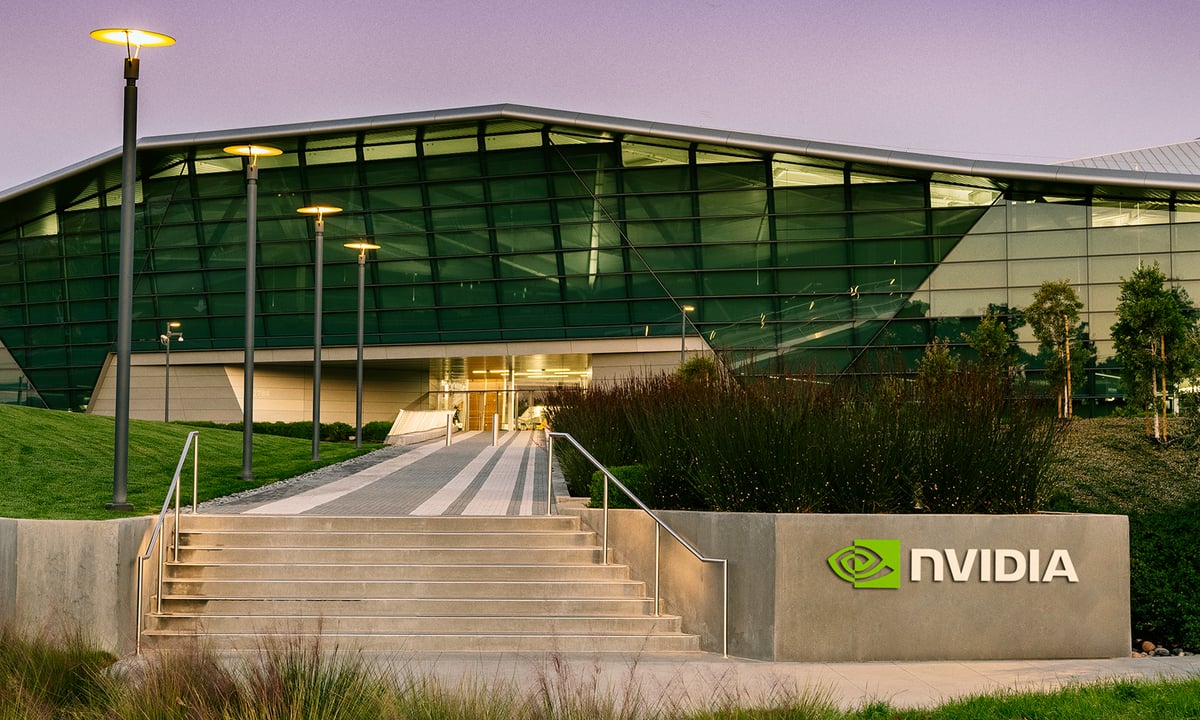
AI Drives Nvidia's Earnings Growth Amid Market Concerns

- Significant Earnings Growth: Nvidia achieved a remarkable 65% revenue growth in fiscal 2026, primarily driven by artificial intelligence, although concerns about future growth slowing persist in the market.
- Market Share Risks: While Nvidia maintains its leadership in the AI chip market, other semiconductor companies are actively developing their own AI chips, which could impact its market share, although this is unlikely to threaten its leadership position in the short term.
- Valuation Pressure: With a market cap of approximately $4.8 trillion, Nvidia's strong revenue growth is tempered by a P/E ratio of 40, and if the stock were to decline by 25% over the next 12 months, its P/E could drop to 18, potentially entering value stock territory.
- Investor Strategy: Despite the potential for AI growth to slow, investors are advised to hold Nvidia shares, as current performance remains robust and valuations may adjust downward in the future, thereby limiting potential downside risks.
See More

Bittensor vs Render: Analyzing AI Crypto Investments
- Market Performance: Bittensor's market cap has reached $3 billion, while Render stands at $1 billion, with both cryptocurrencies showing over 20% growth in 2024, reflecting strong market demand and investor confidence amid rapid advancements in AI technology.
- Shifting Investment Narrative: As investor focus shifts towards decentralized AI, Bittensor has emerged as a leader with its AI-specialized Layer 1 blockchain network, attracting high-profile projects including interest from Nvidia's CEO, indicating significant future growth potential.
- Scarcity Advantage: Bittensor's total supply is capped at 21 million coins, similar to Bitcoin, which enhances its price potential as demand increases, whereas Render's circulating supply of 520 million coins limits its price appreciation potential, influencing investor decisions.
- Future Growth Potential: Estimates from Bitget suggest that Bittensor could reach $1,000 in the coming years, quadrupling its current value, and the successful launch of new investment products like a spot ETF could attract institutional money, further solidifying its market position.
See More
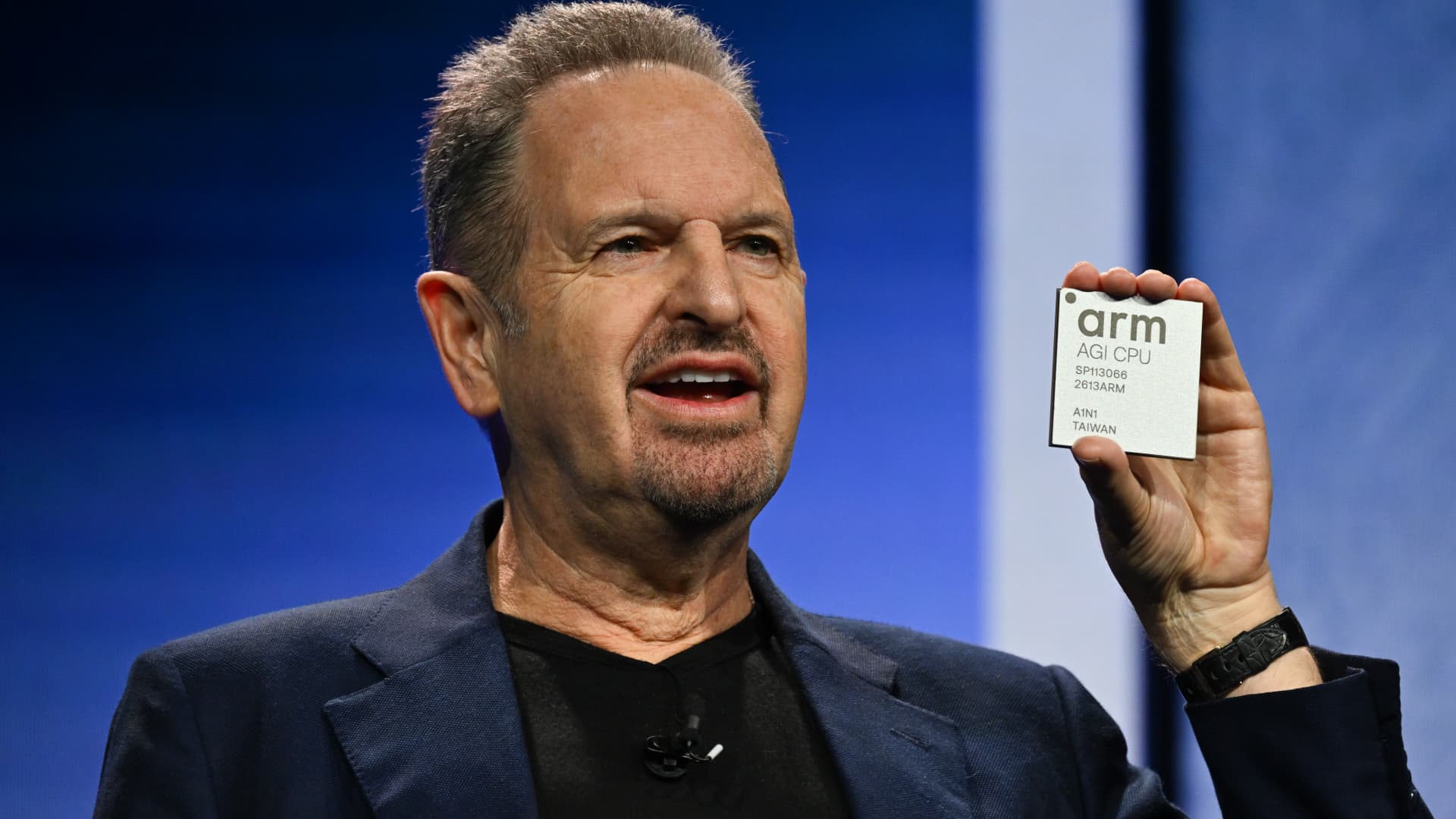
Arm Holdings Shares Drop Amid Demand Concerns, Yet Analysts Remain Bullish


- Stock Volatility: Arm Holdings' shares plummeted on Thursday despite better-than-expected fiscal fourth-quarter revenue and earnings, as concerns about its ability to meet surging chip demand reflect investor caution regarding future growth prospects.
- Market Potential: Analysts at Evercore ISI believe Arm's market value could surpass $1 trillion in the future, positioning it alongside giants like Nvidia and Apple, highlighting its significant role in the rapidly growing CPU market.
- Ecosystem Advantage: Evercore emphasizes Arm's diverse and well-established network of suppliers and customers built over 35 years as a real advantage for expanding its market cap, noting that establishing this ecosystem was the most challenging step, facilitating future product ramp-up.
- Supply Chain Challenges: Despite surging demand for AI-related products, Arm faces serious component supply issues, with analysts indicating that advanced-node wafer availability at TSMC limits Arm's ability to fully capture the potential $2 billion chip opportunity in FY27/28, reflecting market concerns about its supply chain.
See More

DoorDash's Revenue Miss Doesn't Detract from Strong Growth Story

- Significant Revenue Growth: DoorDash's Q1 revenue increased by 33% year-over-year to $4.04 billion, largely driven by the acquisition of Deliveroo, showcasing the company's strong performance in market expansion.
- Order Volume Surge: Total orders rose by 27% to 933 million, with marketplace gross order value jumping 37% to $31.6 billion, indicating that the company is not only adding orders but also capturing larger ones, particularly in the fast-growing grocery and retail categories.
- Profit Pressure Intensifies: Despite revenue growth, diluted EPS fell from $0.44 to $0.42, primarily due to integration costs from Deliveroo and ongoing investments in autonomous delivery, highlighting the profit pressures faced during expansion.
- Optimistic Future Outlook: Management maintained its full-year outlook, expecting modest margin gains, although heavy investment will continue, indicating the company's need to prove that these investments can translate into operational leverage.
See More
Vertiv Stock Soars 121.5% Amid Strong AI Data Center Demand

- Significant Stock Surge: Vertiv's stock has surged 121.5% in 2026, with a remarkable 31.1% increase in April alone, reflecting strong investor confidence in its role within the AI data center infrastructure sector.
- Earnings Beat Expectations: The company raised its full-year net sales guidance to $13.5 billion to $14 billion from a previous range of $13.25 billion to $13.75 billion, indicating robust business growth momentum.
- Increased Profit Forecast: The adjusted full-year earnings per share (EPS) expectation has risen from $6.02 to $6.35, showcasing the company's optimistic outlook for the second half of the year, with the CEO highlighting sustained strong demand for data centers.
- Collaboration with Nvidia: Vertiv's partnership with Nvidia is advancing the development of 800 VDC data center power infrastructure, focusing on power and cooling solutions compatible with AI architecture, thereby solidifying its position in the rapidly evolving AI market.
See More

Vertiv Upgrades Guidance Amid Strong AI Demand
- Guidance Upgrade: Vertiv's first-quarter earnings exceeded expectations, prompting an upgrade in full-year guidance, which indicates robust growth in data center demand, with the CEO emphasizing a focus on capacity expansion and supply chain capabilities.
- Stock Surge: Vertiv's stock has skyrocketed by 121.5% in 2026, with a 31.1% increase in April alone, reflecting optimistic market sentiment towards AI data center infrastructure and rising investor expectations for long-term growth.
- Strategic Partnership: The partnership with Nvidia strengthens Vertiv's role in developing power and cooling solutions compatible with Nvidia's AI architecture, highlighting the company's critical position in AI infrastructure development.
- Improving Market Conditions: With companies like GE Vernova reporting increased demand for gas turbines, the spending environment for AI data centers is improving, driving stock prices higher for companies like Vertiv and indicating signs of industry recovery.
See More
AI Drives Nvidia's Earnings Growth Amid Market Concerns
- Significant Earnings Growth: Nvidia achieved a remarkable 65% revenue growth in fiscal 2026, primarily driven by artificial intelligence, although concerns about future growth slowing persist in the market.
- Market Share Risks: While Nvidia maintains its leadership in the AI chip market, other semiconductor companies are actively developing their own AI chips, which could impact its market share, although this is unlikely to threaten its leadership position in the short term.
- Valuation Pressure: With a market cap of approximately $4.8 trillion, Nvidia's strong revenue growth is tempered by a P/E ratio of 40, and if the stock were to decline by 25% over the next 12 months, its P/E could drop to 18, potentially entering value stock territory.
- Investor Strategy: Despite the potential for AI growth to slow, investors are advised to hold Nvidia shares, as current performance remains robust and valuations may adjust downward in the future, thereby limiting potential downside risks.
See More
Bittensor vs Render: Analyzing AI Crypto Investments
- Market Performance: Bittensor's market cap has reached $3 billion, while Render stands at $1 billion, with both cryptocurrencies showing over 20% growth in 2024, reflecting strong market demand and investor confidence amid rapid advancements in AI technology.
- Shifting Investment Narrative: As investor focus shifts towards decentralized AI, Bittensor has emerged as a leader with its AI-specialized Layer 1 blockchain network, attracting high-profile projects including interest from Nvidia's CEO, indicating significant future growth potential.
- Scarcity Advantage: Bittensor's total supply is capped at 21 million coins, similar to Bitcoin, which enhances its price potential as demand increases, whereas Render's circulating supply of 520 million coins limits its price appreciation potential, influencing investor decisions.
- Future Growth Potential: Estimates from Bitget suggest that Bittensor could reach $1,000 in the coming years, quadrupling its current value, and the successful launch of new investment products like a spot ETF could attract institutional money, further solidifying its market position.
See More
Arm Holdings Shares Drop Amid Demand Concerns, Yet Analysts Remain Bullish
- Stock Volatility: Arm Holdings' shares plummeted on Thursday despite better-than-expected fiscal fourth-quarter revenue and earnings, as concerns about its ability to meet surging chip demand reflect investor caution regarding future growth prospects.
- Market Potential: Analysts at Evercore ISI believe Arm's market value could surpass $1 trillion in the future, positioning it alongside giants like Nvidia and Apple, highlighting its significant role in the rapidly growing CPU market.
- Ecosystem Advantage: Evercore emphasizes Arm's diverse and well-established network of suppliers and customers built over 35 years as a real advantage for expanding its market cap, noting that establishing this ecosystem was the most challenging step, facilitating future product ramp-up.
- Supply Chain Challenges: Despite surging demand for AI-related products, Arm faces serious component supply issues, with analysts indicating that advanced-node wafer availability at TSMC limits Arm's ability to fully capture the potential $2 billion chip opportunity in FY27/28, reflecting market concerns about its supply chain.
See More
DoorDash's Revenue Miss Doesn't Detract from Strong Growth Story
- Significant Revenue Growth: DoorDash's Q1 revenue increased by 33% year-over-year to $4.04 billion, largely driven by the acquisition of Deliveroo, showcasing the company's strong performance in market expansion.
- Order Volume Surge: Total orders rose by 27% to 933 million, with marketplace gross order value jumping 37% to $31.6 billion, indicating that the company is not only adding orders but also capturing larger ones, particularly in the fast-growing grocery and retail categories.
- Profit Pressure Intensifies: Despite revenue growth, diluted EPS fell from $0.44 to $0.42, primarily due to integration costs from Deliveroo and ongoing investments in autonomous delivery, highlighting the profit pressures faced during expansion.
- Optimistic Future Outlook: Management maintained its full-year outlook, expecting modest margin gains, although heavy investment will continue, indicating the company's need to prove that these investments can translate into operational leverage.
See More
Vertiv Stock Soars 121.5% Amid Strong AI Data Center Demand
- Significant Stock Surge: Vertiv's stock has surged 121.5% in 2026, with a remarkable 31.1% increase in April alone, reflecting strong investor confidence in its role within the AI data center infrastructure sector.
- Earnings Beat Expectations: The company raised its full-year net sales guidance to $13.5 billion to $14 billion from a previous range of $13.25 billion to $13.75 billion, indicating robust business growth momentum.
- Increased Profit Forecast: The adjusted full-year earnings per share (EPS) expectation has risen from $6.02 to $6.35, showcasing the company's optimistic outlook for the second half of the year, with the CEO highlighting sustained strong demand for data centers.
- Collaboration with Nvidia: Vertiv's partnership with Nvidia is advancing the development of 800 VDC data center power infrastructure, focusing on power and cooling solutions compatible with AI architecture, thereby solidifying its position in the rapidly evolving AI market.
See More
Vertiv Upgrades Guidance Amid Strong AI Demand
- Guidance Upgrade: Vertiv's first-quarter earnings exceeded expectations, prompting an upgrade in full-year guidance, which indicates robust growth in data center demand, with the CEO emphasizing a focus on capacity expansion and supply chain capabilities.
- Stock Surge: Vertiv's stock has skyrocketed by 121.5% in 2026, with a 31.1% increase in April alone, reflecting optimistic market sentiment towards AI data center infrastructure and rising investor expectations for long-term growth.
- Strategic Partnership: The partnership with Nvidia strengthens Vertiv's role in developing power and cooling solutions compatible with Nvidia's AI architecture, highlighting the company's critical position in AI infrastructure development.
- Improving Market Conditions: With companies like GE Vernova reporting increased demand for gas turbines, the spending environment for AI data centers is improving, driving stock prices higher for companies like Vertiv and indicating signs of industry recovery.
See More