Global Space Economy Booms to $613 Billion by 2025
Written by Emily J. Thompson, Senior Investment Analyst
Updated: 1 hour ago
0mins

Should l Buy RKLB?
Source: Fool
- Market Growth: According to McKinsey estimates, the global space economy is projected to reach $1.8 trillion by 2035, with a compound annual growth rate exceeding 11%, indicating significant commercial potential in the space sector that is attracting substantial investor interest.
- Rocket Lab's Market Positioning: Rocket Lab has established itself as the second-largest rocket launch company in the U.S., having completed 85 launches to date, and plans to introduce its new medium-lift rocket Neutron to meet larger payload demands, thereby enhancing profit margins and competitive positioning.
- Planet Labs' AI Integration: Planet Labs is leveraging artificial intelligence to enhance its satellite imagery platform, and through its partnership with Nvidia, it can process and analyze data in real-time, providing rapid insights to customers and solidifying its position in the defense sector.
- Lockheed Martin's Industry Leadership: As a top defense contractor, Lockheed Martin plays a crucial role in the space economy, boasting a backlog of $194 billion and ensuring stable cash flow through long-term government contracts, making it an attractive option for investors.
Trade with 70% Backtested Accuracy
Stop guessing "Should I Buy RKLB?" and start using high-conviction signals backed by rigorous historical data.
Sign up today to access powerful investing tools and make smarter, data-driven decisions.
Analyst Views on RKLB
Wall Street analysts forecast RKLB stock price to rise
11 Analyst Rating
7 Buy
4 Hold
0 Sell
Moderate Buy
Current: 66.740

Low
63.00
Averages
86.89
High
120.00
Current: 66.740
Low
63.00
Averages
86.89
High
120.00
About RKLB
Rocket Lab Corporation is an end-to-end space company. The Company designs and manufactures small and medium-class rockets, spacecraft and spacecraft components, and related software and services to support the space economy. The Company delivers reliable launch services, satellite manufacture, spacecraft design services, spacecraft components, spacecraft manufacturing, and other spacecraft and on-orbit management solutions that make it easier to access space. Its Launch Services segment provides launch and launch-related services to customers on a dedicated mission or ride-share basis. Its Space Systems segment comprises the design and manufacture of spacecraft components and spacecraft program management services, space data applications, and mission operations. Its space systems solutions are the building blocks for spacecraft, which include composite structures, reaction wheels, star trackers, solar solutions, radios, separation systems, and command and control spacecraft software.
About the author

Emily J. Thompson
Emily J. Thompson, a Chartered Financial Analyst (CFA) with 12 years in investment research, graduated with honors from the Wharton School. Specializing in industrial and technology stocks, she provides in-depth analysis for Intellectia’s earnings and market brief reports.

Rocket Lab Signs Multi-Launch Deal with iQPS

- Strengthened Partnership: Rocket Lab has signed a new multi-launch agreement with iQPS, planning three dedicated Electron launches from New Zealand in 2028, bringing the total to 15 launches and reinforcing Rocket Lab's position as iQPS's primary launch provider.
- Maintained Success Rate: Since 2023, Rocket Lab has successfully completed seven launches with a 100% mission success rate, showcasing Electron's leading role in deploying small satellite constellations and enhancing market demand for its launch services.
- Technical Advantages: Each launch will deploy iQPS's QPS-SAR satellites using Rocket Lab's Motorized Lightband satellite separation system, and by leveraging in-house production of launch and space systems, Rocket Lab reduces scheduling risks and provides superior reliability, optimizing iQPS's constellation deployment efficiency.
- Future Outlook: Rocket Lab's next launch is scheduled for May 2026, and as the partnership with iQPS deepens, Rocket Lab will continue to play a crucial role in launching their Earth-imaging constellation, further driving growth in its market share.
See More

Rocket Lab Completes 85th Mission, Stock Justification in Question
- Mission Success: Rocket Lab has successfully completed its 85th launch, further demonstrating its high execution capabilities in the aerospace sector, which boosts investor confidence in the company's future growth.
- Market Reaction: Despite achieving this significant milestone, the surge in options activity has raised market expectations, potentially leading investors to question the stock's valuation.
- Investor Focus: As interest in Rocket Lab increases, investors must assess whether the company can continue to deliver a growth narrative that justifies its stock price, impacting future investment decisions.
- Future Outlook: Following the completion of its 85th mission, Rocket Lab's performance will serve as a crucial indicator for evaluating its long-term value, especially in an increasingly competitive aerospace market.
See More

Space Economy Booms with New Opportunities

- Rocket Lab's Rise: Rocket Lab has established itself as the second-largest rocket launch company in the U.S., completing 85 launches and focusing on small rocket launches, with its new Neutron rocket expected to debut in Q4 this year, aiming to enhance profits and market share.
- Growth in Space Systems: Rocket Lab's space systems business generated $403 million in revenue last year, accounting for 75% of its $1.85 billion backlog, demonstrating strong performance in its vertically integrated operations and enhancing its competitiveness in the defense sector.
- AI Applications at Planet Labs: Planet Labs leverages artificial intelligence to enhance its Earth-imaging satellites' image processing capabilities, recently expanding its partnership with Nvidia to use AI chips directly on its Pelican-4 satellite, enabling real-time data analysis and significantly reducing the time for customers to gain insights.
- Lockheed Martin's Defense Edge: As a top defense contractor, Lockheed Martin boasts a $194 billion backlog and leads NASA's Orion spacecraft project, ensuring long-term stable returns in the space economy, making it an attractive option for investors.
See More

Global Space Economy Booms to $613 Billion by 2025
- Market Growth: According to McKinsey estimates, the global space economy is projected to reach $1.8 trillion by 2035, with a compound annual growth rate exceeding 11%, indicating significant commercial potential in the space sector that is attracting substantial investor interest.
- Rocket Lab's Market Positioning: Rocket Lab has established itself as the second-largest rocket launch company in the U.S., having completed 85 launches to date, and plans to introduce its new medium-lift rocket Neutron to meet larger payload demands, thereby enhancing profit margins and competitive positioning.
- Planet Labs' AI Integration: Planet Labs is leveraging artificial intelligence to enhance its satellite imagery platform, and through its partnership with Nvidia, it can process and analyze data in real-time, providing rapid insights to customers and solidifying its position in the defense sector.
- Lockheed Martin's Industry Leadership: As a top defense contractor, Lockheed Martin plays a crucial role in the space economy, boasting a backlog of $194 billion and ensuring stable cash flow through long-term government contracts, making it an attractive option for investors.
See More
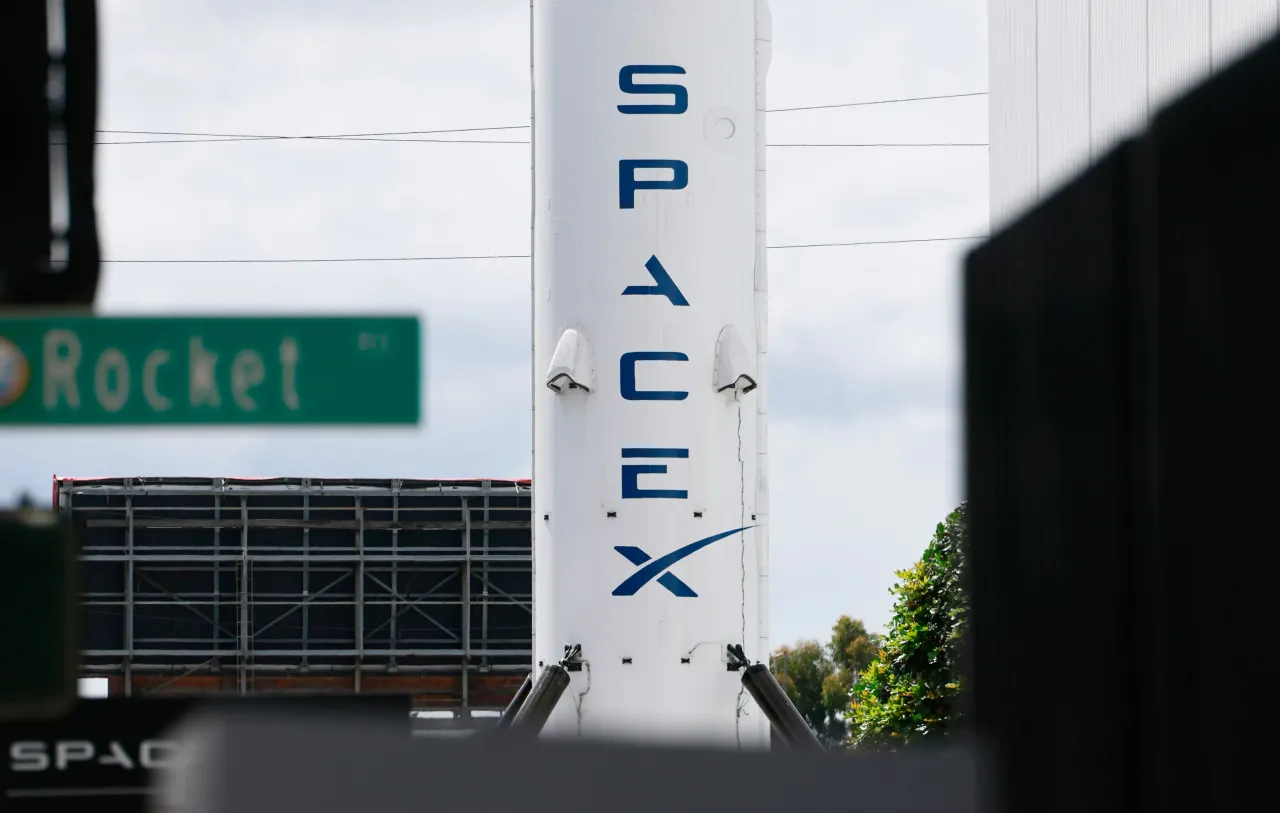
SpaceX IPO Expected to Catalyze Space Stocks Rally

- SpaceX IPO Outlook: NASA ETF portfolio manager Yuri Khodjamirian stated that the anticipated SpaceX IPO in June could serve as a significant catalyst for space stocks, drawing increased investor attention to the space economy, particularly with a projected valuation exceeding $1.75 trillion.
- Blue Origin's Market Impact: Khodjamirian highlighted that launch activities planned by Jeff Bezos-backed Blue Origin could alter supply dynamics in the launch market, thereby enhancing valuations for downstream satellite and infrastructure plays, further propelling growth in the space sector.
- Long-Term Drivers: He noted that long-term drivers such as satellite fleet upgrades, space station replacements, and potential orbital data infrastructure are poised to provide multi-year tailwinds for the space economy, especially as launch costs decrease.
- Market Sentiment Shift: Although the NASA ETF saw slight declines in afternoon trading, it has gained nearly 20% since its launch alongside the Artemis II mission on April 1, reflecting strong market interest and optimistic sentiment among investors regarding space stocks.
See More

Oil Prices Surge Amid SpaceX's $2 Trillion IPO Buzz


- Oil Price Surge: Current prices for West Texas Intermediate and Brent crude have reached $110 per barrel, marking a 35% increase since December, which significantly impacts American consumers as gasoline prices rise from $2.80 to $3.80 per gallon, increasing economic strain on households.
- Futures Market Dynamics: The oil futures market is experiencing backwardation, with current month prices at $110 per barrel compared to $70 for contracts expiring in late 2026, indicating market concerns about short-term supply issues while suggesting a more optimistic long-term outlook that could influence investor strategies.
- SpaceX IPO Outlook: SpaceX has filed for a confidential IPO, potentially valued at $2 trillion, although the actual capital needed may only be $80 to $100 billion, reflecting strong market interest in the space economy and likely attracting significant investor attention.
- Economic Impact Assessment: Despite the pressure from rising oil prices, recent employment data shows a robust job market with a slight decrease in unemployment, indicating that consumers are maintaining some economic resilience in the face of rising costs, necessitating close monitoring of future economic trends.
See More
Rocket Lab Signs Multi-Launch Deal with iQPS
- Strengthened Partnership: Rocket Lab has signed a new multi-launch agreement with iQPS, planning three dedicated Electron launches from New Zealand in 2028, bringing the total to 15 launches and reinforcing Rocket Lab's position as iQPS's primary launch provider.
- Maintained Success Rate: Since 2023, Rocket Lab has successfully completed seven launches with a 100% mission success rate, showcasing Electron's leading role in deploying small satellite constellations and enhancing market demand for its launch services.
- Technical Advantages: Each launch will deploy iQPS's QPS-SAR satellites using Rocket Lab's Motorized Lightband satellite separation system, and by leveraging in-house production of launch and space systems, Rocket Lab reduces scheduling risks and provides superior reliability, optimizing iQPS's constellation deployment efficiency.
- Future Outlook: Rocket Lab's next launch is scheduled for May 2026, and as the partnership with iQPS deepens, Rocket Lab will continue to play a crucial role in launching their Earth-imaging constellation, further driving growth in its market share.
See More
Rocket Lab Completes 85th Mission, Stock Justification in Question
- Mission Success: Rocket Lab has successfully completed its 85th launch, further demonstrating its high execution capabilities in the aerospace sector, which boosts investor confidence in the company's future growth.
- Market Reaction: Despite achieving this significant milestone, the surge in options activity has raised market expectations, potentially leading investors to question the stock's valuation.
- Investor Focus: As interest in Rocket Lab increases, investors must assess whether the company can continue to deliver a growth narrative that justifies its stock price, impacting future investment decisions.
- Future Outlook: Following the completion of its 85th mission, Rocket Lab's performance will serve as a crucial indicator for evaluating its long-term value, especially in an increasingly competitive aerospace market.
See More
Space Economy Booms with New Opportunities
- Rocket Lab's Rise: Rocket Lab has established itself as the second-largest rocket launch company in the U.S., completing 85 launches and focusing on small rocket launches, with its new Neutron rocket expected to debut in Q4 this year, aiming to enhance profits and market share.
- Growth in Space Systems: Rocket Lab's space systems business generated $403 million in revenue last year, accounting for 75% of its $1.85 billion backlog, demonstrating strong performance in its vertically integrated operations and enhancing its competitiveness in the defense sector.
- AI Applications at Planet Labs: Planet Labs leverages artificial intelligence to enhance its Earth-imaging satellites' image processing capabilities, recently expanding its partnership with Nvidia to use AI chips directly on its Pelican-4 satellite, enabling real-time data analysis and significantly reducing the time for customers to gain insights.
- Lockheed Martin's Defense Edge: As a top defense contractor, Lockheed Martin boasts a $194 billion backlog and leads NASA's Orion spacecraft project, ensuring long-term stable returns in the space economy, making it an attractive option for investors.
See More
Global Space Economy Booms to $613 Billion by 2025
- Market Growth: According to McKinsey estimates, the global space economy is projected to reach $1.8 trillion by 2035, with a compound annual growth rate exceeding 11%, indicating significant commercial potential in the space sector that is attracting substantial investor interest.
- Rocket Lab's Market Positioning: Rocket Lab has established itself as the second-largest rocket launch company in the U.S., having completed 85 launches to date, and plans to introduce its new medium-lift rocket Neutron to meet larger payload demands, thereby enhancing profit margins and competitive positioning.
- Planet Labs' AI Integration: Planet Labs is leveraging artificial intelligence to enhance its satellite imagery platform, and through its partnership with Nvidia, it can process and analyze data in real-time, providing rapid insights to customers and solidifying its position in the defense sector.
- Lockheed Martin's Industry Leadership: As a top defense contractor, Lockheed Martin plays a crucial role in the space economy, boasting a backlog of $194 billion and ensuring stable cash flow through long-term government contracts, making it an attractive option for investors.
See More
SpaceX IPO Expected to Catalyze Space Stocks Rally
- SpaceX IPO Outlook: NASA ETF portfolio manager Yuri Khodjamirian stated that the anticipated SpaceX IPO in June could serve as a significant catalyst for space stocks, drawing increased investor attention to the space economy, particularly with a projected valuation exceeding $1.75 trillion.
- Blue Origin's Market Impact: Khodjamirian highlighted that launch activities planned by Jeff Bezos-backed Blue Origin could alter supply dynamics in the launch market, thereby enhancing valuations for downstream satellite and infrastructure plays, further propelling growth in the space sector.
- Long-Term Drivers: He noted that long-term drivers such as satellite fleet upgrades, space station replacements, and potential orbital data infrastructure are poised to provide multi-year tailwinds for the space economy, especially as launch costs decrease.
- Market Sentiment Shift: Although the NASA ETF saw slight declines in afternoon trading, it has gained nearly 20% since its launch alongside the Artemis II mission on April 1, reflecting strong market interest and optimistic sentiment among investors regarding space stocks.
See More
Oil Prices Surge Amid SpaceX's $2 Trillion IPO Buzz
- Oil Price Surge: Current prices for West Texas Intermediate and Brent crude have reached $110 per barrel, marking a 35% increase since December, which significantly impacts American consumers as gasoline prices rise from $2.80 to $3.80 per gallon, increasing economic strain on households.
- Futures Market Dynamics: The oil futures market is experiencing backwardation, with current month prices at $110 per barrel compared to $70 for contracts expiring in late 2026, indicating market concerns about short-term supply issues while suggesting a more optimistic long-term outlook that could influence investor strategies.
- SpaceX IPO Outlook: SpaceX has filed for a confidential IPO, potentially valued at $2 trillion, although the actual capital needed may only be $80 to $100 billion, reflecting strong market interest in the space economy and likely attracting significant investor attention.
- Economic Impact Assessment: Despite the pressure from rising oil prices, recent employment data shows a robust job market with a slight decrease in unemployment, indicating that consumers are maintaining some economic resilience in the face of rising costs, necessitating close monitoring of future economic trends.
See More