BYD Exports Over One Million Cars in 2025
Written by Emily J. Thompson, Senior Investment Analyst
Updated: 4 days ago
0mins
Should l Buy TSLA?
Source: NASDAQ.COM
- Sales Milestone: BYD exported over one million cars in 2025, becoming the world's top-selling EV brand, which signifies rapid growth in its international market presence and increased brand recognition.
- Market Share Growth: In Europe, BYD captured approximately 4.8% of the EV market share, reflecting a remarkable 271.8% year-over-year growth, showcasing its strong momentum internationally despite fierce domestic competition.
- Technological Innovation: BYD unveiled its second-generation Blade Battery, capable of charging from 10% to 97% in just nine minutes, which enhances its product competitiveness and consumer appeal significantly.
- Financial Valuation Advantage: With a forward P/E ratio of only 17 and a PEG ratio of 0.78, BYD appears undervalued relative to its long-term growth potential, attracting investor interest despite existing market risks and competitive pressures.
Trade with 70% Backtested Accuracy
Stop guessing "Should I Buy TSLA?" and start using high-conviction signals backed by rigorous historical data.
Sign up today to access powerful investing tools and make smarter, data-driven decisions.
Analyst Views on TSLA
Wall Street analysts forecast TSLA stock price to rise
30 Analyst Rating
12 Buy
11 Hold
7 Sell
Hold
Current: 380.300

Low
25.28
Averages
401.93
High
600.00
Current: 380.300
Low
25.28
Averages
401.93
High
600.00
About TSLA
Tesla, Inc. designs, develops, manufactures, sells and leases high-performance fully electric vehicles and energy generation and storage systems, and offers services related to its products. Its segments include automotive, and energy generation and storage. The automotive segment includes the design, development, manufacturing, sales and leasing of high-performance fully electric vehicles, and sales of automotive regulatory credits. It also includes sales of used vehicles, non-warranty maintenance services and collisions, part sales, paid supercharging, insurance services revenue and retail merchandise sales. The energy generation and storage segment include the design, manufacture, installation, sales and leasing of solar energy generation and energy storage products and related services and sales of solar energy systems incentives. Its consumer vehicles include the Model 3, Y, S, X and Cybertruck. Its lithium-ion battery energy storage products include Powerwall and Megapack.
About the author

Emily J. Thompson
Emily J. Thompson, a Chartered Financial Analyst (CFA) with 12 years in investment research, graduated with honors from the Wharton School. Specializing in industrial and technology stocks, she provides in-depth analysis for Intellectia’s earnings and market brief reports.
Tesla Delivery Estimates Cut, Market Confidence Diminished

- Delivery Estimate Cut: UBS analyst Joseph Spak has revised Tesla's Q1 2026 delivery estimate down to 345,000 vehicles, an 18% decrease from 421,000 in Q4 2025, indicating weakening demand in key markets that could impact the company's future cash flow and investment capacity.
- Softening Market Demand: U.S. EV demand has softened, leading Tesla to wind down production of higher-margin Model S and Model X, with January and February domestic deliveries around 78,600 units, down 6% year-over-year, which could negatively affect overall company performance.
- Intensifying Competition: Tesla faces increasing pressure in the autonomous driving sector, with Waymo completing over 400,000 paid rides weekly and Nvidia's latest platform raising industry standards, leading investors to question Tesla's competitive advantage in the Robotaxi market, potentially impacting its future market share.
- Profitability Under Pressure: Tesla's gross margins slipped to 16.8% in Q4 2025 due to intensified price competition, particularly from Chinese rivals, and if delivery volumes continue to decline, it will further compress profit margins, affecting the company's long-term growth potential.
See More
Tesla's Ten-Year Investment Returns Exceed $253,000
- Market Capitalization: Tesla's market cap has reached $1.2 trillion, showcasing its strong influence in the global automotive market and attracting numerous long-term investors, reflecting an increase in brand value and market recognition.
- Investment Returns: Over the past decade, Tesla's stock has surged 2,430%, turning a $10,000 investment into over $253,000, and despite the current stock trading 22% off its peak, it significantly outperforms the overall market, demonstrating its investment appeal.
- Revenue Growth: Tesla's sales skyrocketed from $4 billion in 2015 to $95 billion last year, with a marked increase in production and delivery of electric vehicles, driving rapid revenue growth and serving as a key tailwind for the company's success.
- Future Outlook: While it is unlikely that Tesla will generate the same returns in the next decade, the market holds high expectations for its autonomous driving and robotics technologies, although the realization of these expectations is not guaranteed, reflecting investor optimism about the future.
See More

Musk Launches Terafab Semiconductor Project in Texas

- Project Launch: Musk announced the Terafab semiconductor project in Austin, Texas, aimed at internalizing chip production to support his expanding AI, robotics, and aerospace ventures, targeting an annual support of 1 terawatt of computing power to advance autonomous driving and humanoid robotics.
- Vertical Integration Strategy: This initiative signifies a move towards total vertical integration for Tesla and SpaceX, with plans to produce high-specification 2-nanometer chips to reduce reliance on the volatile global semiconductor market, ensuring the specialized needs of its robotics and aerospace subsidiaries are met.
- Space Infrastructure: The Terafab project serves as a foundational component for moving complex computing into orbit, with SpaceX petitioning the FCC for licenses to launch a network of data center satellites, expected to secure funding through a record-setting $50 billion IPO to support the development of these “mini” AI satellites.
- Technological Investment: Tesla's deepening ties with xAI, including a $2 billion investment and the integration of the Grok chatbot, indicate that the success of this capital-intensive pivot in high-end semiconductor manufacturing will depend on overcoming significant engineering and financial challenges.
See More
Tesla Faces Competitive Pressure from Rivian's R2 SUV

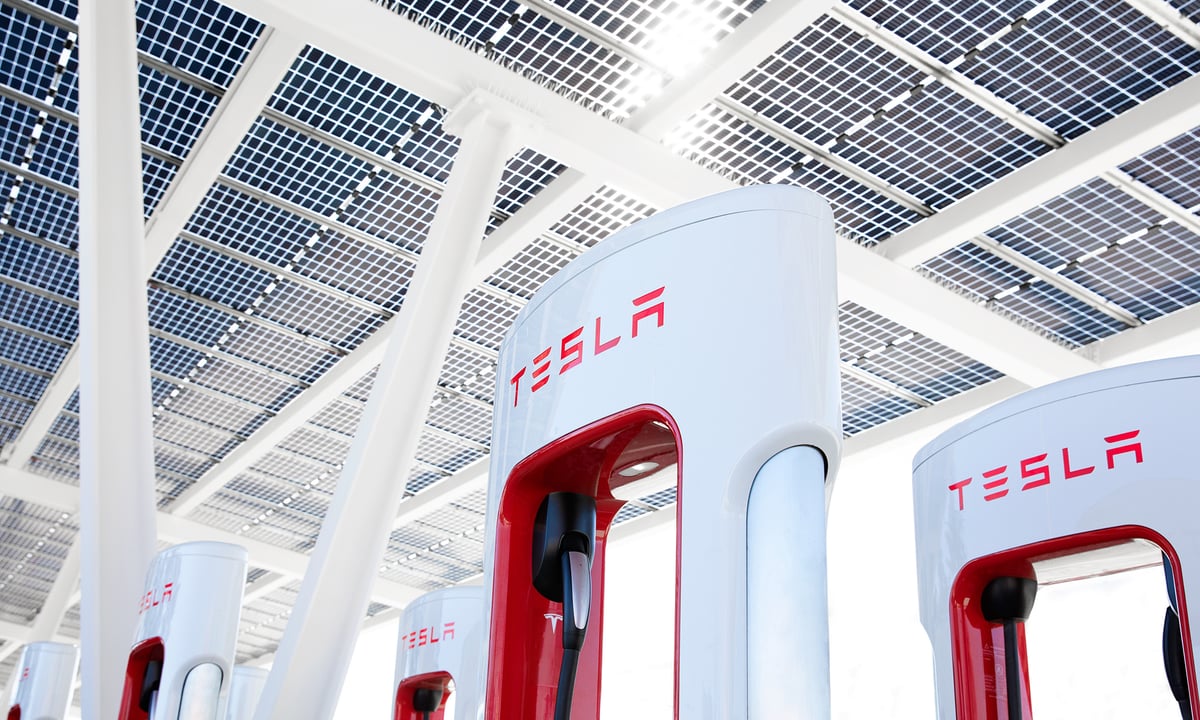
- Market Share Challenge: Tesla commands over 50% of the U.S. market share, but Rivian's R2 SUV is expected to emerge as a significant competitor by 2026, potentially impacting Tesla's market leadership.
- Revenue Structure Analysis: Approximately 75% of Tesla's revenue comes from its automotive business, with the Model Y sales contributing significantly; however, the launch of Rivian's R2 SUV poses a potential threat to Tesla's revenue streams.
- Competitive Pricing Strategy: Rivian's R2 SUV starts at $45,000, while Tesla's Model Y starts at $41,630, but the R2's competitive pricing may attract more consumers, thereby affecting Tesla's sales.
- Sales Forecast Volatility: Tesla's Model Y sales peaked at 385,897 units in 2023 but are expected to drop to around 250,000 units by 2025; if Rivian successfully scales production, it could potentially surpass Model Y sales by 2029.
See More

Tesla Faces Competitive Pressure from Rivian's R2 SUV
- Market Share Challenge: Tesla commands over 50% of the U.S. market share, but Rivian's R2 SUV is expected to pose direct competition to the Model Y in 2026, potentially impacting Tesla's leadership position.
- Sales Data Analysis: Last quarter, Tesla delivered 418,227 vehicles, with over 400,000 from the Model 3 and Model Y, highlighting the Model Y's significance in revenue; however, future sales may decline due to increased competition.
- Price Competition: The Model Y starts at $41,630, while Rivian's R2 SUV starts at $45,000; although the R2 is slightly more expensive, its market positioning and the popularity of SUVs may attract many consumers.
- Future Outlook: Since its launch in 2020, Model Y sales peaked at 385,897 units in 2023 but are projected to drop to around 250,000 units by 2025, and if Rivian successfully scales, it could surpass Tesla's sales by 2029.
See More

Rivian's R2 SUV Threatens Tesla's Market Share

- Market Share Challenge: Tesla currently holds over 50% of the U.S. market share, but Rivian's R2 SUV, set to launch in 2026, poses a significant threat that could erode Tesla's leadership position.
- Revenue Concentration: Approximately 86% of Tesla's revenue is derived from automotive sales, with the Model Y and Model 3 being the primary contributors, as evidenced by 418,227 vehicles delivered in 2023, highlighting Tesla's reliance on these models.
- Competitive Pricing Strategy: Rivian's R2 SUV starts at $45,000, slightly above Tesla's Model Y at $41,630, yet offers a compelling value proposition that could attract a substantial consumer base away from Tesla.
- Sales Forecast Volatility: Since its launch in 2020, Model Y sales surged from 40,001 units to 385,897 in 2023, but are projected to drop to around 250,000 units by 2025, indicating that if Rivian's R2 successfully enters the market, it could potentially surpass Model Y sales by 2029.
See More
Tesla Delivery Estimates Cut, Market Confidence Diminished
- Delivery Estimate Cut: UBS analyst Joseph Spak has revised Tesla's Q1 2026 delivery estimate down to 345,000 vehicles, an 18% decrease from 421,000 in Q4 2025, indicating weakening demand in key markets that could impact the company's future cash flow and investment capacity.
- Softening Market Demand: U.S. EV demand has softened, leading Tesla to wind down production of higher-margin Model S and Model X, with January and February domestic deliveries around 78,600 units, down 6% year-over-year, which could negatively affect overall company performance.
- Intensifying Competition: Tesla faces increasing pressure in the autonomous driving sector, with Waymo completing over 400,000 paid rides weekly and Nvidia's latest platform raising industry standards, leading investors to question Tesla's competitive advantage in the Robotaxi market, potentially impacting its future market share.
- Profitability Under Pressure: Tesla's gross margins slipped to 16.8% in Q4 2025 due to intensified price competition, particularly from Chinese rivals, and if delivery volumes continue to decline, it will further compress profit margins, affecting the company's long-term growth potential.
See More
Tesla's Ten-Year Investment Returns Exceed $253,000
- Market Capitalization: Tesla's market cap has reached $1.2 trillion, showcasing its strong influence in the global automotive market and attracting numerous long-term investors, reflecting an increase in brand value and market recognition.
- Investment Returns: Over the past decade, Tesla's stock has surged 2,430%, turning a $10,000 investment into over $253,000, and despite the current stock trading 22% off its peak, it significantly outperforms the overall market, demonstrating its investment appeal.
- Revenue Growth: Tesla's sales skyrocketed from $4 billion in 2015 to $95 billion last year, with a marked increase in production and delivery of electric vehicles, driving rapid revenue growth and serving as a key tailwind for the company's success.
- Future Outlook: While it is unlikely that Tesla will generate the same returns in the next decade, the market holds high expectations for its autonomous driving and robotics technologies, although the realization of these expectations is not guaranteed, reflecting investor optimism about the future.
See More
Musk Launches Terafab Semiconductor Project in Texas
- Project Launch: Musk announced the Terafab semiconductor project in Austin, Texas, aimed at internalizing chip production to support his expanding AI, robotics, and aerospace ventures, targeting an annual support of 1 terawatt of computing power to advance autonomous driving and humanoid robotics.
- Vertical Integration Strategy: This initiative signifies a move towards total vertical integration for Tesla and SpaceX, with plans to produce high-specification 2-nanometer chips to reduce reliance on the volatile global semiconductor market, ensuring the specialized needs of its robotics and aerospace subsidiaries are met.
- Space Infrastructure: The Terafab project serves as a foundational component for moving complex computing into orbit, with SpaceX petitioning the FCC for licenses to launch a network of data center satellites, expected to secure funding through a record-setting $50 billion IPO to support the development of these “mini” AI satellites.
- Technological Investment: Tesla's deepening ties with xAI, including a $2 billion investment and the integration of the Grok chatbot, indicate that the success of this capital-intensive pivot in high-end semiconductor manufacturing will depend on overcoming significant engineering and financial challenges.
See More
Tesla Faces Competitive Pressure from Rivian's R2 SUV
- Market Share Challenge: Tesla commands over 50% of the U.S. market share, but Rivian's R2 SUV is expected to emerge as a significant competitor by 2026, potentially impacting Tesla's market leadership.
- Revenue Structure Analysis: Approximately 75% of Tesla's revenue comes from its automotive business, with the Model Y sales contributing significantly; however, the launch of Rivian's R2 SUV poses a potential threat to Tesla's revenue streams.
- Competitive Pricing Strategy: Rivian's R2 SUV starts at $45,000, while Tesla's Model Y starts at $41,630, but the R2's competitive pricing may attract more consumers, thereby affecting Tesla's sales.
- Sales Forecast Volatility: Tesla's Model Y sales peaked at 385,897 units in 2023 but are expected to drop to around 250,000 units by 2025; if Rivian successfully scales production, it could potentially surpass Model Y sales by 2029.
See More
Tesla Faces Competitive Pressure from Rivian's R2 SUV
- Market Share Challenge: Tesla commands over 50% of the U.S. market share, but Rivian's R2 SUV is expected to pose direct competition to the Model Y in 2026, potentially impacting Tesla's leadership position.
- Sales Data Analysis: Last quarter, Tesla delivered 418,227 vehicles, with over 400,000 from the Model 3 and Model Y, highlighting the Model Y's significance in revenue; however, future sales may decline due to increased competition.
- Price Competition: The Model Y starts at $41,630, while Rivian's R2 SUV starts at $45,000; although the R2 is slightly more expensive, its market positioning and the popularity of SUVs may attract many consumers.
- Future Outlook: Since its launch in 2020, Model Y sales peaked at 385,897 units in 2023 but are projected to drop to around 250,000 units by 2025, and if Rivian successfully scales, it could surpass Tesla's sales by 2029.
See More
Rivian's R2 SUV Threatens Tesla's Market Share
- Market Share Challenge: Tesla currently holds over 50% of the U.S. market share, but Rivian's R2 SUV, set to launch in 2026, poses a significant threat that could erode Tesla's leadership position.
- Revenue Concentration: Approximately 86% of Tesla's revenue is derived from automotive sales, with the Model Y and Model 3 being the primary contributors, as evidenced by 418,227 vehicles delivered in 2023, highlighting Tesla's reliance on these models.
- Competitive Pricing Strategy: Rivian's R2 SUV starts at $45,000, slightly above Tesla's Model Y at $41,630, yet offers a compelling value proposition that could attract a substantial consumer base away from Tesla.
- Sales Forecast Volatility: Since its launch in 2020, Model Y sales surged from 40,001 units to 385,897 in 2023, but are projected to drop to around 250,000 units by 2025, indicating that if Rivian's R2 successfully enters the market, it could potentially surpass Model Y sales by 2029.
See More