BlackRock Q1 Earnings Preview: Growth Amid Rising Risks
Written by Emily J. Thompson, Senior Investment Analyst
Updated: 1 hour ago
0mins
Should l Buy BLK?
Source: seekingalpha
- Earnings Expectations: BlackRock is set to report Q1 results on April 14, with consensus estimates predicting EPS of $11.48, reflecting a 1.6% year-over-year increase, and revenue of $6.43 billion, up 21.8%, indicating solid growth potential.
- Estimate Revisions: While BlackRock has consistently beaten EPS estimates over the past four quarters, recent forecasts show a cautious tone with 2 upward and 9 downward revisions for EPS, and 1 upward and 4 downward revisions for revenue, suggesting market apprehension about future performance.
- Liquidity Strain: In March, BlackRock curtailed withdrawals from its largest private credit fund after Q1 redemption requests reached 9.3% of shares, fulfilling only 5% of requests, highlighting increasing liquidity pressures within the sector.
- Market Confidence: Despite redemption challenges, CEO Larry Fink downplayed systemic risks, asserting that private credit does not threaten financial stability, with the market size around $2.2 trillion and strong institutional demand, indicating resilience in the face of investor exits.
Trade with 70% Backtested Accuracy
Stop guessing "Should I Buy BLK?" and start using high-conviction signals backed by rigorous historical data.
Sign up today to access powerful investing tools and make smarter, data-driven decisions.
Analyst Views on BLK
Wall Street analysts forecast BLK stock price to rise
10 Analyst Rating
8 Buy
2 Hold
0 Sell
Strong Buy
Current: 999.310

Low
1209
Averages
1354
High
1550
Current: 999.310
Low
1209
Averages
1354
High
1550
About BLK
BlackRock, Inc. is an investment management company. The Company provides a range of investment management and technology services to institutional and retail clients. Its diverse platform of alpha-seeking active, private markets, index and cash management investment strategies across asset classes enables the Company to tailor investment outcomes and asset allocation solutions for clients. Its product offerings include single- and multi-asset portfolios investing in equities, fixed income, alternatives, and money market instruments. Its products are offered directly and through intermediaries in a range of vehicles, including open-end and closed-end mutual funds, iShares exchange-traded funds, separate accounts, collective investment funds and other pooled investment vehicles. It also offers technology services, including the investment and risk management technology platform, Aladdin, Aladdin Wealth, eFront, and Cachematrix, as well as advisory services and solutions.
About the author

Emily J. Thompson
Emily J. Thompson, a Chartered Financial Analyst (CFA) with 12 years in investment research, graduated with honors from the Wharton School. Specializing in industrial and technology stocks, she provides in-depth analysis for Intellectia’s earnings and market brief reports.

BlackRock Q1 Earnings Preview: Growth Amid Rising Risks

- Earnings Expectations: BlackRock is set to report Q1 results on April 14, with consensus estimates predicting EPS of $11.48, reflecting a 1.6% year-over-year increase, and revenue of $6.43 billion, up 21.8%, indicating solid growth potential.
- Estimate Revisions: While BlackRock has consistently beaten EPS estimates over the past four quarters, recent forecasts show a cautious tone with 2 upward and 9 downward revisions for EPS, and 1 upward and 4 downward revisions for revenue, suggesting market apprehension about future performance.
- Liquidity Strain: In March, BlackRock curtailed withdrawals from its largest private credit fund after Q1 redemption requests reached 9.3% of shares, fulfilling only 5% of requests, highlighting increasing liquidity pressures within the sector.
- Market Confidence: Despite redemption challenges, CEO Larry Fink downplayed systemic risks, asserting that private credit does not threaten financial stability, with the market size around $2.2 trillion and strong institutional demand, indicating resilience in the face of investor exits.
See More
Oil Prices Surge Amid U.S. Tensions; Bank Earnings Reports Loom


- Oil Price Surge: Oil prices jumped 7% today, surpassing $100, following President Trump's announcement of a blockade on the Strait of Hormuz due to failed peace talks with Iran, which could lead to instability in global energy markets.
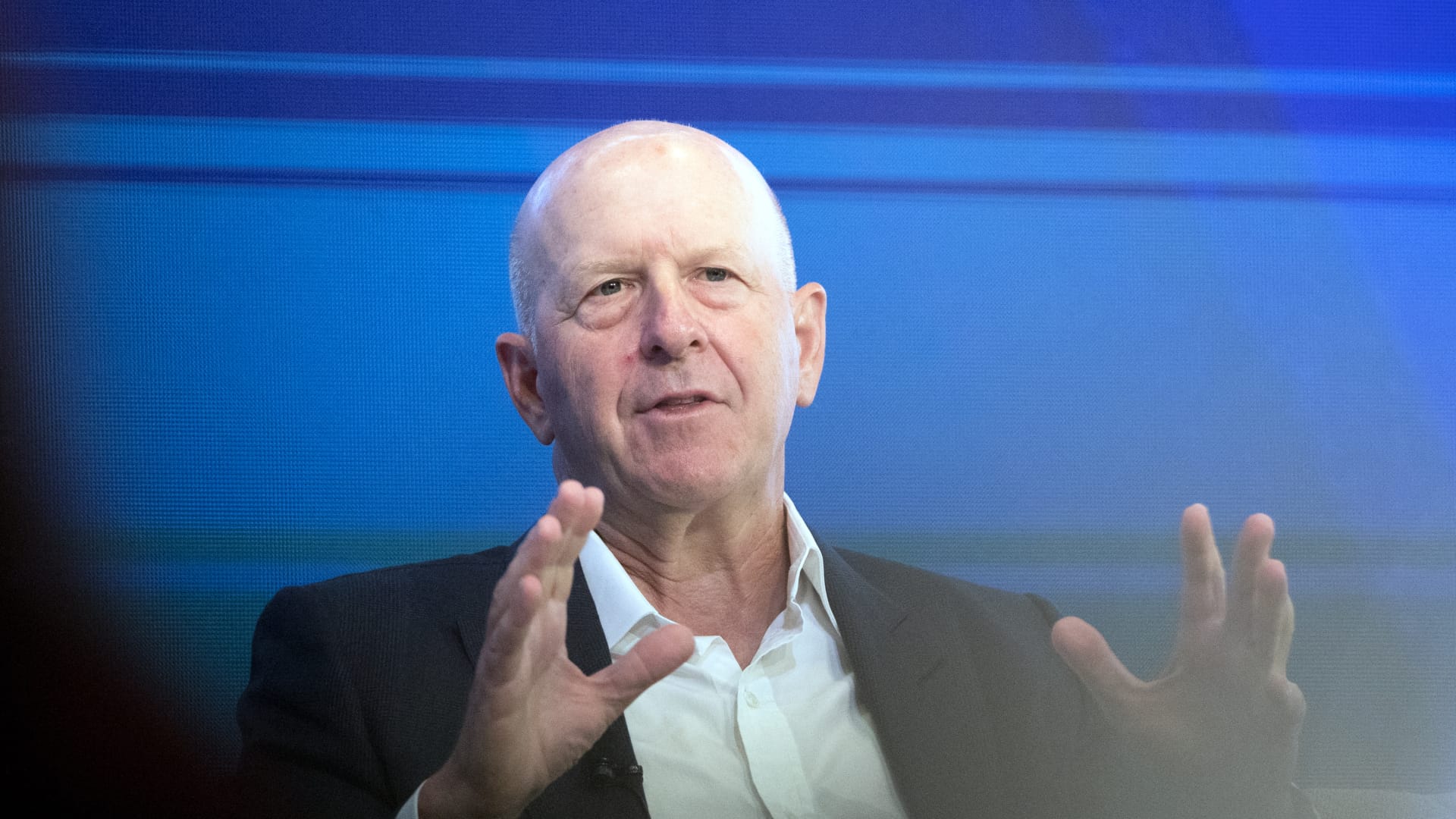
- Goldman Sachs Earnings Beat: Goldman Sachs reported better-than-expected earnings for Q1, driven by record equity trading results, although disappointing fixed-income trading led to a more than 2% drop in its stock price, highlighting mixed performance in its trading divisions.
- AI Security Risk Discussions: The release of Anthropic's new AI model has raised cybersecurity concerns, prompting Federal Reserve Chair and Treasury Secretary to meet with major bank CEOs to discuss potential risks, indicating heightened government scrutiny over AI technology safety.
- Trump vs. Pope Controversy: Trump criticized Pope Leo XIV on social media for being weak on the Iran war, while the Pope responded by emphasizing his commitment to promoting peace and dialogue, reflecting the ongoing tension between political and religious spheres that may influence public opinion.
See More

Trump Announces Maritime Blockade Against Iran Amid Rising Oil Prices


- Oil Price Surge: Following Trump's announcement of a maritime blockade in the Strait of Hormuz, crude oil prices surged by 7% to surpass $100, indicating potential market volatility and broader economic implications as tensions escalate in the region.
- Bank Earnings Season Begins: Goldman Sachs reported better-than-expected earnings for Q1, driven by record equity trading, yet shares fell over 2% due to disappointing fixed-income results, reflecting investor concerns about future performance amidst a competitive landscape.
- AI Security Risks: The release of Anthropic's new AI model has raised cybersecurity concerns, prompting a meeting between the Federal Reserve Chair and major bank CEOs to discuss potential risks, highlighting the government's increasing scrutiny of AI technologies and their implications for financial institutions.
- Ineos Automotive Startup: Ineos is set to announce record orders for its flagship vehicle, with the CEO aiming for breakeven this year while targeting a 30%-35% annual sales increase in the U.S. market, demonstrating its ambition to disrupt the SUV sector amidst fierce competition.
See More

Investment Choices and Account Configurations Discussed

- Investment Choice Analysis: In this episode, experts discuss the pros and cons of index funds, actively managed funds, and individual stocks, highlighting that index funds offer broad market exposure at extremely low fees (0.03%-0.04%), making them suitable for long-term investors, but lacking flexibility and high return potential.
- Cash vs. Bonds Selection: Experts note that the choice between cash and bonds should be based on individual risk tolerance and cash needs, with historical data showing bonds outperform cash by 1-2 percentage points annually, although recent bond performance has been poor, necessitating careful evaluation by investors.
- Tax Account Configuration: When discussing different investment accounts, experts emphasize the flexibility of taxable brokerage accounts, allowing investors to choose any investment type, while 401(k) accounts provide tax advantages and employer matching, making them suitable for long-term savings.
- Investment Strategy Recommendations: Experts advise investors to consider whether their investments are held in the right accounts, emphasizing placing high-growth potential assets in Roth IRAs to avoid future required minimum distributions (RMDs) and associated tax burdens.
See More

Analysis of Investment Choices and Account Types
- Portfolio Foundations: In this episode, Motley Fool experts discuss the fundamentals of investment portfolios, emphasizing the low fees (0.03%-0.04%) and broad diversification of index funds, making them ideal for investors to reduce risk and enhance long-term return potential.
- Advantages of Actively Managed Funds: Actively managed funds offer the potential to outperform the market; despite higher management fees, investors can benefit from specialized investment strategies, making them suitable for those seeking specific investment styles.
- Flexibility of Individual Stocks: Investing in individual stocks allows investors complete control over their portfolios, enabling flexible adjustments based on market changes while also providing tax flexibility, as investors can choose when to sell to optimize tax burdens, thereby enhancing wealth growth potential.
- Importance of Account Selection: The episode highlights the pros and cons of different account types (such as taxable brokerage accounts, IRAs, and 401(k)s), advising investors to choose the appropriate accounts based on their financial situation and investment goals to maximize investment returns and tax efficiency.
See More

Iran War Shakes Markets, Yet Safe Yield Opportunities Persist
- Market Volatility Intensifies: Since the onset of the Iran war, the markets have experienced significant volatility, with the S&P 500 index dropping over 9% at one point, yet it is poised to reverse losses since the conflict began, indicating cautious optimism among investors regarding market recovery.
- Rising Inflation Pressures: Higher oil prices have exacerbated inflation concerns, leading to surging Treasury yields, which necessitates careful selection of fixed income assets to mitigate risks associated with interest rate fluctuations, particularly as longer-duration bonds exhibit greater price volatility.
- Quality Bond Allocation: The Chief Investment Officer at Nuveen recommends maintaining high credit quality while keeping duration at a “short to neutral” stance to navigate market uncertainties, with municipal bonds being viewed as a relatively safe investment amid escalating geopolitical risks.
- Long-Term Investment Strategy: Despite turmoil in the fixed income markets, investors should avoid rushing to cash and instead adhere to long-term investment strategies to capitalize on value opportunities within the market, particularly in municipal bonds and investment-grade corporates that offer compelling yields, especially for high-income investors in high-tax states.
See More
BlackRock Q1 Earnings Preview: Growth Amid Rising Risks
- Earnings Expectations: BlackRock is set to report Q1 results on April 14, with consensus estimates predicting EPS of $11.48, reflecting a 1.6% year-over-year increase, and revenue of $6.43 billion, up 21.8%, indicating solid growth potential.
- Estimate Revisions: While BlackRock has consistently beaten EPS estimates over the past four quarters, recent forecasts show a cautious tone with 2 upward and 9 downward revisions for EPS, and 1 upward and 4 downward revisions for revenue, suggesting market apprehension about future performance.
- Liquidity Strain: In March, BlackRock curtailed withdrawals from its largest private credit fund after Q1 redemption requests reached 9.3% of shares, fulfilling only 5% of requests, highlighting increasing liquidity pressures within the sector.
- Market Confidence: Despite redemption challenges, CEO Larry Fink downplayed systemic risks, asserting that private credit does not threaten financial stability, with the market size around $2.2 trillion and strong institutional demand, indicating resilience in the face of investor exits.
See More
Oil Prices Surge Amid U.S. Tensions; Bank Earnings Reports Loom
- Oil Price Surge: Oil prices jumped 7% today, surpassing $100, following President Trump's announcement of a blockade on the Strait of Hormuz due to failed peace talks with Iran, which could lead to instability in global energy markets.
- Goldman Sachs Earnings Beat: Goldman Sachs reported better-than-expected earnings for Q1, driven by record equity trading results, although disappointing fixed-income trading led to a more than 2% drop in its stock price, highlighting mixed performance in its trading divisions.
- AI Security Risk Discussions: The release of Anthropic's new AI model has raised cybersecurity concerns, prompting Federal Reserve Chair and Treasury Secretary to meet with major bank CEOs to discuss potential risks, indicating heightened government scrutiny over AI technology safety.
- Trump vs. Pope Controversy: Trump criticized Pope Leo XIV on social media for being weak on the Iran war, while the Pope responded by emphasizing his commitment to promoting peace and dialogue, reflecting the ongoing tension between political and religious spheres that may influence public opinion.
See More
Trump Announces Maritime Blockade Against Iran Amid Rising Oil Prices
- Oil Price Surge: Following Trump's announcement of a maritime blockade in the Strait of Hormuz, crude oil prices surged by 7% to surpass $100, indicating potential market volatility and broader economic implications as tensions escalate in the region.
- Bank Earnings Season Begins: Goldman Sachs reported better-than-expected earnings for Q1, driven by record equity trading, yet shares fell over 2% due to disappointing fixed-income results, reflecting investor concerns about future performance amidst a competitive landscape.
- AI Security Risks: The release of Anthropic's new AI model has raised cybersecurity concerns, prompting a meeting between the Federal Reserve Chair and major bank CEOs to discuss potential risks, highlighting the government's increasing scrutiny of AI technologies and their implications for financial institutions.
- Ineos Automotive Startup: Ineos is set to announce record orders for its flagship vehicle, with the CEO aiming for breakeven this year while targeting a 30%-35% annual sales increase in the U.S. market, demonstrating its ambition to disrupt the SUV sector amidst fierce competition.
See More
Investment Choices and Account Configurations Discussed
- Investment Choice Analysis: In this episode, experts discuss the pros and cons of index funds, actively managed funds, and individual stocks, highlighting that index funds offer broad market exposure at extremely low fees (0.03%-0.04%), making them suitable for long-term investors, but lacking flexibility and high return potential.
- Cash vs. Bonds Selection: Experts note that the choice between cash and bonds should be based on individual risk tolerance and cash needs, with historical data showing bonds outperform cash by 1-2 percentage points annually, although recent bond performance has been poor, necessitating careful evaluation by investors.
- Tax Account Configuration: When discussing different investment accounts, experts emphasize the flexibility of taxable brokerage accounts, allowing investors to choose any investment type, while 401(k) accounts provide tax advantages and employer matching, making them suitable for long-term savings.
- Investment Strategy Recommendations: Experts advise investors to consider whether their investments are held in the right accounts, emphasizing placing high-growth potential assets in Roth IRAs to avoid future required minimum distributions (RMDs) and associated tax burdens.
See More
Analysis of Investment Choices and Account Types
- Portfolio Foundations: In this episode, Motley Fool experts discuss the fundamentals of investment portfolios, emphasizing the low fees (0.03%-0.04%) and broad diversification of index funds, making them ideal for investors to reduce risk and enhance long-term return potential.
- Advantages of Actively Managed Funds: Actively managed funds offer the potential to outperform the market; despite higher management fees, investors can benefit from specialized investment strategies, making them suitable for those seeking specific investment styles.
- Flexibility of Individual Stocks: Investing in individual stocks allows investors complete control over their portfolios, enabling flexible adjustments based on market changes while also providing tax flexibility, as investors can choose when to sell to optimize tax burdens, thereby enhancing wealth growth potential.
- Importance of Account Selection: The episode highlights the pros and cons of different account types (such as taxable brokerage accounts, IRAs, and 401(k)s), advising investors to choose the appropriate accounts based on their financial situation and investment goals to maximize investment returns and tax efficiency.
See More
Iran War Shakes Markets, Yet Safe Yield Opportunities Persist
- Market Volatility Intensifies: Since the onset of the Iran war, the markets have experienced significant volatility, with the S&P 500 index dropping over 9% at one point, yet it is poised to reverse losses since the conflict began, indicating cautious optimism among investors regarding market recovery.
- Rising Inflation Pressures: Higher oil prices have exacerbated inflation concerns, leading to surging Treasury yields, which necessitates careful selection of fixed income assets to mitigate risks associated with interest rate fluctuations, particularly as longer-duration bonds exhibit greater price volatility.
- Quality Bond Allocation: The Chief Investment Officer at Nuveen recommends maintaining high credit quality while keeping duration at a “short to neutral” stance to navigate market uncertainties, with municipal bonds being viewed as a relatively safe investment amid escalating geopolitical risks.
- Long-Term Investment Strategy: Despite turmoil in the fixed income markets, investors should avoid rushing to cash and instead adhere to long-term investment strategies to capitalize on value opportunities within the market, particularly in municipal bonds and investment-grade corporates that offer compelling yields, especially for high-income investors in high-tax states.
See More