AI Stocks Face Challenges and Opportunities Amid Market Correction
Written by Emily J. Thompson, Senior Investment Analyst
Updated: Mar 22 2026
0mins


Should l Buy ORCL?
Source: Fool
- Market Correction Impact: The overall market has faced challenges in recent weeks, with AI stocks like Microsoft and Oracle seeing declines of over 20% and 50%, respectively, indicating a reevaluation of AI technology's value and leading to a repricing of related companies.
- Disillusionment Cycle Analysis: According to Gartner's Hype Cycle, AI is currently in the 'trough of disillusionment,' where, despite future potential, the current reality has not met initial high expectations, causing many companies to struggle.
- Investment Opportunity Identification: Despite short-term challenges, investors should view this as a long-term buying opportunity, particularly as Oracle anticipates its AI infrastructure revenue to grow from $18 billion this year to $144 billion by 2030, showcasing strong growth potential.
- Market Leader Outlook: Google's cloud computing division is excelling in the AI space; while AI is not its largest business, the rapidly growing cloud segment is expected to benefit from the upcoming 'slope of enlightenment,' providing new growth momentum for the company.
Trade with 70% Backtested Accuracy
Stop guessing "Should I Buy ORCL?" and start using high-conviction signals backed by rigorous historical data.
Sign up today to access powerful investing tools and make smarter, data-driven decisions.
Analyst Views on ORCL
Wall Street analysts forecast ORCL stock price to rise
34 Analyst Rating
25 Buy
9 Hold
0 Sell
Moderate Buy
Current: 138.800

Low
180.00
Averages
309.59
High
400.00
Current: 138.800
Low
180.00
Averages
309.59
High
400.00
About ORCL
Oracle Corporation offers integrated suites of applications plus secure, autonomous infrastructure in the Oracle Cloud. The Company operates through three businesses: cloud and license, hardware and service. Its cloud and license business is engaged in the sale, marketing and delivery of its enterprise applications and infrastructure technologies through cloud and on-premise deployment models including its cloud services and license support offerings, and its cloud license and on-premise license offerings. Its hardware business provides infrastructure technologies including Oracle Engineered Systems, servers, storage, industry-specific hardware, operating systems, virtualization, management and other hardware-related software to support diverse IT environments. Its services business provides services to customers and partners to help maximize the performance of their investments in Oracle applications and infrastructure technologies.
About the author

Emily J. Thompson
Emily J. Thompson, a Chartered Financial Analyst (CFA) with 12 years in investment research, graduated with honors from the Wharton School. Specializing in industrial and technology stocks, she provides in-depth analysis for Intellectia’s earnings and market brief reports.

Oracle's AI Business Uncertainty Leads to Stock Volatility

- Earnings Volatility: Oracle reported remaining performance obligations (RPOs) of $455 billion in its fiscal Q1 2023, indicating potential in its AI data center business; however, the stock has plummeted nearly 50% due to market doubts about sustainability.
- Debt Pressure: To complete its AI data center build-out, Oracle needs to raise up to $50 billion in debt, raising concerns among investors about its financial health, especially given the weak margins in its data center business.
- Analyst Optimism: Despite challenges, Guggenheim analyst John DiFucci remains bullish on Oracle, setting a price target of $400, suggesting nearly 170% upside, reflecting confidence in its cloud infrastructure and database technology.
- OpenAI Financing Boost: OpenAI's successful $120 billion private financing round enhances market confidence in its future infrastructure commitments, positively impacting Oracle's AI business outlook and potentially alleviating investor concerns.
See More

Investment Outlook for Energy Stocks Amid Market Turbulence


- Complex Energy Market: The ongoing war in Iran has disrupted oil and material flows through the Strait of Hormuz, affecting about one-fifth of global oil supply, driving up prices and causing shortages in some regions, which requires investors to navigate this unpredictable landscape cautiously.
- Growth Potential of Energy Transfer: Energy Transfer (ET), one of the largest midstream companies in the U.S., with over 140,000 miles of pipelines and storage facilities, is projected to see adjusted EBITDA growth of 9% to 12% in 2026, supporting its 6.8% dividend yield and bolstering investor confidence.
- Stability of ExxonMobil: As the largest publicly traded oil company, ExxonMobil (XOM) expects to generate $145 billion in surplus cash flow by 2030, backed by its 43 consecutive years of dividend payments and a strong balance sheet, ensuring stability amid market fluctuations.
- Growth Strategy of Enterprise Products Partners: Enterprise Products Partners (EPD) boasts over 50,000 miles of infrastructure in North America, with expected adjusted EBITDA growth of 3% to 5% in 2026 and accelerating to about 10% in 2027, ensuring continued dividend growth and attracting income-seeking investors.
See More

Trump Hints at Possible End to Military Involvement in Iran


- Military Involvement Update: President Trump hinted that U.S. military involvement in Iran could end within two to three weeks, a development that may significantly impact geopolitical stability and related energy stocks.
- Market Rebound: Following Trump's announcement, U.S. stock futures rose, with Nasdaq and Russell 2000 futures up 0.7% and Dow and S&P 500 futures gaining 0.6%, indicating cautious optimism among investors regarding market prospects.
- Nike's Earnings Decline: Nike Inc. shares fell 10% in pre-market trading after guiding for a revenue decline in Q4, with a projected 20% drop in sales from China, posing challenges to its long-term growth strategy.
- Beyond Meat's Revenue Miss: Beyond Meat's stock dropped 10% in early trading after missing Q4 revenue estimates and citing
See More

Iran Threatens Attacks on U.S. Tech Firms


- Escalating Threats: The Islamic Revolutionary Guard Corps (IRGC) has declared intentions to attack 18 U.S. tech companies, including Nvidia, Apple, Microsoft, and Google, in retaliation for U.S. and Israeli strikes on Iran, indicating a significant escalation in regional tensions.
- Specific Attack Timeline: The IRGC warned that attacks would commence at 8 PM Tehran time on April 1, urging employees at these companies to evacuate immediately to safeguard their lives, highlighting the urgency and potential danger of the situation.
- Vulnerability of Tech Infrastructure: This threat follows Iranian strikes on AWS data centers in the Middle East, which caused outages in several apps and digital services in the UAE, underscoring the vulnerability of U.S. tech firms' infrastructure in the region and its impact on business operations.
- Corporate Response Strategies: Companies like Intel have stated that employee safety is their top priority and are implementing measures to protect their facilities in the Middle East, reflecting their adaptability to geopolitical risks and commitment to employee welfare.
See More

Iran's IRGC Threatens U.S. Tech Firms Amid Rising Tensions

- Expanded Threat Scope: Iran's Islamic Revolutionary Guard Corps (IRGC) has designated 18 U.S. tech companies, including Nvidia, Apple, Microsoft, and Google, as 'legitimate targets' in retaliation for U.S. and Israeli strikes on Iran, highlighting escalating regional tensions.
- Attack Timeline Set: The IRGC announced via Telegram that attacks on these companies would commence at 8 p.m. Tehran time on April 1, warning employees to evacuate workplaces immediately to safeguard their lives, indicating the urgency of their threats.
- Enhanced Security Measures: An Intel spokesperson stated that the safety of their team is the top priority, and the company is implementing measures to protect workers and facilities in the Middle East, reflecting tech firms' strategies in response to security threats.
- Significant Market Impact: As U.S. tech companies have increased investments in the Middle East, particularly in AI infrastructure, the IRGC's threats may compel these firms to reassess their operations and investment strategies in the region, potentially affecting future market positioning.
See More
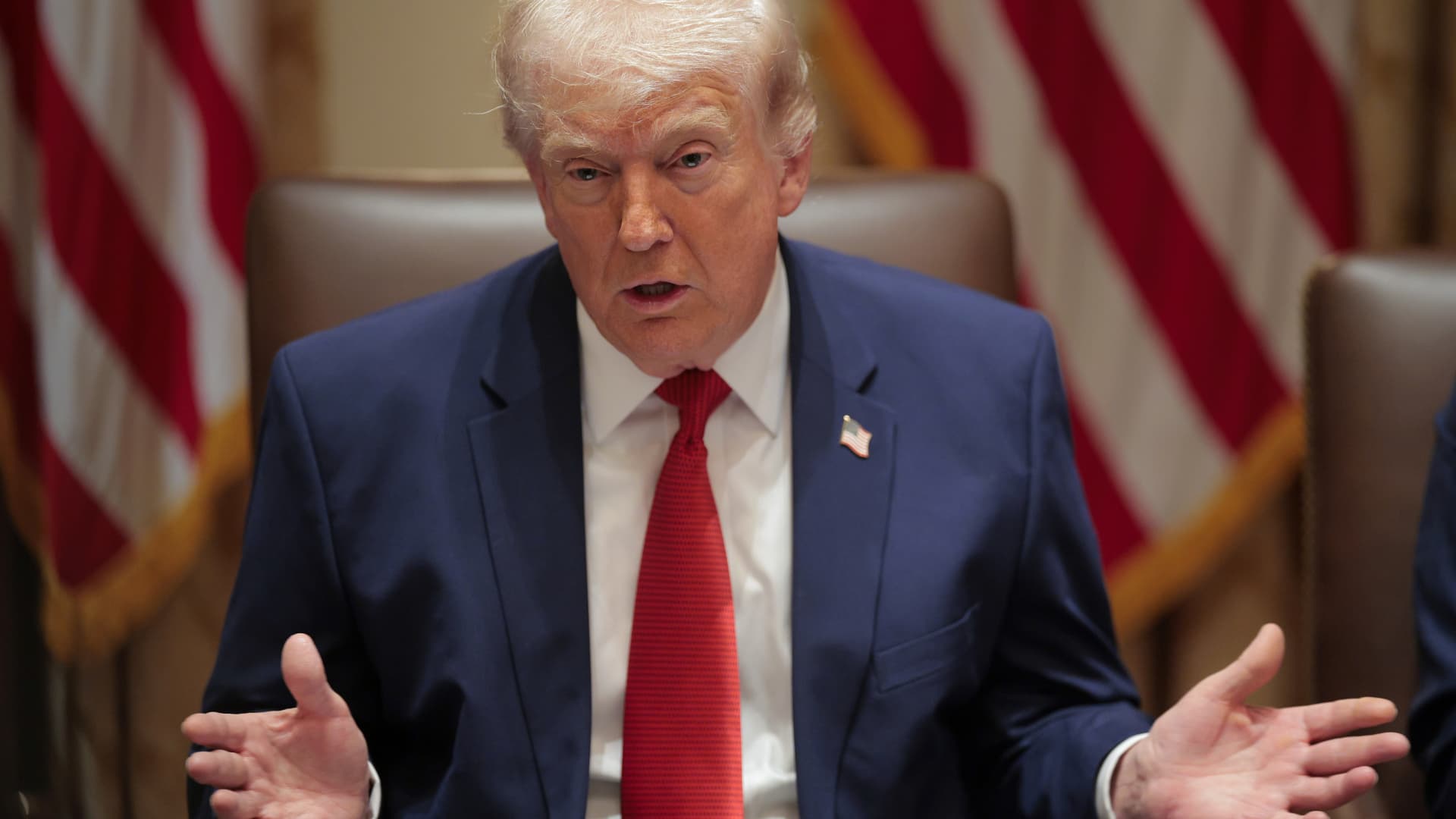
Trump to Address Nation on Iran Situation
- War Fatigue Apparent: Trump has indicated a willingness to end the military operation against Iran, which has lasted over a month, suggesting a diminishing internal support for the war that could influence future military strategies.
- Positive Market Reaction: Global markets rebounded as Trump hinted at a potential end to the conflict, with Asia-Pacific markets rising and European stocks set to open higher, reflecting investor optimism about a de-escalation of tensions.
- Withdrawal Timeline: Trump expects U.S. military forces to leave Iran in two to three weeks, indicating a desire for a swift resolution to the conflict, which could significantly impact global energy markets amid rising oil prices.
- Election-Year Policy Shift: Trump signed an executive order to crack down on mail-in voting, a move that has drawn strong criticism from voting rights advocates and could affect voter turnout in the upcoming 2026 midterm elections.
See More
Oracle's AI Business Uncertainty Leads to Stock Volatility
- Earnings Volatility: Oracle reported remaining performance obligations (RPOs) of $455 billion in its fiscal Q1 2023, indicating potential in its AI data center business; however, the stock has plummeted nearly 50% due to market doubts about sustainability.
- Debt Pressure: To complete its AI data center build-out, Oracle needs to raise up to $50 billion in debt, raising concerns among investors about its financial health, especially given the weak margins in its data center business.
- Analyst Optimism: Despite challenges, Guggenheim analyst John DiFucci remains bullish on Oracle, setting a price target of $400, suggesting nearly 170% upside, reflecting confidence in its cloud infrastructure and database technology.
- OpenAI Financing Boost: OpenAI's successful $120 billion private financing round enhances market confidence in its future infrastructure commitments, positively impacting Oracle's AI business outlook and potentially alleviating investor concerns.
See More
Investment Outlook for Energy Stocks Amid Market Turbulence
- Complex Energy Market: The ongoing war in Iran has disrupted oil and material flows through the Strait of Hormuz, affecting about one-fifth of global oil supply, driving up prices and causing shortages in some regions, which requires investors to navigate this unpredictable landscape cautiously.
- Growth Potential of Energy Transfer: Energy Transfer (ET), one of the largest midstream companies in the U.S., with over 140,000 miles of pipelines and storage facilities, is projected to see adjusted EBITDA growth of 9% to 12% in 2026, supporting its 6.8% dividend yield and bolstering investor confidence.
- Stability of ExxonMobil: As the largest publicly traded oil company, ExxonMobil (XOM) expects to generate $145 billion in surplus cash flow by 2030, backed by its 43 consecutive years of dividend payments and a strong balance sheet, ensuring stability amid market fluctuations.
- Growth Strategy of Enterprise Products Partners: Enterprise Products Partners (EPD) boasts over 50,000 miles of infrastructure in North America, with expected adjusted EBITDA growth of 3% to 5% in 2026 and accelerating to about 10% in 2027, ensuring continued dividend growth and attracting income-seeking investors.
See More
Trump Hints at Possible End to Military Involvement in Iran
- Military Involvement Update: President Trump hinted that U.S. military involvement in Iran could end within two to three weeks, a development that may significantly impact geopolitical stability and related energy stocks.
- Market Rebound: Following Trump's announcement, U.S. stock futures rose, with Nasdaq and Russell 2000 futures up 0.7% and Dow and S&P 500 futures gaining 0.6%, indicating cautious optimism among investors regarding market prospects.
- Nike's Earnings Decline: Nike Inc. shares fell 10% in pre-market trading after guiding for a revenue decline in Q4, with a projected 20% drop in sales from China, posing challenges to its long-term growth strategy.
- Beyond Meat's Revenue Miss: Beyond Meat's stock dropped 10% in early trading after missing Q4 revenue estimates and citing
See More
Iran Threatens Attacks on U.S. Tech Firms
- Escalating Threats: The Islamic Revolutionary Guard Corps (IRGC) has declared intentions to attack 18 U.S. tech companies, including Nvidia, Apple, Microsoft, and Google, in retaliation for U.S. and Israeli strikes on Iran, indicating a significant escalation in regional tensions.
- Specific Attack Timeline: The IRGC warned that attacks would commence at 8 PM Tehran time on April 1, urging employees at these companies to evacuate immediately to safeguard their lives, highlighting the urgency and potential danger of the situation.
- Vulnerability of Tech Infrastructure: This threat follows Iranian strikes on AWS data centers in the Middle East, which caused outages in several apps and digital services in the UAE, underscoring the vulnerability of U.S. tech firms' infrastructure in the region and its impact on business operations.
- Corporate Response Strategies: Companies like Intel have stated that employee safety is their top priority and are implementing measures to protect their facilities in the Middle East, reflecting their adaptability to geopolitical risks and commitment to employee welfare.
See More
Iran's IRGC Threatens U.S. Tech Firms Amid Rising Tensions
- Expanded Threat Scope: Iran's Islamic Revolutionary Guard Corps (IRGC) has designated 18 U.S. tech companies, including Nvidia, Apple, Microsoft, and Google, as 'legitimate targets' in retaliation for U.S. and Israeli strikes on Iran, highlighting escalating regional tensions.
- Attack Timeline Set: The IRGC announced via Telegram that attacks on these companies would commence at 8 p.m. Tehran time on April 1, warning employees to evacuate workplaces immediately to safeguard their lives, indicating the urgency of their threats.
- Enhanced Security Measures: An Intel spokesperson stated that the safety of their team is the top priority, and the company is implementing measures to protect workers and facilities in the Middle East, reflecting tech firms' strategies in response to security threats.
- Significant Market Impact: As U.S. tech companies have increased investments in the Middle East, particularly in AI infrastructure, the IRGC's threats may compel these firms to reassess their operations and investment strategies in the region, potentially affecting future market positioning.
See More
Trump to Address Nation on Iran Situation
- War Fatigue Apparent: Trump has indicated a willingness to end the military operation against Iran, which has lasted over a month, suggesting a diminishing internal support for the war that could influence future military strategies.
- Positive Market Reaction: Global markets rebounded as Trump hinted at a potential end to the conflict, with Asia-Pacific markets rising and European stocks set to open higher, reflecting investor optimism about a de-escalation of tensions.
- Withdrawal Timeline: Trump expects U.S. military forces to leave Iran in two to three weeks, indicating a desire for a swift resolution to the conflict, which could significantly impact global energy markets amid rising oil prices.
- Election-Year Policy Shift: Trump signed an executive order to crack down on mail-in voting, a move that has drawn strong criticism from voting rights advocates and could affect voter turnout in the upcoming 2026 midterm elections.
See More