Kimberly-Clark hits 52-week low amid sector rotation
Kimberly-Clark Corp's stock fell by 3.01% today, hitting a 52-week low amid a generally positive market environment, with the Nasdaq-100 up 1.19% and the S&P 500 up 0.81%.
This decline occurs despite the broader market strength, indicating a potential sector rotation as investors shift their focus. Kimberly-Clark's recent announcement of plans to invest over $2 billion to expand U.S. manufacturing capacity and its consistent dividend payments highlight its long-term growth potential, but the stock's current performance reflects a shift in investor sentiment.
The implications of this movement suggest that while Kimberly-Clark remains a strong player in the market, the recent price action may be influenced by broader trends in investor preferences, particularly towards sectors that are currently outperforming.
Trade with 70% Backtested Accuracy
Analyst Views on KMB

About KMB
About the author


Top Dividend Stocks to Hold for the Next Decade


- Clorox's Rebuilding: After a $580 million ERP upgrade and a cyberattack, Clorox's $2.25 billion acquisition of GOJO Industries in 2026 is expected to drive sales growth over the next decade, particularly in hand hygiene products.
- Brown-Forman's Consistent Growth: With 42 consecutive years of dividend increases, Brown-Forman faces a soft global spirits market but has seen positive consumer engagement with its new Jack Daniel's Tennessee Blackberry flavor, projecting a 6% to 8% annual dividend growth over the next decade.
- Kimberly-Clark's Transformation: Currently undergoing its most significant transformation in 154 years, Kimberly-Clark reported a 3.7% increase in adjusted operating profit in Q1 2026 and reaffirmed its full-year guidance, indicating that restructuring is not disrupting core operations, while the merger with Kenvue will enhance market competitiveness over the next decade.
- Stable Dividend Yields: Clorox, Brown-Forman, and Kimberly-Clark offer dividend yields of 5.18%, 3.45%, and a safe level respectively, indicating that these companies will provide stable cash flow and potential capital appreciation for investors over the next ten years.

2026 Consumer Goods Market Analysis
- Church & Dwight's Strong Performance: Church & Dwight (CHD) achieved a 5% organic sales growth in Q1 2026, surpassing the 3% forecast, indicating the company's ability to navigate inflation through volume growth rather than price increases, thereby enhancing its market competitiveness.
- Keurig Dr Pepper's Growth Potential: Despite a nearly 29% decline from its 2025 peak, Keurig Dr Pepper (KDP) expects its energy drink portfolio to generate over $1 billion in annual retail sales, showcasing strong market demand and growth potential.
- Kenvue's Merger Prospects: Kenvue (KVUE) reported an 8.4% growth in its skin health and beauty division in Q1 2026, with quarterly sales reaching $1 billion, and the anticipated merger with Kimberly-Clark (KMB) is expected to further strengthen its market position and pricing power.
- Robust Investment Amid Market Uncertainty: In an uncertain market, these three companies provide a stable business foundation, making them suitable for investors looking to allocate $1,000 during turbulent times for long-term growth.
Church & Dwight's Growth Strategy Amid Inflation
- Stable Sales Growth: Church & Dwight achieved a 5% organic sales growth in Q1 2026, surpassing the 3% forecast, demonstrating its growth strategy focused on volume rather than price increases, which enhances its competitive edge in an inflationary environment.
- Acquisition to Expand Market Share: The company acquired the fast-growing stain-removal brand Miss Mouth's Messy Eater for $325 million, continuing its decade-long acquisition strategy aimed at expanding market share without increasing leverage, thereby solidifying its position in the consumer goods market.
- Energy Drink Portfolio Growth: Keurig Dr Pepper's energy drink portfolio is expected to exceed $1 billion in annual retail sales, and despite a 29% decline in stock price, its low double-digit adjusted earnings growth forecast indicates potential in the youth market, boosting investor confidence.
- Strong Performance in Beauty Health Segment: Kenvue's skin health and beauty division grew 8.4% in Q1 2026, reaching $1 billion in quarterly sales, reflecting stable consumer demand amid economic uncertainty, with the anticipated merger with Kimberly-Clark expected to further enhance market competitiveness.

Kenvue's Promising Outlook Ahead of Kimberly-Clark Merger

- Merger Catalyst: Kenvue's pending $40 billion merger with Kimberly-Clark is expected to transform it from a slow-growth spinoff into an efficient consumer goods powerhouse, with anticipated cost synergies of $2.1 billion, enhancing margins and accelerating growth.
- Strong Brand Portfolio: Kenvue owns trusted health products like Tylenol and Listerine, which maintain strong pricing power even during economic downturns, ensuring stable gross margins and consumer loyalty.
- Dividend Appeal: With a dividend yield of 4.53%, Kenvue is attractive to income-seeking investors, and this yield may increase post-merger, providing a buffer in volatile market conditions.
- Robust Financial Performance: Kenvue reported first-quarter revenue of $3.9 billion, a 4.5% year-over-year increase, with earnings per share of $0.25, up 47%, showcasing its strong position in the health consumer goods market and boosting investor confidence.

Consumer Stocks Face Challenges but Remain Promising

- Nike's Challenges and Opportunities: Nike (NYSE: NKE) has faced several years of struggles, with its stock price declining from its 2021 peak, currently offering a 3.6% dividend yield; analysts predict earnings will rebound to $2.40 per share by the end of the next fiscal year, indicating potential for recovery.
- PepsiCo's Brand Strength: PepsiCo (NASDAQ: PEP), a 'Dividend King' with 54 consecutive annual increases, faces challenges in sales growth, yet its 4.1% dividend yield and a projected 6% annual earnings growth make it attractive in the current market.
- Hershey's Transformation Strategy: Hershey (NYSE: HSY) has been pressured by soaring cocoa prices affecting profit margins; although it did not raise its dividend last year, new CEO Kirk Tanner aims to expand into salty snacks and nutrition bars, which could drive future growth.
- Kimberly-Clark's Merger Strategy: Kimberly-Clark (NASDAQ: KMB) is merging with Kenvue in a $48.7 billion deal, creating a global consumer products giant; despite integration risks, both companies are Dividend Kings, likely prioritizing dividend maintenance and growth, with a current yield of 5%.
Analysis of Four Declining Consumer Brand Stocks
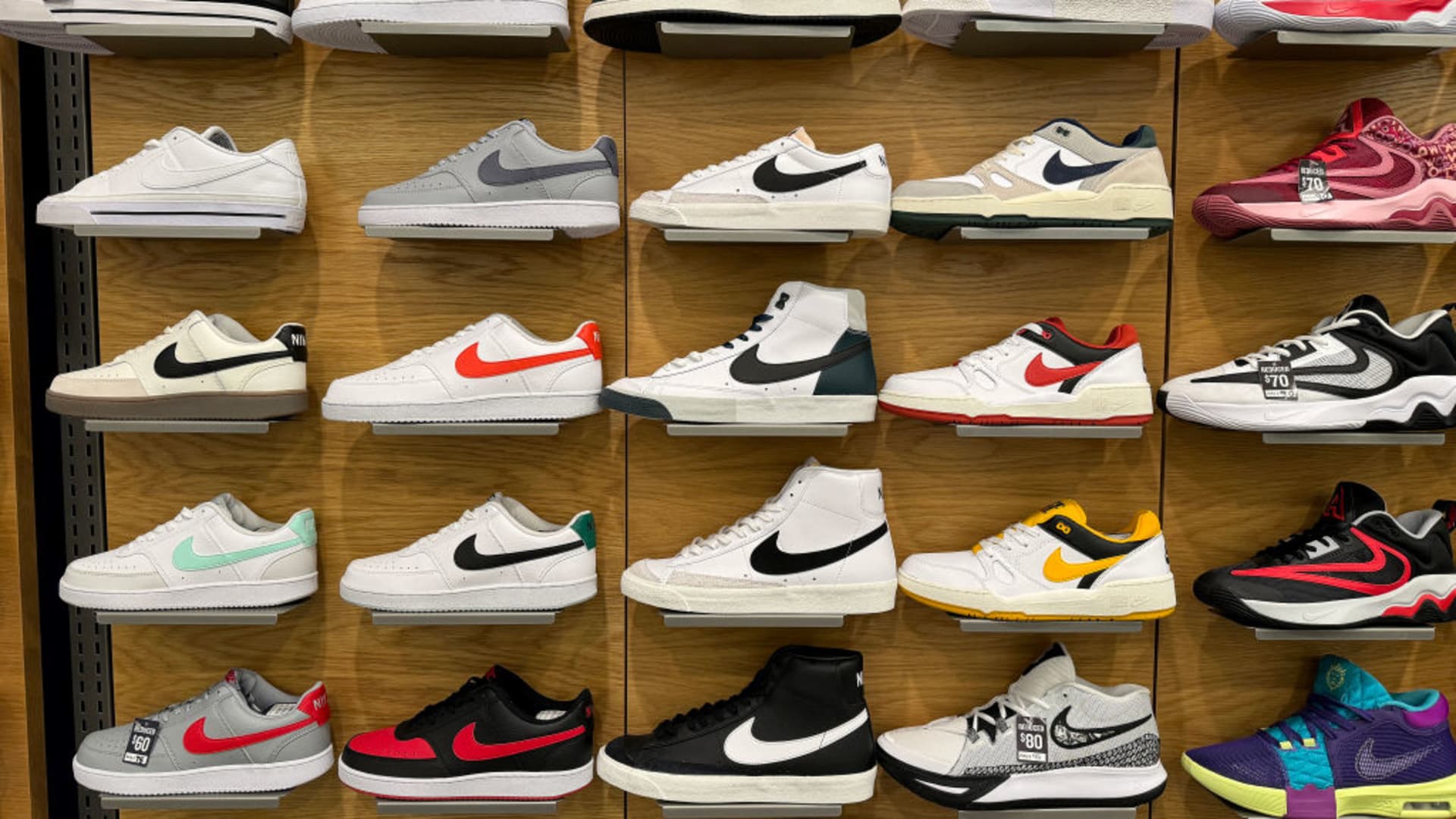
- Nike's Struggles: Nike (NKE) has seen a 74% decline in stock price due to a misguided direct-to-consumer strategy that led to the firing of its CEO; despite raising dividends for 24 consecutive years, the company's earnings have deteriorated, presenting a buying opportunity at a 3.6% dividend yield.
- PepsiCo's Realignment: PepsiCo (PEP) is down 26%, but with a history of 54 consecutive annual dividend increases, the company has adjusted its pricing strategy after aggressive hikes post-COVID, and analysts expect 6% annualized earnings growth, with a dividend yield of 4.1%.
- Hershey's Transition: Hershey (HSY) has dropped 34% due to a severe cocoa shortage impacting profit margins; with a new CEO focusing on growth in salty snacks and nutrition bars, investors should watch for recovery in its core business, currently offering a 3.12% dividend yield.
- Kimberly-Clark's Merger: Kimberly-Clark (KMB) is down 35% as it merges with Kenvue in a $48.7 billion deal, creating a global consumer products giant; while the merger poses risks, both companies are Dividend Kings, and investors can expect a 5% dividend yield during the integration phase.
Top Dividend Stocks to Hold for the Next Decade
- Clorox's Rebuilding: After a $580 million ERP upgrade and a cyberattack, Clorox's $2.25 billion acquisition of GOJO Industries in 2026 is expected to drive sales growth over the next decade, particularly in hand hygiene products.
- Brown-Forman's Consistent Growth: With 42 consecutive years of dividend increases, Brown-Forman faces a soft global spirits market but has seen positive consumer engagement with its new Jack Daniel's Tennessee Blackberry flavor, projecting a 6% to 8% annual dividend growth over the next decade.
- Kimberly-Clark's Transformation: Currently undergoing its most significant transformation in 154 years, Kimberly-Clark reported a 3.7% increase in adjusted operating profit in Q1 2026 and reaffirmed its full-year guidance, indicating that restructuring is not disrupting core operations, while the merger with Kenvue will enhance market competitiveness over the next decade.
- Stable Dividend Yields: Clorox, Brown-Forman, and Kimberly-Clark offer dividend yields of 5.18%, 3.45%, and a safe level respectively, indicating that these companies will provide stable cash flow and potential capital appreciation for investors over the next ten years.
2026 Consumer Goods Market Analysis
- Church & Dwight's Strong Performance: Church & Dwight (CHD) achieved a 5% organic sales growth in Q1 2026, surpassing the 3% forecast, indicating the company's ability to navigate inflation through volume growth rather than price increases, thereby enhancing its market competitiveness.
- Keurig Dr Pepper's Growth Potential: Despite a nearly 29% decline from its 2025 peak, Keurig Dr Pepper (KDP) expects its energy drink portfolio to generate over $1 billion in annual retail sales, showcasing strong market demand and growth potential.
- Kenvue's Merger Prospects: Kenvue (KVUE) reported an 8.4% growth in its skin health and beauty division in Q1 2026, with quarterly sales reaching $1 billion, and the anticipated merger with Kimberly-Clark (KMB) is expected to further strengthen its market position and pricing power.
- Robust Investment Amid Market Uncertainty: In an uncertain market, these three companies provide a stable business foundation, making them suitable for investors looking to allocate $1,000 during turbulent times for long-term growth.
Church & Dwight's Growth Strategy Amid Inflation
- Stable Sales Growth: Church & Dwight achieved a 5% organic sales growth in Q1 2026, surpassing the 3% forecast, demonstrating its growth strategy focused on volume rather than price increases, which enhances its competitive edge in an inflationary environment.
- Acquisition to Expand Market Share: The company acquired the fast-growing stain-removal brand Miss Mouth's Messy Eater for $325 million, continuing its decade-long acquisition strategy aimed at expanding market share without increasing leverage, thereby solidifying its position in the consumer goods market.
- Energy Drink Portfolio Growth: Keurig Dr Pepper's energy drink portfolio is expected to exceed $1 billion in annual retail sales, and despite a 29% decline in stock price, its low double-digit adjusted earnings growth forecast indicates potential in the youth market, boosting investor confidence.
- Strong Performance in Beauty Health Segment: Kenvue's skin health and beauty division grew 8.4% in Q1 2026, reaching $1 billion in quarterly sales, reflecting stable consumer demand amid economic uncertainty, with the anticipated merger with Kimberly-Clark expected to further enhance market competitiveness.
Kenvue's Promising Outlook Ahead of Kimberly-Clark Merger
- Merger Catalyst: Kenvue's pending $40 billion merger with Kimberly-Clark is expected to transform it from a slow-growth spinoff into an efficient consumer goods powerhouse, with anticipated cost synergies of $2.1 billion, enhancing margins and accelerating growth.
- Strong Brand Portfolio: Kenvue owns trusted health products like Tylenol and Listerine, which maintain strong pricing power even during economic downturns, ensuring stable gross margins and consumer loyalty.
- Dividend Appeal: With a dividend yield of 4.53%, Kenvue is attractive to income-seeking investors, and this yield may increase post-merger, providing a buffer in volatile market conditions.
- Robust Financial Performance: Kenvue reported first-quarter revenue of $3.9 billion, a 4.5% year-over-year increase, with earnings per share of $0.25, up 47%, showcasing its strong position in the health consumer goods market and boosting investor confidence.
Consumer Stocks Face Challenges but Remain Promising
- Nike's Challenges and Opportunities: Nike (NYSE: NKE) has faced several years of struggles, with its stock price declining from its 2021 peak, currently offering a 3.6% dividend yield; analysts predict earnings will rebound to $2.40 per share by the end of the next fiscal year, indicating potential for recovery.
- PepsiCo's Brand Strength: PepsiCo (NASDAQ: PEP), a 'Dividend King' with 54 consecutive annual increases, faces challenges in sales growth, yet its 4.1% dividend yield and a projected 6% annual earnings growth make it attractive in the current market.
- Hershey's Transformation Strategy: Hershey (NYSE: HSY) has been pressured by soaring cocoa prices affecting profit margins; although it did not raise its dividend last year, new CEO Kirk Tanner aims to expand into salty snacks and nutrition bars, which could drive future growth.
- Kimberly-Clark's Merger Strategy: Kimberly-Clark (NASDAQ: KMB) is merging with Kenvue in a $48.7 billion deal, creating a global consumer products giant; despite integration risks, both companies are Dividend Kings, likely prioritizing dividend maintenance and growth, with a current yield of 5%.
Analysis of Four Declining Consumer Brand Stocks
- Nike's Struggles: Nike (NKE) has seen a 74% decline in stock price due to a misguided direct-to-consumer strategy that led to the firing of its CEO; despite raising dividends for 24 consecutive years, the company's earnings have deteriorated, presenting a buying opportunity at a 3.6% dividend yield.
- PepsiCo's Realignment: PepsiCo (PEP) is down 26%, but with a history of 54 consecutive annual dividend increases, the company has adjusted its pricing strategy after aggressive hikes post-COVID, and analysts expect 6% annualized earnings growth, with a dividend yield of 4.1%.
- Hershey's Transition: Hershey (HSY) has dropped 34% due to a severe cocoa shortage impacting profit margins; with a new CEO focusing on growth in salty snacks and nutrition bars, investors should watch for recovery in its core business, currently offering a 3.12% dividend yield.
- Kimberly-Clark's Merger: Kimberly-Clark (KMB) is down 35% as it merges with Kenvue in a $48.7 billion deal, creating a global consumer products giant; while the merger poses risks, both companies are Dividend Kings, and investors can expect a 5% dividend yield during the integration phase.