Netflix's Attempt to Acquire WBD Assets Sparks Market Speculation
Written by Emily J. Thompson, Senior Investment Analyst
Updated: 1 day ago
0mins


Should l Buy NFLX?
Source: Newsfilter
- Acquisition Attempt Raises Questions: Netflix's bid for Warner Bros. Discovery (WBD) assets, despite ultimately failing, has sparked significant market speculation regarding its future M&A strategies, particularly as competition in the streaming sector intensifies.
- User Growth Amid Market Pressure: While Netflix reported a robust growth of 325 million global paid subscribers in its Q1 earnings, its stock fell approximately 10% following the failed acquisition, reflecting investor concerns about the company's future profitability in an increasingly competitive streaming landscape.
- Enhanced M&A Capability: Co-CEO Ted Sarandos noted that the WBD acquisition process significantly improved Netflix's deal execution capabilities, and although the transaction did not materialize, it bolstered confidence for potential future deals.
- Focus on Core Business: Sarandos reiterated that despite the failed acquisition, Netflix remains committed to growing its core business, emphasizing success in advertising revenue and user retention, demonstrating the company's resilience and strategic focus in the face of competition.
Trade with 70% Backtested Accuracy
Stop guessing "Should I Buy NFLX?" and start using high-conviction signals backed by rigorous historical data.
Sign up today to access powerful investing tools and make smarter, data-driven decisions.
Analyst Views on NFLX
Wall Street analysts forecast NFLX stock price to rise
38 Analyst Rating
27 Buy
10 Hold
1 Sell
Moderate Buy
Current: 107.790

Low
92.00
Averages
114.18
High
150.00
Current: 107.790
Low
92.00
Averages
114.18
High
150.00
About NFLX
Netflix, Inc. is a provider of entertainment services. The Company acquires, licenses and produces content, including original programming. It provides paid memberships in over 190 countries offering television (TV) series, films and games across a variety of genres and languages. It allows members to play, pause and resume watching as much as they want, anytime, anywhere, and can change their plans at any time. The Company offers members the ability to receive streaming content through a host of Internet-connected devices, including TVs, digital video players, TV set-top boxes and mobile devices. It is engaged in scaling its streaming service, such as introducing games and advertising on its service, as well as offering live programming. It is developing technology and utilizing third-party cloud computing, technology and other services. The Company is also engaged in scaling its own studio operations to produce original content.
About the author

Emily J. Thompson
Emily J. Thompson, a Chartered Financial Analyst (CFA) with 12 years in investment research, graduated with honors from the Wharton School. Specializing in industrial and technology stocks, she provides in-depth analysis for Intellectia’s earnings and market brief reports.

Netflix Q1 Strong Earnings Offset by Weak Guidance and Leadership Change

- Strong Performance: Netflix reported a 16% increase in Q1 sales and an 86% surge in EPS, partly due to a $2.8 billion WBD termination fee, surpassing Wall Street expectations and demonstrating robust performance in the streaming market.
- Leadership Change: Co-founder and board chair Reed Hastings announced he would not seek reelection, which disappointed the market despite strong earnings, contributing to a 9.72% decline in stock price.
- Cautious Outlook: Netflix's revenue growth guidance for 2026 is set at 12% to 14%, which fell short of market expectations, undermining investor confidence and prompting today's stock drop.
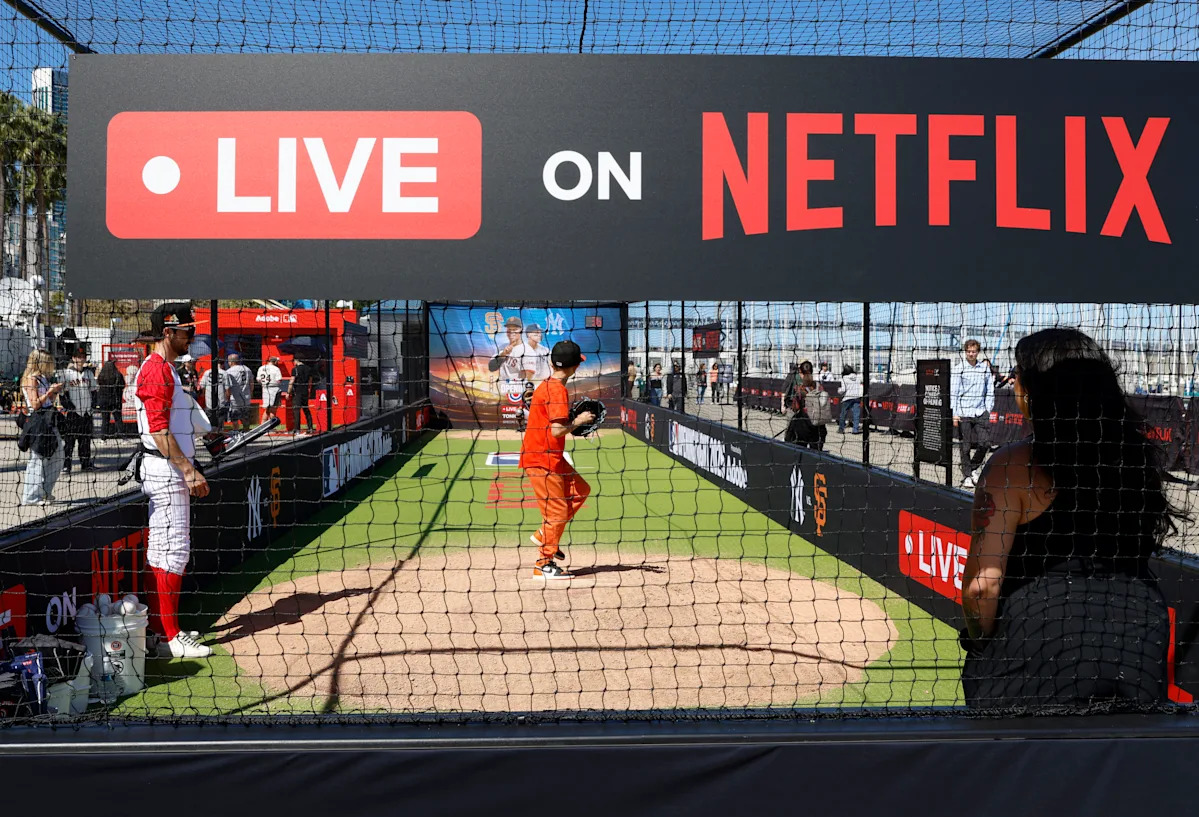
- Advertising Revenue Potential: Despite challenges, Netflix's advertising revenue is projected to double to $3 billion by 2026, and its coverage of the World Baseball Classic achieved record viewership in Japan, indicating growth potential in international markets.
See More
Netflix's Stock Buyback Plans Fall Short in Q1
- Buyback Plans Insufficient: In Q1, Netflix repurchased only $1.3 billion of its stock, significantly lower than the $2.3 billion quarterly average in 2025, raising investor concerns and potentially signaling a lack of confidence in the company's future fundamentals.
- Unchanged Capital Allocation: Executives expressed optimism about new podcasts, vertical videos, and live events during the earnings call, yet did not alter their capital allocation strategy, disappointing the market, especially after the cancellation of large-scale M&A, where investors had hoped for increased stock buybacks.
- Performance Guidance Misses Expectations: Netflix failed to raise its full-year 2026 revenue guidance from $50.7 billion to $51.7 billion, and its operating margin guidance of 31.5% fell short of the 32% analysts expected, indicating rising content amortization costs that could pressure future profitability.
- Executive Transition Impact: The announcement of longtime chairman Reed Hastings stepping down marks the end of an era, coinciding with increasing pressure on the company to prove its advertising business can scale, leading analysts to adopt a cautious outlook on Netflix's future growth, emphasizing price increases and advertising revenue as key drivers.
See More

Investment Opportunities Amid 2026 Market Rebound

- Netflix Ad Revenue Surge: Netflix's ad revenue surpassed $1.5 billion last year, more than doubling and expected to reach $3 billion this year, showcasing strong growth potential in its advertising business while expanding market share, despite a 20% drop from recent highs.
- MercadoLibre's Market Leadership: With 121 million marketplace shoppers and 78 million digital payment users, MercadoLibre is driving growth in the Latin American e-commerce market, achieving a net profit margin increase from nearly zero to about 7% over five years, even as its stock is down 29% from highs.
- Amazon Cloud Service Growth: Amazon's AWS segment saw a 24% revenue growth last quarter, supported by efficient computing from custom chips, with plans to raise capital spending to approximately $200 billion in 2026 to bolster cloud growth and innovation, despite market criticism of heavy spending.
- Long-term Investment Value: Despite recent declines in stock prices for Netflix, MercadoLibre, and Amazon, their market dominance and ongoing investment strategies position them as attractive options for long-term investors looking for growth potential.
See More

Growth Potential of Netflix, MercadoLibre, and Amazon
- Netflix Ad Revenue Surge: Netflix's ad revenue surpassed $1.5 billion last year, more than doubling year-over-year, with projections to reach $3 billion this year, significantly expanding its potential audience to 1 billion and enhancing its competitive market position.
- MercadoLibre's Market Leadership: With 121 million marketplace shoppers and 78 million digital payment users in Latin America, MercadoLibre has increased its net profit margin from nearly zero to about 7% over five years, showcasing its strong market penetration and scalability.
- Amazon's AI Infrastructure Edge: Amazon's AWS segment achieved 24% revenue growth last year, driven by the application of custom chips, with plans to raise capital spending to approximately $200 billion by 2026 to support cloud growth and innovation, further solidifying its market leadership.
- Long-Term Investment Value: Despite Netflix and MercadoLibre's stocks falling 20% and 29% respectively, analysts forecast a 21% annual earnings growth for Netflix over the next few years, while MercadoLibre's low valuation presents a compelling opportunity for investors, indicating that these companies still hold long-term investment potential amid market volatility.
See More

Investment Opportunities Amid Inflation Impact

- Walmart's Price Advantage: As one of the largest retailers globally, Walmart is expected to maintain its 'Everyday Low Price' promise despite inflationary pressures, which should help sustain consistent store traffic and revenue growth, leading to strong returns in the coming years.
- Visa's Profit Potential: Visa benefits from inflation as it charges fees on transactions, leading to higher revenue despite potential declines in transaction volume; its vast market potential and deep network effects provide a strong competitive edge during inflationary periods.
- Netflix's Pricing Power: Despite a recent price hike, Netflix continues to see growth in paid subscribers and revenue, leveraging its strong pricing power and content strategy to maintain its leading position in a competitive streaming market.
- Growth in Digital Commerce: Walmart's push into digital commerce is expected to boost revenue and reduce operating costs while enhancing its high-margin advertising business, highlighting its strategic importance in the retail industry's transformation.
See More

Investment Opportunities Amid Inflation
- Walmart's Price Advantage: Despite inflationary pressures, Walmart is expected to maintain its 'Everyday Low Price' guarantee, which should help sustain consistent store traffic and revenue growth, thereby enhancing its competitive edge in the retail market.
- Visa's Revenue Growth: Visa benefits from inflation as it charges fees per transaction, leading to increased revenue; although transaction volumes may decline, its vast addressable market and strong network effects will continue to support profitability.
- Netflix's Pricing Power: Netflix has successfully raised subscription prices while maintaining growth in paid subscribers and revenue, demonstrating its leadership in the streaming market and significant pricing power despite increasing competition.
- Long-Term Investment Potential: Walmart, Visa, and Netflix all exhibit strong long-term growth potential, particularly in an inflationary environment, making them attractive options for risk-averse investors seeking stable dividends and market performance.
See More
Netflix Q1 Strong Earnings Offset by Weak Guidance and Leadership Change
- Strong Performance: Netflix reported a 16% increase in Q1 sales and an 86% surge in EPS, partly due to a $2.8 billion WBD termination fee, surpassing Wall Street expectations and demonstrating robust performance in the streaming market.
- Leadership Change: Co-founder and board chair Reed Hastings announced he would not seek reelection, which disappointed the market despite strong earnings, contributing to a 9.72% decline in stock price.
- Cautious Outlook: Netflix's revenue growth guidance for 2026 is set at 12% to 14%, which fell short of market expectations, undermining investor confidence and prompting today's stock drop.
- Advertising Revenue Potential: Despite challenges, Netflix's advertising revenue is projected to double to $3 billion by 2026, and its coverage of the World Baseball Classic achieved record viewership in Japan, indicating growth potential in international markets.
See More
Netflix's Stock Buyback Plans Fall Short in Q1
- Buyback Plans Insufficient: In Q1, Netflix repurchased only $1.3 billion of its stock, significantly lower than the $2.3 billion quarterly average in 2025, raising investor concerns and potentially signaling a lack of confidence in the company's future fundamentals.
- Unchanged Capital Allocation: Executives expressed optimism about new podcasts, vertical videos, and live events during the earnings call, yet did not alter their capital allocation strategy, disappointing the market, especially after the cancellation of large-scale M&A, where investors had hoped for increased stock buybacks.
- Performance Guidance Misses Expectations: Netflix failed to raise its full-year 2026 revenue guidance from $50.7 billion to $51.7 billion, and its operating margin guidance of 31.5% fell short of the 32% analysts expected, indicating rising content amortization costs that could pressure future profitability.
- Executive Transition Impact: The announcement of longtime chairman Reed Hastings stepping down marks the end of an era, coinciding with increasing pressure on the company to prove its advertising business can scale, leading analysts to adopt a cautious outlook on Netflix's future growth, emphasizing price increases and advertising revenue as key drivers.
See More
Investment Opportunities Amid 2026 Market Rebound
- Netflix Ad Revenue Surge: Netflix's ad revenue surpassed $1.5 billion last year, more than doubling and expected to reach $3 billion this year, showcasing strong growth potential in its advertising business while expanding market share, despite a 20% drop from recent highs.
- MercadoLibre's Market Leadership: With 121 million marketplace shoppers and 78 million digital payment users, MercadoLibre is driving growth in the Latin American e-commerce market, achieving a net profit margin increase from nearly zero to about 7% over five years, even as its stock is down 29% from highs.
- Amazon Cloud Service Growth: Amazon's AWS segment saw a 24% revenue growth last quarter, supported by efficient computing from custom chips, with plans to raise capital spending to approximately $200 billion in 2026 to bolster cloud growth and innovation, despite market criticism of heavy spending.
- Long-term Investment Value: Despite recent declines in stock prices for Netflix, MercadoLibre, and Amazon, their market dominance and ongoing investment strategies position them as attractive options for long-term investors looking for growth potential.
See More
Growth Potential of Netflix, MercadoLibre, and Amazon
- Netflix Ad Revenue Surge: Netflix's ad revenue surpassed $1.5 billion last year, more than doubling year-over-year, with projections to reach $3 billion this year, significantly expanding its potential audience to 1 billion and enhancing its competitive market position.
- MercadoLibre's Market Leadership: With 121 million marketplace shoppers and 78 million digital payment users in Latin America, MercadoLibre has increased its net profit margin from nearly zero to about 7% over five years, showcasing its strong market penetration and scalability.
- Amazon's AI Infrastructure Edge: Amazon's AWS segment achieved 24% revenue growth last year, driven by the application of custom chips, with plans to raise capital spending to approximately $200 billion by 2026 to support cloud growth and innovation, further solidifying its market leadership.
- Long-Term Investment Value: Despite Netflix and MercadoLibre's stocks falling 20% and 29% respectively, analysts forecast a 21% annual earnings growth for Netflix over the next few years, while MercadoLibre's low valuation presents a compelling opportunity for investors, indicating that these companies still hold long-term investment potential amid market volatility.
See More
Investment Opportunities Amid Inflation Impact
- Walmart's Price Advantage: As one of the largest retailers globally, Walmart is expected to maintain its 'Everyday Low Price' promise despite inflationary pressures, which should help sustain consistent store traffic and revenue growth, leading to strong returns in the coming years.
- Visa's Profit Potential: Visa benefits from inflation as it charges fees on transactions, leading to higher revenue despite potential declines in transaction volume; its vast market potential and deep network effects provide a strong competitive edge during inflationary periods.
- Netflix's Pricing Power: Despite a recent price hike, Netflix continues to see growth in paid subscribers and revenue, leveraging its strong pricing power and content strategy to maintain its leading position in a competitive streaming market.
- Growth in Digital Commerce: Walmart's push into digital commerce is expected to boost revenue and reduce operating costs while enhancing its high-margin advertising business, highlighting its strategic importance in the retail industry's transformation.
See More
Investment Opportunities Amid Inflation
- Walmart's Price Advantage: Despite inflationary pressures, Walmart is expected to maintain its 'Everyday Low Price' guarantee, which should help sustain consistent store traffic and revenue growth, thereby enhancing its competitive edge in the retail market.
- Visa's Revenue Growth: Visa benefits from inflation as it charges fees per transaction, leading to increased revenue; although transaction volumes may decline, its vast addressable market and strong network effects will continue to support profitability.
- Netflix's Pricing Power: Netflix has successfully raised subscription prices while maintaining growth in paid subscribers and revenue, demonstrating its leadership in the streaming market and significant pricing power despite increasing competition.
- Long-Term Investment Potential: Walmart, Visa, and Netflix all exhibit strong long-term growth potential, particularly in an inflationary environment, making them attractive options for risk-averse investors seeking stable dividends and market performance.
See More