Former Aircraft Parts Broker Sentenced for Distributing Counterfeit Components
Written by Emily J. Thompson, Senior Investment Analyst
Updated: Feb 23 2026
0mins

Should l Buy GE?
Source: seekingalpha
- Counterfeit Parts Scheme: Jose Alejandro Zamora Yrala, former director of AOG Technics Ltd., was sentenced to four years and eight months for selling approximately 60,000 counterfeit aircraft components from 2019 to 2023, causing an estimated £40 million ($54 million) in losses and severely compromising global aviation supply chain safety.
- Impact on Airlines: Major airlines including Delta Air Lines, American Airlines, and Ryanair were forced to conduct costly inspections and engine teardowns on aircraft fitted with AOG-supplied parts, significantly increasing operational costs and disrupting flight schedules.
- Exploitation of Regulatory Gaps: Operating from his home near London, Zamora Yrala exploited vulnerabilities in the tightly regulated global aviation supply chain by selling parts that were either entirely counterfeit or accompanied by forged documentation, revealing significant regulatory failures within the industry.
- International Attention: The case gained international attention as forged certification paperwork was discovered across multiple regions, including North America, Europe, Africa, and Asia-Pacific, highlighting the global and complex nature of the counterfeit aircraft parts issue.
Trade with 70% Backtested Accuracy
Stop guessing "Should I Buy GE?" and start using high-conviction signals backed by rigorous historical data.
Sign up today to access powerful investing tools and make smarter, data-driven decisions.
Analyst Views on GE
Wall Street analysts forecast GE stock price to rise
9 Analyst Rating
8 Buy
0 Hold
1 Sell
Strong Buy
Current: 304.130

Low
275.00
Averages
345.67
High
386.00
Current: 304.130
Low
275.00
Averages
345.67
High
386.00
About GE
General Electric Company, doing business as GE Aerospace, is a global aerospace propulsion, services, and systems company. The Company has an installed base of approximately 50,000 commercial and 30,000 military aircraft engines. The Company operates through two segments: Commercial Engines & Services and Defense & Propulsion Technologies. The Commercial Engines & Services segment designs, develops, manufactures and services jet engines for commercial airframes, as well as business aviation and aeroderivative applications. Its services include maintenance, repair and overhaul (MRO) of engines and the sale of spare parts and offers services under a variety of arrangements. The Defense & Propulsion Technologies segment provides defense engines and critical aircraft systems and consists of its Defense & Systems and Propulsion & Additive Technologies businesses. Its portfolio of brands includes Avio Aero, Unison, Dowty Propellers and Colibrium Additive.
About the author

Emily J. Thompson
Emily J. Thompson, a Chartered Financial Analyst (CFA) with 12 years in investment research, graduated with honors from the Wharton School. Specializing in industrial and technology stocks, she provides in-depth analysis for Intellectia’s earnings and market brief reports.

Apple CEO Transition and Market Updates


- Apple CEO Transition: Tim Cook will step down as CEO of Apple on September 1, with John Ternus taking over; under Cook's leadership since August 2011, Apple's stock has surged approximately 2000%, indicating strong growth during his tenure.
- Market Performance: Apple's stock has risen 38% over the past year, although it remains relatively flat in after-hours trading, reflecting a mix of market anticipation and uncertainty regarding the new CEO's impact.
- Aviation Industry Challenges: Alaska Air CEO Ben Minicucci will discuss the impact of high jet fuel prices on the airline industry in an interview tomorrow; despite an 18% stock increase in April, shares are down 13% year-to-date, highlighting ongoing industry pressures.
- Defense Company Dynamics: Northrop Grumman and RTX have seen flat stock performance over the past three months, but Northrop's stock has dropped 9% since the onset of the Iran conflict, while RTX is down 3%, illustrating the geopolitical effects on the defense sector.
See More

Major Earnings Reports Expected Before Tuesday's Open

- Earnings Release Preview: Major companies including General Electric (GE), UnitedHealth Group (UNH), 3M Company (MMM), and RTX Corporation (RTX) are set to report earnings before Tuesday's market open, which is expected to influence market sentiment.
- Additional Earnings Reports: In addition to the aforementioned firms, Halliburton (HAL) and several others such as DGX, DHI, and DHR will also release earnings, potentially impacting investor decisions.
- Market Focus: Investors will closely monitor these earnings reports to assess company performance and future outlooks, which could affect stock market trends and investment strategies.
- Earnings Season Calendar: Seeking Alpha offers a comprehensive earnings season calendar, assisting investors in tracking key earnings release dates to optimize their investment strategies.
See More

IBM and GE Options Show Significant Trading Volume Surge

- IBM Options Volume: Today, IBM options have reached a trading volume of 22,606 contracts, equivalent to approximately 2.3 million shares, representing 48% of its average daily trading volume over the past month, indicating strong market interest in IBM stock.
- High-Frequency Contracts: Within IBM, the $265 strike call option has shown notable activity with 1,501 contracts traded today, representing about 150,100 shares, suggesting investor expectations for future price increases.
- GE Options Volume: GE options have recorded a trading volume of 27,653 contracts today, approximately 2.8 million shares, accounting for 47.9% of its average daily trading volume over the past month, reflecting active market engagement with GE stock.
- Key Contract Analysis: The $302.50 strike put option for GE has seen 2,236 contracts traded, equivalent to about 223,600 shares, highlighting investor concerns regarding potential downside risks for GE's future pricing.
See More
Investors Eye Upcoming Earnings Reports as Market Catalysts

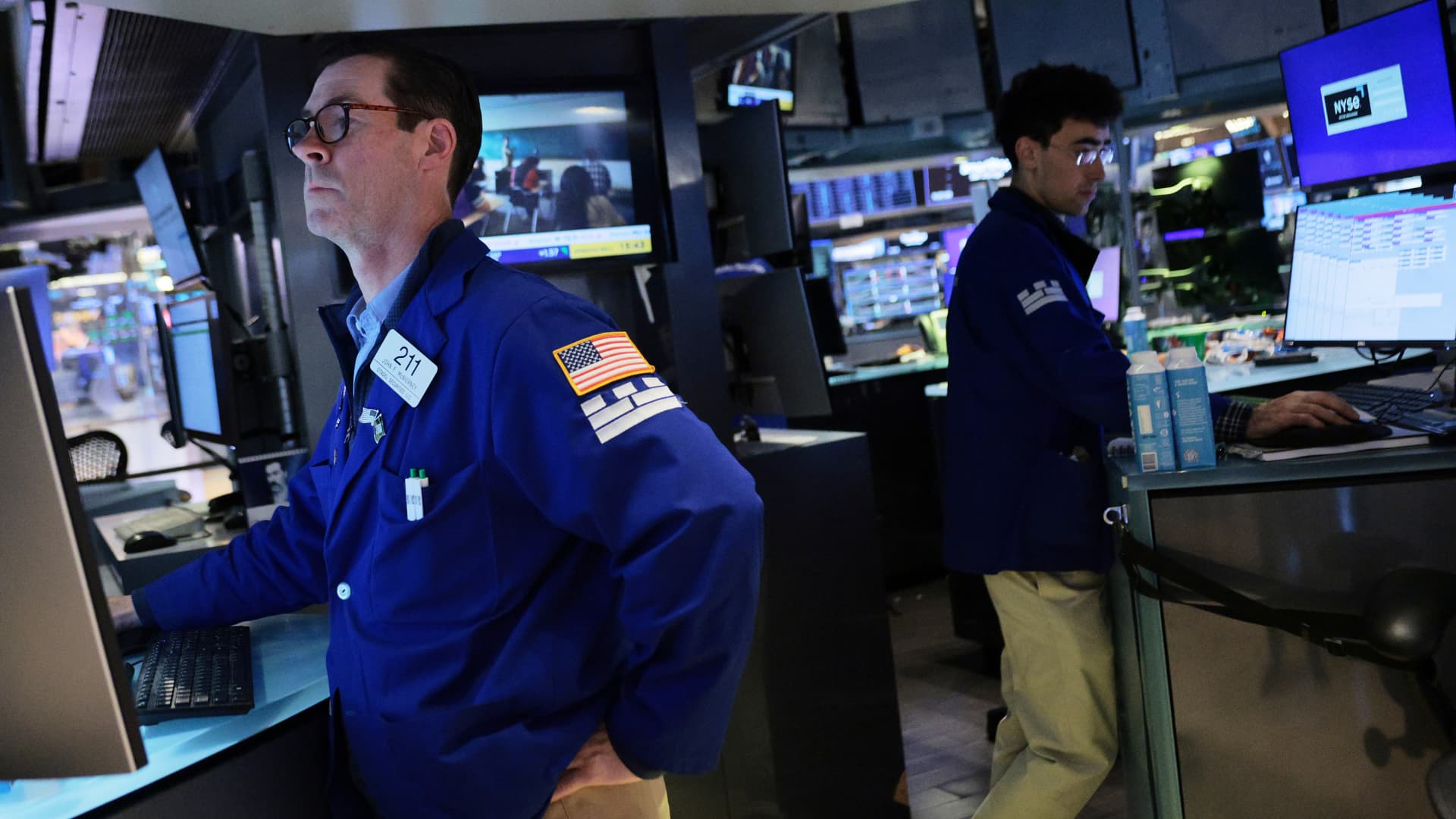
- Positive Bank Performance: Bank stocks kicked off earnings season last week, with the State Street SPDR S&P Bank ETF (KBE) gaining over 2% and marking its fifth consecutive winning week, indicating strong market leadership and potentially boosting investor confidence.
- Focus on Defense Stocks: Jay Woods highlighted that the three largest components of the iShares U.S. Aerospace & Defense ETF (ITA)—GE, RTX, and Boeing—are set to report earnings, with ITA climbing over 7% in 2026, on track for its sixth consecutive profitable year, showcasing the strength of the defense sector.
- ServiceNow Recovery Potential: ServiceNow shares have tumbled more than 35% in 2026, making it one of the worst performers in the S&P 500, but analysts believe the sell-off is overdone, with an average price target suggesting over 72% upside, making it a stock to watch.
- UnitedHealth Stock Analysis: UnitedHealth's stock has fallen over 29% in the past year, yet it is currently trading above its 200-day moving average; Woods noted that if it holds above $324 per share, it could see upside towards $353.75, while downside risks could see it drop to $300 or $287.
See More

Honeywell Sells Business to Reshape Portfolio Amid Market Uncertainty


- Honeywell Business Sale: Honeywell sells its Productivity Solutions and Services (PSS) business to Brady Corporation for $1.4 billion in cash, a strategic move to divest cyclical, slower-growing, lower-margin operations, thereby enhancing the overall quality of its portfolio.
- Market Reaction Stable: Despite a 5% rise in oil prices due to uncertainty over commercial shipping traffic in the Strait of Hormuz, the market's decline was less severe than feared, as Treasury yields remained relatively unchanged, indicating a stable investor sentiment.
- Eli Lilly Acquisition Moves: Eli Lilly acquires clinical-stage biotech firm Kelonia Therapeutics for $3.25 billion in cash, aiming to bolster its cancer treatment pipeline, with the deal potentially worth up to $7 billion, showcasing the company's aggressive expansion strategy in oncology.
- Active IPO Market: In spite of uncertainties from the Iran conflict, Jersey Mike's confidentially files for an IPO with a valuation of approximately $8 billion, reflecting ongoing interest in new public offerings and further driving growth in investment banking activities.
See More
RTX Q1 Earnings Outlook Strong Amid Rising Defense Demand
- Optimistic Earnings Forecast: RTX is expected to report Q1 EPS of $1.52, reflecting a 3.4% increase, with revenue anticipated to rise nearly 6% to $21.47 billion, indicating robust demand in the defense and aerospace sectors.
- Rising Market Demand: Escalating tensions between the U.S. and Iran have led to increased demand for missiles, radar systems, and interceptors, positioning RTX favorably as a prime contractor for the Pentagon.
- Increased Contract Signings: RTX has recently signed contracts to supply Patriot interceptors to Ukraine and the Netherlands, which not only strengthens its market position but also has the potential to drive future revenue growth.
- Enhanced Investor Confidence: RBC analysts believe that RTX's backlog growth in upcoming quarters will bolster investor confidence in revenues for 2026-2027, despite the current administration's focus on reducing dividends and stock buybacks.
See More
Apple CEO Transition and Market Updates
- Apple CEO Transition: Tim Cook will step down as CEO of Apple on September 1, with John Ternus taking over; under Cook's leadership since August 2011, Apple's stock has surged approximately 2000%, indicating strong growth during his tenure.
- Market Performance: Apple's stock has risen 38% over the past year, although it remains relatively flat in after-hours trading, reflecting a mix of market anticipation and uncertainty regarding the new CEO's impact.
- Aviation Industry Challenges: Alaska Air CEO Ben Minicucci will discuss the impact of high jet fuel prices on the airline industry in an interview tomorrow; despite an 18% stock increase in April, shares are down 13% year-to-date, highlighting ongoing industry pressures.
- Defense Company Dynamics: Northrop Grumman and RTX have seen flat stock performance over the past three months, but Northrop's stock has dropped 9% since the onset of the Iran conflict, while RTX is down 3%, illustrating the geopolitical effects on the defense sector.
See More
Major Earnings Reports Expected Before Tuesday's Open
- Earnings Release Preview: Major companies including General Electric (GE), UnitedHealth Group (UNH), 3M Company (MMM), and RTX Corporation (RTX) are set to report earnings before Tuesday's market open, which is expected to influence market sentiment.
- Additional Earnings Reports: In addition to the aforementioned firms, Halliburton (HAL) and several others such as DGX, DHI, and DHR will also release earnings, potentially impacting investor decisions.
- Market Focus: Investors will closely monitor these earnings reports to assess company performance and future outlooks, which could affect stock market trends and investment strategies.
- Earnings Season Calendar: Seeking Alpha offers a comprehensive earnings season calendar, assisting investors in tracking key earnings release dates to optimize their investment strategies.
See More
IBM and GE Options Show Significant Trading Volume Surge
- IBM Options Volume: Today, IBM options have reached a trading volume of 22,606 contracts, equivalent to approximately 2.3 million shares, representing 48% of its average daily trading volume over the past month, indicating strong market interest in IBM stock.
- High-Frequency Contracts: Within IBM, the $265 strike call option has shown notable activity with 1,501 contracts traded today, representing about 150,100 shares, suggesting investor expectations for future price increases.
- GE Options Volume: GE options have recorded a trading volume of 27,653 contracts today, approximately 2.8 million shares, accounting for 47.9% of its average daily trading volume over the past month, reflecting active market engagement with GE stock.
- Key Contract Analysis: The $302.50 strike put option for GE has seen 2,236 contracts traded, equivalent to about 223,600 shares, highlighting investor concerns regarding potential downside risks for GE's future pricing.
See More
Investors Eye Upcoming Earnings Reports as Market Catalysts
- Positive Bank Performance: Bank stocks kicked off earnings season last week, with the State Street SPDR S&P Bank ETF (KBE) gaining over 2% and marking its fifth consecutive winning week, indicating strong market leadership and potentially boosting investor confidence.
- Focus on Defense Stocks: Jay Woods highlighted that the three largest components of the iShares U.S. Aerospace & Defense ETF (ITA)—GE, RTX, and Boeing—are set to report earnings, with ITA climbing over 7% in 2026, on track for its sixth consecutive profitable year, showcasing the strength of the defense sector.
- ServiceNow Recovery Potential: ServiceNow shares have tumbled more than 35% in 2026, making it one of the worst performers in the S&P 500, but analysts believe the sell-off is overdone, with an average price target suggesting over 72% upside, making it a stock to watch.
- UnitedHealth Stock Analysis: UnitedHealth's stock has fallen over 29% in the past year, yet it is currently trading above its 200-day moving average; Woods noted that if it holds above $324 per share, it could see upside towards $353.75, while downside risks could see it drop to $300 or $287.
See More
Honeywell Sells Business to Reshape Portfolio Amid Market Uncertainty
- Honeywell Business Sale: Honeywell sells its Productivity Solutions and Services (PSS) business to Brady Corporation for $1.4 billion in cash, a strategic move to divest cyclical, slower-growing, lower-margin operations, thereby enhancing the overall quality of its portfolio.
- Market Reaction Stable: Despite a 5% rise in oil prices due to uncertainty over commercial shipping traffic in the Strait of Hormuz, the market's decline was less severe than feared, as Treasury yields remained relatively unchanged, indicating a stable investor sentiment.
- Eli Lilly Acquisition Moves: Eli Lilly acquires clinical-stage biotech firm Kelonia Therapeutics for $3.25 billion in cash, aiming to bolster its cancer treatment pipeline, with the deal potentially worth up to $7 billion, showcasing the company's aggressive expansion strategy in oncology.
- Active IPO Market: In spite of uncertainties from the Iran conflict, Jersey Mike's confidentially files for an IPO with a valuation of approximately $8 billion, reflecting ongoing interest in new public offerings and further driving growth in investment banking activities.
See More
RTX Q1 Earnings Outlook Strong Amid Rising Defense Demand
- Optimistic Earnings Forecast: RTX is expected to report Q1 EPS of $1.52, reflecting a 3.4% increase, with revenue anticipated to rise nearly 6% to $21.47 billion, indicating robust demand in the defense and aerospace sectors.
- Rising Market Demand: Escalating tensions between the U.S. and Iran have led to increased demand for missiles, radar systems, and interceptors, positioning RTX favorably as a prime contractor for the Pentagon.
- Increased Contract Signings: RTX has recently signed contracts to supply Patriot interceptors to Ukraine and the Netherlands, which not only strengthens its market position but also has the potential to drive future revenue growth.
- Enhanced Investor Confidence: RBC analysts believe that RTX's backlog growth in upcoming quarters will bolster investor confidence in revenues for 2026-2027, despite the current administration's focus on reducing dividends and stock buybacks.
See More