Form 144: Synchrony Financial (SYF.US) Executive Plans to Sell $3.16 Million in Common Stock
Written by Emily J. Thompson, Senior Investment Analyst
Updated: Mar 03 2026
0mins
Should l Buy SYF?
Source: moomoo
Share Sale Announcement: Wenzel Brian J. Sr. plans to sell 47,112 shares of Synchrony Financial (SYF.US) on March 3, with an estimated market value of around $3.16 million.
Reduction in Holdings: Since March 2, 2026, Wenzel Brian J. Sr. has reduced his shareholding in Synchrony Financial by 19,580 shares, valued at approximately $1.33 million.
Trade with 70% Backtested Accuracy
Stop guessing "Should I Buy SYF?" and start using high-conviction signals backed by rigorous historical data.
Sign up today to access powerful investing tools and make smarter, data-driven decisions.
Analyst Views on SYF
Wall Street analysts forecast SYF stock price to rise
15 Analyst Rating
10 Buy
5 Hold
0 Sell
Moderate Buy
Current: 66.010

Low
83.00
Averages
94.60
High
101.00
Current: 66.010
Low
83.00
Averages
94.60
High
101.00
About SYF
Synchrony Financial is a consumer financial services company focused on delivering digitally enabled product suites. The Company provides a range of credit products through financing programs it has established with a diverse group of national and regional retailers, local merchants, manufacturers, buying groups, industry associations and healthcare service providers. It offers private label, dual card, co-brand, and general-purpose credit cards, as well as short- and long-term installment loans, and savings products through Synchrony Bank (the Bank). The Company primarily manages its credit products through five sales platforms such as Home & Auto, Digital, Diversified & Value, Health & Wellness and Lifestyle. The Bank offers directly to retail, affinity relationships and commercial customers, a range of deposit products, including certificates of deposit, individual retirement accounts (IRAs), money market accounts, savings accounts and sweep and affinity deposits.
About the author

Emily J. Thompson
Emily J. Thompson, a Chartered Financial Analyst (CFA) with 12 years in investment research, graduated with honors from the Wharton School. Specializing in industrial and technology stocks, she provides in-depth analysis for Intellectia’s earnings and market brief reports.

High Interest Rates Impact Credit Card Spending

- Decline in Credit Card Spending: Research from the Federal Reserve Bank of Boston indicates that a 1 percentage point increase in credit card APR leads to a roughly 9% decrease in consumer spending, suggesting that consumer responses to interest rate changes are economically significant, potentially resulting in reduced overall consumption and impacting economic growth.
- Financial Status Impact: The study highlights that financially constrained consumers are more responsive to interest rate changes, with spending reductions of up to 15% for those carrying balances, reflecting increased financial pressure on lower-income households in a high-rate environment, which may lead to further contraction in spending.
- Interest Rates and Consumer Behavior: While some cardholders may be insensitive to rate changes, data shows that many adjust their spending behavior when rates rise, indicating that consumer spending decisions become more rational in high-interest contexts, which could affect revenues in retail and service sectors.
- Future Rate Expectations: Despite the federal funds rate remaining stable between 3.5% and 3.75%, market expectations for future rate hikes are increasing, which may further tighten consumer spending, especially against a backdrop of rising energy costs and growing concerns about stagflation.
See More
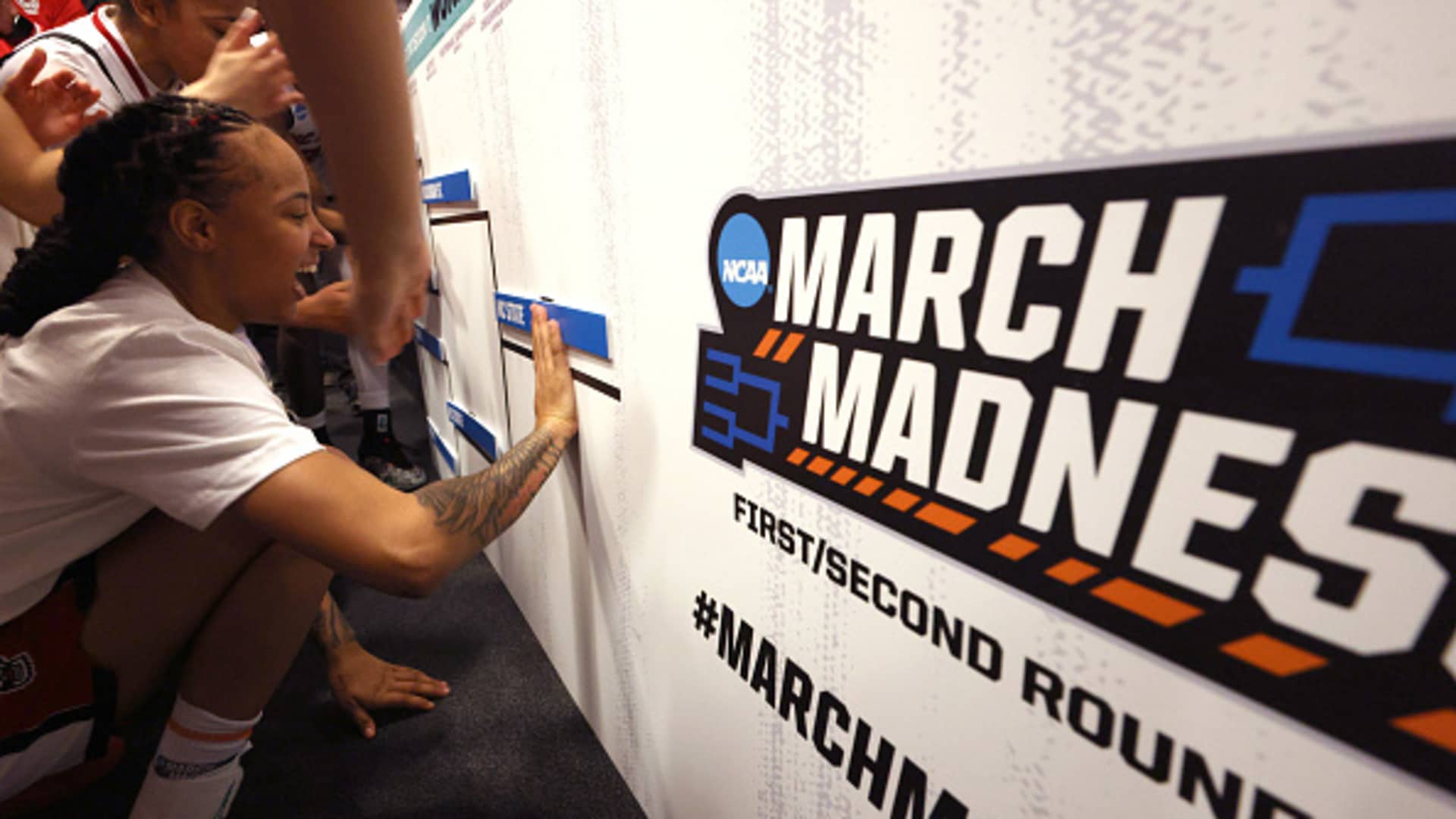
Impact of Sports Betting on Household Finances

- Surge in Betting Expenditure: The American Gaming Association estimates that legal sports betting for this year's NCAA men's and women's basketball tournaments will reach $3.3 billion, marking a 54% increase over the past three years, indicating a rapid rise in sports betting participation, which may strain household financial stability.
- Deteriorating Credit Health: A report from the New York Federal Reserve highlights an increase in credit delinquencies in states with legalized betting, particularly among those under 40, suggesting that gambling may significantly impact young consumers' financial health and lead to higher bankruptcy risks.
- Declining Credit Scores: According to FICO, the national average credit score has dropped to 714, down two points from last year, primarily due to the resumption of student loan and mortgage delinquency reporting, reflecting an overall deterioration in consumer credit health.
- Economic Divergence: While some consumers face worsening credit conditions, FICO also notes a growing number of consumers exhibiting strong credit behaviors at both ends of the scoring spectrum, indicating a K-shaped recovery in the economy, where some borrowers are experiencing increased financial pressure.
See More

Synchrony Employees Participate in Charity Event

- Charity Event Overview: Over 150 Synchrony employees participated in the 11th annual 'Doubles Dive,' bravely plunging into cold waters to support the Connecticut-based SeriousFun Children's Network, which provides free camp experiences for children with serious illnesses from over 50 countries.
- Donation Matching Program: Synchrony will match donations at a 2:1 ratio, amplifying support for children and families in need, which reflects the company's ongoing commitment to community engagement and social responsibility.
- Global Participation Expansion: This year, more than 1,000 Synchrony employees will engage in local plunges or support the cause virtually, showcasing the global spirit of the 'Doubles Dive' and fostering unity and compassion among employees.
- Fundraising Achievements: Since its inception in 2016, the 'Doubles Dive' has raised over $1.4 million for nonprofit organizations, including SeriousFun Children's Network, highlighting Synchrony's proactive role in promoting social responsibility.
See More

Synchrony Employees Participate in Charity Event
- Expanded Charity Event: This year's 'Doubles Dive' attracted over 150 Synchrony employees, highlighting the company's ongoing commitment to community support while fostering unity and collaboration among staff.
- Donation Matching Program: Synchrony will match donations at a 2:1 ratio, meaning every contribution will provide greater support for children and families in need, significantly amplifying the event's impact.
- Global Participation: The event extends beyond Connecticut, with over 1,000 Synchrony employees participating globally through local plunges or virtual support, showcasing the company's sense of social responsibility on a worldwide scale.
- Cumulative Fundraising Achievement: Since its inception in 2016, the 'Doubles Dive' has raised over $1.4 million for nonprofit organizations, including SeriousFun Children's Network, demonstrating Synchrony's steadfast support for improving children's lives.
See More
Synchrony to Report Q1 2026 Earnings on April 21
- Earnings Release Schedule: Synchrony plans to report its Q1 2026 earnings on April 21, 2026, with materials available at 6:00 a.m. ET, demonstrating the company's commitment to transparency and investor communication.
- Conference Call Details: Following the earnings release, Synchrony will hold a conference call at 8:00 a.m. ET on the same day, providing a live audio webcast to enhance investor engagement and information sharing.
- Company Overview: Synchrony is a leading consumer financing company that has been central to American commerce for nearly a century, dedicated to supporting the future of retail through innovative solutions that empower consumers.
- Commitment to Service and Culture: Ranked as the #2 Best Company to Work For® in the U.S. by Fortune and Great Place to Work®, Synchrony's commitment to excellence in service and corporate culture further strengthens its brand reputation.
See More
Study Reveals Significant Gap in Home Maintenance Costs
- Cost Expectation Gap: Synchrony's 'Lifetime of Home Care' study reveals homeowners expect to spend $70,000 on maintenance, yet actual costs exceed $339,000, potentially reaching $418,000 with emergency repairs, creating significant financial anxiety for most homeowners.
- Prevalence of Emergency Repairs: The study indicates that 75% of homeowners have faced emergency repairs, with 40% of those incidents costing over $3,000, while 70% lack sufficient repair reserves, highlighting the critical need for flexible financing solutions.
- Low Financing Utilization: Despite 75% of consumers being aware of contractor financing, only 33% have utilized it, often relying on out-of-pocket payments during critical times, which exacerbates financial stress.
- Flexible Financing Solutions: Synchrony's Synchrony Project Card enables homeowners to manage costs for routine maintenance and urgent repairs, offering promotional financing options from 6 to 132 months, helping to prevent higher long-term costs due to deferred work.
See More
High Interest Rates Impact Credit Card Spending
- Decline in Credit Card Spending: Research from the Federal Reserve Bank of Boston indicates that a 1 percentage point increase in credit card APR leads to a roughly 9% decrease in consumer spending, suggesting that consumer responses to interest rate changes are economically significant, potentially resulting in reduced overall consumption and impacting economic growth.
- Financial Status Impact: The study highlights that financially constrained consumers are more responsive to interest rate changes, with spending reductions of up to 15% for those carrying balances, reflecting increased financial pressure on lower-income households in a high-rate environment, which may lead to further contraction in spending.
- Interest Rates and Consumer Behavior: While some cardholders may be insensitive to rate changes, data shows that many adjust their spending behavior when rates rise, indicating that consumer spending decisions become more rational in high-interest contexts, which could affect revenues in retail and service sectors.
- Future Rate Expectations: Despite the federal funds rate remaining stable between 3.5% and 3.75%, market expectations for future rate hikes are increasing, which may further tighten consumer spending, especially against a backdrop of rising energy costs and growing concerns about stagflation.
See More
Impact of Sports Betting on Household Finances
- Surge in Betting Expenditure: The American Gaming Association estimates that legal sports betting for this year's NCAA men's and women's basketball tournaments will reach $3.3 billion, marking a 54% increase over the past three years, indicating a rapid rise in sports betting participation, which may strain household financial stability.
- Deteriorating Credit Health: A report from the New York Federal Reserve highlights an increase in credit delinquencies in states with legalized betting, particularly among those under 40, suggesting that gambling may significantly impact young consumers' financial health and lead to higher bankruptcy risks.
- Declining Credit Scores: According to FICO, the national average credit score has dropped to 714, down two points from last year, primarily due to the resumption of student loan and mortgage delinquency reporting, reflecting an overall deterioration in consumer credit health.
- Economic Divergence: While some consumers face worsening credit conditions, FICO also notes a growing number of consumers exhibiting strong credit behaviors at both ends of the scoring spectrum, indicating a K-shaped recovery in the economy, where some borrowers are experiencing increased financial pressure.
See More
Synchrony Employees Participate in Charity Event
- Charity Event Overview: Over 150 Synchrony employees participated in the 11th annual 'Doubles Dive,' bravely plunging into cold waters to support the Connecticut-based SeriousFun Children's Network, which provides free camp experiences for children with serious illnesses from over 50 countries.
- Donation Matching Program: Synchrony will match donations at a 2:1 ratio, amplifying support for children and families in need, which reflects the company's ongoing commitment to community engagement and social responsibility.
- Global Participation Expansion: This year, more than 1,000 Synchrony employees will engage in local plunges or support the cause virtually, showcasing the global spirit of the 'Doubles Dive' and fostering unity and compassion among employees.
- Fundraising Achievements: Since its inception in 2016, the 'Doubles Dive' has raised over $1.4 million for nonprofit organizations, including SeriousFun Children's Network, highlighting Synchrony's proactive role in promoting social responsibility.
See More
Synchrony Employees Participate in Charity Event
- Expanded Charity Event: This year's 'Doubles Dive' attracted over 150 Synchrony employees, highlighting the company's ongoing commitment to community support while fostering unity and collaboration among staff.
- Donation Matching Program: Synchrony will match donations at a 2:1 ratio, meaning every contribution will provide greater support for children and families in need, significantly amplifying the event's impact.
- Global Participation: The event extends beyond Connecticut, with over 1,000 Synchrony employees participating globally through local plunges or virtual support, showcasing the company's sense of social responsibility on a worldwide scale.
- Cumulative Fundraising Achievement: Since its inception in 2016, the 'Doubles Dive' has raised over $1.4 million for nonprofit organizations, including SeriousFun Children's Network, demonstrating Synchrony's steadfast support for improving children's lives.
See More
Synchrony to Report Q1 2026 Earnings on April 21
- Earnings Release Schedule: Synchrony plans to report its Q1 2026 earnings on April 21, 2026, with materials available at 6:00 a.m. ET, demonstrating the company's commitment to transparency and investor communication.
- Conference Call Details: Following the earnings release, Synchrony will hold a conference call at 8:00 a.m. ET on the same day, providing a live audio webcast to enhance investor engagement and information sharing.
- Company Overview: Synchrony is a leading consumer financing company that has been central to American commerce for nearly a century, dedicated to supporting the future of retail through innovative solutions that empower consumers.
- Commitment to Service and Culture: Ranked as the #2 Best Company to Work For® in the U.S. by Fortune and Great Place to Work®, Synchrony's commitment to excellence in service and corporate culture further strengthens its brand reputation.
See More
Study Reveals Significant Gap in Home Maintenance Costs
- Cost Expectation Gap: Synchrony's 'Lifetime of Home Care' study reveals homeowners expect to spend $70,000 on maintenance, yet actual costs exceed $339,000, potentially reaching $418,000 with emergency repairs, creating significant financial anxiety for most homeowners.
- Prevalence of Emergency Repairs: The study indicates that 75% of homeowners have faced emergency repairs, with 40% of those incidents costing over $3,000, while 70% lack sufficient repair reserves, highlighting the critical need for flexible financing solutions.
- Low Financing Utilization: Despite 75% of consumers being aware of contractor financing, only 33% have utilized it, often relying on out-of-pocket payments during critical times, which exacerbates financial stress.
- Flexible Financing Solutions: Synchrony's Synchrony Project Card enables homeowners to manage costs for routine maintenance and urgent repairs, offering promotional financing options from 6 to 132 months, helping to prevent higher long-term costs due to deferred work.
See More