EBay Officer Plans to Sell $3.25 Million in Common Stock via Form 144
Written by Emily J. Thompson, Senior Investment Analyst
Updated: Apr 06 2026
0mins
Should l Buy EBAY?
Source: moomoo
Stock Sale Announcement: eBay officer James Joseph Iannone intends to sell 33,217 shares of the company's common stock, valued at approximately $3.25 million, on April 6.
Reduction in Shareholding: Since March 2, 2026, Iannone has reduced his shareholding in eBay by 32,822 shares, with a total value of around $2.99 million.
Trade with 70% Backtested Accuracy
Stop guessing "Should I Buy EBAY?" and start using high-conviction signals backed by rigorous historical data.
Sign up today to access powerful investing tools and make smarter, data-driven decisions.
Analyst Views on EBAY
Wall Street analysts forecast EBAY stock price to fall
8 Analyst Rating
2 Buy
5 Hold
1 Sell
Hold
Current: 101.960

Low
60.00
Averages
95.00
High
112.00
Current: 101.960
Low
60.00
Averages
95.00
High
112.00
About EBAY
eBay Inc. is a global commerce company. The Company's technology empowers buyers and sellers in more than 190 markets globally. Its online marketplace is located at www.ebay.com and its localized counterparts, its off-platform marketplaces and its mobile apps. Its Marketplace platforms enable buyers and sellers to its global scale and continue investments in technology, marketing and customer service. Its eBay Money-Back Guarantee program allows buyers to obtain a refund if an item does not arrive, is damaged or faulty, or differs materially from its description, and applies to most purchases completed through payment methods. It develops intuitive user interfaces; buyer, seller and developer tools; and transaction processing, databases and network applications that enable its users to complete transactions on its Marketplace platforms. Its technology infrastructure simplifies the storage and processing of data, eases the deployment and operation of global products and services.
About the author

Emily J. Thompson
Emily J. Thompson, a Chartered Financial Analyst (CFA) with 12 years in investment research, graduated with honors from the Wharton School. Specializing in industrial and technology stocks, she provides in-depth analysis for Intellectia’s earnings and market brief reports.

Chip Stocks Face Pullback Risks After Rally


- Market Performance Review: The three major indexes surged this week, with the S&P 500 recording its largest one-week gain since May, while the information technology sector climbed 8%, indicating a strong market rebound.
- Overbought Signals: Following the significant market gains, CNBC Pro screened for overbought stocks, with AMD's relative strength index (RSI) exceeding 80, as shares jumped over 13% this week, suggesting potential short-term pullback risks.
- Analyst Ratings Optimistic: Despite concerns of a pullback, most analysts polled by FactSet maintain a buy rating for AMD, expecting about 5% more upside, reflecting confidence in its long-term performance.
- Other Stock Performances: In addition to AMD, ON Semiconductor, Intel, and Broadcom also showed strong performances with RSIs in the high 70s, while Synchrony Financial's RSI approached 74, indicating potential for an 8% increase over the next year despite a year-to-date decline of over 6%.
See More
Josh Brown Remains Bullish on Live Nation Despite Antitrust Ruling


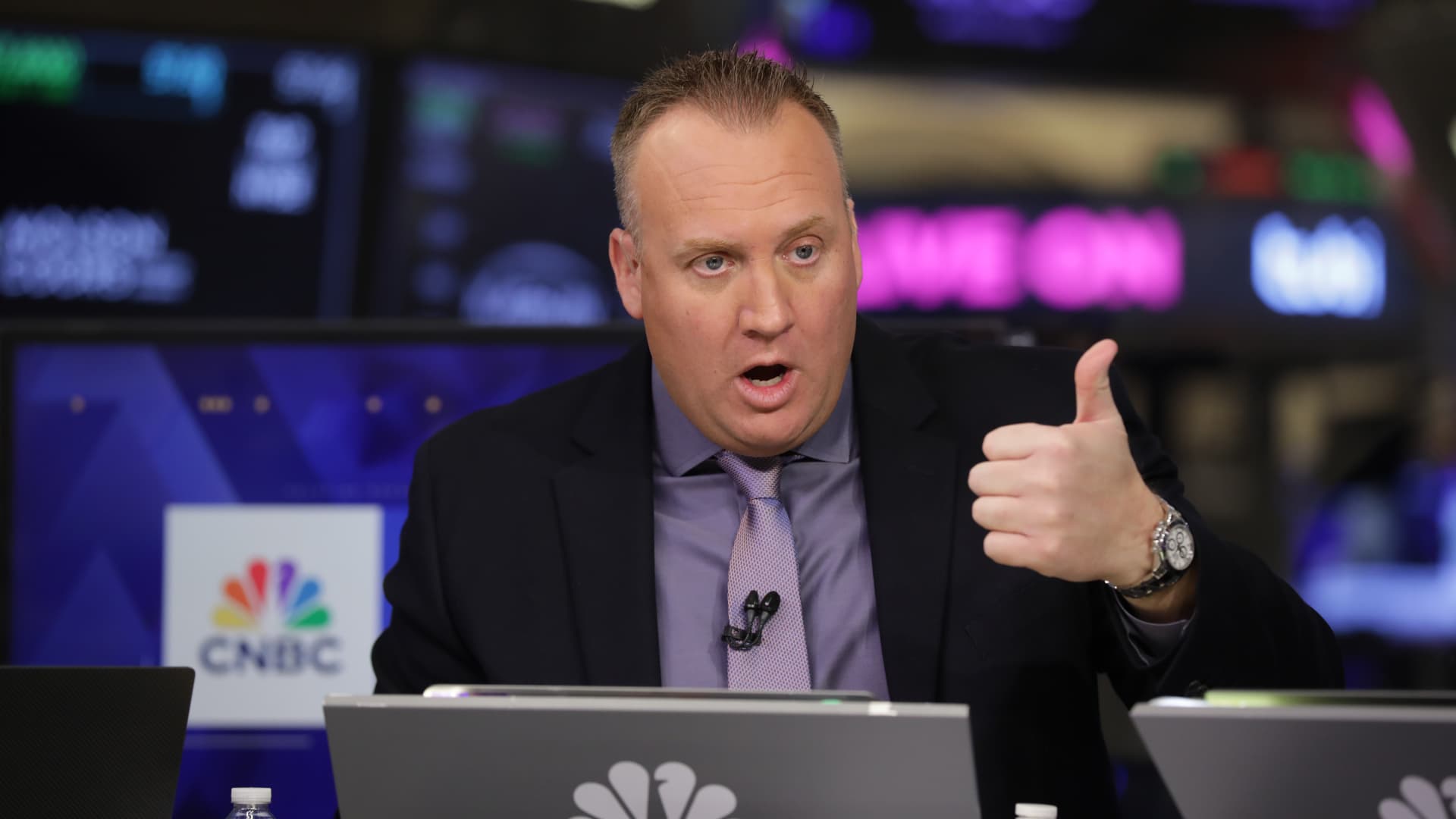
- Antitrust Ruling Impact: A Manhattan federal jury ruled that Live Nation holds an anticompetitive monopoly over major concert venues; however, Josh Brown, co-founder of Ritholtz Wealth Management, views this ruling as a buying opportunity, reflecting his confidence in the company's long-term value.
- Stock Performance Review: Over the past year, Live Nation's stock has surged by 28%, and despite a brief dip following the ruling, it has been recovering in subsequent trading sessions, indicating sustained market confidence in the company's future.
- Industry Comparison Analysis: Brown compared Live Nation's situation to antitrust cases faced by Apple and Alphabet, noting that investors who sold Alphabet after its loss missed out on a doubling of its stock price, emphasizing the potential gains from holding stocks post-legal rulings.
- Market Outlook: Brown also highlighted investment opportunities in Exxon Mobil and eBay, suggesting that oil companies have greater profit margins in a rising price environment, while eBay's stock shows strong upward momentum after breaking through the $100 mark, indicating optimistic market expectations for these companies.
See More
Analyzing Investment Trajectories of PayPal and Palantir


- PayPal's Stock Performance: Over the past five years, PayPal's stock has plummeted by 80%, indicating a trend of slowing growth, although its market cap remains at $46 billion, reflecting market caution regarding its future growth prospects.
- Thiel's Investment Returns: Peter Thiel's initial investment in PayPal was approximately $100,000, and he sold his 3.7% stake for $55 million after eBay's acquisition, showcasing a significant return despite not retaining a larger stake.
- Palantir's Growth Potential: Analysts project Palantir's revenue and EPS to grow at CAGRs of 49% and 54% from 2025 to 2028, driven by strong demand in government contracts and enterprise clients, making it one of the fastest-growing tech stocks in the market.
- Investor Choices: While PayPal's stock appears cheap, its sluggish growth leads investors to focus more on Palantir's potential, suggesting retail investors should follow Thiel's lead and prioritize Palantir's long-term investment value.
See More
Wall Street's Latest Rating Changes Analysis


- MSG Sports Upgrade: Seaport upgraded Madison Square Garden Sports from neutral to buy, citing a significant 57.5% trading discount versus intrinsic value, suggesting a potential appreciation ahead of the 2025-26 season, particularly with plans to spin off the Knicks and Rangers into standalone entities.
- ServiceNow Downgrade: UBS downgraded ServiceNow from buy to neutral due to weakened confidence in the software sector, projecting a decline in 2026 free cash flow to 15x, reflecting increased budget pressures on non-AI applications that could impact future performance.
- Shake Shack Sales Growth: Mizuho upgraded Shake Shack from neutral to outperform, anticipating upside in same-store sales for Q1, driven by strong demand and improved restaurant-level margins, indicating robust market momentum and growth potential.
- Nvidia Strong Performance: Raymond James reiterated a strong buy rating on Nvidia, based on favorable trends in its Asia supply chain, with suppliers receiving increased forecasts during the quarter, reinforcing Nvidia's position as a market leader.
See More

Nike Faces Challenges and Opportunities in Turnaround
- Brand Rebuilding Challenges: Nike has faced significant brand damage under its former CEO, particularly in the Chinese market, where local competitors like Anta and Li-Ning have aggressively captured market share, threatening Nike's dominance.
- Strategic Shift Impact: Since John Donahoe took over as CEO in 2020, he has aimed to pivot towards a higher-margin direct-to-consumer model; however, cutting ties with long-term retail partners has resulted in lost market space and diminished competitive strength.
- Market Environment Challenges: The ongoing trade war and tariff policies have complicated Nike's recovery efforts, and while there is potential for turnaround through operational momentum and leverage, uncertainties remain, especially regarding customer retention after significant losses.
- Investor Confidence Issues: Despite being an iconic global brand, Nike's classification as a
See More
Nike Faces Challenges in Brand Recovery
- Brand Image Damage: Nike has suffered from years of missteps under its former CEO, leading to a tarnished brand image; despite its globally recognized logo and slogan, market share has been eroded by competitors.
- Strategic Transition Challenges: New CEO John Donahoe shifted focus to higher-margin businesses, reducing investment in product innovation, which has left Nike slow to respond to technological advancements and market demands, failing to effectively compete.
- Increased Market Competition: By severing ties with long-term retail partners, Nike lost market space, particularly in China, where local brands like Anta and Li-Ning have rapidly emerged, further weakening Nike's market position.
- Future Uncertainty: While Nike has the potential to turn its business around, external factors such as the trade war with China and tariffs, along with uncertainties regarding the company's past profitability, lead investors to adopt a cautious outlook on its future development.
See More
Chip Stocks Face Pullback Risks After Rally
- Market Performance Review: The three major indexes surged this week, with the S&P 500 recording its largest one-week gain since May, while the information technology sector climbed 8%, indicating a strong market rebound.
- Overbought Signals: Following the significant market gains, CNBC Pro screened for overbought stocks, with AMD's relative strength index (RSI) exceeding 80, as shares jumped over 13% this week, suggesting potential short-term pullback risks.
- Analyst Ratings Optimistic: Despite concerns of a pullback, most analysts polled by FactSet maintain a buy rating for AMD, expecting about 5% more upside, reflecting confidence in its long-term performance.
- Other Stock Performances: In addition to AMD, ON Semiconductor, Intel, and Broadcom also showed strong performances with RSIs in the high 70s, while Synchrony Financial's RSI approached 74, indicating potential for an 8% increase over the next year despite a year-to-date decline of over 6%.
See More
Josh Brown Remains Bullish on Live Nation Despite Antitrust Ruling
- Antitrust Ruling Impact: A Manhattan federal jury ruled that Live Nation holds an anticompetitive monopoly over major concert venues; however, Josh Brown, co-founder of Ritholtz Wealth Management, views this ruling as a buying opportunity, reflecting his confidence in the company's long-term value.
- Stock Performance Review: Over the past year, Live Nation's stock has surged by 28%, and despite a brief dip following the ruling, it has been recovering in subsequent trading sessions, indicating sustained market confidence in the company's future.
- Industry Comparison Analysis: Brown compared Live Nation's situation to antitrust cases faced by Apple and Alphabet, noting that investors who sold Alphabet after its loss missed out on a doubling of its stock price, emphasizing the potential gains from holding stocks post-legal rulings.
- Market Outlook: Brown also highlighted investment opportunities in Exxon Mobil and eBay, suggesting that oil companies have greater profit margins in a rising price environment, while eBay's stock shows strong upward momentum after breaking through the $100 mark, indicating optimistic market expectations for these companies.
See More
Analyzing Investment Trajectories of PayPal and Palantir
- PayPal's Stock Performance: Over the past five years, PayPal's stock has plummeted by 80%, indicating a trend of slowing growth, although its market cap remains at $46 billion, reflecting market caution regarding its future growth prospects.
- Thiel's Investment Returns: Peter Thiel's initial investment in PayPal was approximately $100,000, and he sold his 3.7% stake for $55 million after eBay's acquisition, showcasing a significant return despite not retaining a larger stake.
- Palantir's Growth Potential: Analysts project Palantir's revenue and EPS to grow at CAGRs of 49% and 54% from 2025 to 2028, driven by strong demand in government contracts and enterprise clients, making it one of the fastest-growing tech stocks in the market.
- Investor Choices: While PayPal's stock appears cheap, its sluggish growth leads investors to focus more on Palantir's potential, suggesting retail investors should follow Thiel's lead and prioritize Palantir's long-term investment value.
See More
Wall Street's Latest Rating Changes Analysis
- MSG Sports Upgrade: Seaport upgraded Madison Square Garden Sports from neutral to buy, citing a significant 57.5% trading discount versus intrinsic value, suggesting a potential appreciation ahead of the 2025-26 season, particularly with plans to spin off the Knicks and Rangers into standalone entities.
- ServiceNow Downgrade: UBS downgraded ServiceNow from buy to neutral due to weakened confidence in the software sector, projecting a decline in 2026 free cash flow to 15x, reflecting increased budget pressures on non-AI applications that could impact future performance.
- Shake Shack Sales Growth: Mizuho upgraded Shake Shack from neutral to outperform, anticipating upside in same-store sales for Q1, driven by strong demand and improved restaurant-level margins, indicating robust market momentum and growth potential.
- Nvidia Strong Performance: Raymond James reiterated a strong buy rating on Nvidia, based on favorable trends in its Asia supply chain, with suppliers receiving increased forecasts during the quarter, reinforcing Nvidia's position as a market leader.
See More
Nike Faces Challenges and Opportunities in Turnaround
- Brand Rebuilding Challenges: Nike has faced significant brand damage under its former CEO, particularly in the Chinese market, where local competitors like Anta and Li-Ning have aggressively captured market share, threatening Nike's dominance.
- Strategic Shift Impact: Since John Donahoe took over as CEO in 2020, he has aimed to pivot towards a higher-margin direct-to-consumer model; however, cutting ties with long-term retail partners has resulted in lost market space and diminished competitive strength.
- Market Environment Challenges: The ongoing trade war and tariff policies have complicated Nike's recovery efforts, and while there is potential for turnaround through operational momentum and leverage, uncertainties remain, especially regarding customer retention after significant losses.
- Investor Confidence Issues: Despite being an iconic global brand, Nike's classification as a
See More
Nike Faces Challenges in Brand Recovery
- Brand Image Damage: Nike has suffered from years of missteps under its former CEO, leading to a tarnished brand image; despite its globally recognized logo and slogan, market share has been eroded by competitors.
- Strategic Transition Challenges: New CEO John Donahoe shifted focus to higher-margin businesses, reducing investment in product innovation, which has left Nike slow to respond to technological advancements and market demands, failing to effectively compete.
- Increased Market Competition: By severing ties with long-term retail partners, Nike lost market space, particularly in China, where local brands like Anta and Li-Ning have rapidly emerged, further weakening Nike's market position.
- Future Uncertainty: While Nike has the potential to turn its business around, external factors such as the trade war with China and tariffs, along with uncertainties regarding the company's past profitability, lead investors to adopt a cautious outlook on its future development.
See More