Charles Schwab's Future Growth Prospects Analyzed
Written by Emily J. Thompson, Senior Investment Analyst
Updated: Apr 01 2026
0mins
Should l Buy SCHW?
Source: Fool
- Stock Performance: Over the past 12 months, Charles Schwab's stock has risen by 21%, outperforming the S&P 500's 18% gain, demonstrating its stability and appeal as a blue-chip stock in the financial sector.
- Client Account Growth: By 2025, Schwab is projected to serve 46.5 million client accounts with total assets reaching $11.9 trillion, a significant increase from 33.2 million accounts and $8.1 trillion in assets in 2021, highlighting its expansion capabilities in wealth management.
- Revenue and Earnings Outlook: Analysts expect Schwab's revenue and EPS to grow at CAGRs of 8% and 15% from 2025 to 2028, indicating strong potential for future profitability and growth.
- Market Risk Factors: While Schwab's stock appears undervalued, geopolitical tensions and inflation may prompt the Fed to raise interest rates, potentially impacting its future growth, necessitating investor vigilance regarding these macroeconomic challenges.
Trade with 70% Backtested Accuracy
Stop guessing "Should I Buy SCHW?" and start using high-conviction signals backed by rigorous historical data.
Sign up today to access powerful investing tools and make smarter, data-driven decisions.
Analyst Views on SCHW
Wall Street analysts forecast SCHW stock price to rise
16 Analyst Rating
14 Buy
1 Hold
1 Sell
Strong Buy
Current: 97.270

Low
91.00
Averages
116.64
High
148.00
Current: 97.270
Low
91.00
Averages
116.64
High
148.00
About SCHW
The Charles Schwab Corporation is a savings and loan holding company. The Company, through its subsidiaries, engages in wealth management, securities brokerage, banking, asset management, custody, and financial advisory services. The Company provides financial services to individuals and institutional clients through two segments: Investor Services, and Advisor Services. The Investor Services segment provides retail brokerage, investment advisory, and banking and trust services to individual investors, and retirement plan and business services, as well as other corporate brokerage services, to businesses and their employees. The Advisor Services segment provides custodial, trading, banking and trust, and support services to independent registered investment advisors (RIAs), independent retirement advisors, and recordkeepers. Its products and services include brokerage, mutual funds, exchange-traded funds (ETFs), managed investing solutions, alternative investments, banking, and trust.
About the author

Emily J. Thompson
Emily J. Thompson, a Chartered Financial Analyst (CFA) with 12 years in investment research, graduated with honors from the Wharton School. Specializing in industrial and technology stocks, she provides in-depth analysis for Intellectia’s earnings and market brief reports.

Historical Trends Indicate Imminent Stock Market Recovery


- Opportunity for Recovery: Historical data indicates that major indexes typically experience significant gains in the 12 to 36 months following corrections, particularly during the third year of a presidential term, suggesting investors should seize this moment.
- Market Performance Patterns: Analysis by Charles Schwab from 1933 to 2015 reveals that the average returns of the S&P 500 show weaker performance in the first two years of a presidential term, with rebounds often occurring in the third year, highlighting the importance of recognizing this cyclical trend.
- Timing the Market: While buying stocks during downturns can be intimidating for many investors, history shows that such periods of anxiety often precede strong recoveries, encouraging investors to remain patient and ready to act.
- Long-Term Investment Strategy: For long-term investors, the best time to buy is always “now,” as the value of time in the market outweighs the importance of timing, with historical evidence suggesting that holding investments long enough will yield positive returns.
See More

Imminent Best Time to Buy Stocks
- Historical Return Analysis: According to Charles Schwab's analysis from 1933 to 2015, the average return for the S&P 500 in the third year of a presidential term was 13.5%, indicating that significant gains are typically available during this period, thus providing an optimistic market outlook ahead of the 2026 mid-term elections.
- Market Correction Opportunities: Recently, both the Dow Jones Industrial Average and the Nasdaq Composite Index entered correction territory, and historical data shows that major index corrections are often followed by significant rebounds, as evidenced by the Nasdaq's nearly 44% return post-pandemic in 2020, highlighting investment opportunities amid uncertainty.
- Political Cycle Impact: The Presidential Election Cycle Theory suggests that the stock market tends to perform poorly in the first two years of a presidential term but usually rebounds in the third year, prompting investors to consider the potential policy changes and market stability that upcoming mid-term elections may bring, thus seizing investment opportunities.
- Long-Term Investment Strategy: Despite current market volatility, history indicates that investors who hold the Dow, Nasdaq, or S&P 500 for the long term will ultimately profit, making it particularly advantageous for those with cash on the sidelines to invest now.
See More

Morgan Stanley Cuts Schwab Price Target Amid Cautious Outlook

- Price Target Cut: Morgan Stanley analyst Michael Cyprys lowered Schwab's price target from $148 to $135, reflecting a cautious outlook on the overall profitability of the financial sector, although he maintains a buy rating, indicating confidence in the company's long-term prospects.
- Stock Price Movement: Following the announcement, Schwab's shares fell nearly 3% to $94.81, with a market cap of $170 billion, highlighting investor concerns about future profitability, particularly against a backdrop of reduced trading activity.
- Earnings Expectations: Morgan Stanley anticipates that Schwab and its peers will see only modest profitability improvements of 4% to 5% below consensus estimates for 2026 and 2027, reflecting a cautious stance on market activity levels.
- Market Sentiment: Despite the analyst's cautious outlook for Schwab, there are still views suggesting ample capital in the markets and a generally bullish investor sentiment, with Schwab stock seen as a buy opportunity unless a severe global economic slowdown occurs due to the Iran war.
See More

Morgan Stanley Cuts Schwab Price Target Amid Bearish Sentiment
- Price Target Reduction: Morgan Stanley analyst Michael Cyprys lowered Schwab's price target from $148 to $135, yet he maintains a buy recommendation, indicating confidence in the company's long-term prospects.
- Market Reaction: Following the announcement, Schwab's stock fell nearly 3%, reflecting investor concerns about the overall profitability outlook for the financial sector, particularly in brokerage and securities exchange operations.
- Profitability Expectations: Morgan Stanley anticipates that profitability in the financial sector will be 4% to 5% below consensus estimates for both 2026 and 2027, suggesting that reduced trading activity and client engagement may impact Schwab's earnings.
- Investor Sentiment: Despite cautious market sentiment, there remains ample capital in the securities markets, and analysts believe that unless a severe global economic slowdown occurs due to the Iran war, Schwab stock is still a buy.
See More
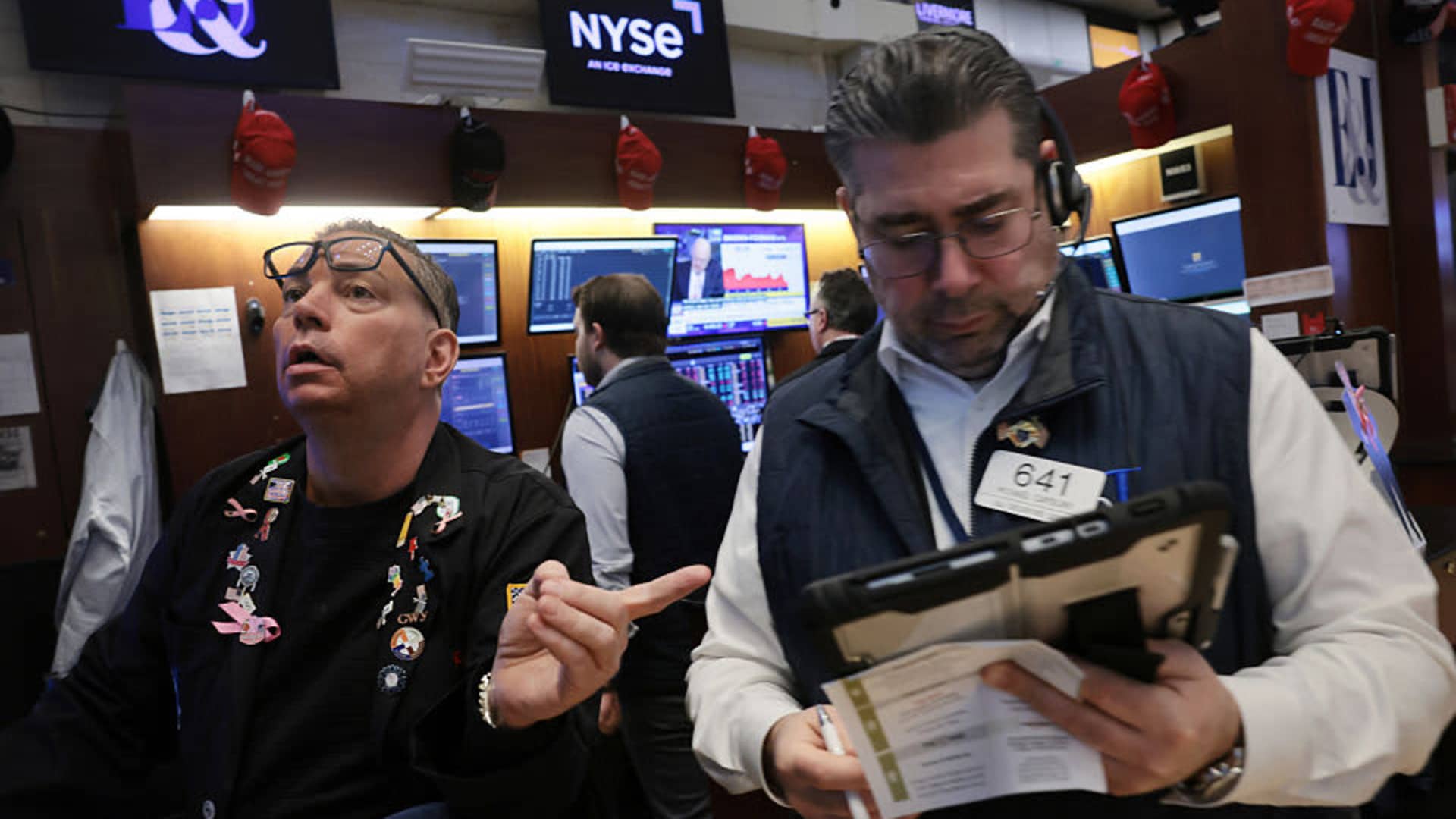
Investors Anticipate Q1 Earnings to Propel Market Recovery


- Market Recovery Signal: Following President Trump's suspension of attacks on Iran, the Dow Jones Industrial Average surged over 1,300 points this week, marking its best single-day performance since April 2025, indicating investor confidence in market recovery.
- Earnings Season Outlook: The S&P 500 companies are expected to report a blended earnings growth rate of 12.5% for Q1, marking the sixth consecutive quarter of double-digit growth, with the information technology sector projected to jump 44%, underscoring its significance to the market.
- Risk Warning: Despite the optimistic overall earnings outlook, Delta Air Lines announced it would
See More

IYF ETF 52-Week Price Fluctuation Analysis

- Price Range Analysis: The IYF ETF has a 52-week low of $100.67 and a high of $133.54, with the latest trade at $121.97, indicating stability and potential investment opportunities in the current market environment.
- Technical Analysis Tool: Comparing the current share price to the 200-day moving average provides valuable insights for investors, helping to assess market trends and potential buy or sell signals.
- ETF Trading Mechanism: ETFs trade like stocks, where investors buy and sell 'units' that can be created or destroyed based on demand, impacting the fund's liquidity and market performance.
- Inflows and Outflows Monitoring: Weekly monitoring of changes in shares outstanding helps identify ETFs experiencing significant inflows (new units created) or outflows (old units destroyed), allowing for assessment of their impact on underlying assets and market dynamics.
See More
Historical Trends Indicate Imminent Stock Market Recovery
- Opportunity for Recovery: Historical data indicates that major indexes typically experience significant gains in the 12 to 36 months following corrections, particularly during the third year of a presidential term, suggesting investors should seize this moment.
- Market Performance Patterns: Analysis by Charles Schwab from 1933 to 2015 reveals that the average returns of the S&P 500 show weaker performance in the first two years of a presidential term, with rebounds often occurring in the third year, highlighting the importance of recognizing this cyclical trend.
- Timing the Market: While buying stocks during downturns can be intimidating for many investors, history shows that such periods of anxiety often precede strong recoveries, encouraging investors to remain patient and ready to act.
- Long-Term Investment Strategy: For long-term investors, the best time to buy is always “now,” as the value of time in the market outweighs the importance of timing, with historical evidence suggesting that holding investments long enough will yield positive returns.
See More
Imminent Best Time to Buy Stocks
- Historical Return Analysis: According to Charles Schwab's analysis from 1933 to 2015, the average return for the S&P 500 in the third year of a presidential term was 13.5%, indicating that significant gains are typically available during this period, thus providing an optimistic market outlook ahead of the 2026 mid-term elections.
- Market Correction Opportunities: Recently, both the Dow Jones Industrial Average and the Nasdaq Composite Index entered correction territory, and historical data shows that major index corrections are often followed by significant rebounds, as evidenced by the Nasdaq's nearly 44% return post-pandemic in 2020, highlighting investment opportunities amid uncertainty.
- Political Cycle Impact: The Presidential Election Cycle Theory suggests that the stock market tends to perform poorly in the first two years of a presidential term but usually rebounds in the third year, prompting investors to consider the potential policy changes and market stability that upcoming mid-term elections may bring, thus seizing investment opportunities.
- Long-Term Investment Strategy: Despite current market volatility, history indicates that investors who hold the Dow, Nasdaq, or S&P 500 for the long term will ultimately profit, making it particularly advantageous for those with cash on the sidelines to invest now.
See More
Morgan Stanley Cuts Schwab Price Target Amid Cautious Outlook
- Price Target Cut: Morgan Stanley analyst Michael Cyprys lowered Schwab's price target from $148 to $135, reflecting a cautious outlook on the overall profitability of the financial sector, although he maintains a buy rating, indicating confidence in the company's long-term prospects.
- Stock Price Movement: Following the announcement, Schwab's shares fell nearly 3% to $94.81, with a market cap of $170 billion, highlighting investor concerns about future profitability, particularly against a backdrop of reduced trading activity.
- Earnings Expectations: Morgan Stanley anticipates that Schwab and its peers will see only modest profitability improvements of 4% to 5% below consensus estimates for 2026 and 2027, reflecting a cautious stance on market activity levels.
- Market Sentiment: Despite the analyst's cautious outlook for Schwab, there are still views suggesting ample capital in the markets and a generally bullish investor sentiment, with Schwab stock seen as a buy opportunity unless a severe global economic slowdown occurs due to the Iran war.
See More
Morgan Stanley Cuts Schwab Price Target Amid Bearish Sentiment
- Price Target Reduction: Morgan Stanley analyst Michael Cyprys lowered Schwab's price target from $148 to $135, yet he maintains a buy recommendation, indicating confidence in the company's long-term prospects.
- Market Reaction: Following the announcement, Schwab's stock fell nearly 3%, reflecting investor concerns about the overall profitability outlook for the financial sector, particularly in brokerage and securities exchange operations.
- Profitability Expectations: Morgan Stanley anticipates that profitability in the financial sector will be 4% to 5% below consensus estimates for both 2026 and 2027, suggesting that reduced trading activity and client engagement may impact Schwab's earnings.
- Investor Sentiment: Despite cautious market sentiment, there remains ample capital in the securities markets, and analysts believe that unless a severe global economic slowdown occurs due to the Iran war, Schwab stock is still a buy.
See More
Investors Anticipate Q1 Earnings to Propel Market Recovery
- Market Recovery Signal: Following President Trump's suspension of attacks on Iran, the Dow Jones Industrial Average surged over 1,300 points this week, marking its best single-day performance since April 2025, indicating investor confidence in market recovery.
- Earnings Season Outlook: The S&P 500 companies are expected to report a blended earnings growth rate of 12.5% for Q1, marking the sixth consecutive quarter of double-digit growth, with the information technology sector projected to jump 44%, underscoring its significance to the market.
- Risk Warning: Despite the optimistic overall earnings outlook, Delta Air Lines announced it would
See More
IYF ETF 52-Week Price Fluctuation Analysis
- Price Range Analysis: The IYF ETF has a 52-week low of $100.67 and a high of $133.54, with the latest trade at $121.97, indicating stability and potential investment opportunities in the current market environment.
- Technical Analysis Tool: Comparing the current share price to the 200-day moving average provides valuable insights for investors, helping to assess market trends and potential buy or sell signals.
- ETF Trading Mechanism: ETFs trade like stocks, where investors buy and sell 'units' that can be created or destroyed based on demand, impacting the fund's liquidity and market performance.
- Inflows and Outflows Monitoring: Weekly monitoring of changes in shares outstanding helps identify ETFs experiencing significant inflows (new units created) or outflows (old units destroyed), allowing for assessment of their impact on underlying assets and market dynamics.
See More