What’s Driving the Rise in Occidental Petroleum Stock on Tuesday?
Written by Emily J. Thompson, Senior Investment Analyst
Updated: Nov 11 2025
0mins
Should l Buy OXY?
Source: Benzinga
Earnings Performance: Occidental Petroleum Corp. reported a fiscal Q3 2025 adjusted EPS of 64 cents, exceeding expectations of 52 cents, with sales of $6.72 billion slightly above the consensus of $6.68 billion.
Production Insights: The company achieved total average global production of 1,465 Mboed, surpassing guidance, with Permian basin production at 800 Mboed; Q4 production is projected between 1,440-1,480 Mboed.
Analyst Perspectives: JP Morgan's Arun Jayaram noted a 1.6% production volume increase over estimates, while Goldman Sachs' Neil Mehta highlighted that Occidental's adjusted EPS and production figures exceeded their forecasts.
Stock Movement: Following the earnings report, OXY shares rose by 2.98%, trading at $43.05.
Trade with 70% Backtested Accuracy
Stop guessing "Should I Buy OXY?" and start using high-conviction signals backed by rigorous historical data.
Sign up today to access powerful investing tools and make smarter, data-driven decisions.
Analyst Views on OXY
Wall Street analysts forecast OXY stock price to fall
16 Analyst Rating
4 Buy
9 Hold
3 Sell
Hold
Current: 65.000

Low
38.00
Averages
47.27
High
64.00
Current: 65.000
Low
38.00
Averages
47.27
High
64.00
About OXY
Occidental Petroleum Corporation is an international energy company with assets primarily in the United States, the Middle East and North Africa. The Company is an oil and gas producer in the United States, including a producer in the Permian and DJ basins, and the offshore Gulf of Mexico. Its segments include oil and gas, and midstream and marketing. The oil and gas segment explores for, develops, and produces oil (which includes condensate), natural gas liquids (NGL) and natural gas. The Company's midstream and marketing segment purchases, markets, gathers, processes, transports, and stores oil (which includes condensate), NGL, natural gas, carbon dioxide (CO2) and power. The midstream and marketing segment provides flow assurance and maximizes the value of its oil and gas. It also optimizes its transportation and storage capacity and invests in entities that conduct similar activities. This segment also includes low-carbon venture businesses.
About the author

Emily J. Thompson
Emily J. Thompson, a Chartered Financial Analyst (CFA) with 12 years in investment research, graduated with honors from the Wharton School. Specializing in industrial and technology stocks, she provides in-depth analysis for Intellectia’s earnings and market brief reports.
Trump Threatens Hard Hits on Iran in Coming Weeks


- Market Reaction: Trump's national address threatening to hit Iran 'extremely hard' led to a significant drop in Asian stocks, with South Korea's KOSPI plunging 4.37%, indicating market sensitivity to geopolitical tensions.
- Rising Treasury Yields: Following the speech, the yield on the benchmark 10-year U.S. Treasury notes climbed 6 basis points to 4.38%, reflecting a sell-off in the bond market that could impact future borrowing costs.
- Oil Price Volatility: Brent crude futures surged 5.37% to $106.59 per barrel, highlighting market concerns over potential disruptions in energy supply, exacerbated by Trump's statements about escalating tensions.
- Currency Market Fluctuations: The U.S. dollar index rose 0.37% to 100.02, while the Japanese yen and South Korean won weakened by 0.38% and 0.6%, respectively, indicating increased confidence in U.S. economic policy amidst regional uncertainties.
See More
Trump's Address Triggers Market Volatility


- War Progress Update: In his national address, Trump claimed unprecedented victories in the U.S. campaign dubbed 'Operation Epic Fury,' while forecasting the conflict to last another two to three weeks, heightening market concerns about future developments.
- Oil Price Surge: Following the speech, international benchmark Brent crude futures rose nearly 6%, with Trump attributing the price increase to Iranian attacks on commercial oil tankers, illustrating the direct impact of geopolitical tensions on energy markets.
- Negative Market Reaction: Asia-Pacific markets broadly declined after Trump's address, with major indices such as Hong Kong's Hang Seng, Japan's Nikkei 225, South Korea's Kospi, and Australia's S&P/ASX 200 all retreating, reflecting investor unease about the future situation.
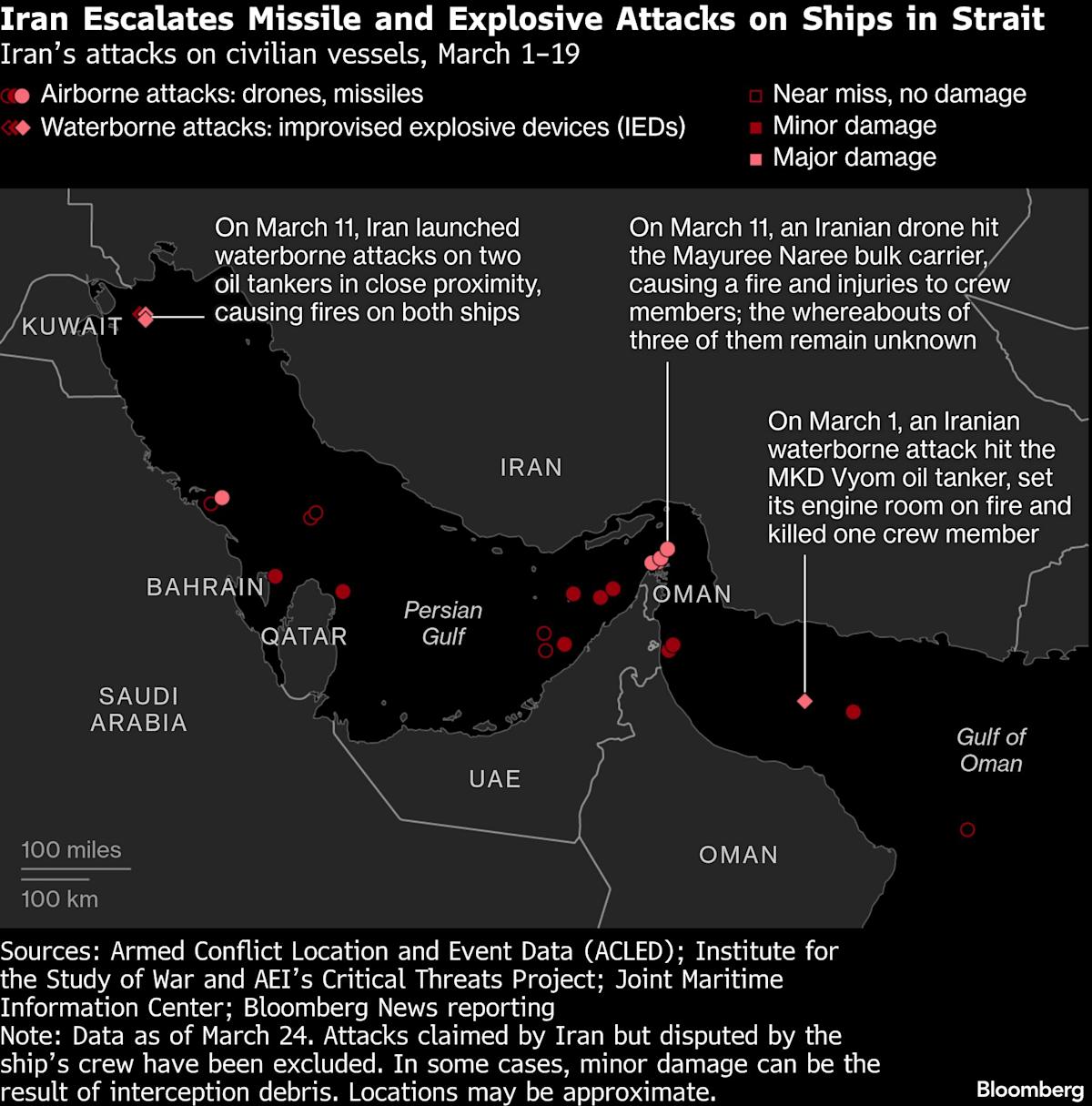
- Escalating Tensions with Iran: Trump threatened that the U.S. would continue to strike Iran hard unless the Strait of Hormuz is 'open, free, and clear,' indicating a worsening relationship between the U.S. and Iran that could affect global energy supplies.
See More

Oil Prices Surge Amid Escalating US-Iran Tensions

- Oil Price Surge: Oil prices surged as President Trump warned of further military action against Iran in the next two to three weeks, with West Texas Intermediate crude futures rising 4.1% to $104.21 per barrel and Brent crude futures increasing 5% to $106.42 per barrel, reflecting market sensitivity to geopolitical risks.
- Shipping Resumption: The Liberia-flagged crude oil tanker Shenlong Suezmax successfully docked at Mumbai Port after navigating the high-risk Strait of Hormuz, indicating a recovery in tanker movements amidst escalating West Asia conflict, potentially alleviating market concerns over supply disruptions.
- Trump's Hardline Stance: Trump stated in a national address that the U.S. would
See More

U.S. Markets Rise on Optimism Over Middle East Situation
- Market Optimism: All three major U.S. indexes rose on Wednesday, with the S&P 500 and Nasdaq Composite gaining 0.72% and 1.16%, respectively, while the Dow Jones Industrial Average increased by 224.23 points or 0.48%, reflecting heightened investor optimism regarding a potential end to the U.S.-Iran war.
- Trump's Address Anticipation: President Trump is expected to address the nation at 9 p.m. ET tonight to provide updates on the Iran ceasefire talks, with market participants closely monitoring the speech for potential impacts on stock prices.
- Iran's Response: Despite Trump's claim that Iran's new regime requested a ceasefire, Iranian officials denied this request, stating that there are currently no negotiations, which adds complexity and uncertainty to the situation and could affect market sentiment.
- Tech Company Developments: SpaceX has confidentially filed for an IPO, setting the stage for a record offering, following a significant funding round for OpenAI, indicating strong activity and investor confidence in the tech sector, which may drive related stock prices higher.
See More

US Stocks Close Higher Amid Optimism Over Middle East Conflict Resolution


- Market Rally: The S&P 500 rose by 0.72%, the Dow Jones increased by 0.48%, and the Nasdaq 100 climbed by 1.18%, reflecting growing investor optimism regarding a potential resolution to the Middle East conflict, which has bolstered market confidence.
- Strong Economic Data: The US ADP employment change for March increased by 62,000, surpassing expectations of 40,000, while February retail sales rose by 0.6% month-over-month, indicating robust economic recovery that could influence Federal Reserve policy decisions.
- Interest Rate Expectations: Despite positive economic indicators, hawkish comments from St. Louis Fed President raised concerns about inflation and employment, leading to a mere 1% chance of a 25 basis point rate hike at the upcoming April FOMC meeting, reflecting cautious market sentiment.
- Divergent Stock Performances: Target Hospitality surged over 36% after securing a multi-year contract worth over $550 million, while Nike fell more than 15% due to revenue forecasts indicating a decline, highlighting the market's varied outlook on different companies' futures.
See More

U.S. Stocks Rise on Easing War Fears and Falling Oil Prices
- Market Recovery: The S&P 500 rose by 0.72% to 6,575.32, while the Nasdaq Composite climbed 1.16% to 21,840.95, reflecting optimism over easing Iran war fears, although the S&P 500 is still down 4% year-to-date.
- Semiconductor Strength: Micron Technology surged 8.96% and Intel increased by 8.78%, with Intel announcing a buyback of its stake in an Irish chip plant, boosting confidence in the semiconductor sector.
- Airline Stock Resurgence: American Airlines Group and Delta Air Lines gained 3.63% and 2.17%, respectively, indicating a cautious return of investor confidence in travel stocks despite ongoing market uncertainties.
- Energy Stock Volatility: Occidental Petroleum and Chevron fell by 4.17% and 4.59%, respectively, yet both have seen significant gains this year; oil prices dipped below $100 intraday, closing down nearly 15%, which may exert inflationary pressure on the stock market.
See More
Trump Threatens Hard Hits on Iran in Coming Weeks
- Market Reaction: Trump's national address threatening to hit Iran 'extremely hard' led to a significant drop in Asian stocks, with South Korea's KOSPI plunging 4.37%, indicating market sensitivity to geopolitical tensions.
- Rising Treasury Yields: Following the speech, the yield on the benchmark 10-year U.S. Treasury notes climbed 6 basis points to 4.38%, reflecting a sell-off in the bond market that could impact future borrowing costs.
- Oil Price Volatility: Brent crude futures surged 5.37% to $106.59 per barrel, highlighting market concerns over potential disruptions in energy supply, exacerbated by Trump's statements about escalating tensions.
- Currency Market Fluctuations: The U.S. dollar index rose 0.37% to 100.02, while the Japanese yen and South Korean won weakened by 0.38% and 0.6%, respectively, indicating increased confidence in U.S. economic policy amidst regional uncertainties.
See More
Trump's Address Triggers Market Volatility
- War Progress Update: In his national address, Trump claimed unprecedented victories in the U.S. campaign dubbed 'Operation Epic Fury,' while forecasting the conflict to last another two to three weeks, heightening market concerns about future developments.
- Oil Price Surge: Following the speech, international benchmark Brent crude futures rose nearly 6%, with Trump attributing the price increase to Iranian attacks on commercial oil tankers, illustrating the direct impact of geopolitical tensions on energy markets.
- Negative Market Reaction: Asia-Pacific markets broadly declined after Trump's address, with major indices such as Hong Kong's Hang Seng, Japan's Nikkei 225, South Korea's Kospi, and Australia's S&P/ASX 200 all retreating, reflecting investor unease about the future situation.
- Escalating Tensions with Iran: Trump threatened that the U.S. would continue to strike Iran hard unless the Strait of Hormuz is 'open, free, and clear,' indicating a worsening relationship between the U.S. and Iran that could affect global energy supplies.
See More
Oil Prices Surge Amid Escalating US-Iran Tensions
- Oil Price Surge: Oil prices surged as President Trump warned of further military action against Iran in the next two to three weeks, with West Texas Intermediate crude futures rising 4.1% to $104.21 per barrel and Brent crude futures increasing 5% to $106.42 per barrel, reflecting market sensitivity to geopolitical risks.
- Shipping Resumption: The Liberia-flagged crude oil tanker Shenlong Suezmax successfully docked at Mumbai Port after navigating the high-risk Strait of Hormuz, indicating a recovery in tanker movements amidst escalating West Asia conflict, potentially alleviating market concerns over supply disruptions.
- Trump's Hardline Stance: Trump stated in a national address that the U.S. would
See More
U.S. Markets Rise on Optimism Over Middle East Situation
- Market Optimism: All three major U.S. indexes rose on Wednesday, with the S&P 500 and Nasdaq Composite gaining 0.72% and 1.16%, respectively, while the Dow Jones Industrial Average increased by 224.23 points or 0.48%, reflecting heightened investor optimism regarding a potential end to the U.S.-Iran war.
- Trump's Address Anticipation: President Trump is expected to address the nation at 9 p.m. ET tonight to provide updates on the Iran ceasefire talks, with market participants closely monitoring the speech for potential impacts on stock prices.
- Iran's Response: Despite Trump's claim that Iran's new regime requested a ceasefire, Iranian officials denied this request, stating that there are currently no negotiations, which adds complexity and uncertainty to the situation and could affect market sentiment.
- Tech Company Developments: SpaceX has confidentially filed for an IPO, setting the stage for a record offering, following a significant funding round for OpenAI, indicating strong activity and investor confidence in the tech sector, which may drive related stock prices higher.
See More
US Stocks Close Higher Amid Optimism Over Middle East Conflict Resolution
- Market Rally: The S&P 500 rose by 0.72%, the Dow Jones increased by 0.48%, and the Nasdaq 100 climbed by 1.18%, reflecting growing investor optimism regarding a potential resolution to the Middle East conflict, which has bolstered market confidence.
- Strong Economic Data: The US ADP employment change for March increased by 62,000, surpassing expectations of 40,000, while February retail sales rose by 0.6% month-over-month, indicating robust economic recovery that could influence Federal Reserve policy decisions.
- Interest Rate Expectations: Despite positive economic indicators, hawkish comments from St. Louis Fed President raised concerns about inflation and employment, leading to a mere 1% chance of a 25 basis point rate hike at the upcoming April FOMC meeting, reflecting cautious market sentiment.
- Divergent Stock Performances: Target Hospitality surged over 36% after securing a multi-year contract worth over $550 million, while Nike fell more than 15% due to revenue forecasts indicating a decline, highlighting the market's varied outlook on different companies' futures.
See More
U.S. Stocks Rise on Easing War Fears and Falling Oil Prices
- Market Recovery: The S&P 500 rose by 0.72% to 6,575.32, while the Nasdaq Composite climbed 1.16% to 21,840.95, reflecting optimism over easing Iran war fears, although the S&P 500 is still down 4% year-to-date.
- Semiconductor Strength: Micron Technology surged 8.96% and Intel increased by 8.78%, with Intel announcing a buyback of its stake in an Irish chip plant, boosting confidence in the semiconductor sector.
- Airline Stock Resurgence: American Airlines Group and Delta Air Lines gained 3.63% and 2.17%, respectively, indicating a cautious return of investor confidence in travel stocks despite ongoing market uncertainties.
- Energy Stock Volatility: Occidental Petroleum and Chevron fell by 4.17% and 4.59%, respectively, yet both have seen significant gains this year; oil prices dipped below $100 intraday, closing down nearly 15%, which may exert inflationary pressure on the stock market.
See More