Waymo Begins Manual Robotaxi Testing in Baltimore, Pittsburgh, and St. Louis
Written by Emily J. Thompson, Senior Investment Analyst
Updated: Dec 03 2025
0mins

Should l Buy GOOGL?
Source: Newsfilter
- Market Expansion: Waymo announced the initiation of manual driving tests in Baltimore, Pittsburgh, and St. Louis, marking a further expansion into a total of 26 markets globally, demonstrating the company's confidence in its robotaxi service.
- Service Capacity Enhancement: Currently, Waymo's robotaxi service provides over 250,000 paid trips weekly, totaling more than 10 million rides since its launch in 2020, indicating strong demand and operational capability in the market.
- Technological Competition: With advancements from rivals Amazon and Tesla in the robotaxi sector, Waymo's new market tests reflect its proactive response to technological innovation and market competition, particularly in servicing colder climate conditions.
- Future Plans: Waymo also plans to launch services in Houston, San Antonio, and Orlando by 2026, further enhancing its market coverage and potential for business growth.
Trade with 70% Backtested Accuracy
Stop guessing "Should I Buy GOOGL?" and start using high-conviction signals backed by rigorous historical data.
Sign up today to access powerful investing tools and make smarter, data-driven decisions.
Analyst Views on GOOGL
Wall Street analysts forecast GOOGL stock price to rise
33 Analyst Rating
26 Buy
7 Hold
0 Sell
Strong Buy
Current: 302.280

Low
305.00
Averages
374.25
High
400.00
Current: 302.280
Low
305.00
Averages
374.25
High
400.00
About GOOGL
Alphabet Inc. is a holding company. The Company's segments include Google Services, Google Cloud, and Other Bets. The Google Services segment includes products and services such as ads, Android, Chrome, devices, Google Maps, Google Play, Search, and YouTube. The Google Cloud segment includes infrastructure and platform services, collaboration tools, and other services for enterprise customers. Its Other Bets segment is engaged in the sale of healthcare-related services and Internet services. Its Google Cloud provides enterprise-ready cloud services, including Google Cloud Platform and Google Workspace. Google Cloud Platform provides access to solutions such as artificial intelligence (AI) offerings, including its AI infrastructure, Vertex AI platform, and Gemini for Google Cloud; cybersecurity, and data and analytics. Google Workspace includes cloud-based communication and collaboration tools for enterprises, such as Calendar, Gmail, Docs, Drive, and Meet.
About the author

Emily J. Thompson
Emily J. Thompson, a Chartered Financial Analyst (CFA) with 12 years in investment research, graduated with honors from the Wharton School. Specializing in industrial and technology stocks, she provides in-depth analysis for Intellectia’s earnings and market brief reports.
CAPE Ratio Signals Potential Market Overvaluation Risks


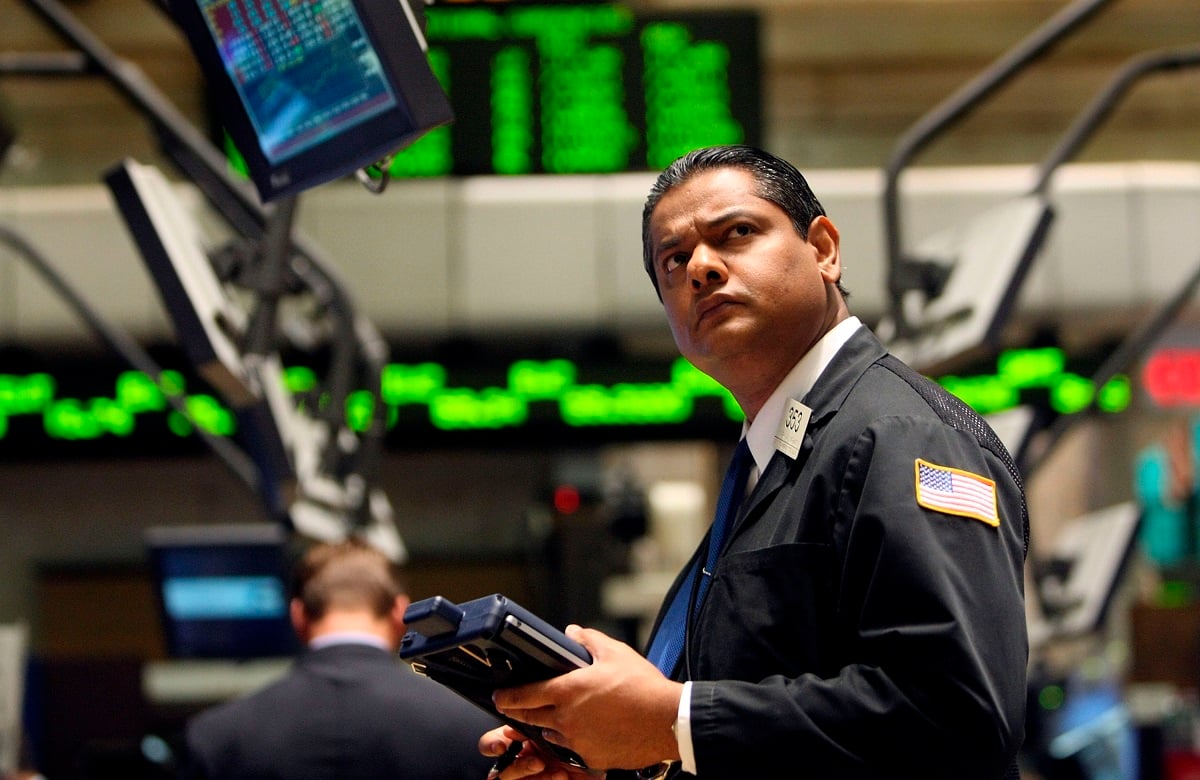
- CAPE Ratio Analysis: The current CAPE ratio of the S&P 500 stands at 39, more than double its long-term average and nearing historical highs, previously seen only in the late 1920s and 2000, which may signal an impending market crash risk.
- Market Drivers: Despite the rising CAPE ratio, the market remains buoyed by demand for artificial intelligence, with companies like Microsoft and Amazon investing hundreds of billions in infrastructure, driving valuations higher, yet this may lead to a disconnection between prices and underlying fundamentals.
- Historical Lessons: The CAPE ratio peaked at 44 in 2000, after which the S&P 500 plummeted over 40% from 2000 to 2002, indicating that rising CAPE ratios often precede market corrections, necessitating caution among investors.
- Investment Strategy Advice: Investors are advised to reduce exposure to volatile growth stocks in the current market environment, favoring blue-chip stocks with durable, diversified business models, while maintaining cash reserves to mitigate potential market downturn risks.
See More

US Stocks Rise as Oil Prices Drop, Boosting Market Sentiment


- Oil Price Drop Fuels Market Rally: The S&P 500 rose 1.01%, the Dow Jones increased by 0.83%, and the Nasdaq 100 climbed 1.13% as crude oil prices fell over 5% due to hopes of tanker passage through the Strait of Hormuz, reflecting positive market sentiment towards lower energy costs.
- Mixed Economic Data: February manufacturing production in the US rose 0.2% month-over-month, surpassing expectations of 0.1%, and January's figure was revised up to 0.8%, indicating a recovery in manufacturing; however, the Empire State manufacturing index fell 7.3 points to -0.2, highlighting economic uncertainty.
- China's Economic Indicators Impact Global Outlook: China's February industrial production grew 6.3% year-on-year, exceeding expectations of 5.3%, while retail sales rose 2.8%, above the 2.5% forecast; however, the unemployment rate increased to 5.3%, indicating labor market pressures that could challenge global economic recovery.
- Airline and Cruise Stocks Surge: With falling oil prices, airline and cruise line stocks rallied, with Norwegian Cruise Line up over 5% and United Airlines up over 4%, suggesting optimistic market expectations for improved profitability due to lower fuel costs.
See More

Analysis of S&P 500 CAPE Ratio
- Current CAPE Ratio: The S&P 500's CAPE ratio stands at 39, more than double its long-term average and nearing historical highs, which historically indicates potential for significant market corrections, as seen in the late 1920s and 2000.
- Market Drivers: The demand for artificial intelligence is driving up market valuations, with major tech companies like Microsoft, Amazon, Alphabet, and Meta investing hundreds of billions in next-generation data centers, which, while boosting the CAPE ratio in the short term, may lead to long-term market overheating.
- Historical Lessons: The CAPE ratio peaked at 44 in 2000, after which the S&P 500 plummeted over 40% from 2000 to 2002, indicating that rising CAPE ratios often signal a disconnection between stock prices and underlying fundamentals, potentially foreshadowing market crashes.
- Investment Strategy Advice: Despite the current market strength, investors should consider trimming exposure to volatile growth stocks and pivoting towards blue-chip stocks with durable, diversified business models, while maintaining cash reserves to mitigate potential downturn risks.
See More
Nvidia Expands Autonomous Vehicle Partnerships


- Partnership Expansion: Nvidia has announced new partnerships with Hyundai, Nissan, Isuzu, and Chinese automakers BYD and Geely, further advancing its autonomous vehicle business and showcasing strong growth potential in this sector.
- Drive Hyperion Platform: The new collaborations will utilize Nvidia's Drive Hyperion platform, designed to assist automakers in developing and deploying Level 4 autonomous driving capabilities, which can operate without human intervention under specific conditions, thereby enhancing market competitiveness.
- Positive Market Outlook: CEO Jensen Huang stated that the 'ChatGPT moment' for self-driving cars has arrived, with a significant number of robotaxi-ready vehicles expected in the future, indicating the company's confidence and strategic focus on the autonomous driving sector.
- Industry Trends: While no fully autonomous consumer vehicles are currently available, advancements in AI technology position autonomous vehicles as a multitrillion-dollar growth industry, and Nvidia's expanded partnerships will help solidify its leading position in this space.
See More
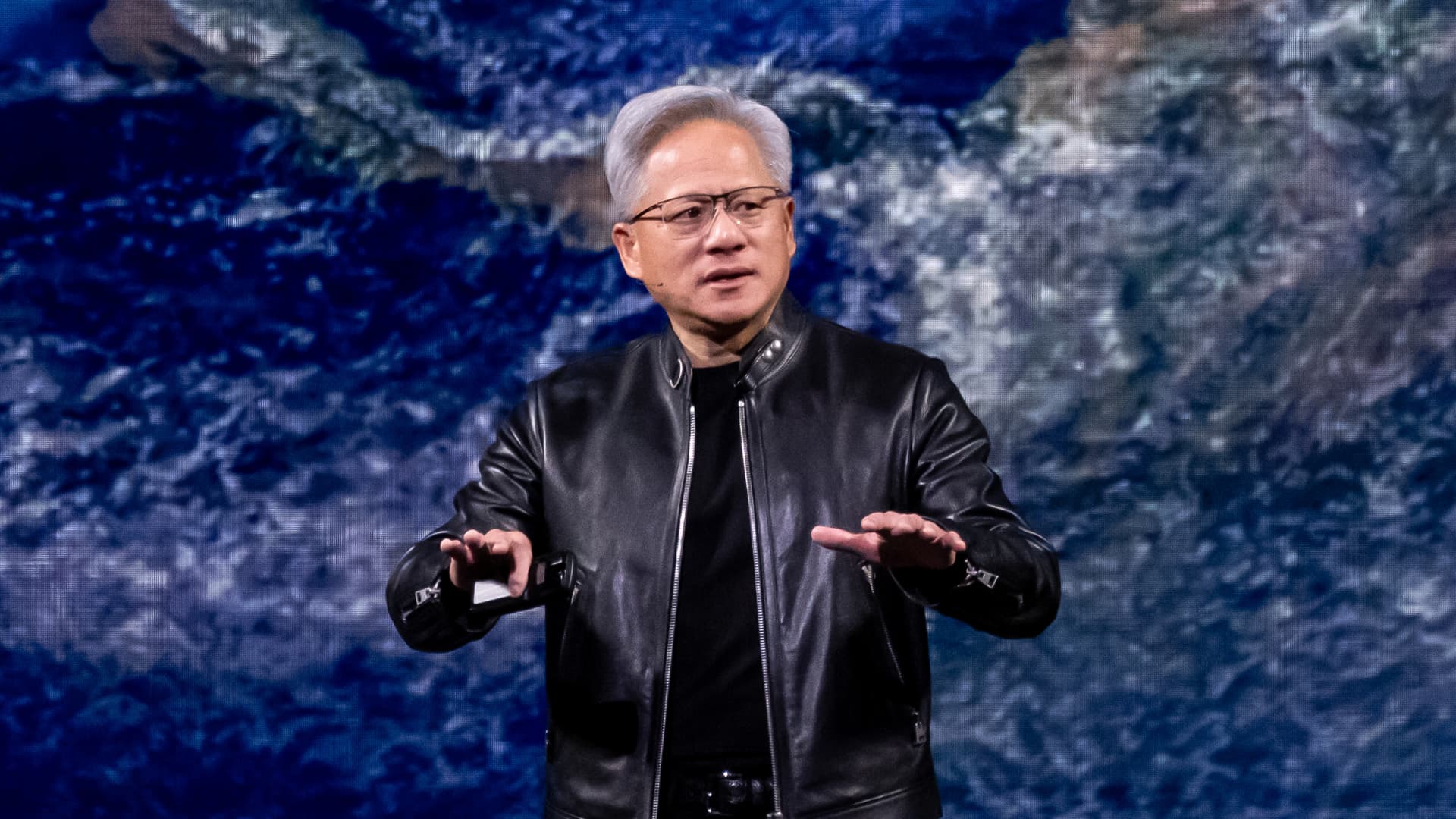
Nvidia Launches Space Computing Platforms
- Launch of Space Computing Platforms: Nvidia unveiled computing platforms for orbital data centers at GTC 2026, with CEO Jensen Huang stating that the era of space computing has arrived, projecting over $1 trillion in orders by 2027.
- Modular Design Benefits: The Vera Rubin Space-1 module integrates IGX Thor and Jetson Orin chips, engineered for efficient operation in size-, weight-, and power-constrained environments, enhancing the intelligence of space missions.
- Engineering Challenges and Partnerships: While Nvidia collaborates with companies like Axiom Space, Starcloud, and Planet to develop orbital data centers, overcoming cooling system challenges in space remains a significant engineering hurdle, highlighting the complexity of technology implementation.
- Market Potential and Competition: As AI demand surges, orbital data centers are seen as a solution to soaring electricity costs, although high launch costs and low availability pose major barriers, prompting AI companies to race for utilizing solar power in space.
See More

Nvidia Expands Autonomous Driving Partnerships


- Partnership Expansion: Nvidia has announced new collaborations with Hyundai, Nissan, Isuzu, and Chinese automakers BYD and Geely to advance its Drive Hyperion platform for autonomous driving, thereby strengthening its market position in the self-driving sector.
- Platform Advantages: The Drive Hyperion platform provides companies with the tools to develop and deploy Level 4 autonomous driving capabilities, enabling driverless operation in predefined areas, marking a significant advancement in Nvidia's self-driving technology and potentially revolutionizing future transportation.
- Massive Market Potential: CEO Jensen Huang stated that the 'ChatGPT moment' for self-driving cars has arrived, predicting an incredible future for robotaxi-ready vehicles, highlighting the enormous market potential that could position this sector as a multitrillion-dollar growth industry.
- Industry Impact: Nvidia's partnerships with multiple automakers further promote the proliferation of autonomous driving technology, and while no fully driverless consumer vehicles are currently available, this progress may accelerate the transformation and development of the industry.
See More
CAPE Ratio Signals Potential Market Overvaluation Risks
- CAPE Ratio Analysis: The current CAPE ratio of the S&P 500 stands at 39, more than double its long-term average and nearing historical highs, previously seen only in the late 1920s and 2000, which may signal an impending market crash risk.
- Market Drivers: Despite the rising CAPE ratio, the market remains buoyed by demand for artificial intelligence, with companies like Microsoft and Amazon investing hundreds of billions in infrastructure, driving valuations higher, yet this may lead to a disconnection between prices and underlying fundamentals.
- Historical Lessons: The CAPE ratio peaked at 44 in 2000, after which the S&P 500 plummeted over 40% from 2000 to 2002, indicating that rising CAPE ratios often precede market corrections, necessitating caution among investors.
- Investment Strategy Advice: Investors are advised to reduce exposure to volatile growth stocks in the current market environment, favoring blue-chip stocks with durable, diversified business models, while maintaining cash reserves to mitigate potential market downturn risks.
See More
US Stocks Rise as Oil Prices Drop, Boosting Market Sentiment
- Oil Price Drop Fuels Market Rally: The S&P 500 rose 1.01%, the Dow Jones increased by 0.83%, and the Nasdaq 100 climbed 1.13% as crude oil prices fell over 5% due to hopes of tanker passage through the Strait of Hormuz, reflecting positive market sentiment towards lower energy costs.
- Mixed Economic Data: February manufacturing production in the US rose 0.2% month-over-month, surpassing expectations of 0.1%, and January's figure was revised up to 0.8%, indicating a recovery in manufacturing; however, the Empire State manufacturing index fell 7.3 points to -0.2, highlighting economic uncertainty.
- China's Economic Indicators Impact Global Outlook: China's February industrial production grew 6.3% year-on-year, exceeding expectations of 5.3%, while retail sales rose 2.8%, above the 2.5% forecast; however, the unemployment rate increased to 5.3%, indicating labor market pressures that could challenge global economic recovery.
- Airline and Cruise Stocks Surge: With falling oil prices, airline and cruise line stocks rallied, with Norwegian Cruise Line up over 5% and United Airlines up over 4%, suggesting optimistic market expectations for improved profitability due to lower fuel costs.
See More
Analysis of S&P 500 CAPE Ratio
- Current CAPE Ratio: The S&P 500's CAPE ratio stands at 39, more than double its long-term average and nearing historical highs, which historically indicates potential for significant market corrections, as seen in the late 1920s and 2000.
- Market Drivers: The demand for artificial intelligence is driving up market valuations, with major tech companies like Microsoft, Amazon, Alphabet, and Meta investing hundreds of billions in next-generation data centers, which, while boosting the CAPE ratio in the short term, may lead to long-term market overheating.
- Historical Lessons: The CAPE ratio peaked at 44 in 2000, after which the S&P 500 plummeted over 40% from 2000 to 2002, indicating that rising CAPE ratios often signal a disconnection between stock prices and underlying fundamentals, potentially foreshadowing market crashes.
- Investment Strategy Advice: Despite the current market strength, investors should consider trimming exposure to volatile growth stocks and pivoting towards blue-chip stocks with durable, diversified business models, while maintaining cash reserves to mitigate potential downturn risks.
See More
Nvidia Expands Autonomous Vehicle Partnerships
- Partnership Expansion: Nvidia has announced new partnerships with Hyundai, Nissan, Isuzu, and Chinese automakers BYD and Geely, further advancing its autonomous vehicle business and showcasing strong growth potential in this sector.
- Drive Hyperion Platform: The new collaborations will utilize Nvidia's Drive Hyperion platform, designed to assist automakers in developing and deploying Level 4 autonomous driving capabilities, which can operate without human intervention under specific conditions, thereby enhancing market competitiveness.
- Positive Market Outlook: CEO Jensen Huang stated that the 'ChatGPT moment' for self-driving cars has arrived, with a significant number of robotaxi-ready vehicles expected in the future, indicating the company's confidence and strategic focus on the autonomous driving sector.
- Industry Trends: While no fully autonomous consumer vehicles are currently available, advancements in AI technology position autonomous vehicles as a multitrillion-dollar growth industry, and Nvidia's expanded partnerships will help solidify its leading position in this space.
See More
Nvidia Launches Space Computing Platforms
- Launch of Space Computing Platforms: Nvidia unveiled computing platforms for orbital data centers at GTC 2026, with CEO Jensen Huang stating that the era of space computing has arrived, projecting over $1 trillion in orders by 2027.
- Modular Design Benefits: The Vera Rubin Space-1 module integrates IGX Thor and Jetson Orin chips, engineered for efficient operation in size-, weight-, and power-constrained environments, enhancing the intelligence of space missions.
- Engineering Challenges and Partnerships: While Nvidia collaborates with companies like Axiom Space, Starcloud, and Planet to develop orbital data centers, overcoming cooling system challenges in space remains a significant engineering hurdle, highlighting the complexity of technology implementation.
- Market Potential and Competition: As AI demand surges, orbital data centers are seen as a solution to soaring electricity costs, although high launch costs and low availability pose major barriers, prompting AI companies to race for utilizing solar power in space.
See More
Nvidia Expands Autonomous Driving Partnerships
- Partnership Expansion: Nvidia has announced new collaborations with Hyundai, Nissan, Isuzu, and Chinese automakers BYD and Geely to advance its Drive Hyperion platform for autonomous driving, thereby strengthening its market position in the self-driving sector.
- Platform Advantages: The Drive Hyperion platform provides companies with the tools to develop and deploy Level 4 autonomous driving capabilities, enabling driverless operation in predefined areas, marking a significant advancement in Nvidia's self-driving technology and potentially revolutionizing future transportation.
- Massive Market Potential: CEO Jensen Huang stated that the 'ChatGPT moment' for self-driving cars has arrived, predicting an incredible future for robotaxi-ready vehicles, highlighting the enormous market potential that could position this sector as a multitrillion-dollar growth industry.
- Industry Impact: Nvidia's partnerships with multiple automakers further promote the proliferation of autonomous driving technology, and while no fully driverless consumer vehicles are currently available, this progress may accelerate the transformation and development of the industry.
See More