Virtus Launches Emerging Markets Dividend ETF
Written by Emily J. Thompson, Senior Investment Analyst
Updated: Feb 10 2026
0mins

Should l Buy TSM?
Source: Benzinga
- New Product Launch: Virtus Investment Partners Inc has introduced the Virtus Emerging Markets Dividend ETF, which employs AI-driven sentiment analysis and a quantitative stock-selection model to capture investment opportunities linked to the MSCI Emerging Markets Index, marking a significant expansion into actively managed ETFs.
- ETF Asset Growth: While overall assets under management decreased to $159 billion, Virtus's ETF assets rose to approximately $5.2 billion, an increase of $500 million sequentially and a 72% year-over-year growth, indicating strong market demand for new products and steady inflows.
- Financial Performance Analysis: In its quarterly report for the period ending December 31, 2025, Virtus reported net outflows of $8.1 billion, primarily driven by the lack of favor for quality-focused equity strategies, despite total sales declining from $6.3 billion to $5.3 billion, reflecting challenging market conditions.
- Strategic Acquisition Plans: Virtus is expanding into alternative assets, announcing a pending majority acquisition of private credit manager Keystone National Group and a minority investment in venture growth manager Crescent Cove, which is expected to provide new revenue streams for future growth.
Trade with 70% Backtested Accuracy
Stop guessing "Should I Buy TSM?" and start using high-conviction signals backed by rigorous historical data.
Sign up today to access powerful investing tools and make smarter, data-driven decisions.
Analyst Views on TSM
Wall Street analysts forecast TSM stock price to fall
8 Analyst Rating
7 Buy
1 Hold
0 Sell
Strong Buy
Current: 348.700

Low
63.24
Averages
313.46
High
390.00
Current: 348.700
Low
63.24
Averages
313.46
High
390.00
About TSM
Taiwan Semiconductor Manufacturing Co Ltd is a Taiwan-based integrated circuit foundry service provider. The Company is primarily engaged in integrated circuit manufacturing services. It offers advanced process technologies, specialised process solutions, advanced photomask and silicon stacking, and packaging-related technologies, while supporting a comprehensive design ecosystem. The Company's products serve diverse electronic sectors including artificial intelligence, high-performance computing, wired and wireless communications, automotive and industrial equipment, personal computing, information applications, consumer electronics, smart internet of things, and wearable devices.
About the author

Emily J. Thompson
Emily J. Thompson, a Chartered Financial Analyst (CFA) with 12 years in investment research, graduated with honors from the Wharton School. Specializing in industrial and technology stocks, she provides in-depth analysis for Intellectia’s earnings and market brief reports.

TSMC Reports 30% Revenue Growth for Jan-Feb 2026

- Significant Revenue Growth: TSMC reported combined revenue of NT$718.91 billion for January-February 2026, reflecting a robust 30% year-over-year increase, driven by sustained global investment in AI technologies, reinforcing its leadership in the semiconductor industry.
- February Revenue Fluctuation: February revenue stood at NT$317.66 billion, down 20.8% from January, yet still up 22.2% year-over-year, indicating strong demand for high-performance chips and the company's strategic adjustments to navigate market volatility.
- Dividend and Investment Plans: TSMC approved a quarterly dividend of NT$6.0 per share in February and allocated $45 billion for fab construction and capacity upgrades in advanced front-end and specialty technologies, demonstrating confidence in future growth and commitment to ongoing investments.
- Monitoring Geopolitical Risks: TSMC stated that it does not expect significant impacts from the U.S.-Israel-Iran conflict, while closely monitoring the situation to ensure supply chain stability and market competitiveness, showcasing its adaptability in a complex international environment.
See More
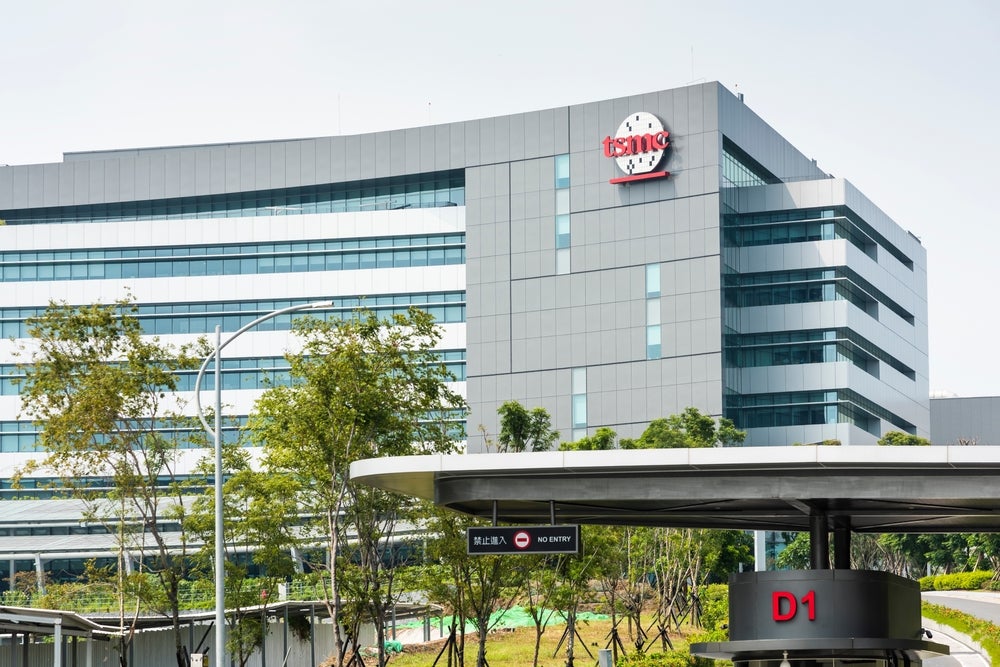
TSMC Expands Workforce Amid Global Chip Demand
- Hiring Initiative: TSMC plans to hire approximately 8,000 employees this year, offering an average annual salary of 2.2 million New Taiwan dollars (about $69,449), demonstrating the company's confidence in future market demand amid global chip shortages.
- Diverse Talent Acquisition: The recruitment drive targets multiple fields including electrical engineering, materials science, mechanical engineering, business management, and accounting, while also focusing on specialists in AI, big data, and digital transformation technologies to enhance its technical capabilities.
- Political Controversy: TSMC's investments in the U.S. have sparked debate in Taiwan, with some politicians arguing that this could weaken Taiwan's semiconductor industry, although analysts suggest that Taiwan's global chip dominance remains intact, highlighting political reactions amid economic anxieties.
- Stock Performance: TSMC shares fell 1.02% to $335.43 in premarket trading on Monday, reflecting market concerns over the semiconductor sector despite the company's strong fundamentals and expansion plans.
See More

Recent Updates on Meta Platforms and AI Stocks


- Meta Platforms Update: The latest video discusses updates affecting Meta Platforms as of March 10, 2026, indicating the company's ongoing focus and investment in the AI sector, although specific details were not disclosed.
- AI Stock Market Trends: The AI stocks mentioned in the video reflect active market engagement, showcasing sustained investor interest in the sector, which may influence future investment decisions.
- Market Reaction Analysis: After-market trading data as of March 10, 2026, shows Meta's stock price increased by 1.03%, indicating a positive market response to the latest updates, potentially attracting more investor attention.
- Video Content Promotion: The video encourages viewers to subscribe and click on a special offer link, highlighting Meta's marketing strategy on social media and video platforms aimed at enhancing user engagement and brand awareness.
See More

Recent Updates on Meta Platforms and AI Stocks
- Market Performance Analysis: Meta Platforms' stock showed a lackluster performance in after-market trading on March 10, 2026, failing to make it onto The Motley Fool Stock Advisor's list of the top 10 stocks, indicating cautious market sentiment regarding its growth potential.
- Investment Recommendations: Despite Meta's exclusion, analysts from The Motley Fool highlighted that the other 10 stocks could yield substantial returns in the coming years, reflecting a lack of confidence in Meta that may impact its stock price performance.
- Historical Return Comparison: For instance, if investors had put $1,000 into Netflix or Nvidia at the time of their recommendations, their investments would have grown to $530,233 and $1,119,682 respectively, showcasing the strong performance of The Motley Fool's recommended stocks and highlighting Meta's relative disadvantage.
- Investor Community: Joining The Motley Fool's investor community provides access to the latest investment advice and market analysis; although Meta was not selected, investors can still achieve returns through other recommended stocks, emphasizing the importance of diversified investment strategies.
See More

Winners in the AI Investment Boom

- Market Outlook: Despite some investors cooling on AI, the big four hyperscalers are projected to spend around $650 billion on data centers by 2026, directly boosting the performance of Nvidia and Taiwan Semiconductor.
- Nvidia's Edge: Nvidia dominates the AI computing space with its GPUs, allowing it to sell products at a premium, currently boasting a market cap of $4.4 trillion and a gross margin of 71.07%, indicating strong profitability.
- Taiwan Semiconductor's Stability: As the primary manufacturer of Nvidia's chips, Taiwan Semiconductor not only supports Nvidia but also produces for various competitors, expected to benefit from ongoing AI spending, with a current market cap of $1.8 trillion and a gross margin of 58.73%.
- Investment Choice Analysis: While Nvidia shows faster growth and significant expected gains in the coming year, Taiwan Semiconductor remains a safer investment option likely to outperform the market, prompting investors to choose based on their risk tolerance.
See More

Investment Outlook for Nvidia and Taiwan Semiconductor
- AI Investment Trend: By 2026, the big four AI hyperscalers are expected to spend around $650 billion on data centers, which will significantly boost Nvidia's revenue and reinforce its leadership in the AI market.
- Market Competition Analysis: While Nvidia holds a competitive edge in the GPU market, the emergence of cheaper alternatives could impact its market share and premium pricing ability, whereas Taiwan Semiconductor's diverse customer base offers relative safety.
- Growth Potential Comparison: Although Nvidia's growth rate is significantly higher than that of Taiwan Semiconductor, the latter's stability and broad customer base make it more attractive for risk management, appealing to conservative investors.
- Investment Recommendation: Considering risk and reward, Nvidia is viewed as the more promising investment in the short term, while Taiwan Semiconductor is suitable for investors seeking stable returns, suggesting choices based on individual risk preferences.
See More
TSMC Reports 30% Revenue Growth for Jan-Feb 2026
- Significant Revenue Growth: TSMC reported combined revenue of NT$718.91 billion for January-February 2026, reflecting a robust 30% year-over-year increase, driven by sustained global investment in AI technologies, reinforcing its leadership in the semiconductor industry.
- February Revenue Fluctuation: February revenue stood at NT$317.66 billion, down 20.8% from January, yet still up 22.2% year-over-year, indicating strong demand for high-performance chips and the company's strategic adjustments to navigate market volatility.
- Dividend and Investment Plans: TSMC approved a quarterly dividend of NT$6.0 per share in February and allocated $45 billion for fab construction and capacity upgrades in advanced front-end and specialty technologies, demonstrating confidence in future growth and commitment to ongoing investments.
- Monitoring Geopolitical Risks: TSMC stated that it does not expect significant impacts from the U.S.-Israel-Iran conflict, while closely monitoring the situation to ensure supply chain stability and market competitiveness, showcasing its adaptability in a complex international environment.
See More
TSMC Expands Workforce Amid Global Chip Demand
- Hiring Initiative: TSMC plans to hire approximately 8,000 employees this year, offering an average annual salary of 2.2 million New Taiwan dollars (about $69,449), demonstrating the company's confidence in future market demand amid global chip shortages.
- Diverse Talent Acquisition: The recruitment drive targets multiple fields including electrical engineering, materials science, mechanical engineering, business management, and accounting, while also focusing on specialists in AI, big data, and digital transformation technologies to enhance its technical capabilities.
- Political Controversy: TSMC's investments in the U.S. have sparked debate in Taiwan, with some politicians arguing that this could weaken Taiwan's semiconductor industry, although analysts suggest that Taiwan's global chip dominance remains intact, highlighting political reactions amid economic anxieties.
- Stock Performance: TSMC shares fell 1.02% to $335.43 in premarket trading on Monday, reflecting market concerns over the semiconductor sector despite the company's strong fundamentals and expansion plans.
See More
Recent Updates on Meta Platforms and AI Stocks
- Meta Platforms Update: The latest video discusses updates affecting Meta Platforms as of March 10, 2026, indicating the company's ongoing focus and investment in the AI sector, although specific details were not disclosed.
- AI Stock Market Trends: The AI stocks mentioned in the video reflect active market engagement, showcasing sustained investor interest in the sector, which may influence future investment decisions.
- Market Reaction Analysis: After-market trading data as of March 10, 2026, shows Meta's stock price increased by 1.03%, indicating a positive market response to the latest updates, potentially attracting more investor attention.
- Video Content Promotion: The video encourages viewers to subscribe and click on a special offer link, highlighting Meta's marketing strategy on social media and video platforms aimed at enhancing user engagement and brand awareness.
See More
Recent Updates on Meta Platforms and AI Stocks
- Market Performance Analysis: Meta Platforms' stock showed a lackluster performance in after-market trading on March 10, 2026, failing to make it onto The Motley Fool Stock Advisor's list of the top 10 stocks, indicating cautious market sentiment regarding its growth potential.
- Investment Recommendations: Despite Meta's exclusion, analysts from The Motley Fool highlighted that the other 10 stocks could yield substantial returns in the coming years, reflecting a lack of confidence in Meta that may impact its stock price performance.
- Historical Return Comparison: For instance, if investors had put $1,000 into Netflix or Nvidia at the time of their recommendations, their investments would have grown to $530,233 and $1,119,682 respectively, showcasing the strong performance of The Motley Fool's recommended stocks and highlighting Meta's relative disadvantage.
- Investor Community: Joining The Motley Fool's investor community provides access to the latest investment advice and market analysis; although Meta was not selected, investors can still achieve returns through other recommended stocks, emphasizing the importance of diversified investment strategies.
See More
Winners in the AI Investment Boom
- Market Outlook: Despite some investors cooling on AI, the big four hyperscalers are projected to spend around $650 billion on data centers by 2026, directly boosting the performance of Nvidia and Taiwan Semiconductor.
- Nvidia's Edge: Nvidia dominates the AI computing space with its GPUs, allowing it to sell products at a premium, currently boasting a market cap of $4.4 trillion and a gross margin of 71.07%, indicating strong profitability.
- Taiwan Semiconductor's Stability: As the primary manufacturer of Nvidia's chips, Taiwan Semiconductor not only supports Nvidia but also produces for various competitors, expected to benefit from ongoing AI spending, with a current market cap of $1.8 trillion and a gross margin of 58.73%.
- Investment Choice Analysis: While Nvidia shows faster growth and significant expected gains in the coming year, Taiwan Semiconductor remains a safer investment option likely to outperform the market, prompting investors to choose based on their risk tolerance.
See More
Investment Outlook for Nvidia and Taiwan Semiconductor
- AI Investment Trend: By 2026, the big four AI hyperscalers are expected to spend around $650 billion on data centers, which will significantly boost Nvidia's revenue and reinforce its leadership in the AI market.
- Market Competition Analysis: While Nvidia holds a competitive edge in the GPU market, the emergence of cheaper alternatives could impact its market share and premium pricing ability, whereas Taiwan Semiconductor's diverse customer base offers relative safety.
- Growth Potential Comparison: Although Nvidia's growth rate is significantly higher than that of Taiwan Semiconductor, the latter's stability and broad customer base make it more attractive for risk management, appealing to conservative investors.
- Investment Recommendation: Considering risk and reward, Nvidia is viewed as the more promising investment in the short term, while Taiwan Semiconductor is suitable for investors seeking stable returns, suggesting choices based on individual risk preferences.
See More