U.S.-Iran Nuclear Talks Collapse, Tensions Escalate
Written by Emily J. Thompson, Senior Investment Analyst
Updated: 1 hour ago
0mins
Source: Yahoo Finance
- Negotiation Breakdown: High-stakes nuclear talks between the U.S. and Iran in Islamabad collapsed after 21 hours, with Vice President JD Vance departing without an agreement, highlighting Iran's refusal to commit to not developing nuclear weapons, which jeopardizes the fragile two-week ceasefire.
- Unmet U.S. Demands: The primary obstacle was Washington's insistence on a permanent renunciation of nuclear ambitions, with the Iranian delegation failing to demonstrate a long-term commitment, underscoring significant divergences on core issues between the two sides.
- Military Readiness Escalation: Following the breakdown, Trump downplayed its significance, asserting U.S. strategic superiority while revealing preparations for potential hostilities, indicating heightened vigilance and urgency in military deployments amid rising tensions.
- Strait of Hormuz Tensions: The U.S. confirmed the transit of two destroyers through the Strait of Hormuz, while Iran warned of a firm response to any challenges to its control, illustrating the ongoing risks of military confrontation in the region.
Trade with 70% Backtested Accuracy
Stop guessing "Should I Buy LMT?" and start using high-conviction signals backed by rigorous historical data.
Sign up today to access powerful investing tools and make smarter, data-driven decisions.
Analyst Views on LMT
Wall Street analysts forecast LMT stock price to fall
12 Analyst Rating
4 Buy
7 Hold
1 Sell
Hold
Current: 623.870

Low
430.00
Averages
535.50
High
605.00
Current: 623.870
Low
430.00
Averages
535.50
High
605.00
About LMT
Lockheed Martin Corporation is a global aerospace and defense company. The Company is engaged in the research, design, development, manufacture, integration and sustainment of advanced technology systems, products and services. Its segments include Aeronautics, Missiles and Fire Control (MFC), Rotary and Mission Systems (RMS) and Space. Aeronautics segment is engaged in the research, design, development, manufacture, integration, sustainment, support and upgrade of advanced military aircraft. MFC segment provides air and missile defense systems, manned and unmanned ground vehicles, energy management solutions, and others. RMS segment designs, manufactures, services and supports various military and commercial helicopters, surface ships, sea and land-based missile defense systems, and others. Its Space segment is engaged in the research and design, development, engineering and production of satellites, space transportation systems, and strategic, advanced strike, and defensive systems.
About the author

Emily J. Thompson
Emily J. Thompson, a Chartered Financial Analyst (CFA) with 12 years in investment research, graduated with honors from the Wharton School. Specializing in industrial and technology stocks, she provides in-depth analysis for Intellectia’s earnings and market brief reports.
Orion Completes First Crewed Deep Space Mission in 53 Years

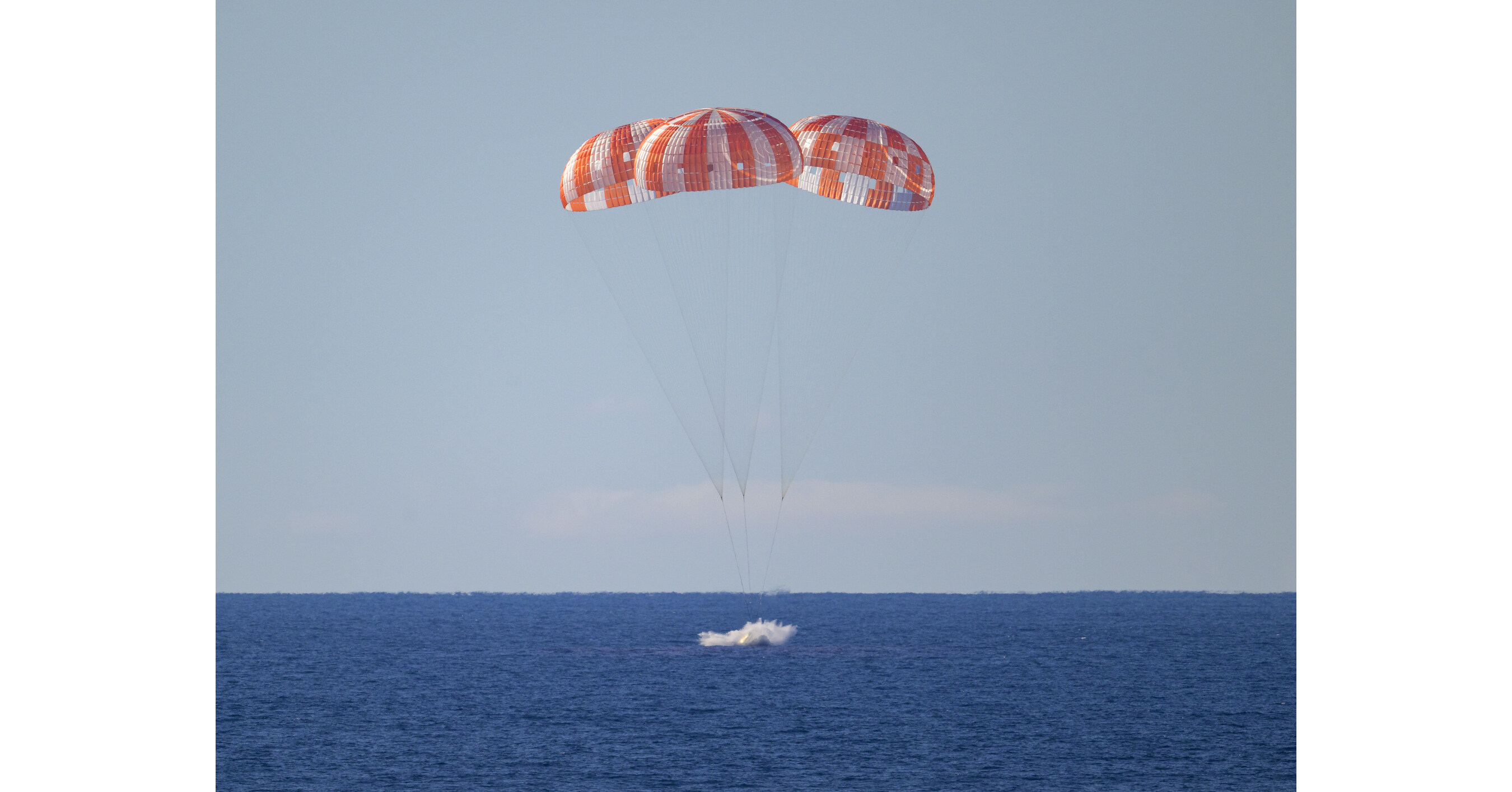
- Successful Mission Return: After completing a 694,481-mile round trip to the Moon, the Orion spacecraft successfully splashed down in the Pacific Ocean, marking a significant milestone for NASA's Artemis II mission and demonstrating its capability to safely transport astronauts beyond low Earth orbit, ensuring feasibility for future Artemis missions.
- Technical Validation: During the mission, Orion's heat shield withstood temperatures nearing 5,000 degrees Fahrenheit, while its parachute system executed a precise descent sequence to ensure astronaut safety upon return, validating its performance in extreme environments and laying the groundwork for future lunar exploration.
- Data Collection and Analysis: The astronauts gathered essential data during the mission, which will be used to refine systems and operations in preparation for Artemis III's critical docking with NASA's Human Landing System, further advancing the timeline for human return to the Moon.
- Long-term Exploration Strategy: Lockheed Martin, as the prime contractor for Orion, continues to collaborate with NASA and its partners to enable sustainable lunar exploration and support the agency's long-term goals for human exploration of Mars, showcasing the company's leadership in the aerospace sector.
See More

U.S.-Iran Nuclear Talks Collapse, Tensions Escalate

- Negotiation Breakdown: High-stakes nuclear talks between the U.S. and Iran in Islamabad collapsed after 21 hours, with Vice President JD Vance departing without an agreement, highlighting Iran's refusal to commit to not developing nuclear weapons, which jeopardizes the fragile two-week ceasefire.
- Unmet U.S. Demands: The primary obstacle was Washington's insistence on a permanent renunciation of nuclear ambitions, with the Iranian delegation failing to demonstrate a long-term commitment, underscoring significant divergences on core issues between the two sides.
- Military Readiness Escalation: Following the breakdown, Trump downplayed its significance, asserting U.S. strategic superiority while revealing preparations for potential hostilities, indicating heightened vigilance and urgency in military deployments amid rising tensions.
- Strait of Hormuz Tensions: The U.S. confirmed the transit of two destroyers through the Strait of Hormuz, while Iran warned of a firm response to any challenges to its control, illustrating the ongoing risks of military confrontation in the region.
See More

Space Economy Booms with New Opportunities
- Rocket Lab's Rise: Rocket Lab has established itself as the second-largest rocket launch company in the U.S., completing 85 launches and focusing on small rocket launches, with its new Neutron rocket expected to debut in Q4 this year, aiming to enhance profits and market share.
- Growth in Space Systems: Rocket Lab's space systems business generated $403 million in revenue last year, accounting for 75% of its $1.85 billion backlog, demonstrating strong performance in its vertically integrated operations and enhancing its competitiveness in the defense sector.
- AI Applications at Planet Labs: Planet Labs leverages artificial intelligence to enhance its Earth-imaging satellites' image processing capabilities, recently expanding its partnership with Nvidia to use AI chips directly on its Pelican-4 satellite, enabling real-time data analysis and significantly reducing the time for customers to gain insights.
- Lockheed Martin's Defense Edge: As a top defense contractor, Lockheed Martin boasts a $194 billion backlog and leads NASA's Orion spacecraft project, ensuring long-term stable returns in the space economy, making it an attractive option for investors.
See More

Global Space Economy Booms to $613 Billion by 2025
- Market Growth: According to McKinsey estimates, the global space economy is projected to reach $1.8 trillion by 2035, with a compound annual growth rate exceeding 11%, indicating significant commercial potential in the space sector that is attracting substantial investor interest.
- Rocket Lab's Market Positioning: Rocket Lab has established itself as the second-largest rocket launch company in the U.S., having completed 85 launches to date, and plans to introduce its new medium-lift rocket Neutron to meet larger payload demands, thereby enhancing profit margins and competitive positioning.
- Planet Labs' AI Integration: Planet Labs is leveraging artificial intelligence to enhance its satellite imagery platform, and through its partnership with Nvidia, it can process and analyze data in real-time, providing rapid insights to customers and solidifying its position in the defense sector.
- Lockheed Martin's Industry Leadership: As a top defense contractor, Lockheed Martin plays a crucial role in the space economy, boasting a backlog of $194 billion and ensuring stable cash flow through long-term government contracts, making it an attractive option for investors.
See More

Market Volatility Creates Investment Opportunities

- Uranium Mining Growth Potential: Cameco, the world's second-largest uranium miner, produced 164 million pounds of uranium last year, accounting for 15% of global output, positioning itself strongly to meet rising nuclear energy demands with its high-grade mines.
- Nuclear Project Boost: With 75 new nuclear reactors under construction globally, Cameco's joint venture with Westinghouse is set to benefit from this trend, projecting an 11% revenue growth by 2025, highlighting its strategic importance in the nuclear market.
- Increased Defense Spending: Lockheed Martin's stock has risen 37% over the past year, and despite a recent 4.6% decline due to market volatility, it is expected to benefit from Trump's proposed $1.5 trillion defense budget, further solidifying its market position.
- Stability and Profitability: Lockheed Martin boasts a 10.3% operating profit margin, and while it carries significant debt, its critical role in the U.S. military provides strong risk resilience, making it a focal point for investors moving forward.
See More

Investment Opportunities Amid Market Turmoil
- Uranium Mining Growth Potential: Cameco, the world's second-largest uranium miner, produced 164 million pounds last year, accounting for 15% of global output, with an expected revenue growth of 11% in 2025, highlighting its strong growth potential amid rising global nuclear energy demand.
- High-Quality Ore Advantage: Cameco's McArthur River and Cigar Lake mines boast average grades of 6.48% and 16.33% uranium, significantly higher than Kazakhstan's average of less than 1%, ensuring its competitive edge in the uranium market.
- Defense Spending Boost: Lockheed Martin's stock has surged 37% over the past 12 months, benefiting from global turmoil and a proposed increase in U.S. defense spending, indicating a likely strengthening of its market position in the future.
- Stability and Growth: Although Lockheed Martin's stock recently fell by 4.6%, its operating profit margin of 10.3% and 6% sales growth suggest that the company maintains strong profitability and market stability in the long run.
See More
Orion Completes First Crewed Deep Space Mission in 53 Years
- Successful Mission Return: After completing a 694,481-mile round trip to the Moon, the Orion spacecraft successfully splashed down in the Pacific Ocean, marking a significant milestone for NASA's Artemis II mission and demonstrating its capability to safely transport astronauts beyond low Earth orbit, ensuring feasibility for future Artemis missions.
- Technical Validation: During the mission, Orion's heat shield withstood temperatures nearing 5,000 degrees Fahrenheit, while its parachute system executed a precise descent sequence to ensure astronaut safety upon return, validating its performance in extreme environments and laying the groundwork for future lunar exploration.
- Data Collection and Analysis: The astronauts gathered essential data during the mission, which will be used to refine systems and operations in preparation for Artemis III's critical docking with NASA's Human Landing System, further advancing the timeline for human return to the Moon.
- Long-term Exploration Strategy: Lockheed Martin, as the prime contractor for Orion, continues to collaborate with NASA and its partners to enable sustainable lunar exploration and support the agency's long-term goals for human exploration of Mars, showcasing the company's leadership in the aerospace sector.
See More
U.S.-Iran Nuclear Talks Collapse, Tensions Escalate
- Negotiation Breakdown: High-stakes nuclear talks between the U.S. and Iran in Islamabad collapsed after 21 hours, with Vice President JD Vance departing without an agreement, highlighting Iran's refusal to commit to not developing nuclear weapons, which jeopardizes the fragile two-week ceasefire.
- Unmet U.S. Demands: The primary obstacle was Washington's insistence on a permanent renunciation of nuclear ambitions, with the Iranian delegation failing to demonstrate a long-term commitment, underscoring significant divergences on core issues between the two sides.
- Military Readiness Escalation: Following the breakdown, Trump downplayed its significance, asserting U.S. strategic superiority while revealing preparations for potential hostilities, indicating heightened vigilance and urgency in military deployments amid rising tensions.
- Strait of Hormuz Tensions: The U.S. confirmed the transit of two destroyers through the Strait of Hormuz, while Iran warned of a firm response to any challenges to its control, illustrating the ongoing risks of military confrontation in the region.
See More
Space Economy Booms with New Opportunities
- Rocket Lab's Rise: Rocket Lab has established itself as the second-largest rocket launch company in the U.S., completing 85 launches and focusing on small rocket launches, with its new Neutron rocket expected to debut in Q4 this year, aiming to enhance profits and market share.
- Growth in Space Systems: Rocket Lab's space systems business generated $403 million in revenue last year, accounting for 75% of its $1.85 billion backlog, demonstrating strong performance in its vertically integrated operations and enhancing its competitiveness in the defense sector.
- AI Applications at Planet Labs: Planet Labs leverages artificial intelligence to enhance its Earth-imaging satellites' image processing capabilities, recently expanding its partnership with Nvidia to use AI chips directly on its Pelican-4 satellite, enabling real-time data analysis and significantly reducing the time for customers to gain insights.
- Lockheed Martin's Defense Edge: As a top defense contractor, Lockheed Martin boasts a $194 billion backlog and leads NASA's Orion spacecraft project, ensuring long-term stable returns in the space economy, making it an attractive option for investors.
See More
Global Space Economy Booms to $613 Billion by 2025
- Market Growth: According to McKinsey estimates, the global space economy is projected to reach $1.8 trillion by 2035, with a compound annual growth rate exceeding 11%, indicating significant commercial potential in the space sector that is attracting substantial investor interest.
- Rocket Lab's Market Positioning: Rocket Lab has established itself as the second-largest rocket launch company in the U.S., having completed 85 launches to date, and plans to introduce its new medium-lift rocket Neutron to meet larger payload demands, thereby enhancing profit margins and competitive positioning.
- Planet Labs' AI Integration: Planet Labs is leveraging artificial intelligence to enhance its satellite imagery platform, and through its partnership with Nvidia, it can process and analyze data in real-time, providing rapid insights to customers and solidifying its position in the defense sector.
- Lockheed Martin's Industry Leadership: As a top defense contractor, Lockheed Martin plays a crucial role in the space economy, boasting a backlog of $194 billion and ensuring stable cash flow through long-term government contracts, making it an attractive option for investors.
See More
Market Volatility Creates Investment Opportunities
- Uranium Mining Growth Potential: Cameco, the world's second-largest uranium miner, produced 164 million pounds of uranium last year, accounting for 15% of global output, positioning itself strongly to meet rising nuclear energy demands with its high-grade mines.
- Nuclear Project Boost: With 75 new nuclear reactors under construction globally, Cameco's joint venture with Westinghouse is set to benefit from this trend, projecting an 11% revenue growth by 2025, highlighting its strategic importance in the nuclear market.
- Increased Defense Spending: Lockheed Martin's stock has risen 37% over the past year, and despite a recent 4.6% decline due to market volatility, it is expected to benefit from Trump's proposed $1.5 trillion defense budget, further solidifying its market position.
- Stability and Profitability: Lockheed Martin boasts a 10.3% operating profit margin, and while it carries significant debt, its critical role in the U.S. military provides strong risk resilience, making it a focal point for investors moving forward.
See More
Investment Opportunities Amid Market Turmoil
- Uranium Mining Growth Potential: Cameco, the world's second-largest uranium miner, produced 164 million pounds last year, accounting for 15% of global output, with an expected revenue growth of 11% in 2025, highlighting its strong growth potential amid rising global nuclear energy demand.
- High-Quality Ore Advantage: Cameco's McArthur River and Cigar Lake mines boast average grades of 6.48% and 16.33% uranium, significantly higher than Kazakhstan's average of less than 1%, ensuring its competitive edge in the uranium market.
- Defense Spending Boost: Lockheed Martin's stock has surged 37% over the past 12 months, benefiting from global turmoil and a proposed increase in U.S. defense spending, indicating a likely strengthening of its market position in the future.
- Stability and Growth: Although Lockheed Martin's stock recently fell by 4.6%, its operating profit margin of 10.3% and 6% sales growth suggest that the company maintains strong profitability and market stability in the long run.
See More