U.S. Electric Vehicle Market Faces Challenges
Written by Emily J. Thompson, Senior Investment Analyst
Updated: 1 hour ago
0mins
Should l Buy F?
Source: Fool
- Registration Decline: U.S. EV registrations fell by 0.4% in 2025 for the first time in a decade, contrasting sharply with growth rates of 11% and 52% in 2024 and 2023, indicating a weakening market demand that could impact investor confidence.
- Tesla's Market Share: Tesla registered over 42,400 vehicles in December, yet faces the challenge of a shrinking market share, as competitors Ford and General Motors registered only 5,138 and 3,694 vehicles respectively, highlighting the threat to Tesla's market dominance.
- Ford and GM Performance: Ford's registrations plunged 61% in December, primarily due to the end of F-150 Lightning production, while GM's Cadillac EVs saw a remarkable 73% increase in registrations for the full year 2025, showcasing potential in the premium market segment.
- Cautious Future Outlook: While improving charging infrastructure and narrowing price gaps may support market rebounds, analysts suggest that future growth will be gradual, urging investors to focus on how companies can offset uncertain demand with new products and pricing strategies.
Trade with 70% Backtested Accuracy
Stop guessing "Should I Buy F?" and start using high-conviction signals backed by rigorous historical data.
Sign up today to access powerful investing tools and make smarter, data-driven decisions.
Analyst Views on F
Wall Street analysts forecast F stock price to rise
14 Analyst Rating
3 Buy
10 Hold
1 Sell
Hold
Current: 12.040

Low
11.00
Averages
13.65
High
16.00
Current: 12.040
Low
11.00
Averages
13.65
High
16.00
About F
Ford Motor Company is an automobile company. The Company develops and delivers Ford trucks, sport utility vehicles, commercial vans and cars, and Lincoln luxury vehicles, along with connected services. The Company’s segments include Ford Blue, Ford Model e, Ford Pro, and Ford Credit. The Ford Blue segment primarily includes the sale of Ford and Lincoln internal combustion engine (ICE) and hybrid vehicles, service parts, accessories, and digital services for retail customers. The Ford Model e segment primarily includes the sale of its electric vehicles, service parts, accessories, and digital services for retail customers. The Ford Pro segment primarily includes the sale of Ford and Lincoln vehicles, service parts, accessories, and services for commercial, government, and rental customers. The Ford Credit segment consists of the Ford Credit business on a consolidated basis, which is primarily vehicle-related financing and leasing activities. Its vehicle brands are Ford and Lincoln.
About the author

Emily J. Thompson
Emily J. Thompson, a Chartered Financial Analyst (CFA) with 12 years in investment research, graduated with honors from the Wharton School. Specializing in industrial and technology stocks, she provides in-depth analysis for Intellectia’s earnings and market brief reports.

Ford Adjusts EV Plans but Launches New Pickup

- EV Platform Launch: Ford is set to introduce a new 'Universal EV Platform' with the first affordable electric pickup expected next year at around $30,000, aimed at enhancing market competitiveness through lower production costs and increased economies of scale.
- Battery Technology Utilization: The new pickup will utilize lithium-iron phosphate (LFP) batteries produced in Michigan, which, while having lower energy density than traditional lithium-ion batteries, offer lower upfront costs and longer lifespans, thereby reducing overall operational costs.
- Investment Scale: Ford's investment in this new platform amounts to approximately $5 billion, including $3 billion for a new battery plant in Michigan and $2 billion for reworking a factory in Kentucky, demonstrating the company's long-term commitment to the electric vehicle market.
- Market Outlook: Ford has not yet disclosed details about subsequent EV models, likely to observe the evolution of the U.S. EV market over the next few years, but the success of the new pickup will set the foundation for Ford's future electric offerings.
See More
U.S. Electric Vehicle Market Faces Challenges

- Registration Decline: U.S. EV registrations fell by 0.4% in 2025 for the first time in a decade, contrasting sharply with growth rates of 11% and 52% in 2024 and 2023, indicating a weakening market demand that could impact investor confidence.
- Tesla's Market Share: Tesla registered over 42,400 vehicles in December, yet faces the challenge of a shrinking market share, as competitors Ford and General Motors registered only 5,138 and 3,694 vehicles respectively, highlighting the threat to Tesla's market dominance.
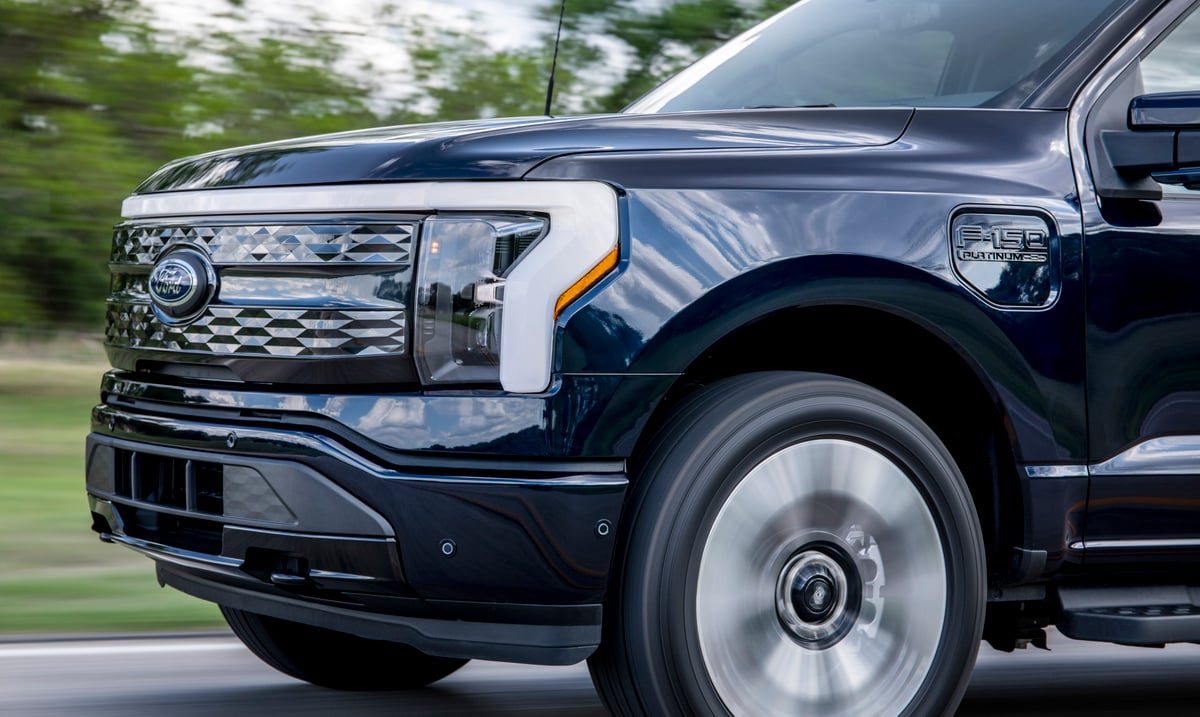
- Ford and GM Performance: Ford's registrations plunged 61% in December, primarily due to the end of F-150 Lightning production, while GM's Cadillac EVs saw a remarkable 73% increase in registrations for the full year 2025, showcasing potential in the premium market segment.
- Cautious Future Outlook: While improving charging infrastructure and narrowing price gaps may support market rebounds, analysts suggest that future growth will be gradual, urging investors to focus on how companies can offset uncertain demand with new products and pricing strategies.
See More

U.S. EV Registrations Decline for First Time in a Decade
- Market Share Shift: U.S. EV registrations fell for the first time in a decade in 2025, dipping 0.4% from the previous year, contrasting sharply with growth rates of 11% and 52% in 2024 and 2023, indicating a weakening demand that could impact investor confidence.
- Tesla's Leading Position: Tesla registered over 42,400 vehicles in December, maintaining a significant market share lead, yet its share is gradually declining, reflecting increased competition and changing market dynamics.
- Competitor Performance: Ford and General Motors' Cadillac registered 5,138 and 3,694 vehicles in December, respectively, with Ford experiencing a 61% drop, while Cadillac saw a 12% increase, highlighting disparities in brand performance amid challenging conditions.
- Future Outlook: Despite a 48% plunge in December registrations, EV market share rose from 4.6% in November to 5.3%, with analysts suggesting a gradual increase ahead, supported by improving charging infrastructure and narrowing price gaps.
See More
Tesla's 2025 Delivery Data Analysis

- Delivery Overview: In 2025, Tesla experienced a roughly 9% drop in global deliveries, highlighting the severe market conditions under pressures such as high interest rates and elevated EV prices, which challenge the company's market share.
- U.S. Market Performance: Despite a staggering 48% decline in overall EV registrations in December, Tesla's registrations fell only 35% to 42,403 vehicles, demonstrating its strong leadership position in the U.S. market amid increasing competition.
- Model Y Performance: Tesla's best-selling Model Y saw a 24% decline in December registrations to 29,121 vehicles, yet its strong brand loyalty continues to drive demand, even as the company faces an aging vehicle lineup and competitive pressures.
- Competitor Dynamics: Ford's EV registrations plummeted 61% in December, primarily due to the end of F-150 Lightning production, while General Motors' Cadillac brand posted a 12% increase, illustrating the complexity and diversity of market competition.
See More

Markets Experience Two Weeks of Struggles; Friday the 13th Won't Bring Relief Along with 5 Other Key Updates.


Wall Street Superstitions: Traders on Wall Street have a long history of adhering to various superstitions that they believe influence their success.
Red Pen and Necktie Rituals: Among these superstitions are the avoidance of red pens, the significance of wearing the same necktie during winning streaks, and the adage to "sell in May and go away."
See More

Trump Administration Sues California Over EV Mandate

- Lawsuit Background: The Trump administration has officially sued California, accusing it of imposing an 'illegal electric vehicle (EV) mandate,' which is seen as a violation of federal law that could lead to higher compliance costs for the automotive industry.
- Federal Law Restrictions: The Department of Transportation highlighted that California's 'state-specific mileage requirements' contradict federal law, emphasizing that states cannot set their own emissions standards, and this lawsuit may impact future state environmental policies.
- Government Response: The Department of Justice criticized California's EV policies as 'oppressive and expensive,' which will increase costs for American consumers, reflecting the Trump administration's strong opposition to California's environmental regulations.
- Market Impact: As the lawsuit progresses, automakers may face uncertainty, particularly in designing and producing vehicles that comply with a single federal fuel economy standard, potentially affecting the competitive landscape in the market.
See More
Ford Adjusts EV Plans but Launches New Pickup
- EV Platform Launch: Ford is set to introduce a new 'Universal EV Platform' with the first affordable electric pickup expected next year at around $30,000, aimed at enhancing market competitiveness through lower production costs and increased economies of scale.
- Battery Technology Utilization: The new pickup will utilize lithium-iron phosphate (LFP) batteries produced in Michigan, which, while having lower energy density than traditional lithium-ion batteries, offer lower upfront costs and longer lifespans, thereby reducing overall operational costs.
- Investment Scale: Ford's investment in this new platform amounts to approximately $5 billion, including $3 billion for a new battery plant in Michigan and $2 billion for reworking a factory in Kentucky, demonstrating the company's long-term commitment to the electric vehicle market.
- Market Outlook: Ford has not yet disclosed details about subsequent EV models, likely to observe the evolution of the U.S. EV market over the next few years, but the success of the new pickup will set the foundation for Ford's future electric offerings.
See More
U.S. Electric Vehicle Market Faces Challenges
- Registration Decline: U.S. EV registrations fell by 0.4% in 2025 for the first time in a decade, contrasting sharply with growth rates of 11% and 52% in 2024 and 2023, indicating a weakening market demand that could impact investor confidence.
- Tesla's Market Share: Tesla registered over 42,400 vehicles in December, yet faces the challenge of a shrinking market share, as competitors Ford and General Motors registered only 5,138 and 3,694 vehicles respectively, highlighting the threat to Tesla's market dominance.
- Ford and GM Performance: Ford's registrations plunged 61% in December, primarily due to the end of F-150 Lightning production, while GM's Cadillac EVs saw a remarkable 73% increase in registrations for the full year 2025, showcasing potential in the premium market segment.
- Cautious Future Outlook: While improving charging infrastructure and narrowing price gaps may support market rebounds, analysts suggest that future growth will be gradual, urging investors to focus on how companies can offset uncertain demand with new products and pricing strategies.
See More
U.S. EV Registrations Decline for First Time in a Decade
- Market Share Shift: U.S. EV registrations fell for the first time in a decade in 2025, dipping 0.4% from the previous year, contrasting sharply with growth rates of 11% and 52% in 2024 and 2023, indicating a weakening demand that could impact investor confidence.
- Tesla's Leading Position: Tesla registered over 42,400 vehicles in December, maintaining a significant market share lead, yet its share is gradually declining, reflecting increased competition and changing market dynamics.
- Competitor Performance: Ford and General Motors' Cadillac registered 5,138 and 3,694 vehicles in December, respectively, with Ford experiencing a 61% drop, while Cadillac saw a 12% increase, highlighting disparities in brand performance amid challenging conditions.
- Future Outlook: Despite a 48% plunge in December registrations, EV market share rose from 4.6% in November to 5.3%, with analysts suggesting a gradual increase ahead, supported by improving charging infrastructure and narrowing price gaps.
See More
Tesla's 2025 Delivery Data Analysis
- Delivery Overview: In 2025, Tesla experienced a roughly 9% drop in global deliveries, highlighting the severe market conditions under pressures such as high interest rates and elevated EV prices, which challenge the company's market share.
- U.S. Market Performance: Despite a staggering 48% decline in overall EV registrations in December, Tesla's registrations fell only 35% to 42,403 vehicles, demonstrating its strong leadership position in the U.S. market amid increasing competition.
- Model Y Performance: Tesla's best-selling Model Y saw a 24% decline in December registrations to 29,121 vehicles, yet its strong brand loyalty continues to drive demand, even as the company faces an aging vehicle lineup and competitive pressures.
- Competitor Dynamics: Ford's EV registrations plummeted 61% in December, primarily due to the end of F-150 Lightning production, while General Motors' Cadillac brand posted a 12% increase, illustrating the complexity and diversity of market competition.
See More
Markets Experience Two Weeks of Struggles; Friday the 13th Won't Bring Relief Along with 5 Other Key Updates.
Wall Street Superstitions: Traders on Wall Street have a long history of adhering to various superstitions that they believe influence their success.
Red Pen and Necktie Rituals: Among these superstitions are the avoidance of red pens, the significance of wearing the same necktie during winning streaks, and the adage to "sell in May and go away."
See More
Trump Administration Sues California Over EV Mandate
- Lawsuit Background: The Trump administration has officially sued California, accusing it of imposing an 'illegal electric vehicle (EV) mandate,' which is seen as a violation of federal law that could lead to higher compliance costs for the automotive industry.
- Federal Law Restrictions: The Department of Transportation highlighted that California's 'state-specific mileage requirements' contradict federal law, emphasizing that states cannot set their own emissions standards, and this lawsuit may impact future state environmental policies.
- Government Response: The Department of Justice criticized California's EV policies as 'oppressive and expensive,' which will increase costs for American consumers, reflecting the Trump administration's strong opposition to California's environmental regulations.
- Market Impact: As the lawsuit progresses, automakers may face uncertainty, particularly in designing and producing vehicles that comply with a single federal fuel economy standard, potentially affecting the competitive landscape in the market.
See More