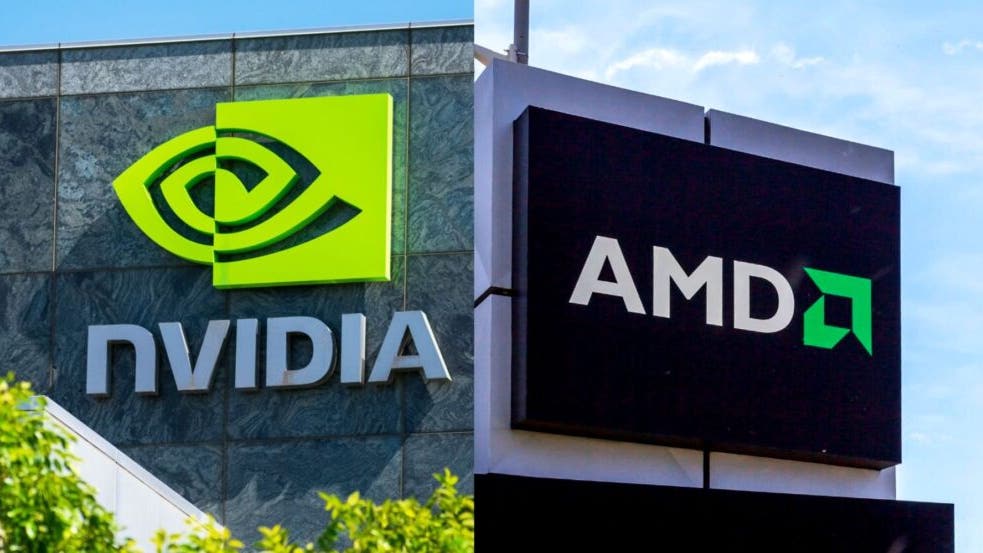
Three Competitors to Nvidia Set to Lead the AI Competition


Nvidia's Dominance in AI: Nvidia has been a major profit player in the AI market, powering technologies like ChatGPT and Tesla's self-driving systems, but investors are starting to question if its peak performance is already reflected in its stock price.
Shift in AI Investment Focus: Analysts suggest that the next wave of AI investment will favor companies that create recurring revenue models over traditional chipmakers, emphasizing the importance of integration and orchestration in AI applications.
Emerging AI Players: Companies like AMD, Microsoft, and Taiwan Semiconductor are highlighted as potential future winners in the AI landscape, with AMD focusing on efficiency in inference workloads and Microsoft rapidly monetizing its AI integrations.
Long-Term Outlook: While Microsoft is currently investing heavily in AI infrastructure, AMD is seen as better positioned for immediate benefits as the market shifts towards inference, indicating a potential change in the competitive landscape of AI development.
Trade with 70% Backtested Accuracy
Analyst Views on AMD

About AMD
About the author

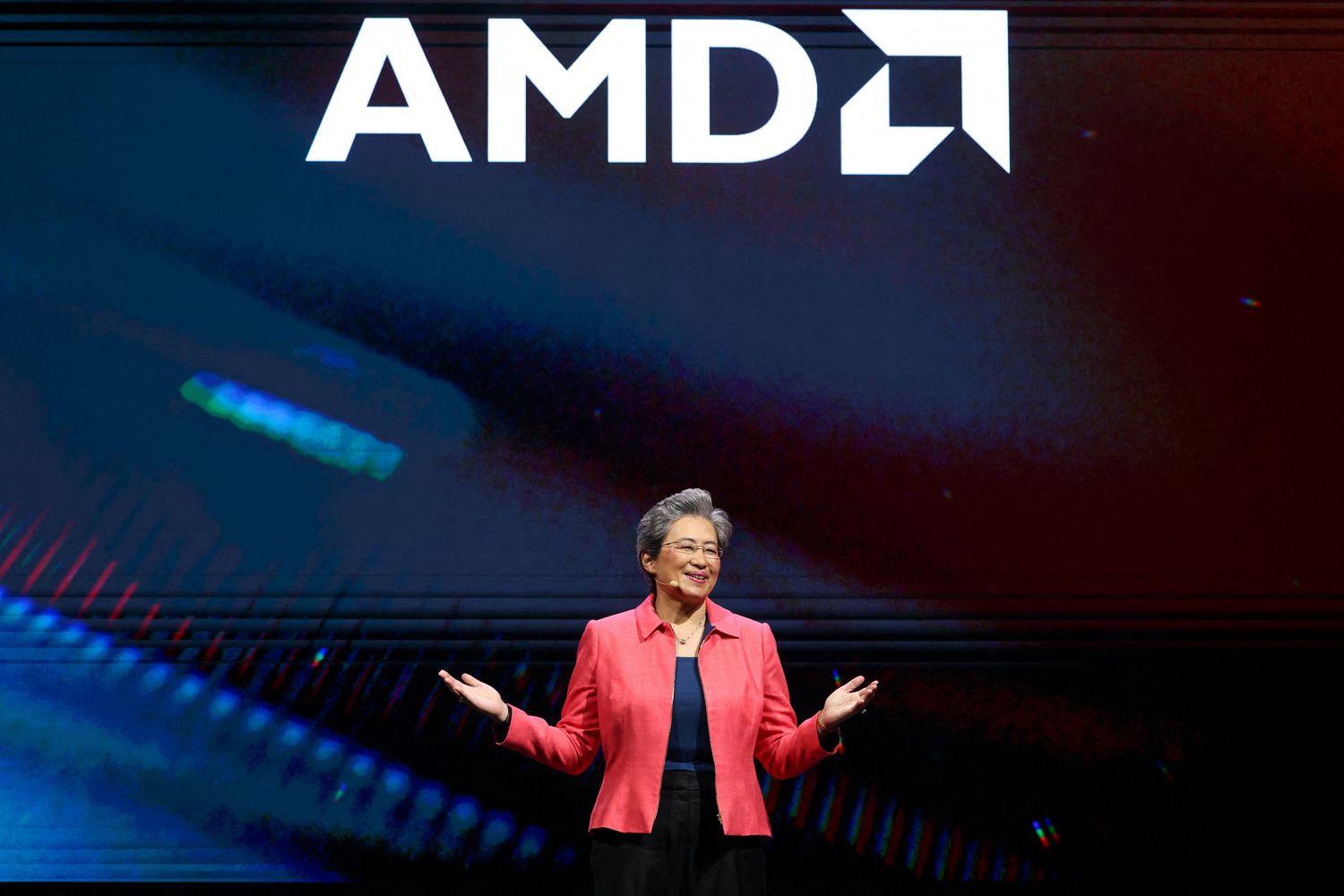
AMD Poised to Announce Major New Chip Customer
- Optimistic Market Outlook: Citi analysts project that as agentic AI workflows move into production, AMD's strong position in the CPU market will significantly expand, with the total addressable market for CPUs expected to grow from $29 billion to $131 billion by 2030, indicating substantial future growth potential for AMD.
- Upcoming Summit: AMD is set to host the 'Advancing AI' summit on July 22-23, with analysts suggesting that the event could feature industry-shaking announcements, particularly regarding the expanded adoption of AMD's MI series chips, which may attract new customers and bolster market confidence.
- Strong Stock Performance: AMD's stock has appreciated 159% by mid-2026, leading to a forward price-to-earnings ratio of 75, reflecting significant market expectations for AMD's future success, although the shares appear increasingly pricey.
- Investment Strategy Advice: Despite AMD's compelling prospects in the AI ecosystem, analysts recommend a dollar-cost averaging strategy rather than attempting to time market fluctuations, allowing investors to benefit from the expanding CPU opportunity and AMD's potential market share growth over the long term.

AMD's Potential and Outlook in the AI Sector
- Expanding Market Potential: Citi analysts project that the total addressable market for CPUs will grow from approximately $29 billion to over $131 billion by 2030, indicating AMD's increasing role in AI workloads and bolstering investor confidence in its future growth.
- New Customer Speculation: Analysts speculate that AMD may announce partnerships with frontier AI labs, which, if confirmed, would further validate the demand for AMD chips and enhance the company's position in the AI infrastructure landscape.
- Strong Stock Performance: By mid-2026, AMD's stock has appreciated by 159%, resulting in a forward P/E ratio of 75, indicating that the market is pricing in substantial future success and reflecting investor optimism about long-term growth.
- Investment Strategy Recommendation: Despite AMD's compelling prospects in the AI ecosystem, analysts recommend employing a dollar-cost averaging strategy to avoid overextending investments due to single event-driven market fluctuations, thereby more prudently capturing the expanding CPU market opportunities.

AMD's AI Summit Sparks Investor Anticipation

- Market Potential: Citi analysts project that the total addressable market for CPUs will grow from approximately $29 billion to over $131 billion by 2030, indicating a significant surge in demand for CPUs as AI workloads evolve, positioning AMD's EPYC processors to benefit and solidify its role in AI infrastructure.
- Customer Expansion Speculation: Analysts speculate that AMD may announce partnerships with frontier AI labs for the adoption of its MI series chips, which could diversify AMD's customer base and optimize costs, although such announcements remain uncertain.
- Strong Stock Performance: By mid-2026, AMD's stock has appreciated by 159%, resulting in a forward P/E ratio of 75, indicating that the market is pricing in substantial future success and reflecting investor confidence in AMD's prospects within the AI ecosystem.
- Investment Strategy Advice: While AMD presents compelling opportunities in AI, analysts recommend a dollar-cost averaging strategy rather than attempting to time purchases, allowing investors to benefit from the expanding CPU market and AMD's potential market share growth over the long term.

AMD's AI Event Could Boost Stock Price

- Stock Price Upside: AMD's shares have surged 131% in the first half of 2026, and despite a recent 5% drop due to semiconductor sell-offs, the upcoming AI event could reignite investor confidence.
- Helios Platform Demand: At the July 22-23 event, AMD is expected to announce significant customer wins for its Helios server solutions, with Meta set to deploy the platform in the second half of 2026, indicating strong market demand.
- Significant Technical Advantage: The Helios system features 432GB of high-bandwidth memory, surpassing Nvidia's 288GB, positioning AMD favorably in AI infrastructure and potentially attracting more hyperscaler customers.
- Future Growth Expectations: AMD's earnings per share are projected to jump 77% to $7.39 in 2023, and if it reaches $18.30 by 2028, the stock could see a 41% increase, highlighting strong long-term growth potential.

AMD Shares Surge 131% in 2026, Positive Outlook Ahead
- Stock Performance: AMD's shares have surged by 131% in the first half of 2026, although they have recently dropped nearly 5% due to a sell-off in semiconductor stocks, indicating strong market confidence in its future growth despite short-term volatility.
- AI Event Announcement: AMD is set to hold its 'Advancing AI' event on July 22-23, where it is expected to unveil new AI platforms and customer deployment details, which could further boost investor confidence, especially after last year's event showcased the Helios server architecture.
- Strong Customer Demand: The Helios platform has been adopted by Meta, which plans to deploy it in the second half of 2026, and AMD's management noted strong customer demand during the May earnings call, suggesting potential to attract more hyperscaler clients.
- Earnings Expectations: AMD's earnings per share are projected to jump by 77% to $7.39 this year, and if it reaches $18.30 by 2028, trading at 40 times earnings could push its stock price to $732, representing a potential 41% increase, highlighting its long-term growth potential.

Strong Prospects for AI Infrastructure Market

- Nvidia's Market Leadership: Nvidia has grown to become the world's largest company by market cap, with its GPUs serving as the primary chips for training AI models, and its CUDA software creating a strong competitive moat, positioning it for continued robust growth.
- AMD's Growth Potential: Although AMD lags behind Nvidia in AI model training, its strategic positioning in inference and agentic AI presents significant market opportunities, with inference expected to surpass training, and AMD's chip design being better suited for this demand.
- Micron's Financial Performance: Micron Technology reported a staggering revenue increase from $9.3 billion last year to $41.5 billion in its fiscal third quarter, with gross margins expanding from 37.7% to 84.6%, reflecting strong demand in the high-bandwidth memory market, which is projected to reach $100 billion next year.
- Advantages of Long-term Customer Agreements: Micron's long-term strategic agreements with customers, which include non-cancellable HBM and NAND contracts, are expected to mitigate the typical cyclicality of the memory business, enhancing its competitive position in the market.
AMD Poised to Announce Major New Chip Customer
- Optimistic Market Outlook: Citi analysts project that as agentic AI workflows move into production, AMD's strong position in the CPU market will significantly expand, with the total addressable market for CPUs expected to grow from $29 billion to $131 billion by 2030, indicating substantial future growth potential for AMD.
- Upcoming Summit: AMD is set to host the 'Advancing AI' summit on July 22-23, with analysts suggesting that the event could feature industry-shaking announcements, particularly regarding the expanded adoption of AMD's MI series chips, which may attract new customers and bolster market confidence.
- Strong Stock Performance: AMD's stock has appreciated 159% by mid-2026, leading to a forward price-to-earnings ratio of 75, reflecting significant market expectations for AMD's future success, although the shares appear increasingly pricey.
- Investment Strategy Advice: Despite AMD's compelling prospects in the AI ecosystem, analysts recommend a dollar-cost averaging strategy rather than attempting to time market fluctuations, allowing investors to benefit from the expanding CPU opportunity and AMD's potential market share growth over the long term.
AMD's Potential and Outlook in the AI Sector
- Expanding Market Potential: Citi analysts project that the total addressable market for CPUs will grow from approximately $29 billion to over $131 billion by 2030, indicating AMD's increasing role in AI workloads and bolstering investor confidence in its future growth.
- New Customer Speculation: Analysts speculate that AMD may announce partnerships with frontier AI labs, which, if confirmed, would further validate the demand for AMD chips and enhance the company's position in the AI infrastructure landscape.
- Strong Stock Performance: By mid-2026, AMD's stock has appreciated by 159%, resulting in a forward P/E ratio of 75, indicating that the market is pricing in substantial future success and reflecting investor optimism about long-term growth.
- Investment Strategy Recommendation: Despite AMD's compelling prospects in the AI ecosystem, analysts recommend employing a dollar-cost averaging strategy to avoid overextending investments due to single event-driven market fluctuations, thereby more prudently capturing the expanding CPU market opportunities.
AMD's AI Summit Sparks Investor Anticipation
- Market Potential: Citi analysts project that the total addressable market for CPUs will grow from approximately $29 billion to over $131 billion by 2030, indicating a significant surge in demand for CPUs as AI workloads evolve, positioning AMD's EPYC processors to benefit and solidify its role in AI infrastructure.
- Customer Expansion Speculation: Analysts speculate that AMD may announce partnerships with frontier AI labs for the adoption of its MI series chips, which could diversify AMD's customer base and optimize costs, although such announcements remain uncertain.
- Strong Stock Performance: By mid-2026, AMD's stock has appreciated by 159%, resulting in a forward P/E ratio of 75, indicating that the market is pricing in substantial future success and reflecting investor confidence in AMD's prospects within the AI ecosystem.
- Investment Strategy Advice: While AMD presents compelling opportunities in AI, analysts recommend a dollar-cost averaging strategy rather than attempting to time purchases, allowing investors to benefit from the expanding CPU market and AMD's potential market share growth over the long term.
AMD's AI Event Could Boost Stock Price
- Stock Price Upside: AMD's shares have surged 131% in the first half of 2026, and despite a recent 5% drop due to semiconductor sell-offs, the upcoming AI event could reignite investor confidence.
- Helios Platform Demand: At the July 22-23 event, AMD is expected to announce significant customer wins for its Helios server solutions, with Meta set to deploy the platform in the second half of 2026, indicating strong market demand.
- Significant Technical Advantage: The Helios system features 432GB of high-bandwidth memory, surpassing Nvidia's 288GB, positioning AMD favorably in AI infrastructure and potentially attracting more hyperscaler customers.
- Future Growth Expectations: AMD's earnings per share are projected to jump 77% to $7.39 in 2023, and if it reaches $18.30 by 2028, the stock could see a 41% increase, highlighting strong long-term growth potential.
AMD Shares Surge 131% in 2026, Positive Outlook Ahead
- Stock Performance: AMD's shares have surged by 131% in the first half of 2026, although they have recently dropped nearly 5% due to a sell-off in semiconductor stocks, indicating strong market confidence in its future growth despite short-term volatility.
- AI Event Announcement: AMD is set to hold its 'Advancing AI' event on July 22-23, where it is expected to unveil new AI platforms and customer deployment details, which could further boost investor confidence, especially after last year's event showcased the Helios server architecture.
- Strong Customer Demand: The Helios platform has been adopted by Meta, which plans to deploy it in the second half of 2026, and AMD's management noted strong customer demand during the May earnings call, suggesting potential to attract more hyperscaler clients.
- Earnings Expectations: AMD's earnings per share are projected to jump by 77% to $7.39 this year, and if it reaches $18.30 by 2028, trading at 40 times earnings could push its stock price to $732, representing a potential 41% increase, highlighting its long-term growth potential.
Strong Prospects for AI Infrastructure Market
- Nvidia's Market Leadership: Nvidia has grown to become the world's largest company by market cap, with its GPUs serving as the primary chips for training AI models, and its CUDA software creating a strong competitive moat, positioning it for continued robust growth.
- AMD's Growth Potential: Although AMD lags behind Nvidia in AI model training, its strategic positioning in inference and agentic AI presents significant market opportunities, with inference expected to surpass training, and AMD's chip design being better suited for this demand.
- Micron's Financial Performance: Micron Technology reported a staggering revenue increase from $9.3 billion last year to $41.5 billion in its fiscal third quarter, with gross margins expanding from 37.7% to 84.6%, reflecting strong demand in the high-bandwidth memory market, which is projected to reach $100 billion next year.
- Advantages of Long-term Customer Agreements: Micron's long-term strategic agreements with customers, which include non-cancellable HBM and NAND contracts, are expected to mitigate the typical cyclicality of the memory business, enhancing its competitive position in the market.