Tema Space Innovators ETF Gains 17.5% Since Launch Amid Artemis II Mission
Written by Emily J. Thompson, Senior Investment Analyst
Updated: 2 days ago
0mins

Should l Buy ASTS?
Source: stocktwits
- Strong Launch Performance: The Tema Space Innovators ETF has gained approximately 17.5% since its debut on April 1, coinciding with the launch of the Artemis II mission, indicating robust market interest and investor enthusiasm in the space economy.
- Unique Portfolio Allocation: With a 10% to 15% allocation to SpaceX through private market exposure, the ETF distinguishes itself from competitors by focusing on 'pure play' space companies across launch, satellite, and infrastructure sectors, enhancing its competitive edge.
- Market Sentiment Fluctuations: Despite the positive performance post-launch, NASA ETF's price dipped 0.9% in midday trading on Friday, reflecting broader market weakness, while retail sentiment trended 'bearish' over the past day, indicating cautious investor sentiment towards the space sector.
- Competitor Performance: In contrast to the Tema ETF, rival Procure Space ETF has surged about 28% year-to-date, driven by ASTS's nearly 290% stock increase, highlighting the coexistence of investment opportunities and risks within the space industry.
Trade with 70% Backtested Accuracy
Stop guessing "Should I Buy ASTS?" and start using high-conviction signals backed by rigorous historical data.
Sign up today to access powerful investing tools and make smarter, data-driven decisions.
Analyst Views on ASTS
Wall Street analysts forecast ASTS stock price to rise
8 Analyst Rating
3 Buy
4 Hold
1 Sell
Hold
Current: 91.610

Low
43.00
Averages
91.68
High
137.00
Current: 91.610
Low
43.00
Averages
91.68
High
137.00
About ASTS
AST SpaceMobile, Inc. is engaged in building a global cellular broadband network in space to operate directly with standard, unmodified mobile devices based on its intellectual property (IP) and patent portfolio and designed for both commercial and government applications. The Company is engaged in designing and developing the constellation of BlueBird (BB) satellites and has planned space-based Cellular Broadband network distributed through a constellation of low Earth orbit (LEO) satellites. Its SpaceMobile Service is being designed to provide high-speed cellular broadband services to end-users who are out of terrestrial cellular coverage using existing mobile devices. The Company intends to continue testing capabilities of the BW3 test satellite, including further testing with cellular service providers and the government. The Company has operations in India, Scotland, Spain, and Israel.
About the author

Emily J. Thompson
Emily J. Thompson, a Chartered Financial Analyst (CFA) with 12 years in investment research, graduated with honors from the Wharton School. Specializing in industrial and technology stocks, she provides in-depth analysis for Intellectia’s earnings and market brief reports.
BlueBird 7 Satellite Set for April 16 Launch

- Launch Preparation Progress: The BlueBird 7 satellite has been integrated with Blue Origin's New Glenn rocket and is set for launch on April 16, marking a significant milestone for AST SpaceMobile's next-generation Block 2 series, although shares slipped 2% in premarket trading.
- Bandwidth Enhancement Capability: BlueBird 7 is designed to deliver up to 10x more bandwidth than existing satellites, supporting nationwide coverage across over 5,600 cells with peak transmission speeds of up to 120 Mbps, and is expected to become the largest commercially deployed satellite in low Earth orbit.
- Market Sentiment Impact: Despite optimistic launch prospects, Barclays raised its price target on AST SpaceMobile to $65 while maintaining an 'Underweight' rating, reflecting increasing pressure on traditional satellite service providers amid the expansion of low Earth orbit constellations.
- Investor Sentiment Shift: On Stocktwits, retail sentiment for ASTS shifted from 'bullish' to 'neutral' amid high message volume, indicating cautious investor attitudes towards the upcoming launch, even as the stock has risen 31% over the past year but faces macroeconomic uncertainties.
See More

Artemis II Mission Successful, Paving Way for Future Lunar Exploration

- Artemis II Success: The Artemis II mission has successfully concluded, with four astronauts safely back on Earth, laying the groundwork for future lunar bases and demonstrating NASA's ongoing commitment to deep space exploration.
- Reduced Launch Costs: According to CSIS Aerospace Security, SpaceX's reusable Falcon 1 rocket has brought launch costs down to under $6,000 per pound, while Falcon Heavy's costs are around $1,000, significantly lowering the economic barriers to accessing space.
- Emerging Investment Opportunities: With decreasing launch costs, companies like AST SpaceMobile are capitalizing on this trend, planning to deploy up to 60 satellites in low Earth orbit by year-end to provide global mobile broadband, attracting customers like Verizon and Telus.
- Industry Growth Outlook: Research firm IMARC anticipates that the global space launch service market will grow at an average annual rate of nearly 15% through 2034, indicating substantial opportunities for investors in this emerging sector.
See More

Significant Drop in Space Launch Costs
- Dramatic Cost Reduction: The cost of sending payloads into space has fallen by over 90% since the inception of modern rocketry, accelerating the development of satellites and related technologies, which is expected to create new investment opportunities in the space industry.
- Successful Artemis II Mission: NASA's Artemis II mission has successfully returned four astronauts to Earth, marking a significant step in the U.S. lunar exploration efforts and laying the groundwork for future lunar base establishment.
- AST SpaceMobile Network Expansion: AST SpaceMobile plans to deploy up to 60 satellites in low Earth orbit by the end of the year to provide mobile broadband internet from space, having already partnered with Verizon and Telus, indicating strong market potential.
- Optimistic Industry Growth Outlook: IMARC forecasts that the global space launch service market will grow at an average annual rate of nearly 15% through 2034, reflecting increasing investment opportunities as launch costs continue to decline.
See More
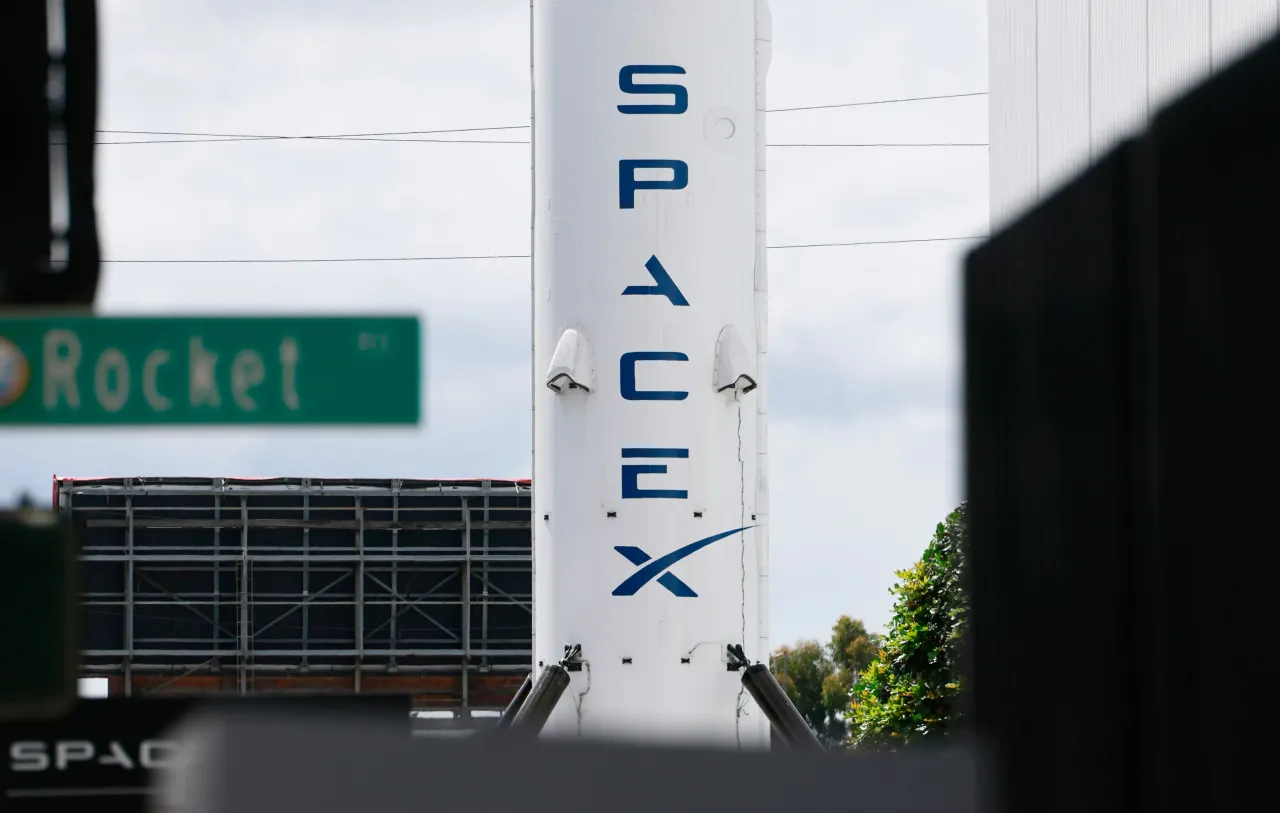
SpaceX IPO Expected to Catalyze Space Stocks Rally

- SpaceX IPO Outlook: NASA ETF portfolio manager Yuri Khodjamirian stated that the anticipated SpaceX IPO in June could serve as a significant catalyst for space stocks, drawing increased investor attention to the space economy, particularly with a projected valuation exceeding $1.75 trillion.
- Blue Origin's Market Impact: Khodjamirian highlighted that launch activities planned by Jeff Bezos-backed Blue Origin could alter supply dynamics in the launch market, thereby enhancing valuations for downstream satellite and infrastructure plays, further propelling growth in the space sector.
- Long-Term Drivers: He noted that long-term drivers such as satellite fleet upgrades, space station replacements, and potential orbital data infrastructure are poised to provide multi-year tailwinds for the space economy, especially as launch costs decrease.
- Market Sentiment Shift: Although the NASA ETF saw slight declines in afternoon trading, it has gained nearly 20% since its launch alongside the Artemis II mission on April 1, reflecting strong market interest and optimistic sentiment among investors regarding space stocks.
See More
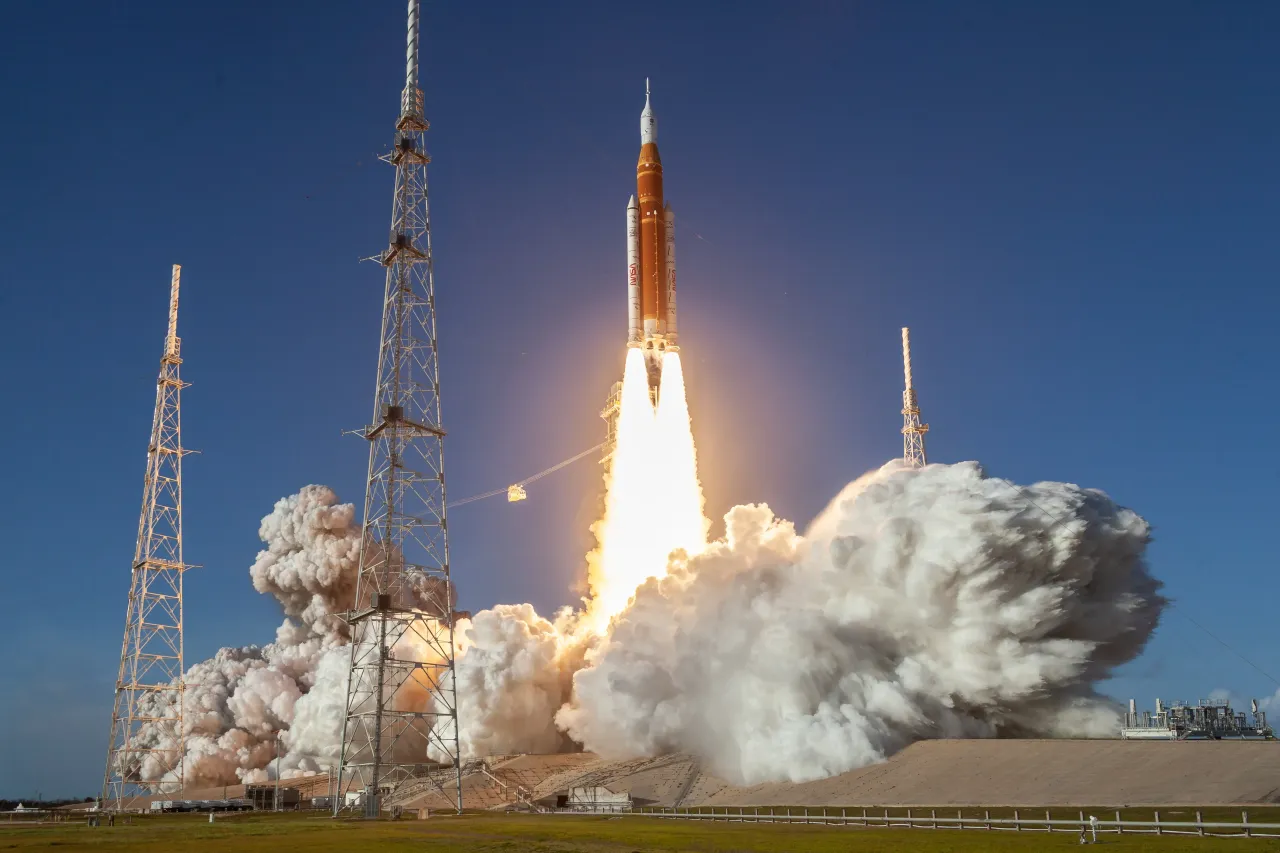
Tema Space Innovators ETF Gains 17.5% Since Launch Amid Artemis II Mission
- Strong Launch Performance: The Tema Space Innovators ETF has gained approximately 17.5% since its debut on April 1, coinciding with the launch of the Artemis II mission, indicating robust market interest and investor enthusiasm in the space economy.
- Unique Portfolio Allocation: With a 10% to 15% allocation to SpaceX through private market exposure, the ETF distinguishes itself from competitors by focusing on 'pure play' space companies across launch, satellite, and infrastructure sectors, enhancing its competitive edge.
- Market Sentiment Fluctuations: Despite the positive performance post-launch, NASA ETF's price dipped 0.9% in midday trading on Friday, reflecting broader market weakness, while retail sentiment trended 'bearish' over the past day, indicating cautious investor sentiment towards the space sector.
- Competitor Performance: In contrast to the Tema ETF, rival Procure Space ETF has surged about 28% year-to-date, driven by ASTS's nearly 290% stock increase, highlighting the coexistence of investment opportunities and risks within the space industry.
See More

SpaceX IPO Could Become Largest in History
- IPO Valuation Target: SpaceX is targeting a valuation of up to $2 trillion for its IPO, aiming to raise $75 billion, which would make it the largest IPO in history, significantly enhancing the company's influence in the aerospace industry.
- Industry Impact: The public offering of SpaceX is likely to draw attention to other space stocks, particularly AST SpaceMobile, which is just beginning to commercialize its business and has signed agreements with several major telecom companies, positioning it to benefit from the industry's heightened visibility.
- Financial Performance: Reports indicate that SpaceX generated between $15 billion and $16 billion in revenue last year, primarily from Starlink, with an EBITDA of around $8 billion, providing investors with a clearer perspective on the company's business potential.
- Market Opportunity: AST SpaceMobile plans to launch 45 to 60 satellites this year, and while it is smaller than Starlink, its partnerships with major telecoms give it a competitive edge in the satellite broadband market, and it is expected to benefit from increased investor interest following SpaceX's IPO.
See More
BlueBird 7 Satellite Set for April 16 Launch
- Launch Preparation Progress: The BlueBird 7 satellite has been integrated with Blue Origin's New Glenn rocket and is set for launch on April 16, marking a significant milestone for AST SpaceMobile's next-generation Block 2 series, although shares slipped 2% in premarket trading.
- Bandwidth Enhancement Capability: BlueBird 7 is designed to deliver up to 10x more bandwidth than existing satellites, supporting nationwide coverage across over 5,600 cells with peak transmission speeds of up to 120 Mbps, and is expected to become the largest commercially deployed satellite in low Earth orbit.
- Market Sentiment Impact: Despite optimistic launch prospects, Barclays raised its price target on AST SpaceMobile to $65 while maintaining an 'Underweight' rating, reflecting increasing pressure on traditional satellite service providers amid the expansion of low Earth orbit constellations.
- Investor Sentiment Shift: On Stocktwits, retail sentiment for ASTS shifted from 'bullish' to 'neutral' amid high message volume, indicating cautious investor attitudes towards the upcoming launch, even as the stock has risen 31% over the past year but faces macroeconomic uncertainties.
See More
Artemis II Mission Successful, Paving Way for Future Lunar Exploration
- Artemis II Success: The Artemis II mission has successfully concluded, with four astronauts safely back on Earth, laying the groundwork for future lunar bases and demonstrating NASA's ongoing commitment to deep space exploration.
- Reduced Launch Costs: According to CSIS Aerospace Security, SpaceX's reusable Falcon 1 rocket has brought launch costs down to under $6,000 per pound, while Falcon Heavy's costs are around $1,000, significantly lowering the economic barriers to accessing space.
- Emerging Investment Opportunities: With decreasing launch costs, companies like AST SpaceMobile are capitalizing on this trend, planning to deploy up to 60 satellites in low Earth orbit by year-end to provide global mobile broadband, attracting customers like Verizon and Telus.
- Industry Growth Outlook: Research firm IMARC anticipates that the global space launch service market will grow at an average annual rate of nearly 15% through 2034, indicating substantial opportunities for investors in this emerging sector.
See More
Significant Drop in Space Launch Costs
- Dramatic Cost Reduction: The cost of sending payloads into space has fallen by over 90% since the inception of modern rocketry, accelerating the development of satellites and related technologies, which is expected to create new investment opportunities in the space industry.
- Successful Artemis II Mission: NASA's Artemis II mission has successfully returned four astronauts to Earth, marking a significant step in the U.S. lunar exploration efforts and laying the groundwork for future lunar base establishment.
- AST SpaceMobile Network Expansion: AST SpaceMobile plans to deploy up to 60 satellites in low Earth orbit by the end of the year to provide mobile broadband internet from space, having already partnered with Verizon and Telus, indicating strong market potential.
- Optimistic Industry Growth Outlook: IMARC forecasts that the global space launch service market will grow at an average annual rate of nearly 15% through 2034, reflecting increasing investment opportunities as launch costs continue to decline.
See More
SpaceX IPO Expected to Catalyze Space Stocks Rally
- SpaceX IPO Outlook: NASA ETF portfolio manager Yuri Khodjamirian stated that the anticipated SpaceX IPO in June could serve as a significant catalyst for space stocks, drawing increased investor attention to the space economy, particularly with a projected valuation exceeding $1.75 trillion.
- Blue Origin's Market Impact: Khodjamirian highlighted that launch activities planned by Jeff Bezos-backed Blue Origin could alter supply dynamics in the launch market, thereby enhancing valuations for downstream satellite and infrastructure plays, further propelling growth in the space sector.
- Long-Term Drivers: He noted that long-term drivers such as satellite fleet upgrades, space station replacements, and potential orbital data infrastructure are poised to provide multi-year tailwinds for the space economy, especially as launch costs decrease.
- Market Sentiment Shift: Although the NASA ETF saw slight declines in afternoon trading, it has gained nearly 20% since its launch alongside the Artemis II mission on April 1, reflecting strong market interest and optimistic sentiment among investors regarding space stocks.
See More
Tema Space Innovators ETF Gains 17.5% Since Launch Amid Artemis II Mission
- Strong Launch Performance: The Tema Space Innovators ETF has gained approximately 17.5% since its debut on April 1, coinciding with the launch of the Artemis II mission, indicating robust market interest and investor enthusiasm in the space economy.
- Unique Portfolio Allocation: With a 10% to 15% allocation to SpaceX through private market exposure, the ETF distinguishes itself from competitors by focusing on 'pure play' space companies across launch, satellite, and infrastructure sectors, enhancing its competitive edge.
- Market Sentiment Fluctuations: Despite the positive performance post-launch, NASA ETF's price dipped 0.9% in midday trading on Friday, reflecting broader market weakness, while retail sentiment trended 'bearish' over the past day, indicating cautious investor sentiment towards the space sector.
- Competitor Performance: In contrast to the Tema ETF, rival Procure Space ETF has surged about 28% year-to-date, driven by ASTS's nearly 290% stock increase, highlighting the coexistence of investment opportunities and risks within the space industry.
See More
SpaceX IPO Could Become Largest in History
- IPO Valuation Target: SpaceX is targeting a valuation of up to $2 trillion for its IPO, aiming to raise $75 billion, which would make it the largest IPO in history, significantly enhancing the company's influence in the aerospace industry.
- Industry Impact: The public offering of SpaceX is likely to draw attention to other space stocks, particularly AST SpaceMobile, which is just beginning to commercialize its business and has signed agreements with several major telecom companies, positioning it to benefit from the industry's heightened visibility.
- Financial Performance: Reports indicate that SpaceX generated between $15 billion and $16 billion in revenue last year, primarily from Starlink, with an EBITDA of around $8 billion, providing investors with a clearer perspective on the company's business potential.
- Market Opportunity: AST SpaceMobile plans to launch 45 to 60 satellites this year, and while it is smaller than Starlink, its partnerships with major telecoms give it a competitive edge in the satellite broadband market, and it is expected to benefit from increased investor interest following SpaceX's IPO.
See More