Taiwan Semiconductor's Hesitation Impacts ASML Stock
Written by Emily J. Thompson, Senior Investment Analyst
Updated: 16 hours ago
0mins
Source: Fool
- Customer Hesitation: Taiwan Semiconductor's co-COO Kevin Zhang indicated that the company would not consider deploying ASML's high-numerical-aperture extreme ultraviolet lithography machines until 2029, leading to a more than 1% drop in ASML's stock during the trading session.
- High Equipment Costs: The high-numerical-aperture equipment from ASML costs at least $410 million, and Taiwan Semi's satisfaction with its existing low-NA equipment suggests a conservative approach to technology upgrades, potentially impacting ASML's future sales.
- Initial Market Reaction: ASML's stock fell as much as 5.5% following the announcement but recovered somewhat, indicating that investors view this as a temporary setback rather than a significant blow to the company's business, reflecting confidence in ASML's long-term prospects.
- Key to AI Hardware Development: Although Taiwan Semi is not adopting high-NA equipment immediately, ASML remains critical in the development of artificial intelligence hardware, with potential customers like Intel already utilizing ASML machines, indicating ongoing market demand.
Trade with 70% Backtested Accuracy
Stop guessing "Should I Buy ASML?" and start using high-conviction signals backed by rigorous historical data.
Sign up today to access powerful investing tools and make smarter, data-driven decisions.
Analyst Views on ASML
Wall Street analysts forecast ASML stock price to rise
12 Analyst Rating
12 Buy
0 Hold
0 Sell
Strong Buy
Current: 1443.660

Low
1385
Averages
1583
High
1911
Current: 1443.660
Low
1385
Averages
1583
High
1911
About ASML
ASML Holding N.V. is a holding company based in the Netherlands. The Company operates through its subsidiaries in the Netherlands, the United States, Italy, France, Germany, the United Kingdom, Ireland, Belgium, South Korea, Taiwan, Singapore, China, Hong Kong, Japan, Malaysia and Israel. The Company operates through one business segment which is engage in development, production, marketing, sales, upgrading and servicing of advanced semiconductor equipment systems, consisting of lithography, metrology and inspection systems. The Company offers TWINSCAN systems, equipped with lithography system with a mercury lamp as light source (i-line), Krypton Fluoride (KrF) and Argon Fluoride (ArF) light sources for processing wafers for manufacturing environments for which imaging at a small resolution is required. TWINSCAN systems also include immersion lithography systems (TWINSCAN immersion systems).
About the author

Emily J. Thompson
Emily J. Thompson, a Chartered Financial Analyst (CFA) with 12 years in investment research, graduated with honors from the Wharton School. Specializing in industrial and technology stocks, she provides in-depth analysis for Intellectia’s earnings and market brief reports.
ASML Reports Strong Earnings, Stock Doubles
- Strong Performance: ASML reported €8.8 billion in net sales for Q1 2026, achieving a gross margin of 53% and a net income of €2.8 billion, reflecting robust performance in the semiconductor sector.
- Robust Market Demand: Customers have indicated that memory chip demand is sold out for 2026, with supply constraints expected to persist, driving increased capital expenditures in advanced logic and memory markets, ensuring future growth potential for ASML.
- Enhanced Shareholder Returns: Despite record R&D spending, ASML plans a 17% increase in dividends and a €12 billion stock buyback program from 2026 to 2028, demonstrating a strong commitment to shareholders and healthy cash flow.
- Long-term Investment Value: With a forward P/E ratio of 39.3, ASML's valuation is high, yet its leadership in AI and semiconductor manufacturing, along with sustained high margins, positions it as an ideal choice for long-term investors.
See More

ASML Discloses Results of 2026 AGM
- AGM Resolutions: ASML held its AGM on April 22, 2026, where the statutory financial statements for the 2025 fiscal year were adopted, indicating a robust financial position that enhances investor confidence.
- Dividend Proposal: A final dividend of €2.70 per ordinary share was proposed, leading to a total dividend of €7.50 per share for 2025, reflecting the company's commitment to shareholder returns amidst strong performance.
- Management Appointments: The AGM approved the reappointment of Terri Kelly and An Steegen, along with the appointment of Benjamin Loh to the Supervisory Board, ensuring stability and continuity in leadership.
- Share Buyback Authorization: A proposal was made to authorize the management to repurchase up to 10% of ASML's issued share capital from April 22, 2026, to October 22, 2027, demonstrating confidence in the stock's value and a strategic response to market fluctuations.
See More
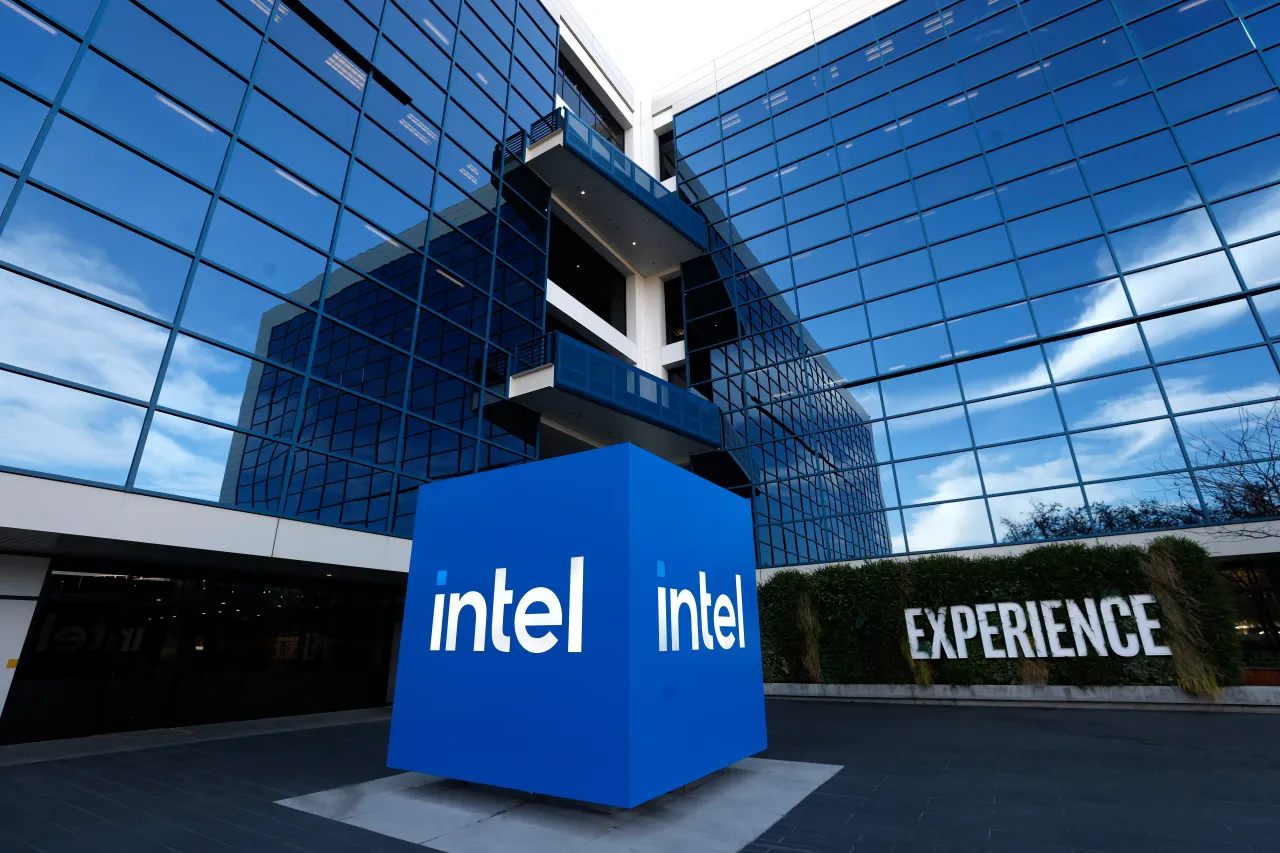
Intel's Q1 Earnings Outlook Shows Optimism

- Tesla Collaboration: During the Q1 earnings call, Tesla CEO Elon Musk announced plans to utilize Intel's 14A process in the Terafab project, which is expected to drive demand for Intel's chips and enhance its competitive position in the semiconductor industry.
- Stock Price Surge: Following Musk's announcement, Intel's (INTC) share price rose by 3% in aftermarket trading, reflecting market optimism regarding its upcoming Q1 earnings report and future performance.
- Analyst Rating Upgrade: HSBC upgraded Intel's rating from 'Hold' to 'Buy', raising the price target from $50 to $95, indicating strong recognition of Intel's momentum in the server processor market, which is likely to further boost its stock price.
- Future Earnings Outlook: Analysts expect Intel's Q1 2026 earnings per share (EPS) to be $0.02, down from $0.13 year-over-year, but anticipate a gradual increase in EPS from Q2 to Q4, suggesting potential improvement in the company's profitability going forward.
See More

Taiwan Semiconductor's Hesitation Impacts ASML Stock

- Customer Hesitation: Taiwan Semiconductor's co-COO Kevin Zhang indicated that the company would not consider deploying ASML's high-numerical-aperture extreme ultraviolet lithography machines until 2029, leading to a more than 1% drop in ASML's stock during the trading session.
- High Equipment Costs: The high-numerical-aperture equipment from ASML costs at least $410 million, and Taiwan Semi's satisfaction with its existing low-NA equipment suggests a conservative approach to technology upgrades, potentially impacting ASML's future sales.
- Initial Market Reaction: ASML's stock fell as much as 5.5% following the announcement but recovered somewhat, indicating that investors view this as a temporary setback rather than a significant blow to the company's business, reflecting confidence in ASML's long-term prospects.
- Key to AI Hardware Development: Although Taiwan Semi is not adopting high-NA equipment immediately, ASML remains critical in the development of artificial intelligence hardware, with potential customers like Intel already utilizing ASML machines, indicating ongoing market demand.
See More

Taiwan Semiconductor Halts ASML Equipment Deployment
- Deployment Stagnation: Taiwan Semiconductor announced it will continue using its existing low-NA EUV equipment and will not consider adopting ASML's high-NA EUV lithography machines until 2029, posing a risk of customer attrition for ASML that could impact future revenues.
- Stock Reaction: ASML's stock fell over 1% following the announcement, with a drop of 5.5% during trading, although it recovered somewhat, indicating that investors view this as a setback rather than a fatal blow, reflecting confidence in ASML's long-term prospects.
- Market Competition: Despite Taiwan Semiconductor's decision, ASML still has other clients, such as Intel, which began using its equipment in April 2024, suggesting that ASML maintains a solid customer base and market demand for its high-end lithography machines.
- Ongoing R&D: Taiwan Semiconductor's R&D team stated they will continue to explore ways to drive technological advancement without high-NA equipment, which may affect ASML's innovation and competitive position, compelling it to accelerate R&D efforts to meet future market demands.
See More
TSMC Opts Out of ASML's New Lithography Machines
- Cost-Saving Strategy: TSMC's decision to forgo ASML's new lithography machines, which cost upwards of $400 million, is a strategic move aimed at saving billions and reflects a cautious approach to capital expenditure while enhancing profitability.
- New Technology Launch: TSMC introduced its A13 and N2U technologies, with production slated for 2029, where N2U will cater to chip manufacturing for phones and laptops, showcasing the company's competitive edge and innovation in the AI chip market.
- Market Reaction: ASML's stock fell 1% following TSMC's technology showcase, indicating market concerns regarding TSMC's advancements and the potential threat to ASML's future sales, which could impact ASML's market share.
- Industry Trend: With the global semiconductor market projected to grow by 22% to $772 billion in 2023, TSMC's decision reflects a broader industry shift towards simplified processes and advanced packaging rather than reliance on expensive hardware, signaling a transformation in the sector.
See More
ASML Reports Strong Earnings, Stock Doubles
- Strong Performance: ASML reported €8.8 billion in net sales for Q1 2026, achieving a gross margin of 53% and a net income of €2.8 billion, reflecting robust performance in the semiconductor sector.
- Robust Market Demand: Customers have indicated that memory chip demand is sold out for 2026, with supply constraints expected to persist, driving increased capital expenditures in advanced logic and memory markets, ensuring future growth potential for ASML.
- Enhanced Shareholder Returns: Despite record R&D spending, ASML plans a 17% increase in dividends and a €12 billion stock buyback program from 2026 to 2028, demonstrating a strong commitment to shareholders and healthy cash flow.
- Long-term Investment Value: With a forward P/E ratio of 39.3, ASML's valuation is high, yet its leadership in AI and semiconductor manufacturing, along with sustained high margins, positions it as an ideal choice for long-term investors.
See More
ASML Discloses Results of 2026 AGM
- AGM Resolutions: ASML held its AGM on April 22, 2026, where the statutory financial statements for the 2025 fiscal year were adopted, indicating a robust financial position that enhances investor confidence.
- Dividend Proposal: A final dividend of €2.70 per ordinary share was proposed, leading to a total dividend of €7.50 per share for 2025, reflecting the company's commitment to shareholder returns amidst strong performance.
- Management Appointments: The AGM approved the reappointment of Terri Kelly and An Steegen, along with the appointment of Benjamin Loh to the Supervisory Board, ensuring stability and continuity in leadership.
- Share Buyback Authorization: A proposal was made to authorize the management to repurchase up to 10% of ASML's issued share capital from April 22, 2026, to October 22, 2027, demonstrating confidence in the stock's value and a strategic response to market fluctuations.
See More
Intel's Q1 Earnings Outlook Shows Optimism
- Tesla Collaboration: During the Q1 earnings call, Tesla CEO Elon Musk announced plans to utilize Intel's 14A process in the Terafab project, which is expected to drive demand for Intel's chips and enhance its competitive position in the semiconductor industry.
- Stock Price Surge: Following Musk's announcement, Intel's (INTC) share price rose by 3% in aftermarket trading, reflecting market optimism regarding its upcoming Q1 earnings report and future performance.
- Analyst Rating Upgrade: HSBC upgraded Intel's rating from 'Hold' to 'Buy', raising the price target from $50 to $95, indicating strong recognition of Intel's momentum in the server processor market, which is likely to further boost its stock price.
- Future Earnings Outlook: Analysts expect Intel's Q1 2026 earnings per share (EPS) to be $0.02, down from $0.13 year-over-year, but anticipate a gradual increase in EPS from Q2 to Q4, suggesting potential improvement in the company's profitability going forward.
See More
Taiwan Semiconductor's Hesitation Impacts ASML Stock
- Customer Hesitation: Taiwan Semiconductor's co-COO Kevin Zhang indicated that the company would not consider deploying ASML's high-numerical-aperture extreme ultraviolet lithography machines until 2029, leading to a more than 1% drop in ASML's stock during the trading session.
- High Equipment Costs: The high-numerical-aperture equipment from ASML costs at least $410 million, and Taiwan Semi's satisfaction with its existing low-NA equipment suggests a conservative approach to technology upgrades, potentially impacting ASML's future sales.
- Initial Market Reaction: ASML's stock fell as much as 5.5% following the announcement but recovered somewhat, indicating that investors view this as a temporary setback rather than a significant blow to the company's business, reflecting confidence in ASML's long-term prospects.
- Key to AI Hardware Development: Although Taiwan Semi is not adopting high-NA equipment immediately, ASML remains critical in the development of artificial intelligence hardware, with potential customers like Intel already utilizing ASML machines, indicating ongoing market demand.
See More
Taiwan Semiconductor Halts ASML Equipment Deployment
- Deployment Stagnation: Taiwan Semiconductor announced it will continue using its existing low-NA EUV equipment and will not consider adopting ASML's high-NA EUV lithography machines until 2029, posing a risk of customer attrition for ASML that could impact future revenues.
- Stock Reaction: ASML's stock fell over 1% following the announcement, with a drop of 5.5% during trading, although it recovered somewhat, indicating that investors view this as a setback rather than a fatal blow, reflecting confidence in ASML's long-term prospects.
- Market Competition: Despite Taiwan Semiconductor's decision, ASML still has other clients, such as Intel, which began using its equipment in April 2024, suggesting that ASML maintains a solid customer base and market demand for its high-end lithography machines.
- Ongoing R&D: Taiwan Semiconductor's R&D team stated they will continue to explore ways to drive technological advancement without high-NA equipment, which may affect ASML's innovation and competitive position, compelling it to accelerate R&D efforts to meet future market demands.
See More
TSMC Opts Out of ASML's New Lithography Machines
- Cost-Saving Strategy: TSMC's decision to forgo ASML's new lithography machines, which cost upwards of $400 million, is a strategic move aimed at saving billions and reflects a cautious approach to capital expenditure while enhancing profitability.
- New Technology Launch: TSMC introduced its A13 and N2U technologies, with production slated for 2029, where N2U will cater to chip manufacturing for phones and laptops, showcasing the company's competitive edge and innovation in the AI chip market.
- Market Reaction: ASML's stock fell 1% following TSMC's technology showcase, indicating market concerns regarding TSMC's advancements and the potential threat to ASML's future sales, which could impact ASML's market share.
- Industry Trend: With the global semiconductor market projected to grow by 22% to $772 billion in 2023, TSMC's decision reflects a broader industry shift towards simplified processes and advanced packaging rather than reliance on expensive hardware, signaling a transformation in the sector.
See More