Spirit Airlines Could Liquidate This Week Amid Financial Struggles
Written by Emily J. Thompson, Senior Investment Analyst
Updated: 4 days ago
0mins

Should l Buy RTX?
Source: Newsfilter
- Liquidation Risk: Spirit Airlines could face liquidation as early as this week due to its second bankruptcy in less than a year and the added pressure from rising fuel prices, significantly worsening its financial situation.
- Bankruptcy Restructuring Challenges: Although Spirit aimed to exit bankruptcy this spring, the surge in fuel costs and intensified market competition pose substantial challenges to its restructuring plans, potentially impacting its future operational capabilities.
- Deteriorating Industry Environment: Post-pandemic, airlines are grappling with soaring wages and costs, shifting customer preferences, and an oversupply of domestic flights leading to falling airfares, making it difficult for Spirit to regain profitability in this challenging landscape.
- Blocked Acquisition Impact: The failed acquisition by JetBlue Airways due to antitrust rulings has left Spirit isolated in a market dominated by larger carriers, exacerbating its financial woes and limiting its strategic options.
Trade with 70% Backtested Accuracy
Stop guessing "Should I Buy RTX?" and start using high-conviction signals backed by rigorous historical data.
Sign up today to access powerful investing tools and make smarter, data-driven decisions.
Analyst Views on RTX
Wall Street analysts forecast RTX stock price to fall
14 Analyst Rating
9 Buy
5 Hold
0 Sell
Moderate Buy
Current: 196.420

Low
168.00
Averages
195.77
High
215.00
Current: 196.420
Low
168.00
Averages
195.77
High
215.00
About RTX
RTX Corporation is an aerospace and defense company, which provides advanced systems and services for commercial, military, and government customers worldwide. The Company operates through three segments: Collins Aerospace, Pratt & Whitney, and Raytheon. Collins Aerospace segment provides technologically advanced aerospace and defense products and aftermarket service solutions for civil and military aircraft manufacturers, commercial airlines, and regional, business and general aviation, as well as for defense and commercial space operations. The Pratt & Whitney segment supplies aircraft engines for commercial, military, business jet, and general aviation customers. The Raytheon segment provides defensive and offensive threat detection, tracking and mitigation capabilities for the United States and foreign government and commercial customers. The Raytheon designs, develops, and provides advanced capabilities in integrated air and missile defense, smart weapons, missiles and others.
About the author

Emily J. Thompson
Emily J. Thompson, a Chartered Financial Analyst (CFA) with 12 years in investment research, graduated with honors from the Wharton School. Specializing in industrial and technology stocks, she provides in-depth analysis for Intellectia’s earnings and market brief reports.

RTX Quarterly Earnings Report Could Impact Investors Significantly

- Earnings Report Announcement: RTX Corporation is scheduled to report its quarterly financial results on April 15, 2026, which could significantly impact investors, particularly in the current market environment where performance metrics are crucial.
- Investment Recommendation Analysis: The Motley Fool's analyst team has identified 10 top stocks for investors to consider, notably excluding RTX, which may reflect a cautious market sentiment regarding its future growth potential, prompting investors to reassess its investment value.
- Historical Performance Comparison: The Motley Fool's Stock Advisor service boasts an average return of 1,016% since inception, significantly outperforming the S&P 500's 197%, indicating the potential profitability of its recommended stocks, which investors should take into account.
- Market Competition Dynamics: With intensifying competition in AI technology and the semiconductor industry, RTX's financial performance will be closely monitored, especially regarding its technological dependencies on industry giants like Nvidia and Intel, which could influence its market position and investor confidence.
See More
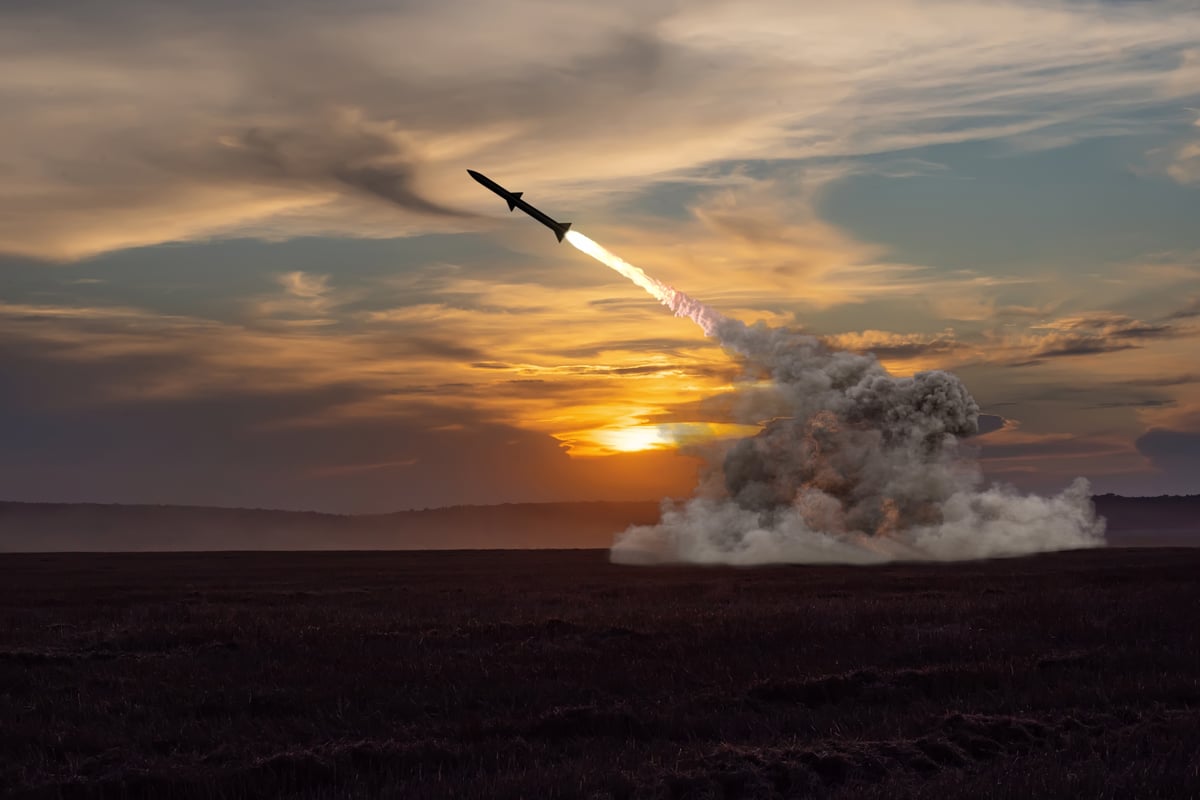
Impact of Iran War on RTX Stock Price
- Market Reaction Analysis: Last week, despite a perceived easing of tensions in the Middle East, RTX's stock fell by 2.55%, indicating complex market sentiments towards defense stocks, as investors may believe RTX needs the war to continue for its stock price to rise.
- Surge in Orders: Due to the increased demand for missiles driven by the war, RTX has secured government orders to double its annual production of Tomahawk missiles from 500 to 1000 units, highlighting the company's critical role in national defense.
- Production Capacity Expansion: RTX has committed to quadrupling production rates in some cases to meet the U.S. government's demand for air-to-air and interceptor missiles, underscoring the strategic importance of the company in defense rearmament efforts.
- Manufacturing Revival: With production facilities located in Alabama, Arizona, and Massachusetts, RTX reflects the U.S. government's focus on revitalizing domestic manufacturing, which could yield long-term economic benefits for the company.
See More

Raytheon Delivers Next Generation Jammer to Australia
- Delivery Milestone: Raytheon has delivered its first Next Generation Jammer (NGJ) pods to the Royal Australian Air Force, marking a significant advancement in collaboration with the U.S. Navy and RAAF, expected to enhance Australia's electronic warfare capabilities.
- Technological Advantage: The NGJ system features active electronically scanned arrays that disrupt enemy radar and communication systems, allowing aircrews to remain undetected during missions, thereby increasing safety and effectiveness.
- Early Delivery: The first set of equipment was delivered ahead of schedule in September 2025, with future deliveries continuing through 2026, demonstrating Raytheon's efficiency in project management and production capabilities.
- On-Site Support: Raytheon will also provide on-site deployment and maintenance support in Australia to ensure operational and mission readiness, thereby enhancing the operational capabilities of the Australian Air Force.
See More

U.S. Stock Futures Dip as Iran Conflict Clouds Market Outlook


- Market Reaction: U.S. stock index futures dipped on Monday after last week's record rally on Wall Street, with the Dow futures down 303 points or 0.61%, as dimming prospects of the Iran conflict prompted investors to curb their risk appetite.
- Oil Price Surge: Oil prices jumped 5% on Monday following Iran's reclosure of the Strait of Hormuz, with U.S. energy stocks rising in premarket trading, as Exxon Mobil and Chevron gained 2% and 1.9% respectively, indicating market concerns over supply disruptions.
- Volatility Index Rise: The CBOE Volatility Index (.VIX) rebounded after falling for eight consecutive sessions, last up 2.25 points to 19.73, marking a one-week high, reflecting increased market anxiety about future uncertainties.
- Earnings Focus: Investors are keenly awaiting upcoming earnings reports from defense giants like Lockheed Martin and RTX, as well as tech stocks such as Tesla, to assess the impact of the Iran conflict on corporate results and the broader economy.
See More

Zelenskiy Proposes European Missile Defense System
- Defense System Need: Ukrainian President Zelenskiy stated that Europe should develop its own anti-ballistic missile defense system to counter ongoing Russian attacks on Ukraine's power grid and infrastructure, highlighting Ukraine's urgent military needs.
- International Cooperation Talks: Zelenskiy revealed that Ukraine is in discussions with several countries to launch this missile defense project within a year, although he did not specify which nations, indicating a strategic move to bolster European defense capabilities.
- Existing System Limitations: Currently, Ukraine relies heavily on the U.S.-made Patriot system for interception, but with inventories tightening, Ukraine and its partners are seeking alternatives, reflecting a critical dependency on existing defense capabilities.
- New System Development: Ukrainian company Fire Point is collaborating with European firms to develop a new lower-cost air defense system expected to be introduced next year, aimed at enhancing Ukraine's air defense capabilities while reducing costs.
See More

Hidden AI Infrastructure Companies Present Significant Opportunities


- TTM Technologies Growth: TTM Technologies (TTMI) reported a 57% year-over-year growth in its data center computing segment by late 2025, with a projected 66% increase in Q1 2026, highlighting its critical role in AI servers and defense systems, alongside a $1.61 billion defense backlog indicating strong market demand.
- Bel Fuse Reorganization and Acquisition: Bel Fuse (BELF) has reorganized into two business units and acquired Methode Electronics' data transceiver business, enhancing its position in high-density data center power delivery, reflecting its growing importance in AI infrastructure.
- Calix's AI Investment: Calix (CALX) has invested over $100 million in AI capabilities since 2023 and launched a new platform built on Google Cloud in 2025, expected to benefit from federal broadband deployment funding, further solidifying its market position in fiber networks.
- Clearfield's Market Outlook: Clearfield (CLFD) launched the NOVA platform designed for hyperscale data centers, with its market projected to grow from $19.1 billion in 2022 to $29.7 billion by 2026, at a CAGR of 13.1%, despite execution risks, as its core community broadband providers are expected to deploy funds more rapidly.
See More
RTX Quarterly Earnings Report Could Impact Investors Significantly
- Earnings Report Announcement: RTX Corporation is scheduled to report its quarterly financial results on April 15, 2026, which could significantly impact investors, particularly in the current market environment where performance metrics are crucial.
- Investment Recommendation Analysis: The Motley Fool's analyst team has identified 10 top stocks for investors to consider, notably excluding RTX, which may reflect a cautious market sentiment regarding its future growth potential, prompting investors to reassess its investment value.
- Historical Performance Comparison: The Motley Fool's Stock Advisor service boasts an average return of 1,016% since inception, significantly outperforming the S&P 500's 197%, indicating the potential profitability of its recommended stocks, which investors should take into account.
- Market Competition Dynamics: With intensifying competition in AI technology and the semiconductor industry, RTX's financial performance will be closely monitored, especially regarding its technological dependencies on industry giants like Nvidia and Intel, which could influence its market position and investor confidence.
See More
Impact of Iran War on RTX Stock Price
- Market Reaction Analysis: Last week, despite a perceived easing of tensions in the Middle East, RTX's stock fell by 2.55%, indicating complex market sentiments towards defense stocks, as investors may believe RTX needs the war to continue for its stock price to rise.
- Surge in Orders: Due to the increased demand for missiles driven by the war, RTX has secured government orders to double its annual production of Tomahawk missiles from 500 to 1000 units, highlighting the company's critical role in national defense.
- Production Capacity Expansion: RTX has committed to quadrupling production rates in some cases to meet the U.S. government's demand for air-to-air and interceptor missiles, underscoring the strategic importance of the company in defense rearmament efforts.
- Manufacturing Revival: With production facilities located in Alabama, Arizona, and Massachusetts, RTX reflects the U.S. government's focus on revitalizing domestic manufacturing, which could yield long-term economic benefits for the company.
See More
Raytheon Delivers Next Generation Jammer to Australia
- Delivery Milestone: Raytheon has delivered its first Next Generation Jammer (NGJ) pods to the Royal Australian Air Force, marking a significant advancement in collaboration with the U.S. Navy and RAAF, expected to enhance Australia's electronic warfare capabilities.
- Technological Advantage: The NGJ system features active electronically scanned arrays that disrupt enemy radar and communication systems, allowing aircrews to remain undetected during missions, thereby increasing safety and effectiveness.
- Early Delivery: The first set of equipment was delivered ahead of schedule in September 2025, with future deliveries continuing through 2026, demonstrating Raytheon's efficiency in project management and production capabilities.
- On-Site Support: Raytheon will also provide on-site deployment and maintenance support in Australia to ensure operational and mission readiness, thereby enhancing the operational capabilities of the Australian Air Force.
See More
U.S. Stock Futures Dip as Iran Conflict Clouds Market Outlook
- Market Reaction: U.S. stock index futures dipped on Monday after last week's record rally on Wall Street, with the Dow futures down 303 points or 0.61%, as dimming prospects of the Iran conflict prompted investors to curb their risk appetite.
- Oil Price Surge: Oil prices jumped 5% on Monday following Iran's reclosure of the Strait of Hormuz, with U.S. energy stocks rising in premarket trading, as Exxon Mobil and Chevron gained 2% and 1.9% respectively, indicating market concerns over supply disruptions.
- Volatility Index Rise: The CBOE Volatility Index (.VIX) rebounded after falling for eight consecutive sessions, last up 2.25 points to 19.73, marking a one-week high, reflecting increased market anxiety about future uncertainties.
- Earnings Focus: Investors are keenly awaiting upcoming earnings reports from defense giants like Lockheed Martin and RTX, as well as tech stocks such as Tesla, to assess the impact of the Iran conflict on corporate results and the broader economy.
See More
Zelenskiy Proposes European Missile Defense System
- Defense System Need: Ukrainian President Zelenskiy stated that Europe should develop its own anti-ballistic missile defense system to counter ongoing Russian attacks on Ukraine's power grid and infrastructure, highlighting Ukraine's urgent military needs.
- International Cooperation Talks: Zelenskiy revealed that Ukraine is in discussions with several countries to launch this missile defense project within a year, although he did not specify which nations, indicating a strategic move to bolster European defense capabilities.
- Existing System Limitations: Currently, Ukraine relies heavily on the U.S.-made Patriot system for interception, but with inventories tightening, Ukraine and its partners are seeking alternatives, reflecting a critical dependency on existing defense capabilities.
- New System Development: Ukrainian company Fire Point is collaborating with European firms to develop a new lower-cost air defense system expected to be introduced next year, aimed at enhancing Ukraine's air defense capabilities while reducing costs.
See More
Hidden AI Infrastructure Companies Present Significant Opportunities
- TTM Technologies Growth: TTM Technologies (TTMI) reported a 57% year-over-year growth in its data center computing segment by late 2025, with a projected 66% increase in Q1 2026, highlighting its critical role in AI servers and defense systems, alongside a $1.61 billion defense backlog indicating strong market demand.
- Bel Fuse Reorganization and Acquisition: Bel Fuse (BELF) has reorganized into two business units and acquired Methode Electronics' data transceiver business, enhancing its position in high-density data center power delivery, reflecting its growing importance in AI infrastructure.
- Calix's AI Investment: Calix (CALX) has invested over $100 million in AI capabilities since 2023 and launched a new platform built on Google Cloud in 2025, expected to benefit from federal broadband deployment funding, further solidifying its market position in fiber networks.
- Clearfield's Market Outlook: Clearfield (CLFD) launched the NOVA platform designed for hyperscale data centers, with its market projected to grow from $19.1 billion in 2022 to $29.7 billion by 2026, at a CAGR of 13.1%, despite execution risks, as its core community broadband providers are expected to deploy funds more rapidly.
See More