S&P 500 Declines as Oil Prices Surge Despite Reserve Release
Written by Emily J. Thompson, Senior Investment Analyst
Updated: Mar 12 2026
0mins


Should l Buy ARES?
Source: Benzinga
- Oil Price Surge: Despite the IEA authorizing a historic release of 400 million barrels of strategic oil reserves, WTI crude prices surged by 8.45% to $94.62 per barrel, indicating heightened market concerns over energy supply tightness.
- Bearish Market Sentiment: Data from the Polygon platform reveals that traders are only pricing in a 12% chance of an upward opening on March 12, with early trading volume reaching $26,319, reflecting a pessimistic outlook among investors.
- Rising Inflation Expectations: February's Consumer Price Index (CPI) rose by 0.3%, aligning with expectations; however, the market is beginning to price in the inflationary impact of the current energy spike, pushing the 10-year Treasury yield up to 4.23%.
- Geopolitical Risks Intensify: Iran's reported attacks on three cargo vessels in the Strait of Hormuz further exacerbate oil price increases, highlighting the significant impact of geopolitical factors on energy markets, necessitating close monitoring by investors.
Trade with 70% Backtested Accuracy
Stop guessing "Should I Buy ARES?" and start using high-conviction signals backed by rigorous historical data.
Sign up today to access powerful investing tools and make smarter, data-driven decisions.
Analyst Views on ARES
Wall Street analysts forecast ARES stock price to rise
10 Analyst Rating
8 Buy
2 Hold
0 Sell
Strong Buy
Current: 105.800

Low
155.00
Averages
191.40
High
223.00
Current: 105.800
Low
155.00
Averages
191.40
High
223.00
About ARES
Ares Management Corporation is an alternative investment manager offering clients complementary primary and secondary investment solutions across various asset classes. Its segments include Credit Group, Private Equity Group, Real Assets Group, Secondaries Group, and Other. The Credit Group segment manages credit strategies across the liquid and illiquid spectrum, including liquid credit, alternative credit, direct lending and APAC credit. The Private Equity Group segment categorizes its investment strategies as corporate private equity, special opportunities and APAC private equity. The Real Assets Group segment manages comprehensive equity and debt strategies across real estate and infrastructure investments. The Secondaries Group segment invests in secondary markets across a range of alternative asset class strategies, including private equity, real estate, infrastructure and credit. It has operations across North America, South America, Europe, Asia Pacific and the Middle East.
About the author

Emily J. Thompson
Emily J. Thompson, a Chartered Financial Analyst (CFA) with 12 years in investment research, graduated with honors from the Wharton School. Specializing in industrial and technology stocks, she provides in-depth analysis for Intellectia’s earnings and market brief reports.

Blue Owl Capital Shares Drop Amid Redemption Limits Announcement


- Redemption Limit Announcement: Blue Owl Credit Income Corp. informed shareholders that redemptions in its private credit and technology-focused funds will be capped at 5%, following withdrawal requests totaling 21.9% and 40.7%, respectively.
- Stock Price Reaction: Shares of Blue Owl Capital fell 7%, or 59 cents, to $8.13 in morning trading, indicating a negative market response and concerns over liquidity risks associated with the redemption limits.
- Industry Impact: Other alternative asset management stocks, including Ares Management, KKR, Apollo Global, and Blackstone, also experienced declines, reflecting a broader loss of confidence in the sector following Blue Owl's announcement.
- Market Sentiment: This situation has raised investor concerns regarding the liquidity status of Blue Owl Capital and its funds, potentially leading to a decrease in investor trust and adversely affecting its market performance.
See More

Ares Capital Corporation Achieves 10.8% Dividend Yield Amid Low Market Rates


- Dividend Yield Advantage: Ares Capital Corporation boasts a 10.8% dividend yield, significantly higher than the S&P 500's current historical low of approximately 1.2%, indicating its appeal to income-seeking investors in a low-rate environment.
- BDC Characteristics: As the largest publicly traded Business Development Company (BDC), Ares Capital provides capital to small businesses and is required to distribute at least 90% of its taxable income as dividends, resulting in higher yields despite facing elevated default risks.
- Financial Robustness: Since its inception, Ares Capital has maintained annualized net realized loan losses averaging below 0%, outperforming banks and other BDCs, demonstrating its strong credit management capabilities that support its ability to pay stable dividends.
- Future Outlook: Ares anticipates distributing approximately $1.38 per share of excess taxable income to shareholders in 2026, further bolstering its dividend payment capacity, although economic fluctuations could impact the repayment ability of its portfolio companies, its financial position remains strong.
See More

Ares Capital Maintains Over 10% Dividend Yield
- Stable Dividend Record: Ares Capital has maintained a stable or growing dividend for over 16 years, currently yielding 10.8%, significantly higher than the S&P 500's 1.2%, showcasing its strong competitive edge in dividend payouts.
- Strong Financial Health: With an investment portfolio of approximately $29.4 billion and an annualized net realized loan loss rate below 0%, Ares Capital outperforms other BDCs and banks, indicating robust financial health that supports ongoing dividends.
- Excess Earnings Support: The company reported core earnings of $2.01 per share last year, exceeding its dividend of $1.92 per share, and expects to carry forward about $1.38 per share of excess taxable income for distribution in 2026, further enhancing dividend sustainability.
- Market Risk Consideration: While Ares Capital excels in dividend performance, potential economic downturns could impact the repayment ability of its portfolio companies, necessitating careful risk assessment by investors.
See More

US Stocks Close Mixed Amid Oil Surge and Economic Data

- Market Fluctuations: The S&P 500 Index closed up 0.11%, while the Dow Jones Industrial Average fell 0.13%, and the Nasdaq 100 Index rose 0.11%, reflecting volatility influenced by surging oil prices and economic data.
- Positive Economic Data: Weekly initial unemployment claims unexpectedly fell by 9,000 to 202,000, indicating a stronger labor market than the anticipated increase to 212,000, which could impact the Fed's interest rate policy.
- Impact of Oil Surge: Crude oil prices soared over 11% due to President Trump's tougher stance on Iran, leading to sharp declines in airline and cruise line stocks, with United Airlines and Carnival both down more than 3%.
- Corporate Developments: SBA Communications surged over 18% as it explores potential acquisition options, while Globalstar rose over 13% amid reports of Amazon's interest in acquiring the company, highlighting market focus on M&A activity.
See More

US Stocks Plummet as Oil Prices Surge
- Oil Price Surge: Crude oil prices soared over 13% as President Trump took a tougher stance on Iran, reaching a 3.5-week high, which not only heightened inflation fears but also pushed bond yields higher, with the 10-year T-note yield rising by 2 basis points to 4.34%.
- Unemployment Claims Drop: Weekly initial unemployment claims unexpectedly fell by 9,000 to 202,000, indicating a stronger labor market than the anticipated increase to 212,000, which could provide support for the stock market amid rising inflation concerns.
- Global Market Decline: Overseas stock markets are lower, with the Euro Stoxx 50 down 2.25%, China's Shanghai Composite down 0.74%, and Japan's Nikkei 225 sharply falling 2.38% from a two-week high, reflecting global economic uncertainty and investor caution.
- Airline Stocks Plummet: Airline stocks are sharply lower as crude oil prices surged over 10%, raising fuel costs; United Airlines and American Airlines Group both fell more than 6%, highlighting the direct impact of rising oil prices on airline profitability.
See More
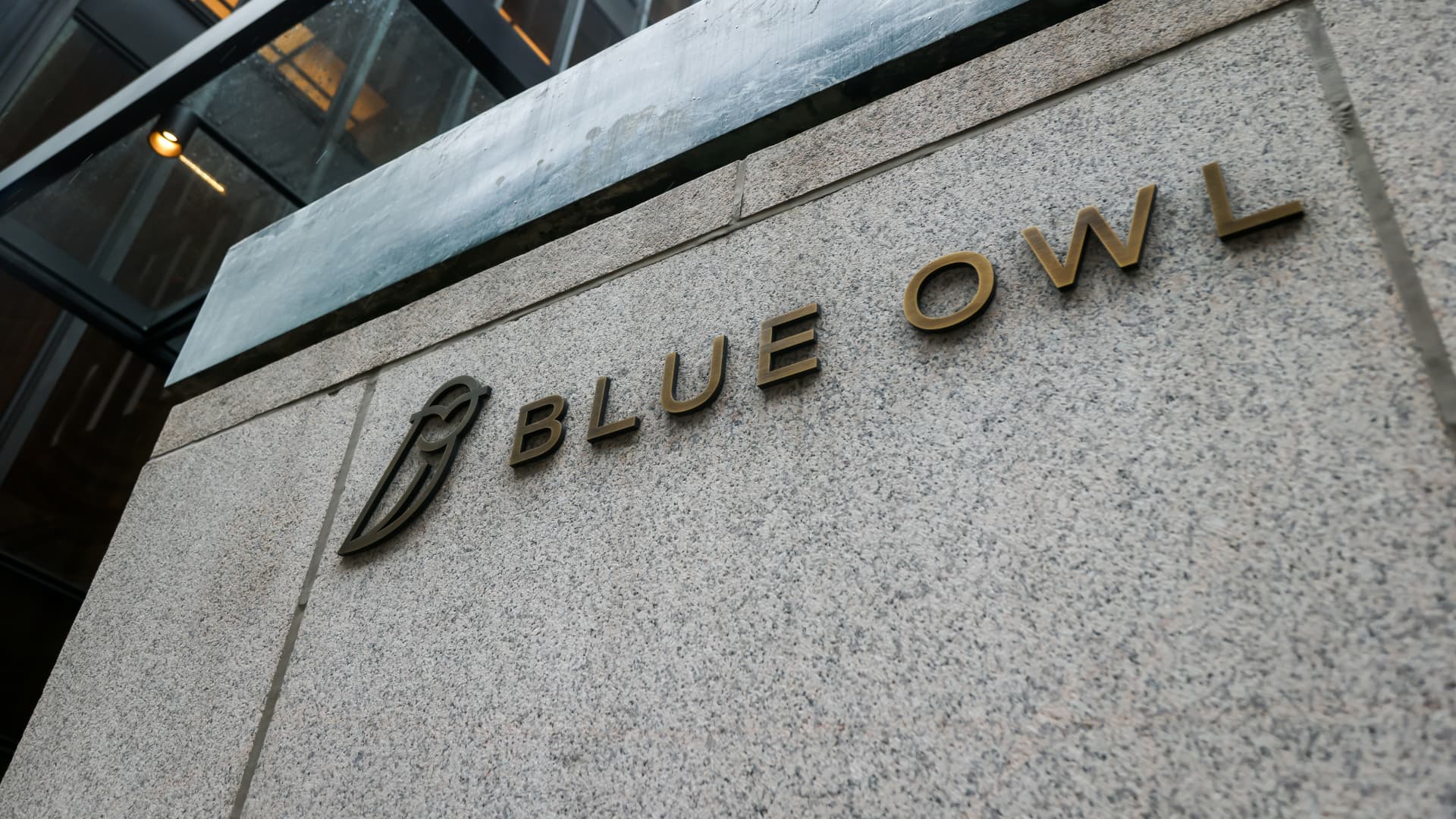
Blue Owl Caps Redemptions at 5% Amid High Requests

- Surge in Redemption Requests: Blue Owl's flagship OCIC fund faced redemption requests of approximately 21.9% during Q1, involving around $36 billion in assets, indicating heightened market concerns regarding AI-related disruptions to software companies, leading to increased liquidity pressure.
- Technology Fund Redemption Dynamics: The OTIC technology-focused fund experienced redemption requests as high as 40.7% in the same period, reflecting a concentrated shareholder base, particularly within certain wealth channels and regions, which exacerbated the redemption pressure.
- Redemption Cap Implementation: In response to the surge in redemption requests, Blue Owl opted to cap redemptions at 5% for both funds, a measure aimed at preserving liquidity and stabilizing investor confidence, while also demonstrating the company's ability to navigate market volatility.
- Market Reaction and Outlook: Despite implementing redemption caps, Blue Owl's shares fell approximately 9% in premarket trading on Thursday, indicating market concerns over its liquidity management, which may impact its competitive position in the private credit market moving forward.
See More
Blue Owl Capital Shares Drop Amid Redemption Limits Announcement
- Redemption Limit Announcement: Blue Owl Credit Income Corp. informed shareholders that redemptions in its private credit and technology-focused funds will be capped at 5%, following withdrawal requests totaling 21.9% and 40.7%, respectively.
- Stock Price Reaction: Shares of Blue Owl Capital fell 7%, or 59 cents, to $8.13 in morning trading, indicating a negative market response and concerns over liquidity risks associated with the redemption limits.
- Industry Impact: Other alternative asset management stocks, including Ares Management, KKR, Apollo Global, and Blackstone, also experienced declines, reflecting a broader loss of confidence in the sector following Blue Owl's announcement.
- Market Sentiment: This situation has raised investor concerns regarding the liquidity status of Blue Owl Capital and its funds, potentially leading to a decrease in investor trust and adversely affecting its market performance.
See More
Ares Capital Corporation Achieves 10.8% Dividend Yield Amid Low Market Rates
- Dividend Yield Advantage: Ares Capital Corporation boasts a 10.8% dividend yield, significantly higher than the S&P 500's current historical low of approximately 1.2%, indicating its appeal to income-seeking investors in a low-rate environment.
- BDC Characteristics: As the largest publicly traded Business Development Company (BDC), Ares Capital provides capital to small businesses and is required to distribute at least 90% of its taxable income as dividends, resulting in higher yields despite facing elevated default risks.
- Financial Robustness: Since its inception, Ares Capital has maintained annualized net realized loan losses averaging below 0%, outperforming banks and other BDCs, demonstrating its strong credit management capabilities that support its ability to pay stable dividends.
- Future Outlook: Ares anticipates distributing approximately $1.38 per share of excess taxable income to shareholders in 2026, further bolstering its dividend payment capacity, although economic fluctuations could impact the repayment ability of its portfolio companies, its financial position remains strong.
See More
Ares Capital Maintains Over 10% Dividend Yield
- Stable Dividend Record: Ares Capital has maintained a stable or growing dividend for over 16 years, currently yielding 10.8%, significantly higher than the S&P 500's 1.2%, showcasing its strong competitive edge in dividend payouts.
- Strong Financial Health: With an investment portfolio of approximately $29.4 billion and an annualized net realized loan loss rate below 0%, Ares Capital outperforms other BDCs and banks, indicating robust financial health that supports ongoing dividends.
- Excess Earnings Support: The company reported core earnings of $2.01 per share last year, exceeding its dividend of $1.92 per share, and expects to carry forward about $1.38 per share of excess taxable income for distribution in 2026, further enhancing dividend sustainability.
- Market Risk Consideration: While Ares Capital excels in dividend performance, potential economic downturns could impact the repayment ability of its portfolio companies, necessitating careful risk assessment by investors.
See More
US Stocks Close Mixed Amid Oil Surge and Economic Data
- Market Fluctuations: The S&P 500 Index closed up 0.11%, while the Dow Jones Industrial Average fell 0.13%, and the Nasdaq 100 Index rose 0.11%, reflecting volatility influenced by surging oil prices and economic data.
- Positive Economic Data: Weekly initial unemployment claims unexpectedly fell by 9,000 to 202,000, indicating a stronger labor market than the anticipated increase to 212,000, which could impact the Fed's interest rate policy.
- Impact of Oil Surge: Crude oil prices soared over 11% due to President Trump's tougher stance on Iran, leading to sharp declines in airline and cruise line stocks, with United Airlines and Carnival both down more than 3%.
- Corporate Developments: SBA Communications surged over 18% as it explores potential acquisition options, while Globalstar rose over 13% amid reports of Amazon's interest in acquiring the company, highlighting market focus on M&A activity.
See More
US Stocks Plummet as Oil Prices Surge
- Oil Price Surge: Crude oil prices soared over 13% as President Trump took a tougher stance on Iran, reaching a 3.5-week high, which not only heightened inflation fears but also pushed bond yields higher, with the 10-year T-note yield rising by 2 basis points to 4.34%.
- Unemployment Claims Drop: Weekly initial unemployment claims unexpectedly fell by 9,000 to 202,000, indicating a stronger labor market than the anticipated increase to 212,000, which could provide support for the stock market amid rising inflation concerns.
- Global Market Decline: Overseas stock markets are lower, with the Euro Stoxx 50 down 2.25%, China's Shanghai Composite down 0.74%, and Japan's Nikkei 225 sharply falling 2.38% from a two-week high, reflecting global economic uncertainty and investor caution.
- Airline Stocks Plummet: Airline stocks are sharply lower as crude oil prices surged over 10%, raising fuel costs; United Airlines and American Airlines Group both fell more than 6%, highlighting the direct impact of rising oil prices on airline profitability.
See More
Blue Owl Caps Redemptions at 5% Amid High Requests
- Surge in Redemption Requests: Blue Owl's flagship OCIC fund faced redemption requests of approximately 21.9% during Q1, involving around $36 billion in assets, indicating heightened market concerns regarding AI-related disruptions to software companies, leading to increased liquidity pressure.
- Technology Fund Redemption Dynamics: The OTIC technology-focused fund experienced redemption requests as high as 40.7% in the same period, reflecting a concentrated shareholder base, particularly within certain wealth channels and regions, which exacerbated the redemption pressure.
- Redemption Cap Implementation: In response to the surge in redemption requests, Blue Owl opted to cap redemptions at 5% for both funds, a measure aimed at preserving liquidity and stabilizing investor confidence, while also demonstrating the company's ability to navigate market volatility.
- Market Reaction and Outlook: Despite implementing redemption caps, Blue Owl's shares fell approximately 9% in premarket trading on Thursday, indicating market concerns over its liquidity management, which may impact its competitive position in the private credit market moving forward.
See More