Nvidia's Future Growth Potential is Huge
Written by Emily J. Thompson, Senior Investment Analyst
Updated: 41 minutes ago
0mins

Source: NASDAQ.COM
- Data Center Spending Forecast: Nvidia reaffirms that data center capital expenditures will reach $3 trillion to $4 trillion by 2030, indicating the company's long-term growth potential in the AI sector, despite currently not generating revenue from its new chip designs.
- New Chip Architecture Upgrade: The Vera Rubin architecture will replace the existing Blackwell technology, with projections suggesting inference costs will be 10 times cheaper and training costs 4 times lower than Blackwell chips, a significant upgrade that will unlock new AI capabilities and drive future revenue growth.
- Client Spending Signals: Alphabet has indicated that capital expenditures for 2027 will be significantly higher than in 2026, suggesting that AI build-out will extend into 2027, with Nvidia expecting hyperscaler capital expenditures to exceed $1 trillion in 2027, laying a foundation for future growth.
- Valuation Attractiveness: Nvidia currently trades at about 27 times earnings, and considering its strong growth expectations, even if growth slows to 50%, buying at this valuation remains a smart move, as the market tends to overlook long-term growth opportunities, presenting a favorable investment scenario.
Trade with 70% Backtested Accuracy
Stop guessing "Should I Buy NVDA?" and start using high-conviction signals backed by rigorous historical data.
Sign up today to access powerful investing tools and make smarter, data-driven decisions.
Analyst Views on NVDA
Wall Street analysts forecast NVDA stock price to rise
41 Analyst Rating
39 Buy
1 Hold
1 Sell
Strong Buy
Current: 219.510

Low
200.00
Averages
264.97
High
352.00
Current: 219.510
Low
200.00
Averages
264.97
High
352.00
About NVDA
NVIDIA Corporation is an artificial intelligence (AI) infrastructure company. The Company is engaged in accelerated computing to help solve the challenging computational problems. Its segments include Compute & Networking and Graphics. The Compute & Networking segment includes its Data Center accelerated computing and networking platforms and AI solutions and software, and automotive platforms and autonomous and electric vehicle solutions, including software. The Graphics segment includes GeForce GPUs for gaming and personal computers (PCs), and Quadro/NVIDIA RTX GPUs for enterprise workstation graphics. Its technology stack includes the foundational NVIDIA CUDA development platform that runs on all NVIDIA GPUs, as well as hundreds of domain-specific software libraries, frameworks, algorithms, software development kits (SDKs), and application programming interfaces (APIs). Its platforms address four markets, which include Data Center, Gaming, Professional Visualization, and Automotive.
About the author

Emily J. Thompson
Emily J. Thompson, a Chartered Financial Analyst (CFA) with 12 years in investment research, graduated with honors from the Wharton School. Specializing in industrial and technology stocks, she provides in-depth analysis for Intellectia’s earnings and market brief reports.
Nvidia Announces $80 Billion Stock Buyback Amid AI Growth

- Earnings Beat: Nvidia's first-quarter results exceeded Wall Street expectations, showcasing robust growth in its data center business amid accelerating AI infrastructure investments, which reflects management's confidence in future revenue and profit expansion.
- Massive Buyback Authorization: The board approved an additional $80 billion stock repurchase program, indicating management's belief that the current stock price is undervalued and aiming to enhance shareholder confidence through capital return.
- Historical Buyback Trends: Over the past year, Nvidia has authorized more than $25 billion in stock buybacks, demonstrating a consistent capital return strategy, particularly returning over $41.1 billion to shareholders through buybacks and dividends in fiscal 2026.
- Attractive Market Valuation: With a current P/E ratio of 25 times expected earnings, Nvidia appears relatively undervalued compared to historical premiums during AI expansion phases, making the buyback decision not just a capital return but a strong signal of future growth potential.
See More

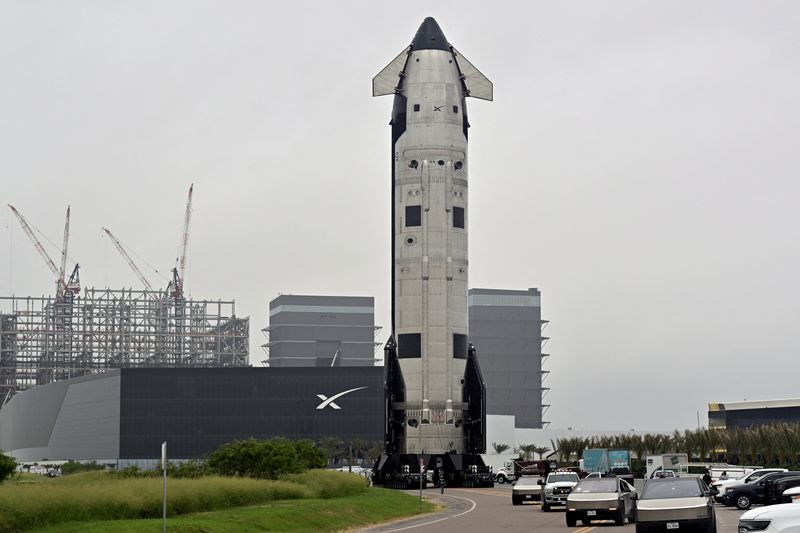
SpaceX IPO Expected to Be Largest in History
- Massive Capital Raise: SpaceX aims to raise approximately $75 billion through its IPO, with a valuation between $1.75 trillion and $2 trillion, positioning it as potentially the largest IPO in history and attracting significant investor interest.
- Infrastructure Supplier Dependence: While SpaceX's IPO garners attention, history indicates that infrastructure suppliers like Nvidia often achieve higher long-term returns, highlighting the market's ongoing demand for essential technology support.
- Clear Funding Utilization: The IPO proceeds will be directed towards expanding the Starlink network, enhancing Starship reusability, and designing data centers that could be deployed in orbit, all of which require substantial GPU support, thereby reinforcing the partnership with Nvidia.
- Expected Market Volatility: SpaceX stock is anticipated to experience typical post-IPO volatility, particularly after lock-up periods expire when insiders may begin to take profits, while Nvidia could benefit from the influx of capital due to its dominant position in AI infrastructure.
See More

Analysis of Billionaire Investors' Holdings


- Portfolio Overview: Chase Coleman's Tiger Global Management held 54 stocks at the end of Q1, with seven stocks comprising over 56% of the portfolio, indicating a strong confidence in the artificial intelligence sector.
- Major Holding Dynamics: Coleman increased his stakes in Nvidia and Meta Platforms by 9% and 12% respectively during Q1, while also boosting his positions in Broadcom and Taiwan Semiconductor by 25% and 49%, reflecting an optimistic outlook on AI demand.
- Reduction Strategy: Although Coleman slightly reduced his Amazon holdings by 0.1%, he significantly cut his Microsoft stake by 54%, a major adjustment that may indicate concerns about the company's future performance.
- Long-term Investment Strategy: Tiger Global Management's investment approach emphasizes long-term holding, with Coleman's portfolio not only mirroring individual investors' choices but also showcasing a forward-looking strategy in the rapidly growing AI market.
See More

Stock Market Soars Amid Economic Fragility


- Market Performance: Since April, the Dow Jones has risen by 0.58%, the S&P 500 by 0.37%, and the Nasdaq by 0.19%, all reaching new all-time highs, indicating a strong market recovery, yet the economy faces challenges such as rising inflation and high interest rates.
- Corporate Earnings Growth: While corporate earnings have been robust, with the Nasdaq up 13% year-to-date, the economy remains fragile with a weak labor market and increasing geopolitical uncertainty, prompting investors to prepare for potential market corrections.
- Investment Strategy Adjustment: In the current high-valuation market environment, investors should build a diversified portfolio of stocks and ETFs to navigate potential bear markets and corrections, taking advantage of market pullbacks to enhance portfolio value.
- Stock Recommendations: It is advisable to increase holdings in Nvidia, Amazon, and Walmart during market downturns; Nvidia dominates the data center market with a 90% share, Amazon shows strong growth potential at lower valuations, and Walmart performs well during economic slowdowns, making it a buy at the right price.
See More

Nvidia's Future Growth Potential is Huge
- Major Upgrade with New Architecture: Nvidia's upcoming Vera Rubin architecture will replace the existing Blackwell technology, with inference costs expected to be 10 times cheaper and training costs 4 times lower, unlocking new AI capabilities that will drive future revenue growth.
- Sustained Data Center Build-Out Trend: Nvidia reported $81.6 billion in revenue for Q1 2023, with $75.2 billion from its data center division; despite potential spending slowdowns, major client Alphabet has indicated that 2027 capital expenditures will be significantly higher than in 2026, suggesting AI build-out will continue into 2027.
- Market Underpricing Growth Expectations: Currently, Nvidia trades at about 27 times forward earnings, and if it meets growth projections, it will still trade at that multiple; with revenue boosts from Vera Rubin, 2027 is expected to be another year of remarkable growth for Nvidia.
- Multi-Year Growth Trajectory: While the market tends to focus on short-term performance, investing in Nvidia stock now means getting on board a multi-year growth trajectory, especially with projections indicating that 2027 capital expenditures could exceed $1 trillion.
See More

Google Cloud's 63% Revenue Growth Captivates Investors

- Cloud Business Excellence: Google Cloud achieved a remarkable 63% year-over-year revenue growth in Q1, with a customer backlog of $462 billion, indicating strong market demand and competitive advantage, further solidifying its leadership in the cloud computing sector.
- Capital Expenditure Plans: Google plans to invest between $180 billion and $190 billion in capital expenditures in 2026; despite facing high risks, this investment will drive the construction of AI infrastructure and enhance the company's long-term growth potential.
- Advertising Revenue Growth: YouTube's ad revenue rose nearly 11% year-over-year, while Google Search revenue increased by 19%, demonstrating the company's continued strong performance in advertising and further improving its overall financial health.
- Optimistic Market Outlook: Analysts project Alphabet's earnings per share to grow at a compound annual rate of nearly 17% between 2025 and 2028; although valuations have risen, the strong fundamentals and market trends instill confidence in investors regarding future prospects.
See More
Nvidia Announces $80 Billion Stock Buyback Amid AI Growth
- Earnings Beat: Nvidia's first-quarter results exceeded Wall Street expectations, showcasing robust growth in its data center business amid accelerating AI infrastructure investments, which reflects management's confidence in future revenue and profit expansion.
- Massive Buyback Authorization: The board approved an additional $80 billion stock repurchase program, indicating management's belief that the current stock price is undervalued and aiming to enhance shareholder confidence through capital return.
- Historical Buyback Trends: Over the past year, Nvidia has authorized more than $25 billion in stock buybacks, demonstrating a consistent capital return strategy, particularly returning over $41.1 billion to shareholders through buybacks and dividends in fiscal 2026.
- Attractive Market Valuation: With a current P/E ratio of 25 times expected earnings, Nvidia appears relatively undervalued compared to historical premiums during AI expansion phases, making the buyback decision not just a capital return but a strong signal of future growth potential.
See More
SpaceX IPO Expected to Be Largest in History
- Massive Capital Raise: SpaceX aims to raise approximately $75 billion through its IPO, with a valuation between $1.75 trillion and $2 trillion, positioning it as potentially the largest IPO in history and attracting significant investor interest.
- Infrastructure Supplier Dependence: While SpaceX's IPO garners attention, history indicates that infrastructure suppliers like Nvidia often achieve higher long-term returns, highlighting the market's ongoing demand for essential technology support.
- Clear Funding Utilization: The IPO proceeds will be directed towards expanding the Starlink network, enhancing Starship reusability, and designing data centers that could be deployed in orbit, all of which require substantial GPU support, thereby reinforcing the partnership with Nvidia.
- Expected Market Volatility: SpaceX stock is anticipated to experience typical post-IPO volatility, particularly after lock-up periods expire when insiders may begin to take profits, while Nvidia could benefit from the influx of capital due to its dominant position in AI infrastructure.
See More
Analysis of Billionaire Investors' Holdings
- Portfolio Overview: Chase Coleman's Tiger Global Management held 54 stocks at the end of Q1, with seven stocks comprising over 56% of the portfolio, indicating a strong confidence in the artificial intelligence sector.
- Major Holding Dynamics: Coleman increased his stakes in Nvidia and Meta Platforms by 9% and 12% respectively during Q1, while also boosting his positions in Broadcom and Taiwan Semiconductor by 25% and 49%, reflecting an optimistic outlook on AI demand.
- Reduction Strategy: Although Coleman slightly reduced his Amazon holdings by 0.1%, he significantly cut his Microsoft stake by 54%, a major adjustment that may indicate concerns about the company's future performance.
- Long-term Investment Strategy: Tiger Global Management's investment approach emphasizes long-term holding, with Coleman's portfolio not only mirroring individual investors' choices but also showcasing a forward-looking strategy in the rapidly growing AI market.
See More
Stock Market Soars Amid Economic Fragility
- Market Performance: Since April, the Dow Jones has risen by 0.58%, the S&P 500 by 0.37%, and the Nasdaq by 0.19%, all reaching new all-time highs, indicating a strong market recovery, yet the economy faces challenges such as rising inflation and high interest rates.
- Corporate Earnings Growth: While corporate earnings have been robust, with the Nasdaq up 13% year-to-date, the economy remains fragile with a weak labor market and increasing geopolitical uncertainty, prompting investors to prepare for potential market corrections.
- Investment Strategy Adjustment: In the current high-valuation market environment, investors should build a diversified portfolio of stocks and ETFs to navigate potential bear markets and corrections, taking advantage of market pullbacks to enhance portfolio value.
- Stock Recommendations: It is advisable to increase holdings in Nvidia, Amazon, and Walmart during market downturns; Nvidia dominates the data center market with a 90% share, Amazon shows strong growth potential at lower valuations, and Walmart performs well during economic slowdowns, making it a buy at the right price.
See More
Nvidia's Future Growth Potential is Huge
- Major Upgrade with New Architecture: Nvidia's upcoming Vera Rubin architecture will replace the existing Blackwell technology, with inference costs expected to be 10 times cheaper and training costs 4 times lower, unlocking new AI capabilities that will drive future revenue growth.
- Sustained Data Center Build-Out Trend: Nvidia reported $81.6 billion in revenue for Q1 2023, with $75.2 billion from its data center division; despite potential spending slowdowns, major client Alphabet has indicated that 2027 capital expenditures will be significantly higher than in 2026, suggesting AI build-out will continue into 2027.
- Market Underpricing Growth Expectations: Currently, Nvidia trades at about 27 times forward earnings, and if it meets growth projections, it will still trade at that multiple; with revenue boosts from Vera Rubin, 2027 is expected to be another year of remarkable growth for Nvidia.
- Multi-Year Growth Trajectory: While the market tends to focus on short-term performance, investing in Nvidia stock now means getting on board a multi-year growth trajectory, especially with projections indicating that 2027 capital expenditures could exceed $1 trillion.
See More
Google Cloud's 63% Revenue Growth Captivates Investors
- Cloud Business Excellence: Google Cloud achieved a remarkable 63% year-over-year revenue growth in Q1, with a customer backlog of $462 billion, indicating strong market demand and competitive advantage, further solidifying its leadership in the cloud computing sector.
- Capital Expenditure Plans: Google plans to invest between $180 billion and $190 billion in capital expenditures in 2026; despite facing high risks, this investment will drive the construction of AI infrastructure and enhance the company's long-term growth potential.
- Advertising Revenue Growth: YouTube's ad revenue rose nearly 11% year-over-year, while Google Search revenue increased by 19%, demonstrating the company's continued strong performance in advertising and further improving its overall financial health.
- Optimistic Market Outlook: Analysts project Alphabet's earnings per share to grow at a compound annual rate of nearly 17% between 2025 and 2028; although valuations have risen, the strong fundamentals and market trends instill confidence in investors regarding future prospects.
See More