Safran picks France for major new carbon brakes investment
Written by Emily J. Thompson, Senior Investment Analyst
Updated: Jul 31 2025
0mins
Should l Buy RTX?
Source: Reuters
Safran's New Factory Announcement: French aerospace group Safran has chosen to build a new carbon brakes factory in France, investing over 450 million euros and marking a significant commitment to its home country amidst competition from sites in the U.S. and Canada.
Impact on Production and Energy Concerns: The facility, set to begin operations in 2030, will enhance production capacity by 25% and relies on biomethane and low-carbon electricity, addressing previous tensions with EDF regarding energy supply costs.
Trade with 70% Backtested Accuracy
Stop guessing "Should I Buy RTX?" and start using high-conviction signals backed by rigorous historical data.
Sign up today to access powerful investing tools and make smarter, data-driven decisions.
Analyst Views on RTX
Wall Street analysts forecast RTX stock price to fall
14 Analyst Rating
9 Buy
5 Hold
0 Sell
Moderate Buy
Current: 196.210

Low
168.00
Averages
195.77
High
215.00
Current: 196.210
Low
168.00
Averages
195.77
High
215.00
About RTX
RTX Corporation is an aerospace and defense company, which provides advanced systems and services for commercial, military, and government customers worldwide. The Company operates through three segments: Collins Aerospace, Pratt & Whitney, and Raytheon. Collins Aerospace segment provides technologically advanced aerospace and defense products and aftermarket service solutions for civil and military aircraft manufacturers, commercial airlines, and regional, business and general aviation, as well as for defense and commercial space operations. The Pratt & Whitney segment supplies aircraft engines for commercial, military, business jet, and general aviation customers. The Raytheon segment provides defensive and offensive threat detection, tracking and mitigation capabilities for the United States and foreign government and commercial customers. The Raytheon designs, develops, and provides advanced capabilities in integrated air and missile defense, smart weapons, missiles and others.
About the author

Emily J. Thompson
Emily J. Thompson, a Chartered Financial Analyst (CFA) with 12 years in investment research, graduated with honors from the Wharton School. Specializing in industrial and technology stocks, she provides in-depth analysis for Intellectia’s earnings and market brief reports.

GE Aerospace Shares Down 8.7% Year-to-Date Amid Economic Concerns
- Poor Stock Performance: GE Aerospace shares have declined 8.7% year-to-date against a 2% industry growth, indicating significant underperformance due to macroeconomic volatility, rising fuel prices, and supply chain constraints.
- Order and Contract Growth: Despite pressures, GE Aerospace secured over 500 engine orders in 2025, including a $5 billion contract with the U.S. Air Force for F110 engines, reflecting strong demand in both commercial and defense sectors.
- Investment and Expansion Plans: The company plans to invest over $1 billion in global MRO facilities over the next five years and an additional $1 billion in U.S. manufacturing and technology in 2026, aimed at enhancing operational capacity and service quality to strengthen market competitiveness.
- Increased Shareholder Returns: In 2025, GE Aerospace paid $1.45 billion in dividends, a 44.1% year-over-year increase, and repurchased $7.4 billion in shares, demonstrating a commitment to shareholder returns despite high operating cost pressures.
See More

Surge in Global Defense Spending Amid Geopolitical Tensions


- Defense Budget Surge: The defense budget is projected to reach $1 trillion in 2026 and exceed $1.5 trillion in 2027, reflecting a dramatic increase in defense spending amid global unrest, which is driving investor interest in defense stocks.
- Lockheed Martin's Strong Performance: Lockheed Martin's F-35 stealth fighter and missile systems underpin its robust aeronautics segment, with a $4.94 billion contract signed in 2022 pushing its backlog to $194 billion, more than 2.5 times its annual sales.
- RTX's Diversification Advantage: RTX combines Raytheon's missile expertise with Pratt & Whitney's commercial aerospace engines, boasting over 85,000 engines in service; in 2022, it secured a $50 billion contract, ensuring long-term cash flow and market stability.
- Investor Choice Analysis: While Lockheed Martin is suitable for dividend-seeking investors, RTX, with its diversified business model and combination of defense and commercial aviation, demonstrates stronger resilience, making it a more attractive investment option.
See More

Global Arms Race Drives Surge in Defense Stocks
- Defense Budget Surge: The defense budget is projected to reach $1 trillion in 2026 and exceed $1.5 trillion in 2027, driving a significant rearmament effort that is reshaping the national security landscape and attracting investor interest.
- Strong Demand for Lockheed Martin: Lockheed Martin's F-35 stealth fighter sales provide a high-margin revenue stream, and the ongoing need for maintenance and software upgrades ensures earnings visibility for decades to come, reinforcing its market position.
- RTX's Diversified Business: RTX combines Raytheon's missile expertise with Pratt & Whitney's commercial aerospace engines, maintaining over 85,000 engines in service, which secures a steady cash flow and mitigates dependence on defense budgets.
- Growth in Contracts and Backlogs: Lockheed Martin's agreement with the DOD to quadruple Precision Strike Missile production capacity and RTX's $268 billion backlog, with defense making up about 40%, highlight both companies' strong positions in the defense sector.
See More

Global Defense Spending Surge Benefits Lockheed and RTX

- Surge in Defense Budget: The defense budget is projected to reach $1 trillion in 2026 and exceed $1.5 trillion in 2027, driving investor interest in defense stocks, with companies like Lockheed Martin and RTX poised to benefit significantly.
- Strong Demand for Lockheed Martin: Lockheed's F-35 stealth fighter sales provide a high-margin revenue stream, and with a 14% growth in its missiles and fire control business driven by global demand for HIMARS and PAC-3 interceptors, the company ensures earnings visibility for decades to come.
- RTX's Diversified Business: RTX combines Raytheon's missile expertise with Pratt & Whitney's commercial aerospace engines, maintaining over 85,000 engines in service, which secures a steady cash flow, further bolstered by a $50 billion contract awarded by the DOD.
- Investment Choice Analysis: Lockheed is suitable for dividend-seeking investors, while RTX has a slight edge due to its diversified business model; however, both are high-quality defense stocks, and future changes in defense budgets could impact Lockheed's performance.
See More
U.S. Air Force F-15E Shot Down, Successful Rescue Operation Confirmed

- Successful Rescue Operation: President Trump confirmed that two military officers missing in Iran have been rescued, showcasing the U.S. military's rapid response capabilities in complex environments and boosting public confidence in military rescue operations.
- Fighter Jet Shot Down: Iran successfully shot down a U.S. F-15E fighter jet, marking the first instance of a U.S. combat aircraft being downed since the war began, indicating an enhancement in Iran's aerial combat capabilities that could influence future military strategies.
- Oil Price Surge: The spot price for Brent crude soared to $141.36, the highest since the 2008 financial crisis, reflecting tight physical supply due to the closure of the Strait of Hormuz, which may have far-reaching implications for the global energy market.
- Trump's Pressure on Iran: Trump stated on social media that he has given Iran ten days to make a deal or open the Strait of Hormuz, demonstrating a hardline stance by the U.S. in the Middle East, which could escalate regional tensions.
See More

Escalating US-Iran Conflict: Trump’s Bold Claims vs. Ground Realities
- Discrepancy in US Claims: President Trump’s assertion of Iran being “militarily defeated” was contradicted just 48 hours later when Iranian forces downed two US planes, indicating Iran's resilience in a high-stakes war of attrition, which could sway US military strategy and public opinion.
- Limitations of Air Superiority: Despite claims of over 12,300 successful strikes, military analysts caution that the US has achieved “air superiority” only in pockets, not total dominance, which may lead to prolonged military engagement and resource depletion.
- Strategic Stalemate at Strait of Hormuz: Analysts suggest Iran now views its control over the Strait of Hormuz as a “strategic gain,” employing drones and anti-ship missiles to sustain a prolonged conflict, potentially disrupting global energy flows and increasing market uncertainty.
- Rising Market Risk Premium: As the conflict enters its sixth week, markets are pricing in a “permanent war-risk premium,” with diminishing expectations for a quick victory, shifting focus to the implications of a prolonged military engagement on the global economy.
See More
GE Aerospace Shares Down 8.7% Year-to-Date Amid Economic Concerns
- Poor Stock Performance: GE Aerospace shares have declined 8.7% year-to-date against a 2% industry growth, indicating significant underperformance due to macroeconomic volatility, rising fuel prices, and supply chain constraints.
- Order and Contract Growth: Despite pressures, GE Aerospace secured over 500 engine orders in 2025, including a $5 billion contract with the U.S. Air Force for F110 engines, reflecting strong demand in both commercial and defense sectors.
- Investment and Expansion Plans: The company plans to invest over $1 billion in global MRO facilities over the next five years and an additional $1 billion in U.S. manufacturing and technology in 2026, aimed at enhancing operational capacity and service quality to strengthen market competitiveness.
- Increased Shareholder Returns: In 2025, GE Aerospace paid $1.45 billion in dividends, a 44.1% year-over-year increase, and repurchased $7.4 billion in shares, demonstrating a commitment to shareholder returns despite high operating cost pressures.
See More
Surge in Global Defense Spending Amid Geopolitical Tensions
- Defense Budget Surge: The defense budget is projected to reach $1 trillion in 2026 and exceed $1.5 trillion in 2027, reflecting a dramatic increase in defense spending amid global unrest, which is driving investor interest in defense stocks.
- Lockheed Martin's Strong Performance: Lockheed Martin's F-35 stealth fighter and missile systems underpin its robust aeronautics segment, with a $4.94 billion contract signed in 2022 pushing its backlog to $194 billion, more than 2.5 times its annual sales.
- RTX's Diversification Advantage: RTX combines Raytheon's missile expertise with Pratt & Whitney's commercial aerospace engines, boasting over 85,000 engines in service; in 2022, it secured a $50 billion contract, ensuring long-term cash flow and market stability.
- Investor Choice Analysis: While Lockheed Martin is suitable for dividend-seeking investors, RTX, with its diversified business model and combination of defense and commercial aviation, demonstrates stronger resilience, making it a more attractive investment option.
See More
Global Arms Race Drives Surge in Defense Stocks
- Defense Budget Surge: The defense budget is projected to reach $1 trillion in 2026 and exceed $1.5 trillion in 2027, driving a significant rearmament effort that is reshaping the national security landscape and attracting investor interest.
- Strong Demand for Lockheed Martin: Lockheed Martin's F-35 stealth fighter sales provide a high-margin revenue stream, and the ongoing need for maintenance and software upgrades ensures earnings visibility for decades to come, reinforcing its market position.
- RTX's Diversified Business: RTX combines Raytheon's missile expertise with Pratt & Whitney's commercial aerospace engines, maintaining over 85,000 engines in service, which secures a steady cash flow and mitigates dependence on defense budgets.
- Growth in Contracts and Backlogs: Lockheed Martin's agreement with the DOD to quadruple Precision Strike Missile production capacity and RTX's $268 billion backlog, with defense making up about 40%, highlight both companies' strong positions in the defense sector.
See More
Global Defense Spending Surge Benefits Lockheed and RTX
- Surge in Defense Budget: The defense budget is projected to reach $1 trillion in 2026 and exceed $1.5 trillion in 2027, driving investor interest in defense stocks, with companies like Lockheed Martin and RTX poised to benefit significantly.
- Strong Demand for Lockheed Martin: Lockheed's F-35 stealth fighter sales provide a high-margin revenue stream, and with a 14% growth in its missiles and fire control business driven by global demand for HIMARS and PAC-3 interceptors, the company ensures earnings visibility for decades to come.
- RTX's Diversified Business: RTX combines Raytheon's missile expertise with Pratt & Whitney's commercial aerospace engines, maintaining over 85,000 engines in service, which secures a steady cash flow, further bolstered by a $50 billion contract awarded by the DOD.
- Investment Choice Analysis: Lockheed is suitable for dividend-seeking investors, while RTX has a slight edge due to its diversified business model; however, both are high-quality defense stocks, and future changes in defense budgets could impact Lockheed's performance.
See More
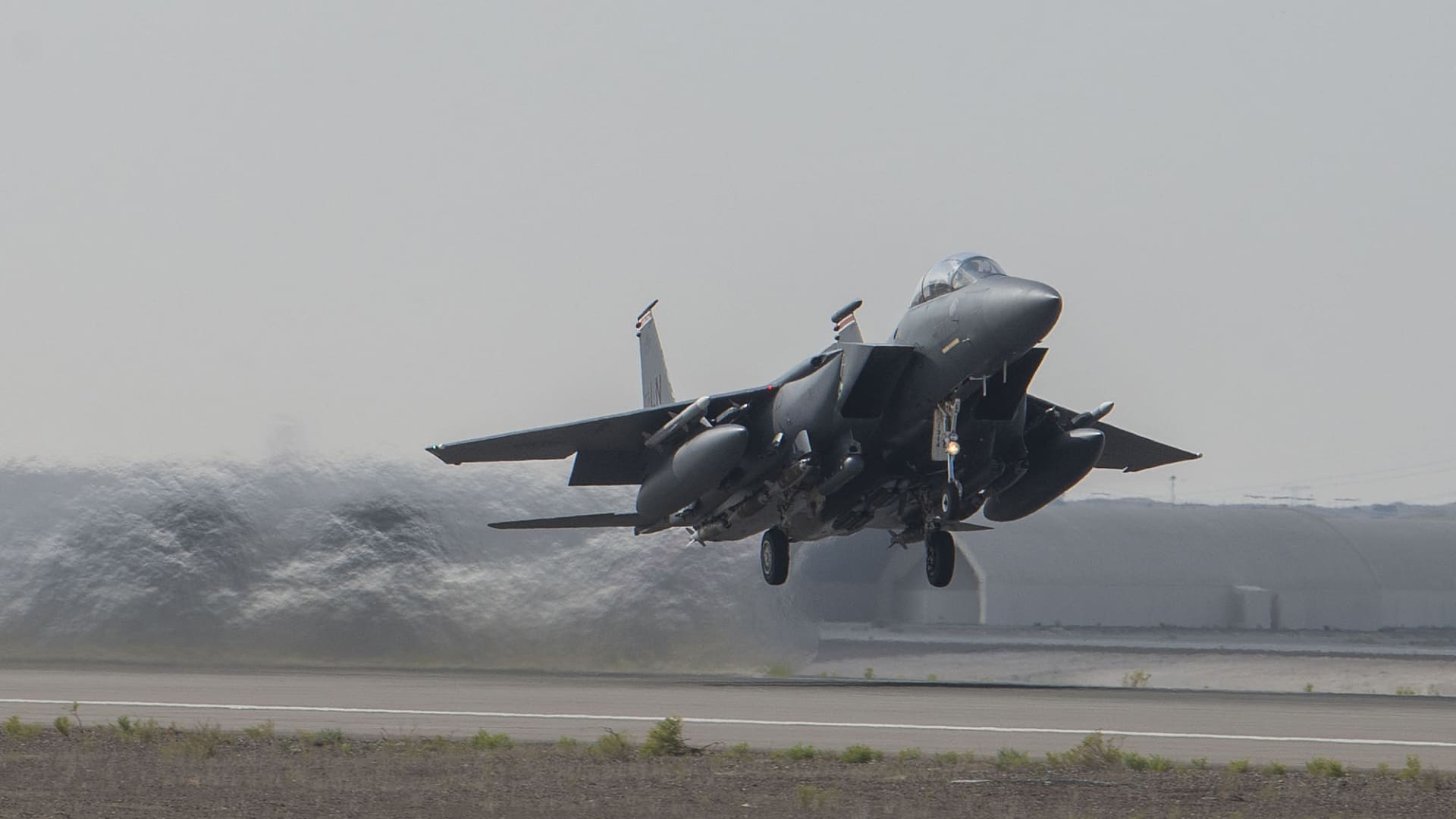
U.S. Air Force F-15E Shot Down, Successful Rescue Operation Confirmed
- Successful Rescue Operation: President Trump confirmed that two military officers missing in Iran have been rescued, showcasing the U.S. military's rapid response capabilities in complex environments and boosting public confidence in military rescue operations.
- Fighter Jet Shot Down: Iran successfully shot down a U.S. F-15E fighter jet, marking the first instance of a U.S. combat aircraft being downed since the war began, indicating an enhancement in Iran's aerial combat capabilities that could influence future military strategies.
- Oil Price Surge: The spot price for Brent crude soared to $141.36, the highest since the 2008 financial crisis, reflecting tight physical supply due to the closure of the Strait of Hormuz, which may have far-reaching implications for the global energy market.
- Trump's Pressure on Iran: Trump stated on social media that he has given Iran ten days to make a deal or open the Strait of Hormuz, demonstrating a hardline stance by the U.S. in the Middle East, which could escalate regional tensions.
See More
Escalating US-Iran Conflict: Trump’s Bold Claims vs. Ground Realities
- Discrepancy in US Claims: President Trump’s assertion of Iran being “militarily defeated” was contradicted just 48 hours later when Iranian forces downed two US planes, indicating Iran's resilience in a high-stakes war of attrition, which could sway US military strategy and public opinion.
- Limitations of Air Superiority: Despite claims of over 12,300 successful strikes, military analysts caution that the US has achieved “air superiority” only in pockets, not total dominance, which may lead to prolonged military engagement and resource depletion.
- Strategic Stalemate at Strait of Hormuz: Analysts suggest Iran now views its control over the Strait of Hormuz as a “strategic gain,” employing drones and anti-ship missiles to sustain a prolonged conflict, potentially disrupting global energy flows and increasing market uncertainty.
- Rising Market Risk Premium: As the conflict enters its sixth week, markets are pricing in a “permanent war-risk premium,” with diminishing expectations for a quick victory, shifting focus to the implications of a prolonged military engagement on the global economy.
See More