Pfizer Stock Plummets, Dividend Yield Rises to 6.3%
Written by Emily J. Thompson, Senior Investment Analyst
Updated: 5 days ago
0mins
Should l Buy PFE?
Source: NASDAQ.COM
- Significant Stock Decline: Pfizer's stock has fallen 55% since late 2021, indicating a substantial shift in Wall Street's perception of the pharmaceutical giant, which has pushed the dividend yield up to 6.3%, creating pressure on investor confidence.
- R&D Challenges: The company faced setbacks with its internally developed GLP-1 weight-loss drug candidate, failing to enter a highly competitive market, which has exacerbated investor concerns regarding its future growth potential and negatively impacted its vaccine business performance.
- Dividend Payment Risks: Pfizer's trailing 12-month dividend payout ratio stands at 126%, while the cash payout ratio is slightly lower at 107%, indicating risks in maintaining the dividend, especially given the current underperformance in business results.
- Future Outlook: Despite these challenges, Pfizer remains a $155 billion innovative company, with management clearly stating their commitment to supporting the dividend, suggesting that investors may retain confidence in the dividend's sustainability until the company's R&D efforts begin to yield results.
Trade with 70% Backtested Accuracy
Stop guessing "Should I Buy PFE?" and start using high-conviction signals backed by rigorous historical data.
Sign up today to access powerful investing tools and make smarter, data-driven decisions.
Analyst Views on PFE
Wall Street analysts forecast PFE stock price to rise
16 Analyst Rating
5 Buy
11 Hold
0 Sell
Moderate Buy
Current: 26.700

Low
24.00
Averages
28.56
High
35.00
Current: 26.700
Low
24.00
Averages
28.56
High
35.00
About PFE
Pfizer Inc. is a research-based, global biopharmaceutical company. The Company is engaged in the discovery, development, manufacture, marketing, sale and distribution of biopharmaceutical products worldwide. Its Biopharma segment includes the Pfizer U.S. Commercial Division, and the Pfizer International Commercial Division. Its product categories include oncology, primary care and specialty care. Its oncology products include Ibrance, Xtandi, Padcev, Adcetris, Inlyta, Lorbrena, Bosulif, Tukysa, Braftovi, Mektovi, Orgovyx, Elrexfio, Tivdak and Talzenna. Its primary care products include Eliquis, Nurtec ODT/Vydura, Zavzpret, the Prevnar family, Comirnaty, Abrysvo, FSME/IMMUN-TicoVac, Nimenrix, Trumenba, and Paxlovid. Its specialty care products include Xeljanz, Enbrel (outside the United States and Canada), Inflectra, Abrilada, Cibinqo, Litfulo, Eucrisa, Velsipity, the Vyndaqel family, Genotropin, and others. Its PF-08653944 is an ultra-long-acting fully biased GLP-1 receptor agonist.
About the author

Emily J. Thompson
Emily J. Thompson, a Chartered Financial Analyst (CFA) with 12 years in investment research, graduated with honors from the Wharton School. Specializing in industrial and technology stocks, she provides in-depth analysis for Intellectia’s earnings and market brief reports.

Pfizer Secures Patent Extension for Vyndamax with Generic Drugmakers

- Patent Protection Extended: Pfizer has reached a settlement with Hikma, Cipla, and Dexcel to extend the patent protection for Vyndamax until June 2031, providing the company with additional time to develop new blockbuster drugs, thereby enhancing its market competitiveness.
- Revenue Growth Support: Vyndamax and its related drugs generated $6.3 billion in revenue for Pfizer in 2025, reflecting a 17% increase and accounting for 10% of total revenue, indicating that Pfizer can maintain revenue stability despite slowing COVID vaccine sales.
- Market Expectation Adjustment: Analysts had anticipated a decline in Vyndamax revenue starting in 2029; however, the settlement delays the launch of generics, giving Pfizer two more years to fill this revenue gap, ensuring future income sources.
- Strategic Development Outlook: By securing Vyndamax's patent, Pfizer provides investors with a clear outlook for the next five years, and combined with the expansion of its respiratory vaccine portfolio, new GLP-1 obesity drugs, and cancer medications, it may achieve stable growth again.
See More

Biotech Dealmaking Accelerates Ahead of Patent Cliffs


- Surge in M&A Activity: Biotech M&A deal value reached $84 billion in Q1 2026, a staggering 89.4% increase from $44.4 billion a year earlier, indicating a robust market recovery, with projections suggesting total annual deal value could exceed $250 billion, ranking second only to 2019.
- Patent Cliffs Catalyst: Pharmaceutical companies are accelerating M&A due to impending patent cliffs, with over $300 billion in revenue facing loss of exclusivity in the next five years, particularly with Merck's Keytruda losing exclusivity in 2028, adding to market uncertainty.
- Strong Cash Reserves Fuel Acquisitions: Eli Lilly, for instance, ended 2025 with over $7.27 billion in cash and equivalents, having spent over $35 billion on acquisitions in 2023, demonstrating that strong financial positions make M&A decisions more justifiable at the board level.
- Mid-Sized Deals Dominate: Recent CEO transitions at GSK and Novo Nordisk have led to more aggressive M&A strategies, with analysts noting that the global revenue exposed to patent expirations over the next seven years is 2.5 times higher than in the last 16 years, further driving the activity in mid-sized deals.
See More

Pfizer Settles with Generic Makers to Extend Vyndamax Patent Until 2031
- Patent Extension: Pfizer's settlement with Hikma, Cipla, and Dexcel extends Vyndamax's patent protection until 2031, providing the company with additional market time to counter future competition.
- Revenue Growth Support: Vyndamax and its related drugs generated $6.3 billion in revenue for Pfizer in 2025, reflecting a 17% year-over-year growth and accounting for 10% of the company's total revenue, indicating strong performance in the heart disease treatment market.
- Improved Market Expectations: The patent extension allows Pfizer to avoid generic competition until 2029, giving the company time to launch new drugs and enhancing investor confidence in future growth prospects.
- Strategic Development Outlook: The expansion of Pfizer's respiratory vaccine portfolio, new GLP-1 obesity drugs, and new cancer drugs, combined with the stable revenue from Vyndamax, may help the company achieve sustained growth and improve overall market performance.
See More
Eli Lilly Reports Strong Q1 Performance with Revenue Surge
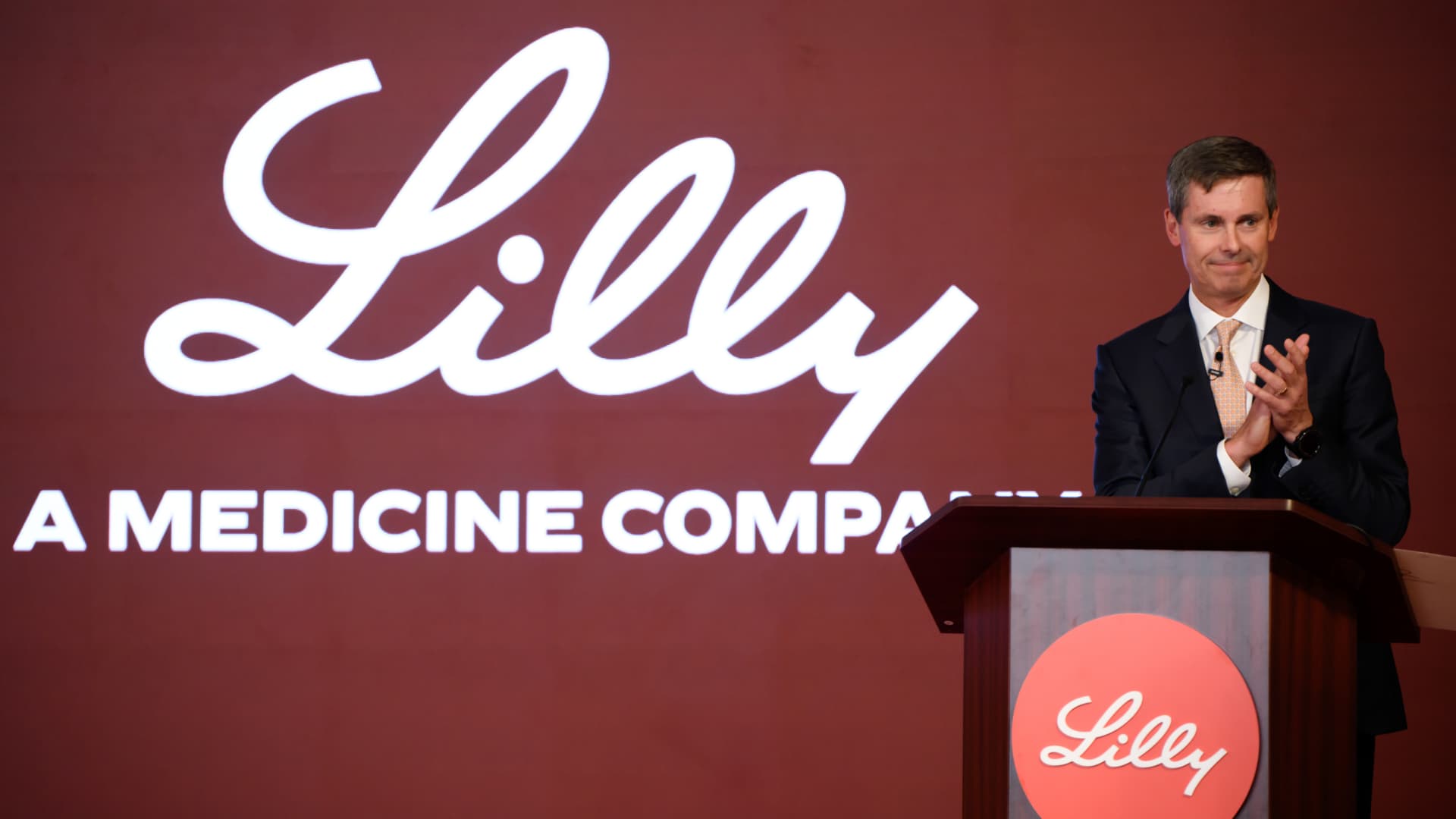
- Significant Revenue Growth: Eli Lilly reported Q1 revenue of $19.8 billion, a 56% year-over-year increase that surpassed the market expectation of $17.6 billion, demonstrating strong performance in the obesity drug market and reinforcing investor confidence in the stock.
- Earnings Surge: Adjusted earnings per share reached $8.55, more than doubling from last year and exceeding the consensus estimate of $6.66, indicating the company's ability to achieve profitability despite declining drug prices.
- Competitive Market Dynamics: Despite competition from Novo Nordisk, CEO David Ricks emphasized that the company can overcome price declines through higher volumes, with U.S. drug prices down 7% but volumes up 49%, showcasing strong demand for its GLP-1 products.
- New Drug Launch and Market Outlook: The recently launched obesity drug Foundayo received FDA approval and became available quickly; although initial growth has been slow, 80% of prescriptions are from patients who had not previously used GLP-1 drugs, suggesting potential to expand the market size.
See More

Pfizer's Dividend Growth Amid Market Transition
- Dividend Appeal: Pfizer's dividend yield has reached 6.55%, making it an attractive option for investors despite challenges from declining demand for COVID products and loss of exclusivity for older drugs, supported by its stable cash flow and history of dividend growth.
- Financial Health Focus: After achieving over $100 billion in revenue in 2022, Pfizer faced pressure from slowing growth and stock price declines, yet the company ensured dividend sustainability through cost restructuring and infrastructure adjustments, mitigating investment risks.
- R&D and Acquisition Strategy: Pfizer's focus on internal R&D and acquisitions, particularly the recent purchase of oncology specialist Seagen, has driven a 15% growth in its key product Padcev in the latest quarter, highlighting the company's potential in the oncology market.
- Future Growth Outlook: With 20 pivotal studies expected to start this year, even if only a few succeed, this could lead to significant growth down the line, enhancing confidence in Pfizer's ability to maintain its dividend payments.
See More

Analysis of Investment Value in High-Yield Stocks
- Attraction of High-Yield Stocks: High-yield stocks are favored by investors for their passive income potential; however, understanding the reasons behind their high yields is crucial to avoid risks of dividend cuts due to poor financial health.
- Pfizer's Current Situation: After achieving over $100 billion in revenue in 2022, Pfizer faced challenges as demand for its COVID products declined and older blockbusters lost exclusivity, leading to a drop in stock price and an increase in dividend yield, reflecting both challenges and opportunities.
- R&D and Acquisition Strategy: Pfizer has reorganized its costs and infrastructure to focus on internal R&D and acquisitions, recently achieving a 6% operational revenue growth, particularly driven by the acquisition of oncology specialist Seagen, which propelled key product Padcev's 15% growth.
- Future Outlook: Pfizer expects to initiate 20 pivotal studies this year; while the dividend yield may return to historical levels, the company's growth potential in the oncology market and stable dividend payments make it an attractive long-term investment option.
See More
Pfizer Secures Patent Extension for Vyndamax with Generic Drugmakers
- Patent Protection Extended: Pfizer has reached a settlement with Hikma, Cipla, and Dexcel to extend the patent protection for Vyndamax until June 2031, providing the company with additional time to develop new blockbuster drugs, thereby enhancing its market competitiveness.
- Revenue Growth Support: Vyndamax and its related drugs generated $6.3 billion in revenue for Pfizer in 2025, reflecting a 17% increase and accounting for 10% of total revenue, indicating that Pfizer can maintain revenue stability despite slowing COVID vaccine sales.
- Market Expectation Adjustment: Analysts had anticipated a decline in Vyndamax revenue starting in 2029; however, the settlement delays the launch of generics, giving Pfizer two more years to fill this revenue gap, ensuring future income sources.
- Strategic Development Outlook: By securing Vyndamax's patent, Pfizer provides investors with a clear outlook for the next five years, and combined with the expansion of its respiratory vaccine portfolio, new GLP-1 obesity drugs, and cancer medications, it may achieve stable growth again.
See More
Biotech Dealmaking Accelerates Ahead of Patent Cliffs
- Surge in M&A Activity: Biotech M&A deal value reached $84 billion in Q1 2026, a staggering 89.4% increase from $44.4 billion a year earlier, indicating a robust market recovery, with projections suggesting total annual deal value could exceed $250 billion, ranking second only to 2019.
- Patent Cliffs Catalyst: Pharmaceutical companies are accelerating M&A due to impending patent cliffs, with over $300 billion in revenue facing loss of exclusivity in the next five years, particularly with Merck's Keytruda losing exclusivity in 2028, adding to market uncertainty.
- Strong Cash Reserves Fuel Acquisitions: Eli Lilly, for instance, ended 2025 with over $7.27 billion in cash and equivalents, having spent over $35 billion on acquisitions in 2023, demonstrating that strong financial positions make M&A decisions more justifiable at the board level.
- Mid-Sized Deals Dominate: Recent CEO transitions at GSK and Novo Nordisk have led to more aggressive M&A strategies, with analysts noting that the global revenue exposed to patent expirations over the next seven years is 2.5 times higher than in the last 16 years, further driving the activity in mid-sized deals.
See More
Pfizer Settles with Generic Makers to Extend Vyndamax Patent Until 2031
- Patent Extension: Pfizer's settlement with Hikma, Cipla, and Dexcel extends Vyndamax's patent protection until 2031, providing the company with additional market time to counter future competition.
- Revenue Growth Support: Vyndamax and its related drugs generated $6.3 billion in revenue for Pfizer in 2025, reflecting a 17% year-over-year growth and accounting for 10% of the company's total revenue, indicating strong performance in the heart disease treatment market.
- Improved Market Expectations: The patent extension allows Pfizer to avoid generic competition until 2029, giving the company time to launch new drugs and enhancing investor confidence in future growth prospects.
- Strategic Development Outlook: The expansion of Pfizer's respiratory vaccine portfolio, new GLP-1 obesity drugs, and new cancer drugs, combined with the stable revenue from Vyndamax, may help the company achieve sustained growth and improve overall market performance.
See More
Eli Lilly Reports Strong Q1 Performance with Revenue Surge
- Significant Revenue Growth: Eli Lilly reported Q1 revenue of $19.8 billion, a 56% year-over-year increase that surpassed the market expectation of $17.6 billion, demonstrating strong performance in the obesity drug market and reinforcing investor confidence in the stock.
- Earnings Surge: Adjusted earnings per share reached $8.55, more than doubling from last year and exceeding the consensus estimate of $6.66, indicating the company's ability to achieve profitability despite declining drug prices.
- Competitive Market Dynamics: Despite competition from Novo Nordisk, CEO David Ricks emphasized that the company can overcome price declines through higher volumes, with U.S. drug prices down 7% but volumes up 49%, showcasing strong demand for its GLP-1 products.
- New Drug Launch and Market Outlook: The recently launched obesity drug Foundayo received FDA approval and became available quickly; although initial growth has been slow, 80% of prescriptions are from patients who had not previously used GLP-1 drugs, suggesting potential to expand the market size.
See More
Pfizer's Dividend Growth Amid Market Transition
- Dividend Appeal: Pfizer's dividend yield has reached 6.55%, making it an attractive option for investors despite challenges from declining demand for COVID products and loss of exclusivity for older drugs, supported by its stable cash flow and history of dividend growth.
- Financial Health Focus: After achieving over $100 billion in revenue in 2022, Pfizer faced pressure from slowing growth and stock price declines, yet the company ensured dividend sustainability through cost restructuring and infrastructure adjustments, mitigating investment risks.
- R&D and Acquisition Strategy: Pfizer's focus on internal R&D and acquisitions, particularly the recent purchase of oncology specialist Seagen, has driven a 15% growth in its key product Padcev in the latest quarter, highlighting the company's potential in the oncology market.
- Future Growth Outlook: With 20 pivotal studies expected to start this year, even if only a few succeed, this could lead to significant growth down the line, enhancing confidence in Pfizer's ability to maintain its dividend payments.
See More
Analysis of Investment Value in High-Yield Stocks
- Attraction of High-Yield Stocks: High-yield stocks are favored by investors for their passive income potential; however, understanding the reasons behind their high yields is crucial to avoid risks of dividend cuts due to poor financial health.
- Pfizer's Current Situation: After achieving over $100 billion in revenue in 2022, Pfizer faced challenges as demand for its COVID products declined and older blockbusters lost exclusivity, leading to a drop in stock price and an increase in dividend yield, reflecting both challenges and opportunities.
- R&D and Acquisition Strategy: Pfizer has reorganized its costs and infrastructure to focus on internal R&D and acquisitions, recently achieving a 6% operational revenue growth, particularly driven by the acquisition of oncology specialist Seagen, which propelled key product Padcev's 15% growth.
- Future Outlook: Pfizer expects to initiate 20 pivotal studies this year; while the dividend yield may return to historical levels, the company's growth potential in the oncology market and stable dividend payments make it an attractive long-term investment option.
See More