Oracle and Papa John's Stocks Surge Amid Strong Earnings and Takeover Bid
Written by Emily J. Thompson, Senior Investment Analyst
Updated: Mar 11 2026
0mins


Should l Buy ORCL?
Source: CNBC
- Oracle's Strong Earnings: Oracle's stock surged 10% after reporting fiscal third-quarter results that exceeded expectations, raising its fiscal 2027 revenue outlook by $1 billion to $90 billion, significantly above analysts' estimates of $86.6 billion, indicating robust growth potential in its cloud infrastructure business.
- Papa John's Takeover Bid: Shares of Papa John's jumped 18% following a $1.5 billion takeover bid from Irth Capital Management, offering $47 per share, a 50% premium over the stock price prior to the announcement, which could significantly alter the company's capital structure and market positioning.
- Campbell's Disappointing Results: Campbell's stock fell over 7.5% after its fiscal second-quarter earnings missed analyst expectations, with snack sales down 6% and U.S. soup sales down 4%, leading to a 23-year low in stock price, reflecting market concerns about its future growth prospects.
- Nebius Group's Investment Boost: Nebius Group's shares rose 15% after Nvidia announced a $2 billion investment to enable Nebius to deploy over 5 gigawatts of AI cloud capacity by the end of 2030, enhancing Nvidia's AI infrastructure buildout and demonstrating strong confidence in the AI sector.
Trade with 70% Backtested Accuracy
Stop guessing "Should I Buy ORCL?" and start using high-conviction signals backed by rigorous historical data.
Sign up today to access powerful investing tools and make smarter, data-driven decisions.
Analyst Views on ORCL
Wall Street analysts forecast ORCL stock price to rise
34 Analyst Rating
25 Buy
9 Hold
0 Sell
Moderate Buy
Current: 163.830

Low
180.00
Averages
309.59
High
400.00
Current: 163.830
Low
180.00
Averages
309.59
High
400.00
About ORCL
Oracle Corporation offers integrated suites of applications plus secure, autonomous infrastructure in the Oracle Cloud. The Company operates through three businesses: cloud and license, hardware and service. Its cloud and license business is engaged in the sale, marketing and delivery of its enterprise applications and infrastructure technologies through cloud and on-premise deployment models including its cloud services and license support offerings, and its cloud license and on-premise license offerings. Its hardware business provides infrastructure technologies including Oracle Engineered Systems, servers, storage, industry-specific hardware, operating systems, virtualization, management and other hardware-related software to support diverse IT environments. Its services business provides services to customers and partners to help maximize the performance of their investments in Oracle applications and infrastructure technologies.
About the author

Emily J. Thompson
Emily J. Thompson, a Chartered Financial Analyst (CFA) with 12 years in investment research, graduated with honors from the Wharton School. Specializing in industrial and technology stocks, she provides in-depth analysis for Intellectia’s earnings and market brief reports.
Analysts Claim OpenAI Concerns Are Overreactions

- Market Reaction Analysis: Despite the drop in shares of OpenAI-linked companies, Wedbush Securities believes that concerns over OpenAI missing internal growth targets are an “overreaction,” reflecting confidence in AI-driven tech stocks.
- Sustained Demand: Analysts emphasize that OpenAI continues to experience strong demand in both consumer and enterprise sectors, countering notions of weakening growth and indicating solid future growth potential for the company.
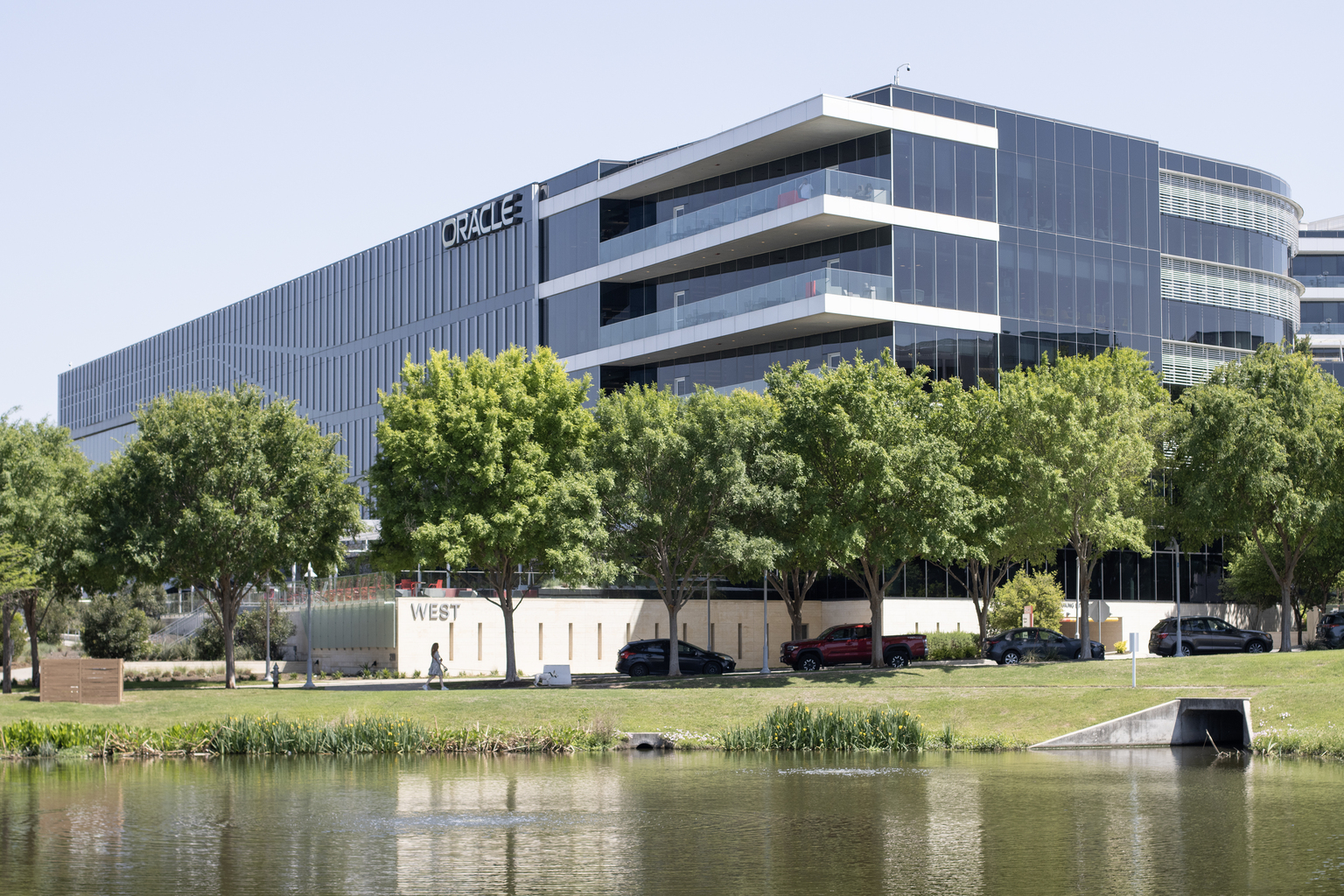
- Capital Raising Capability: Oracle is working on raising $50 billion in debt and equity, while OpenAI has successfully raised $122 billion, providing robust financial support for both companies to ensure ongoing business development.
- Investment Opportunity: Analysts view the pullback in Oracle's shares as a solid buying opportunity, especially with OpenAI expected to go public by the end of the year, which will provide new capital sources to meet future funding needs.
See More
Veeva Systems Joins S&P 500 Index

- Stock Surge: Veeva Systems (VEEV) shares surged over 11% in Thursday's after-hours trading due to the announcement that it will replace Coterra Energy (CTRA) in the S&P 500 index on May 7, which is expected to trigger significant passive fund buying and increase market attention.
- Market Valuation: Michael Burry noted that VEEV's forward P/E ratio of 17.6 is lower than Tyler Technologies' 26.4 and Oracle's 21.4, indicating its relative undervaluation among peers, which may attract value investors looking for bargains.
- Revenue Growth: Veeva reported a 16% growth in both quarterly and fiscal year 2026 revenues, driven by increasing subscription revenues, despite its stock declining nearly 29% this year, reflecting broader sell-off pressures in the cloud software sector.
- Improved Investor Sentiment: Retail sentiment around VEEV on Stocktwits shifted from 'neutral' to 'bullish' in the past 24 hours, with one user suggesting the stock is worth $300, indicating a potential upside of 73% based on its last close, reflecting optimism about its future performance.
See More

Veeva Systems Joins S&P 500 Index

- New S&P 500 Member: Veeva Systems announced its inclusion in the S&P 500 index effective May 7, replacing Coterra Energy, which is being acquired by Devon Energy; this move is expected to attract more fund managers to purchase its shares, potentially boosting its stock price.
- Stock Price Surge: Following the announcement, Veeva's stock jumped nearly 10% in after-hours trading, despite a 30% decline this year due to investor concerns over threats from artificial intelligence, indicating a divergence in market sentiment regarding its future performance.
- Financial Performance: Veeva reported a quarterly profit of $244 million on approximately $836 million in revenue, reflecting a nearly 16% year-over-year growth, demonstrating strong sales in its cloud software offerings for the life sciences sector despite intense competition.
- Industry Competition: Veeva faces significant competition from major players such as Amazon, IQVIA, Microsoft, Oracle, and Salesforce; however, its market position in the life sciences industry remains robust despite the potential threats posed by artificial intelligence.
See More

Veeva Systems Joins S&P 500 Index
- Stock Surge: Veeva Systems' stock jumped nearly 10% in after-hours trading following the announcement of its inclusion in the S&P 500, indicating market optimism about its future performance, particularly as being added to major indices typically attracts more fund managers to buy its shares.
- Replacement Company: Veeva will officially join the S&P 500 on May 7, replacing Coterra Energy, which is being acquired by Devon Energy; this change not only reflects market recognition of Veeva but also underscores its strategic importance in the life sciences sector.
- Financial Performance: Veeva reported a quarterly profit of $244 million on approximately $836 million in revenue, growing nearly 16% year-over-year, demonstrating solid fundamentals despite concerns about potential disruptions from artificial intelligence in the cloud software industry.
- Market Competition: Although Veeva's stock has fallen 30% in 2026, its competitors like Amazon, Microsoft, and Oracle are facing similar market pressures, highlighting the vulnerability of the entire industry amid technological transformations.
See More

Middle East Sovereign Wealth Funds May Impact AI Investments

- Investment Risk Warning: Jack Selby of Thiel Capital highlights that Middle Eastern sovereign wealth funds account for about a quarter of global AI investments over the next five years, and prolonged conflict in Iran could drain hundreds of billions, impacting data center projects and tech companies.
- Market Underestimation: Selby asserts that markets have underestimated the Middle East's significance in AI infrastructure capital expenditures, warning that if the region starts canceling projects, the market impact could be much larger than currently anticipated, leading to increased volatility.
- Increased Funding Dependency: As AI companies grow more reliant on Middle Eastern capital, Selby cautions that cancellations of data center projects could severely affect the industry, particularly as companies like OpenAI face missed revenue targets.
- Investment Strategy Shift: Selby notes that many family offices are opting for direct investments due to dissatisfaction with private equity and venture capital funds, but he warns that their lack of expertise in assessing private companies could lead to significant investment mistakes in the current market landscape.
See More

Impact of Middle East Investors on Global AI Investments

- Middle East Investment Share: Middle Eastern investors account for approximately 25% of global AI investments committed over the next five years, highlighting the region's significance in global capital expenditure; prolonged conflict could lead to capital flight, impacting data centers and tech companies.
- Funding Risk Warning: Jack Selby warns that a pullback by Middle Eastern sovereign wealth funds could drain hundreds of billions of dollars, threatening key data center projects, indicating that the market underestimates this risk.
- Investment Strategy Shift: Selby plans to focus his Copper Sky fund on tech firms outside California, New York, and Massachusetts, believing these areas offer better value, reflecting a reconsideration of traditional investment hotspots.
- Bubble Risk Intensification: Selby notes that the AI sector faces risks of overinvestment, with top hyperscalers expected to spend over $700 billion this year, potentially leading to wealth destruction far exceeding that of the dot-com bubble, necessitating market vigilance against a possible collapse.
See More
Analysts Claim OpenAI Concerns Are Overreactions
- Market Reaction Analysis: Despite the drop in shares of OpenAI-linked companies, Wedbush Securities believes that concerns over OpenAI missing internal growth targets are an “overreaction,” reflecting confidence in AI-driven tech stocks.
- Sustained Demand: Analysts emphasize that OpenAI continues to experience strong demand in both consumer and enterprise sectors, countering notions of weakening growth and indicating solid future growth potential for the company.
- Capital Raising Capability: Oracle is working on raising $50 billion in debt and equity, while OpenAI has successfully raised $122 billion, providing robust financial support for both companies to ensure ongoing business development.
- Investment Opportunity: Analysts view the pullback in Oracle's shares as a solid buying opportunity, especially with OpenAI expected to go public by the end of the year, which will provide new capital sources to meet future funding needs.
See More
Veeva Systems Joins S&P 500 Index
- Stock Surge: Veeva Systems (VEEV) shares surged over 11% in Thursday's after-hours trading due to the announcement that it will replace Coterra Energy (CTRA) in the S&P 500 index on May 7, which is expected to trigger significant passive fund buying and increase market attention.
- Market Valuation: Michael Burry noted that VEEV's forward P/E ratio of 17.6 is lower than Tyler Technologies' 26.4 and Oracle's 21.4, indicating its relative undervaluation among peers, which may attract value investors looking for bargains.
- Revenue Growth: Veeva reported a 16% growth in both quarterly and fiscal year 2026 revenues, driven by increasing subscription revenues, despite its stock declining nearly 29% this year, reflecting broader sell-off pressures in the cloud software sector.
- Improved Investor Sentiment: Retail sentiment around VEEV on Stocktwits shifted from 'neutral' to 'bullish' in the past 24 hours, with one user suggesting the stock is worth $300, indicating a potential upside of 73% based on its last close, reflecting optimism about its future performance.
See More
Veeva Systems Joins S&P 500 Index
- New S&P 500 Member: Veeva Systems announced its inclusion in the S&P 500 index effective May 7, replacing Coterra Energy, which is being acquired by Devon Energy; this move is expected to attract more fund managers to purchase its shares, potentially boosting its stock price.
- Stock Price Surge: Following the announcement, Veeva's stock jumped nearly 10% in after-hours trading, despite a 30% decline this year due to investor concerns over threats from artificial intelligence, indicating a divergence in market sentiment regarding its future performance.
- Financial Performance: Veeva reported a quarterly profit of $244 million on approximately $836 million in revenue, reflecting a nearly 16% year-over-year growth, demonstrating strong sales in its cloud software offerings for the life sciences sector despite intense competition.
- Industry Competition: Veeva faces significant competition from major players such as Amazon, IQVIA, Microsoft, Oracle, and Salesforce; however, its market position in the life sciences industry remains robust despite the potential threats posed by artificial intelligence.
See More
Veeva Systems Joins S&P 500 Index
- Stock Surge: Veeva Systems' stock jumped nearly 10% in after-hours trading following the announcement of its inclusion in the S&P 500, indicating market optimism about its future performance, particularly as being added to major indices typically attracts more fund managers to buy its shares.
- Replacement Company: Veeva will officially join the S&P 500 on May 7, replacing Coterra Energy, which is being acquired by Devon Energy; this change not only reflects market recognition of Veeva but also underscores its strategic importance in the life sciences sector.
- Financial Performance: Veeva reported a quarterly profit of $244 million on approximately $836 million in revenue, growing nearly 16% year-over-year, demonstrating solid fundamentals despite concerns about potential disruptions from artificial intelligence in the cloud software industry.
- Market Competition: Although Veeva's stock has fallen 30% in 2026, its competitors like Amazon, Microsoft, and Oracle are facing similar market pressures, highlighting the vulnerability of the entire industry amid technological transformations.
See More
Middle East Sovereign Wealth Funds May Impact AI Investments
- Investment Risk Warning: Jack Selby of Thiel Capital highlights that Middle Eastern sovereign wealth funds account for about a quarter of global AI investments over the next five years, and prolonged conflict in Iran could drain hundreds of billions, impacting data center projects and tech companies.
- Market Underestimation: Selby asserts that markets have underestimated the Middle East's significance in AI infrastructure capital expenditures, warning that if the region starts canceling projects, the market impact could be much larger than currently anticipated, leading to increased volatility.
- Increased Funding Dependency: As AI companies grow more reliant on Middle Eastern capital, Selby cautions that cancellations of data center projects could severely affect the industry, particularly as companies like OpenAI face missed revenue targets.
- Investment Strategy Shift: Selby notes that many family offices are opting for direct investments due to dissatisfaction with private equity and venture capital funds, but he warns that their lack of expertise in assessing private companies could lead to significant investment mistakes in the current market landscape.
See More
Impact of Middle East Investors on Global AI Investments
- Middle East Investment Share: Middle Eastern investors account for approximately 25% of global AI investments committed over the next five years, highlighting the region's significance in global capital expenditure; prolonged conflict could lead to capital flight, impacting data centers and tech companies.
- Funding Risk Warning: Jack Selby warns that a pullback by Middle Eastern sovereign wealth funds could drain hundreds of billions of dollars, threatening key data center projects, indicating that the market underestimates this risk.
- Investment Strategy Shift: Selby plans to focus his Copper Sky fund on tech firms outside California, New York, and Massachusetts, believing these areas offer better value, reflecting a reconsideration of traditional investment hotspots.
- Bubble Risk Intensification: Selby notes that the AI sector faces risks of overinvestment, with top hyperscalers expected to spend over $700 billion this year, potentially leading to wealth destruction far exceeding that of the dot-com bubble, necessitating market vigilance against a possible collapse.
See More