Nike Faces Challenges and Opportunities in Turnaround
Written by Emily J. Thompson, Senior Investment Analyst
Updated: 2 hours ago
0mins
Should l Buy NKE?
Source: NASDAQ.COM
- Brand Rebuilding Challenges: Nike has faced significant brand damage under its former CEO, particularly in the Chinese market, where local competitors like Anta and Li-Ning have aggressively captured market share, threatening Nike's dominance.
- Strategic Shift Impact: Since John Donahoe took over as CEO in 2020, he has aimed to pivot towards a higher-margin direct-to-consumer model; however, cutting ties with long-term retail partners has resulted in lost market space and diminished competitive strength.
- Market Environment Challenges: The ongoing trade war and tariff policies have complicated Nike's recovery efforts, and while there is potential for turnaround through operational momentum and leverage, uncertainties remain, especially regarding customer retention after significant losses.
- Investor Confidence Issues: Despite being an iconic global brand, Nike's classification as a
Trade with 70% Backtested Accuracy
Stop guessing "Should I Buy NKE?" and start using high-conviction signals backed by rigorous historical data.
Sign up today to access powerful investing tools and make smarter, data-driven decisions.
Analyst Views on NKE
Wall Street analysts forecast NKE stock price to rise
21 Analyst Rating
14 Buy
7 Hold
0 Sell
Moderate Buy
Current: 42.690

Low
62.00
Averages
76.11
High
110.00
Current: 42.690
Low
62.00
Averages
76.11
High
110.00
About NKE
NIKE, Inc. is engaged in the designing, marketing and distributing of athletic footwear, apparel, equipment and accessories and services for sports and fitness activities. The Company's operating segments include North America; Europe, Middle East & Africa (EMEA); Greater China; and Asia Pacific & Latin America (APLA). It sells a line of equipment and accessories under the NIKE Brand name, including bags, socks, sport balls, eyewear, timepieces, digital devices, bats, gloves, protective equipment and other equipment designed for sports activities. It also designs products specifically for the Jordan Brand and Converse. The Jordan Brand designs, distributes and licenses athletic and casual footwear, apparel and accessories predominantly focused on basketball performance and culture using the Jumpman trademark. The Company also designs, distributes and licenses casual sneakers, apparel and accessories under the Chuck Taylor, All Star, One Star, Star Chevron and Jack Purcell trademarks.
About the author

Emily J. Thompson
Emily J. Thompson, a Chartered Financial Analyst (CFA) with 12 years in investment research, graduated with honors from the Wharton School. Specializing in industrial and technology stocks, she provides in-depth analysis for Intellectia’s earnings and market brief reports.

Nike Struggles with Growth as Earnings Decline
- Stagnant Revenue Growth: Nike's quarterly report for the period ending February 28 shows revenue of $11.3 billion, flat compared to last year, and only a 9% increase from $10.4 billion five years ago, reflecting a disappointing compounded annual growth rate of just 1.7%.
- Significant Profit Decline: The company's net income for the quarter was $520 million, down 35% year-over-year, and a stark 64% decline from over $1.4 billion five years ago, indicating a troubling decrease in profitability that raises red flags for investors.
- Poor Stock Performance: Nike's stock has already fallen 31% this year, and while its current valuation may attract bargain hunters, the investment risk has markedly increased compared to the past, highlighting market concerns over its future growth prospects.
- Transformation Challenges: Under new CEO leadership, Nike is striving to rebuild relationships with key partners and achieve business recovery; however, with a history of declining performance, investors must exercise patience as the turnaround path is fraught with difficulties.
See More

GLP-1 Drugs Drive Growth in U.S. Apparel Spending

- Surge in Apparel Demand: Approximately 80% of GLP-1 users anticipate needing new clothing due to size changes, with a Circana survey revealing that 55% of active users have already purchased new items, indicating a fresh wave of consumer spending in the apparel market.
- Significant Market Potential: Bernstein estimates that GLP-1 users could purchase between 150 million and 700 million apparel items due to weight loss, translating to an additional $13 billion in annual spending in the U.S. apparel sector, highlighting robust market demand.
- Brands Adapting to Change: Retailers like Stitch Fix have launched targeted marketing campaigns for weight loss users, with client mentions of weight loss requests tripling over the past two years, demonstrating brands' proactive adaptation to this emerging trend.
- Shift in Consumer Behavior: An increasing number of consumers are opting for more affordable clothing during their weight loss journey, with Destination XL's CEO noting that about 25% of their customers are using GLP-1 drugs, leading to a preference for cost-effective options.
See More

Nike Faces Challenges and Opportunities in Turnaround

- Brand Rebuilding Challenges: Nike has faced significant brand damage under its former CEO, particularly in the Chinese market, where local competitors like Anta and Li-Ning have aggressively captured market share, threatening Nike's dominance.
- Strategic Shift Impact: Since John Donahoe took over as CEO in 2020, he has aimed to pivot towards a higher-margin direct-to-consumer model; however, cutting ties with long-term retail partners has resulted in lost market space and diminished competitive strength.
- Market Environment Challenges: The ongoing trade war and tariff policies have complicated Nike's recovery efforts, and while there is potential for turnaround through operational momentum and leverage, uncertainties remain, especially regarding customer retention after significant losses.
- Investor Confidence Issues: Despite being an iconic global brand, Nike's classification as a
See More
Nike Faces Challenges in Brand Recovery
- Brand Image Damage: Nike has suffered from years of missteps under its former CEO, leading to a tarnished brand image; despite its globally recognized logo and slogan, market share has been eroded by competitors.
- Strategic Transition Challenges: New CEO John Donahoe shifted focus to higher-margin businesses, reducing investment in product innovation, which has left Nike slow to respond to technological advancements and market demands, failing to effectively compete.
- Increased Market Competition: By severing ties with long-term retail partners, Nike lost market space, particularly in China, where local brands like Anta and Li-Ning have rapidly emerged, further weakening Nike's market position.
- Future Uncertainty: While Nike has the potential to turn its business around, external factors such as the trade war with China and tariffs, along with uncertainties regarding the company's past profitability, lead investors to adopt a cautious outlook on its future development.
See More
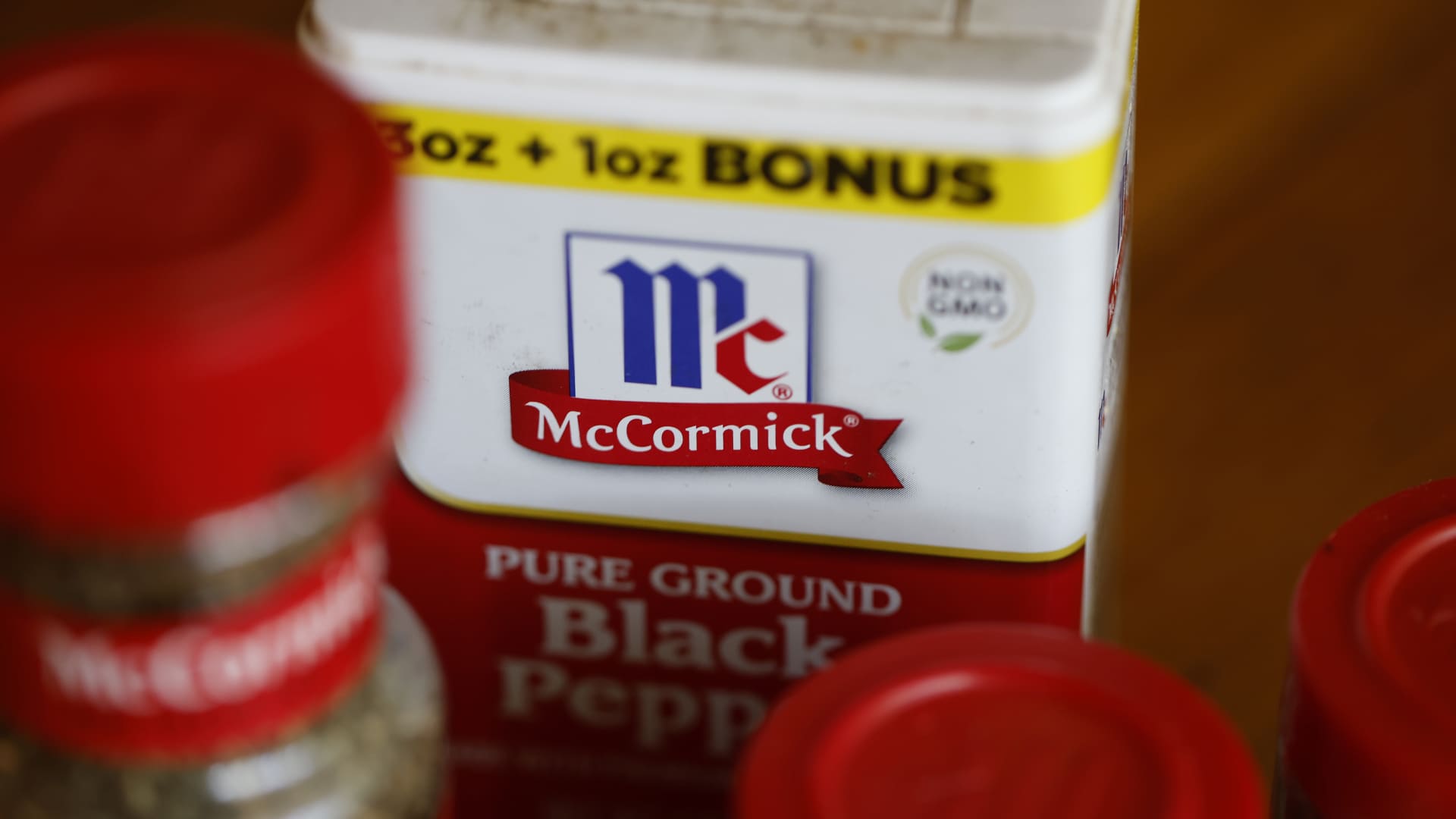
McCormick Acquires Unilever's Food Business Amid Stock Volatility

- Acquisition Update: McCormick's announcement to acquire Unilever's food business comes as its stock has dropped nearly 6% since the deal was revealed, indicating market caution and investor concerns regarding future integration challenges.
- Analyst Sentiment: Despite the stock decline, Jim Cramer and other analysts express optimism about the deal, suggesting that the current stock price presents an attractive entry point, with seven analysts rating it as buy or strong buy, reflecting confidence in McCormick's growth potential.
- Consumer Trends: As consumers increasingly turn to GLP-1 drugs for weight loss, analysts highlight potential beneficiaries like TJX, Walmart, and Target, with TJX up 5% in 2026, showcasing its strong market performance amid changing consumer preferences.
- Golf Market Dynamics: Equipment maker Callaway has seen its stock rise nearly 24% in 2026 after rebranding to CALY in January following the sale of a majority stake in Topgolf, indicating its ongoing appeal in the golf market and potential for future growth.
See More
Nike's Stock Decline Continues but Future Looks Promising
- Poor Stock Performance: Nike's stock (NKE) has plummeted over 75% since its November 2021 peak, with a year-to-date decline exceeding 30% as of April 6, currently priced at $43.13, marking a decade low that raises concerns about its future growth prospects.
- Strategic Missteps: Nike's overemphasis on direct-to-consumer channels has made its products harder to obtain, allowing competitors like On and Hoka to gain market share; although the company is attempting to revert to its wholesale roots, this transition is not quick or easy.
- Challenges in China: The company anticipates a 20% decline in sales in China for the current fiscal quarter, a market that was once a significant growth driver, indicating a weakening competitive position globally.
- Positive Earnings Outlook: While revenue is expected to grow at a modest CAGR of 3.8%, Nike's earnings per share (EPS) is projected to grow at a much faster rate of around 25% from 2025 to 2028, suggesting improved operational efficiency, although this may not immediately translate into stock price appreciation.
See More
Nike Struggles with Growth as Earnings Decline
- Stagnant Revenue Growth: Nike's quarterly report for the period ending February 28 shows revenue of $11.3 billion, flat compared to last year, and only a 9% increase from $10.4 billion five years ago, reflecting a disappointing compounded annual growth rate of just 1.7%.
- Significant Profit Decline: The company's net income for the quarter was $520 million, down 35% year-over-year, and a stark 64% decline from over $1.4 billion five years ago, indicating a troubling decrease in profitability that raises red flags for investors.
- Poor Stock Performance: Nike's stock has already fallen 31% this year, and while its current valuation may attract bargain hunters, the investment risk has markedly increased compared to the past, highlighting market concerns over its future growth prospects.
- Transformation Challenges: Under new CEO leadership, Nike is striving to rebuild relationships with key partners and achieve business recovery; however, with a history of declining performance, investors must exercise patience as the turnaround path is fraught with difficulties.
See More
GLP-1 Drugs Drive Growth in U.S. Apparel Spending
- Surge in Apparel Demand: Approximately 80% of GLP-1 users anticipate needing new clothing due to size changes, with a Circana survey revealing that 55% of active users have already purchased new items, indicating a fresh wave of consumer spending in the apparel market.
- Significant Market Potential: Bernstein estimates that GLP-1 users could purchase between 150 million and 700 million apparel items due to weight loss, translating to an additional $13 billion in annual spending in the U.S. apparel sector, highlighting robust market demand.
- Brands Adapting to Change: Retailers like Stitch Fix have launched targeted marketing campaigns for weight loss users, with client mentions of weight loss requests tripling over the past two years, demonstrating brands' proactive adaptation to this emerging trend.
- Shift in Consumer Behavior: An increasing number of consumers are opting for more affordable clothing during their weight loss journey, with Destination XL's CEO noting that about 25% of their customers are using GLP-1 drugs, leading to a preference for cost-effective options.
See More
Nike Faces Challenges and Opportunities in Turnaround
- Brand Rebuilding Challenges: Nike has faced significant brand damage under its former CEO, particularly in the Chinese market, where local competitors like Anta and Li-Ning have aggressively captured market share, threatening Nike's dominance.
- Strategic Shift Impact: Since John Donahoe took over as CEO in 2020, he has aimed to pivot towards a higher-margin direct-to-consumer model; however, cutting ties with long-term retail partners has resulted in lost market space and diminished competitive strength.
- Market Environment Challenges: The ongoing trade war and tariff policies have complicated Nike's recovery efforts, and while there is potential for turnaround through operational momentum and leverage, uncertainties remain, especially regarding customer retention after significant losses.
- Investor Confidence Issues: Despite being an iconic global brand, Nike's classification as a
See More
Nike Faces Challenges in Brand Recovery
- Brand Image Damage: Nike has suffered from years of missteps under its former CEO, leading to a tarnished brand image; despite its globally recognized logo and slogan, market share has been eroded by competitors.
- Strategic Transition Challenges: New CEO John Donahoe shifted focus to higher-margin businesses, reducing investment in product innovation, which has left Nike slow to respond to technological advancements and market demands, failing to effectively compete.
- Increased Market Competition: By severing ties with long-term retail partners, Nike lost market space, particularly in China, where local brands like Anta and Li-Ning have rapidly emerged, further weakening Nike's market position.
- Future Uncertainty: While Nike has the potential to turn its business around, external factors such as the trade war with China and tariffs, along with uncertainties regarding the company's past profitability, lead investors to adopt a cautious outlook on its future development.
See More
McCormick Acquires Unilever's Food Business Amid Stock Volatility
- Acquisition Update: McCormick's announcement to acquire Unilever's food business comes as its stock has dropped nearly 6% since the deal was revealed, indicating market caution and investor concerns regarding future integration challenges.
- Analyst Sentiment: Despite the stock decline, Jim Cramer and other analysts express optimism about the deal, suggesting that the current stock price presents an attractive entry point, with seven analysts rating it as buy or strong buy, reflecting confidence in McCormick's growth potential.
- Consumer Trends: As consumers increasingly turn to GLP-1 drugs for weight loss, analysts highlight potential beneficiaries like TJX, Walmart, and Target, with TJX up 5% in 2026, showcasing its strong market performance amid changing consumer preferences.
- Golf Market Dynamics: Equipment maker Callaway has seen its stock rise nearly 24% in 2026 after rebranding to CALY in January following the sale of a majority stake in Topgolf, indicating its ongoing appeal in the golf market and potential for future growth.
See More
Nike's Stock Decline Continues but Future Looks Promising
- Poor Stock Performance: Nike's stock (NKE) has plummeted over 75% since its November 2021 peak, with a year-to-date decline exceeding 30% as of April 6, currently priced at $43.13, marking a decade low that raises concerns about its future growth prospects.
- Strategic Missteps: Nike's overemphasis on direct-to-consumer channels has made its products harder to obtain, allowing competitors like On and Hoka to gain market share; although the company is attempting to revert to its wholesale roots, this transition is not quick or easy.
- Challenges in China: The company anticipates a 20% decline in sales in China for the current fiscal quarter, a market that was once a significant growth driver, indicating a weakening competitive position globally.
- Positive Earnings Outlook: While revenue is expected to grow at a modest CAGR of 3.8%, Nike's earnings per share (EPS) is projected to grow at a much faster rate of around 25% from 2025 to 2028, suggesting improved operational efficiency, although this may not immediately translate into stock price appreciation.
See More