Meta Platforms' Secret AI Advantage Set to Outpace Rivals
Meta's User Engagement: Meta Platforms has over 3.5 billion daily active users across its apps, generating extensive behavioral data that enhances its AI systems and advertising tools, which now manage over $60 billion in annual ad spend.
AI and Revenue Growth: The company is transitioning from a social media focus to a technology powerhouse, with significant growth in Reality Labs and AI-driven products, including smart glasses and AI assistants, which are expected to reach profitability soon.
Competitive Advantage: Meta's unique scale of daily user interactions creates a closed-loop system that continuously improves its AI capabilities, leading to higher engagement and advertising effectiveness that competitors cannot easily replicate.
Investment Perspective: Investors who view Meta solely as a social media company may overlook its potential as an evolving AI platform, which is likely to enhance revenue diversity and margins, justifying a higher valuation in the future.
Trade with 70% Backtested Accuracy
Analyst Views on META

About META
About the author


MercadoLibre Shares Drop Amid Rising Treasury Yields and Inflation Concerns


- Stock Price Decline: MercadoLibre's shares fell 2.9% in the afternoon session primarily due to the April PPI report pushing the 10-year Treasury yield to a 10-month high of 4.49%, eliminating 2026 rate-cut expectations and raising the discount rate for long-duration growth valuations.
- Consumer Pressure Intensifies: The report indicated negative real wage growth (3.6% wages vs. 3.8% CPI), which typically leads brands to tighten digital advertising budgets to protect margins, thereby impacting revenue for digital advertising giants like Google, Meta, and Amazon.
- Market Reaction Analysis: Although the Q1 ad cycle was strong, the PPI data suggested a macro environment turning against next quarter's growth targets, with the market's reaction indicating that it considers this news significant but not fundamentally altering its perception of the business.
- Investor Confidence Fluctuations: MercadoLibre's stock has dropped 21.9% since the beginning of the year, currently trading at $1,542 per share, which is 41% below its 52-week high of $2,614 from June 2025; however, investors who bought $1,000 worth of shares five years ago would still see their investment worth $1,189.

Bank of America Raises Nvidia Price Target to $320 Amid AI Optimism


- Price Target Increase: Bank of America analyst Vivek Arya raised Nvidia's price target from $300 to $320, implying approximately 42% upside from its May 15 closing price, reflecting an optimistic outlook on the AI market potential.
- Market Size Estimate: The firm increased its estimate of the total addressable market for AI data centers from $1.4 trillion to $1.7 trillion annually, indicating strong confidence in future AI infrastructure demand, with Nvidia expected to maintain over 70% market share.
- Robust Financial Performance: Nvidia generated $215.9 billion in revenue for fiscal 2026, a 65% year-over-year increase, with a gross margin exceeding 71%, and is guiding for first-quarter fiscal 2027 revenue in the range of $78 billion, showcasing strong business momentum.
- Rising Customer Spending: Nvidia's top four customers—Amazon, Microsoft, Alphabet, and Meta—are projected to spend over $700 billion on AI infrastructure in 2026, further solidifying Nvidia's leadership position in the AI market.

Analysis and Investment Recommendations for AI Stocks


- BigBear.ai Financial Struggles: BigBear.ai's revenue declined from $146 million in 2021 to $128 million in 2025, with net losses widening from $124 million to $294 million, primarily due to the bankruptcy of its largest customer, Virgin Orbit, and increased market competition, raising concerns about its future growth prospects in the AI sector.
- C3.ai's Weak Growth: C3.ai's revenue increased from $183 million to $389 million between fiscal 2022 and 2025, but its net loss expanded from $56 million to $289 million; despite launching new generative AI modules, its reliance on lower-margin services led to a decrease in gross margins, with future revenue expected to drop to $251 million.
- Broadcom's Strong Performance: Broadcom's revenue and adjusted EBITDA grew at CAGRs of 24% and 27% from fiscal 2021 to 2025, with AI chip sales surging 65% to $20 billion in 2025, accounting for 31% of total revenue, indicating robust demand and growth potential in the AI market.
- Future Outlook: Analysts expect Broadcom's revenue and adjusted EBITDA to grow at a 48% CAGR through 2028; despite its enterprise value of $2.1 trillion, it remains an attractive investment option compared to C3.ai and BigBear.ai, trading at 18 times next year's adjusted EBITDA.
Cerebras Systems IPO Soars, Reaches $95 Billion Market Cap


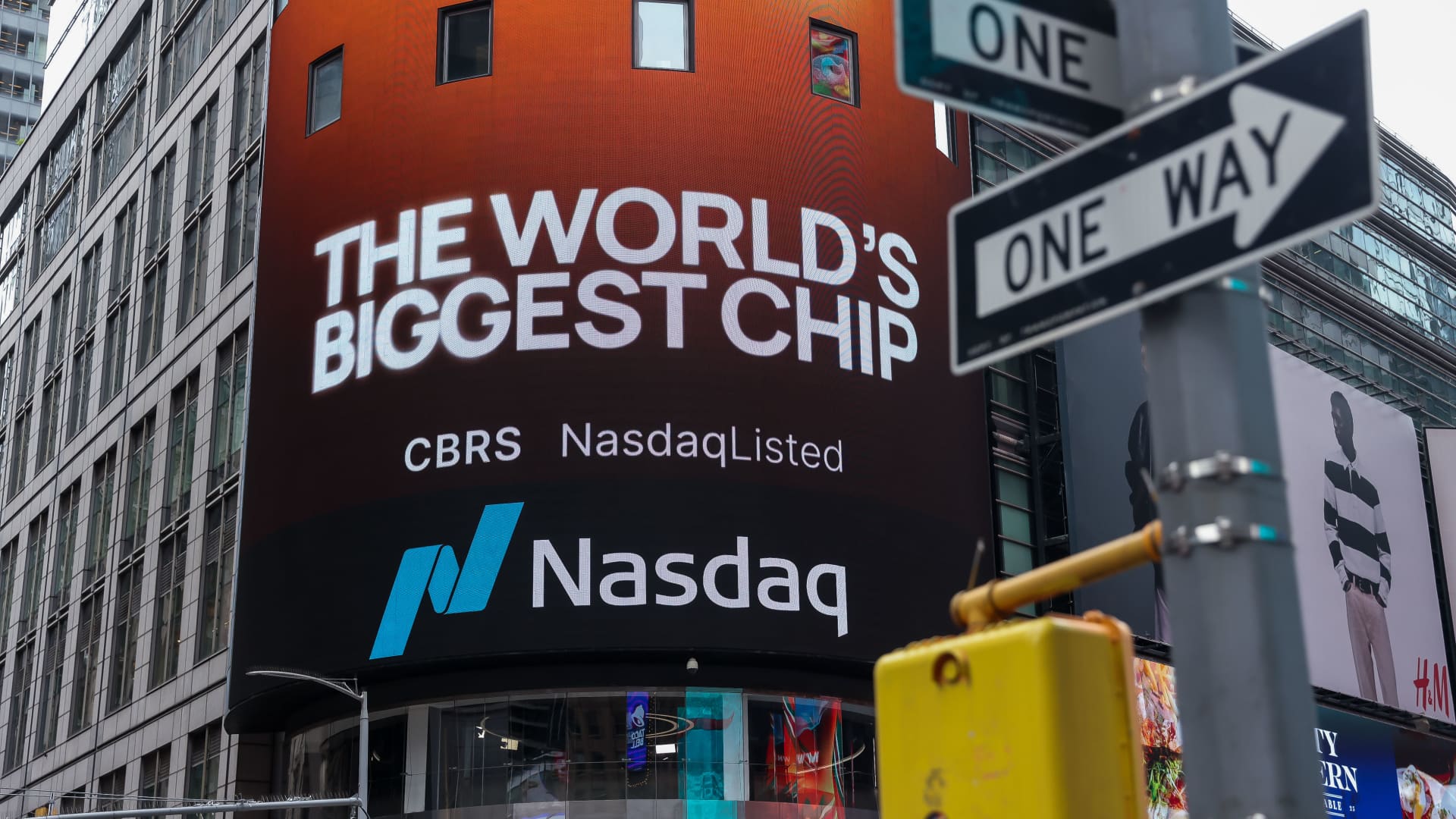
- Strong IPO Performance: Cerebras Systems saw its shares surge nearly 70% during its IPO, elevating its market cap to approximately $95 billion, marking the largest IPO of the year and the biggest for a U.S. tech company since Uber in 2019.
- Market Environment Challenges: Despite Cerebras' success providing hope for the tech IPO market, the impending listings of high-valued AI companies like SpaceX and OpenAI make it difficult for other firms to capture investor attention, leading to diminished interest in non-AI companies.
- Industry Dynamics Shift: The IPO of Cerebras offers investors a chance to engage in the AI boom, particularly against the backdrop of a nearly dormant tech IPO market over the past four years, indicating a resurgence in demand for pure-play tech stocks.
- Future Outlook: With the upcoming IPOs of companies like SpaceX, Cerebras' success may encourage more high-value startups to consider going public, although the market still requires more data points to confirm investor receptivity.

Cerebras IPO Sparks Market Focus on SpaceX and AI Giants
- Cerebras IPO Performance: Cerebras shares surged nearly 70% on debut, reaching a market cap of approximately $95 billion, marking the largest IPO of the year and highlighting the intense investor interest in AI companies while underscoring the challenges faced by non-AI firms in attracting attention.
- Market Dynamics Shift: With companies like SpaceX, OpenAI, and Anthropic preparing for IPOs, there is a potential $3 trillion in IPOs expected over the next year, making other companies appear relatively small, especially against the backdrop of the AI boom.
- Investor Sentiment Change: Since early 2022, rising inflation and interest rates have dampened investor enthusiasm for emerging tech companies, with U.S. venture-backed exit values last year falling to less than one-third of the peak in 2021, resulting in almost no tech IPOs this year.
- AI Industry Outlook: Cerebras' success provides investors with an entry point into the AI market, especially following its $20 billion deal with OpenAI, indicating a rapid growth in demand for AI infrastructure and driving increased attention and investment across the sector.

High-Level China-U.S. Talks Focus on Wealth Management and Financing


- High-Level Talks: Wu Qing, chairman of the China Securities Regulatory Commission, met with Citigroup CEO Jane Fraser in Beijing to discuss enhancing cooperation in wealth management and cross-border financing, indicating potential for deeper financial collaboration between China and the U.S.
- Commitment to Market Opening: Beijing Party Secretary Yin Li welcomed Citigroup's expansion, aiming to attract more international companies and investments into China, reflecting the country's emphasis on foreign capital and openness.
- Importance of Corporate Diplomacy: The summit provided U.S. corporate leaders a crucial platform to engage directly with top Chinese authorities, underscoring the significance of corporate diplomacy amid ongoing trade, AI, and geopolitical tensions.
- Boeing Order Potential: Trump announced that China agreed to purchase 200 Boeing jets, with the possibility of increasing the order to 750 planes, marking Boeing's first major deal in China in nearly a decade, which holds substantial market implications.
MercadoLibre Shares Drop Amid Rising Treasury Yields and Inflation Concerns
- Stock Price Decline: MercadoLibre's shares fell 2.9% in the afternoon session primarily due to the April PPI report pushing the 10-year Treasury yield to a 10-month high of 4.49%, eliminating 2026 rate-cut expectations and raising the discount rate for long-duration growth valuations.
- Consumer Pressure Intensifies: The report indicated negative real wage growth (3.6% wages vs. 3.8% CPI), which typically leads brands to tighten digital advertising budgets to protect margins, thereby impacting revenue for digital advertising giants like Google, Meta, and Amazon.
- Market Reaction Analysis: Although the Q1 ad cycle was strong, the PPI data suggested a macro environment turning against next quarter's growth targets, with the market's reaction indicating that it considers this news significant but not fundamentally altering its perception of the business.
- Investor Confidence Fluctuations: MercadoLibre's stock has dropped 21.9% since the beginning of the year, currently trading at $1,542 per share, which is 41% below its 52-week high of $2,614 from June 2025; however, investors who bought $1,000 worth of shares five years ago would still see their investment worth $1,189.
Bank of America Raises Nvidia Price Target to $320 Amid AI Optimism
- Price Target Increase: Bank of America analyst Vivek Arya raised Nvidia's price target from $300 to $320, implying approximately 42% upside from its May 15 closing price, reflecting an optimistic outlook on the AI market potential.
- Market Size Estimate: The firm increased its estimate of the total addressable market for AI data centers from $1.4 trillion to $1.7 trillion annually, indicating strong confidence in future AI infrastructure demand, with Nvidia expected to maintain over 70% market share.
- Robust Financial Performance: Nvidia generated $215.9 billion in revenue for fiscal 2026, a 65% year-over-year increase, with a gross margin exceeding 71%, and is guiding for first-quarter fiscal 2027 revenue in the range of $78 billion, showcasing strong business momentum.
- Rising Customer Spending: Nvidia's top four customers—Amazon, Microsoft, Alphabet, and Meta—are projected to spend over $700 billion on AI infrastructure in 2026, further solidifying Nvidia's leadership position in the AI market.
Analysis and Investment Recommendations for AI Stocks
- BigBear.ai Financial Struggles: BigBear.ai's revenue declined from $146 million in 2021 to $128 million in 2025, with net losses widening from $124 million to $294 million, primarily due to the bankruptcy of its largest customer, Virgin Orbit, and increased market competition, raising concerns about its future growth prospects in the AI sector.
- C3.ai's Weak Growth: C3.ai's revenue increased from $183 million to $389 million between fiscal 2022 and 2025, but its net loss expanded from $56 million to $289 million; despite launching new generative AI modules, its reliance on lower-margin services led to a decrease in gross margins, with future revenue expected to drop to $251 million.
- Broadcom's Strong Performance: Broadcom's revenue and adjusted EBITDA grew at CAGRs of 24% and 27% from fiscal 2021 to 2025, with AI chip sales surging 65% to $20 billion in 2025, accounting for 31% of total revenue, indicating robust demand and growth potential in the AI market.
- Future Outlook: Analysts expect Broadcom's revenue and adjusted EBITDA to grow at a 48% CAGR through 2028; despite its enterprise value of $2.1 trillion, it remains an attractive investment option compared to C3.ai and BigBear.ai, trading at 18 times next year's adjusted EBITDA.
Cerebras Systems IPO Soars, Reaches $95 Billion Market Cap
- Strong IPO Performance: Cerebras Systems saw its shares surge nearly 70% during its IPO, elevating its market cap to approximately $95 billion, marking the largest IPO of the year and the biggest for a U.S. tech company since Uber in 2019.
- Market Environment Challenges: Despite Cerebras' success providing hope for the tech IPO market, the impending listings of high-valued AI companies like SpaceX and OpenAI make it difficult for other firms to capture investor attention, leading to diminished interest in non-AI companies.
- Industry Dynamics Shift: The IPO of Cerebras offers investors a chance to engage in the AI boom, particularly against the backdrop of a nearly dormant tech IPO market over the past four years, indicating a resurgence in demand for pure-play tech stocks.
- Future Outlook: With the upcoming IPOs of companies like SpaceX, Cerebras' success may encourage more high-value startups to consider going public, although the market still requires more data points to confirm investor receptivity.
Cerebras IPO Sparks Market Focus on SpaceX and AI Giants
- Cerebras IPO Performance: Cerebras shares surged nearly 70% on debut, reaching a market cap of approximately $95 billion, marking the largest IPO of the year and highlighting the intense investor interest in AI companies while underscoring the challenges faced by non-AI firms in attracting attention.
- Market Dynamics Shift: With companies like SpaceX, OpenAI, and Anthropic preparing for IPOs, there is a potential $3 trillion in IPOs expected over the next year, making other companies appear relatively small, especially against the backdrop of the AI boom.
- Investor Sentiment Change: Since early 2022, rising inflation and interest rates have dampened investor enthusiasm for emerging tech companies, with U.S. venture-backed exit values last year falling to less than one-third of the peak in 2021, resulting in almost no tech IPOs this year.
- AI Industry Outlook: Cerebras' success provides investors with an entry point into the AI market, especially following its $20 billion deal with OpenAI, indicating a rapid growth in demand for AI infrastructure and driving increased attention and investment across the sector.
High-Level China-U.S. Talks Focus on Wealth Management and Financing
- High-Level Talks: Wu Qing, chairman of the China Securities Regulatory Commission, met with Citigroup CEO Jane Fraser in Beijing to discuss enhancing cooperation in wealth management and cross-border financing, indicating potential for deeper financial collaboration between China and the U.S.
- Commitment to Market Opening: Beijing Party Secretary Yin Li welcomed Citigroup's expansion, aiming to attract more international companies and investments into China, reflecting the country's emphasis on foreign capital and openness.
- Importance of Corporate Diplomacy: The summit provided U.S. corporate leaders a crucial platform to engage directly with top Chinese authorities, underscoring the significance of corporate diplomacy amid ongoing trade, AI, and geopolitical tensions.
- Boeing Order Potential: Trump announced that China agreed to purchase 200 Boeing jets, with the possibility of increasing the order to 750 planes, marking Boeing's first major deal in China in nearly a decade, which holds substantial market implications.