Market Update: Jobs Report and Company Earnings
Written by Emily J. Thompson, Senior Investment Analyst
Updated: Feb 11 2026
0mins

Source: CNBC
- Strong Job Data: The U.S. economy added 130,000 jobs in January, significantly exceeding the consensus estimate of 65,000, while the unemployment rate fell to 4.3% from 4.4%, indicating a robust economic recovery that could boost consumer spending and investment.
- Vertiv Shares Surge: The company reported a 252% year-over-year increase in organic orders for Q4, along with a 117% sequential rise, highlighting strong momentum in the data center market, which is likely to drive further gains for related stocks.
- Cloudflare Exceeds Expectations: The company reported better-than-expected Q4 results, with its 2026 revenue forecast surpassing market expectations, leading to a 13% stock price increase and an upgrade to a buy rating from Baird, reflecting strong market confidence in its growth prospects.
- Lyft Shares Decline: Lyft's stock fell over 15% after missing Q4 revenue and active rider targets, coupled with a lower adjusted EBITDA forecast, indicating significant challenges and uncertainty facing the company in a competitive market.
Trade with 70% Backtested Accuracy
Stop guessing "Should I Buy NKE?" and start using high-conviction signals backed by rigorous historical data.
Sign up today to access powerful investing tools and make smarter, data-driven decisions.
Analyst Views on NKE
Wall Street analysts forecast NKE stock price to rise
21 Analyst Rating
14 Buy
7 Hold
0 Sell
Moderate Buy
Current: 65.550

Low
62.00
Averages
76.11
High
110.00
Current: 65.550
Low
62.00
Averages
76.11
High
110.00
About NKE
NIKE, Inc. is engaged in the designing, marketing and distributing of athletic footwear, apparel, equipment and accessories and services for sports and fitness activities. The Company's operating segments include North America; Europe, Middle East & Africa (EMEA); Greater China; and Asia Pacific & Latin America (APLA). It sells a line of equipment and accessories under the NIKE Brand name, including bags, socks, sport balls, eyewear, timepieces, digital devices, bats, gloves, protective equipment and other equipment designed for sports activities. It also designs products specifically for the Jordan Brand and Converse. The Jordan Brand designs, distributes and licenses athletic and casual footwear, apparel and accessories predominantly focused on basketball performance and culture using the Jumpman trademark. The Company also designs, distributes and licenses casual sneakers, apparel and accessories under the Chuck Taylor, All Star, One Star, Star Chevron and Jack Purcell trademarks.
About the author

Emily J. Thompson
Emily J. Thompson, a Chartered Financial Analyst (CFA) with 12 years in investment research, graduated with honors from the Wharton School. Specializing in industrial and technology stocks, she provides in-depth analysis for Intellectia’s earnings and market brief reports.

New Balance Sales Surge 19% to $9.2 Billion Amid Market Share Gains

- Significant Sales Growth: New Balance achieved $9.2 billion in sales for 2025, marking a 19% increase, outperforming competitors in the global footwear market and demonstrating strong market competitiveness.
- Market Share Gains: Since 2020, New Balance has seen a staggering 180% sales growth, successfully capturing market share from competitors like Nike, reflecting its successful brand positioning and market strategy.
- Store Expansion Plans: In 2025, New Balance plans to open 80 new stores globally, which, despite high costs and long return periods, will further drive revenue growth and market coverage.
- Brand Positioning Strategy: By positioning itself as a premium brand, New Balance has increased its average selling price by 30% over the past five years while avoiding excessive discounts, ensuring brand value and market competitiveness.
See More
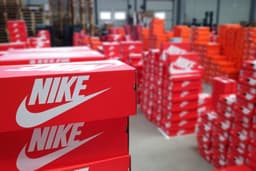
Nike's Turnaround: Cutting Classics Sales to Rebuild Brand
- Brand Restructuring Strategy: Under CEO Elliott Hill, Nike plans to cut Classics sales by over $4 billion by the end of fiscal 2026, aiming to rebuild its brand image through reduced promotions and a return to scarcity, thereby enhancing market competitiveness.
- Collaborative Innovation: Nike's partnership with Costco to launch the Kirkland Signature x Nike SB Dunk Low, limited to 8 Costco locations at a price of $135, has seen resale values exceed $400, demonstrating Nike's ability to generate market buzz through scarcity.
- North American Market Recovery: Although Nike's overall revenue grew by only 1% in Q2 of fiscal 2026, its North America wholesale business saw a 20% year-over-year increase, indicating that retail partners are re-engaging with Nike following the company's strategic adjustments.
- Long-term Investment Signal: The reduction in Classics sales and the collaboration with Costco provide positive signals for long-term investors, indicating that Nike is laying the groundwork for a successful turnaround, even though the recovery path may not be straightforward.
See More

Three Consumer Stocks with Strong Upside Potential

- Lululemon's International Strength: Lululemon Athletica's international revenue surged 33% year-over-year, with China alone growing 46%, indicating that despite a 3% decline in the U.S. market, international operations are becoming the main revenue driver, expected to boost overall performance moving forward.
- Hershey's Sales Growth Surprises: Hershey anticipates net sales growth of 4% to 5% in 2026, significantly exceeding analysts' expectations of 2.69%, while the CEO is pushing for innovation in healthier, zero-sugar products, which is likely to enhance market share and brand competitiveness.
- Nike's Attractive Valuation: Currently trading at a P/E of 20, Nike is well below its historical average of 31, and despite weak performance in Greater China, North America saw a 9% sales increase, with the upcoming 2026 FIFA World Cup expected to drive demand and profit growth.
- Market Rebound Potential: All three companies possess strong brand influence and market share in their respective sectors, and their current stock prices appear undervalued, presenting investors with an opportunity to capitalize on future rebounds through diversified investments.
See More

International Markets Propel Lululemon and Nike's Recovery
- Lululemon's International Growth: Lululemon's international revenue surged 33% year-over-year in Q3, with China alone up 46%, indicating that while U.S. revenue fell 3%, the international segment is becoming the main revenue driver, expected to boost future performance.
- Hershey's Strong Guidance: Hershey anticipates net sales growth of 4% to 5% in 2026, significantly exceeding the 2.69% forecasted by analysts, as CEO Kirk Tanner focuses on healthier, zero-sugar products, with gross margins expected to improve starting Q2 2026, showcasing strong recovery potential.
- Nike's Attractive Valuation: Trading at a P/E of 20, Nike is undervalued compared to its historical average of 31, with a 9% sales increase in North America despite a 520 basis point tariff headwind, indicating early success of its
See More

The 'Boomcession' Phenomenon in the U.S. Economy


- Disconnect Between Data and Sentiment: Despite rising economic output and stock market gains, ordinary Americans are feeling increased financial pressure, as evidenced by credit card debt reaching a record $1.28 trillion in Q4 last year, indicating that economic prosperity is not benefiting the majority.
- Uneven Inflation Impact: According to Morgan Stanley, lower-income consumers faced significantly higher inflation rates for food and housing in 2024 compared to wealthier counterparts, exacerbating the gap between economic growth and consumer confidence and highlighting social inequality.
- 'Hiring Recession' in Job Market: While economic output per hour hit new highs, ordinary workers are anxious as the job market tightens, with December job openings falling to their lowest level since 2020, reflecting the disparity in economic benefits between high-income stockholders and the general workforce.
- Crisis of Trust in Economic Data: Surveys reveal that nearly 60% of Americans believe the economy is in recession, particularly among low-income households facing unstable financial situations, leading to a decline in trust in government economic data and highlighting the significant gap between economic prosperity and public sentiment.
See More
U.S. Economy Faces 'Boomcession' Phenomenon

- Disconnection Between Growth and Sentiment: Despite the U.S. economy showing strong performance with a GDP growth rate of 4.3%, nearly 60% of Americans believe the economy is in recession, highlighting a stark contrast between economic data and the lived experiences of ordinary citizens who feel excluded from the benefits of growth.
- Uneven Inflation Impact: According to Morgan Stanley, lower-income consumers faced significantly higher inflation rates for essentials like food and housing in 2024, exacerbating economic pressures and deepening social inequality, which in turn affects consumer confidence and spending.
- Tightening Job Market: While the stock market continues to rally, job openings fell to their lowest level since 2020 in December, leading economists to describe the situation as a 'hiring recession,' which increases anxiety among lower-income individuals who feel more vulnerable in this fragile recovery.
- Declining Consumer Confidence: Recent surveys indicate that 41% of individuals with low credit scores and 54% of low-income households view their financial situations as 'unstable,' underscoring the growing gap between economic data and public sentiment, which could negatively impact future consumer spending.
See More
New Balance Sales Surge 19% to $9.2 Billion Amid Market Share Gains
- Significant Sales Growth: New Balance achieved $9.2 billion in sales for 2025, marking a 19% increase, outperforming competitors in the global footwear market and demonstrating strong market competitiveness.
- Market Share Gains: Since 2020, New Balance has seen a staggering 180% sales growth, successfully capturing market share from competitors like Nike, reflecting its successful brand positioning and market strategy.
- Store Expansion Plans: In 2025, New Balance plans to open 80 new stores globally, which, despite high costs and long return periods, will further drive revenue growth and market coverage.
- Brand Positioning Strategy: By positioning itself as a premium brand, New Balance has increased its average selling price by 30% over the past five years while avoiding excessive discounts, ensuring brand value and market competitiveness.
See More
Nike's Turnaround: Cutting Classics Sales to Rebuild Brand
- Brand Restructuring Strategy: Under CEO Elliott Hill, Nike plans to cut Classics sales by over $4 billion by the end of fiscal 2026, aiming to rebuild its brand image through reduced promotions and a return to scarcity, thereby enhancing market competitiveness.
- Collaborative Innovation: Nike's partnership with Costco to launch the Kirkland Signature x Nike SB Dunk Low, limited to 8 Costco locations at a price of $135, has seen resale values exceed $400, demonstrating Nike's ability to generate market buzz through scarcity.
- North American Market Recovery: Although Nike's overall revenue grew by only 1% in Q2 of fiscal 2026, its North America wholesale business saw a 20% year-over-year increase, indicating that retail partners are re-engaging with Nike following the company's strategic adjustments.
- Long-term Investment Signal: The reduction in Classics sales and the collaboration with Costco provide positive signals for long-term investors, indicating that Nike is laying the groundwork for a successful turnaround, even though the recovery path may not be straightforward.
See More
Three Consumer Stocks with Strong Upside Potential
- Lululemon's International Strength: Lululemon Athletica's international revenue surged 33% year-over-year, with China alone growing 46%, indicating that despite a 3% decline in the U.S. market, international operations are becoming the main revenue driver, expected to boost overall performance moving forward.
- Hershey's Sales Growth Surprises: Hershey anticipates net sales growth of 4% to 5% in 2026, significantly exceeding analysts' expectations of 2.69%, while the CEO is pushing for innovation in healthier, zero-sugar products, which is likely to enhance market share and brand competitiveness.
- Nike's Attractive Valuation: Currently trading at a P/E of 20, Nike is well below its historical average of 31, and despite weak performance in Greater China, North America saw a 9% sales increase, with the upcoming 2026 FIFA World Cup expected to drive demand and profit growth.
- Market Rebound Potential: All three companies possess strong brand influence and market share in their respective sectors, and their current stock prices appear undervalued, presenting investors with an opportunity to capitalize on future rebounds through diversified investments.
See More
International Markets Propel Lululemon and Nike's Recovery
- Lululemon's International Growth: Lululemon's international revenue surged 33% year-over-year in Q3, with China alone up 46%, indicating that while U.S. revenue fell 3%, the international segment is becoming the main revenue driver, expected to boost future performance.
- Hershey's Strong Guidance: Hershey anticipates net sales growth of 4% to 5% in 2026, significantly exceeding the 2.69% forecasted by analysts, as CEO Kirk Tanner focuses on healthier, zero-sugar products, with gross margins expected to improve starting Q2 2026, showcasing strong recovery potential.
- Nike's Attractive Valuation: Trading at a P/E of 20, Nike is undervalued compared to its historical average of 31, with a 9% sales increase in North America despite a 520 basis point tariff headwind, indicating early success of its
See More
The 'Boomcession' Phenomenon in the U.S. Economy
- Disconnect Between Data and Sentiment: Despite rising economic output and stock market gains, ordinary Americans are feeling increased financial pressure, as evidenced by credit card debt reaching a record $1.28 trillion in Q4 last year, indicating that economic prosperity is not benefiting the majority.
- Uneven Inflation Impact: According to Morgan Stanley, lower-income consumers faced significantly higher inflation rates for food and housing in 2024 compared to wealthier counterparts, exacerbating the gap between economic growth and consumer confidence and highlighting social inequality.
- 'Hiring Recession' in Job Market: While economic output per hour hit new highs, ordinary workers are anxious as the job market tightens, with December job openings falling to their lowest level since 2020, reflecting the disparity in economic benefits between high-income stockholders and the general workforce.
- Crisis of Trust in Economic Data: Surveys reveal that nearly 60% of Americans believe the economy is in recession, particularly among low-income households facing unstable financial situations, leading to a decline in trust in government economic data and highlighting the significant gap between economic prosperity and public sentiment.
See More
U.S. Economy Faces 'Boomcession' Phenomenon
- Disconnection Between Growth and Sentiment: Despite the U.S. economy showing strong performance with a GDP growth rate of 4.3%, nearly 60% of Americans believe the economy is in recession, highlighting a stark contrast between economic data and the lived experiences of ordinary citizens who feel excluded from the benefits of growth.
- Uneven Inflation Impact: According to Morgan Stanley, lower-income consumers faced significantly higher inflation rates for essentials like food and housing in 2024, exacerbating economic pressures and deepening social inequality, which in turn affects consumer confidence and spending.
- Tightening Job Market: While the stock market continues to rally, job openings fell to their lowest level since 2020 in December, leading economists to describe the situation as a 'hiring recession,' which increases anxiety among lower-income individuals who feel more vulnerable in this fragile recovery.
- Declining Consumer Confidence: Recent surveys indicate that 41% of individuals with low credit scores and 54% of low-income households view their financial situations as 'unstable,' underscoring the growing gap between economic data and public sentiment, which could negatively impact future consumer spending.
See More