Lucid Expands Driverless Vehicle Partnership with Uber
Written by Emily J. Thompson, Senior Investment Analyst
Updated: 1 hour ago
0mins
Should l Buy LCID?
Source: Fool
- Strategic Partnership Upgrade: Lucid's agreement with Uber integrates Nuro's autonomous technology, aiming to provide over 20,000 Lucid Gravity SUVs for Uber's platform over six years, backed by a $300 million investment from Uber, despite significant challenges in achieving commercial scale delivery.
- Model Expansion Plan: Lucid's upcoming midsize EV platform is set to be deployed as robotaxis, with plans to double the program's scope to about 40,000 vehicles; however, while Lucid has achieved eight consecutive quarters of record deliveries, scaling production remains a time-consuming process.
- Product Line Innovation: New models from Lucid include Cosmos, Earth, and Lunar, with Lunar being a dedicated two-seat robotaxi concept designed to optimize economic efficiency, although its market positioning still requires further validation.
- Market Competition Pressure: Despite Lucid's strategic expansion appearing positive, Uber's existing partnerships with over 20 driverless vehicle companies, without manufacturing involvement, may make it more attractive to investors, prompting Lucid to focus on improving the unit economics of the Gravity SUV to maintain competitiveness.
Trade with 70% Backtested Accuracy
Stop guessing "Should I Buy LCID?" and start using high-conviction signals backed by rigorous historical data.
Sign up today to access powerful investing tools and make smarter, data-driven decisions.
Analyst Views on LCID
Wall Street analysts forecast LCID stock price to rise
6 Analyst Rating
1 Buy
4 Hold
1 Sell
Hold
Current: 10.300

Low
10.00
Averages
17.00
High
30.00
Current: 10.300
Low
10.00
Averages
17.00
High
30.00
About LCID
Lucid Group, Inc. is a technology company, which designs, engineers, and manufactures electric vehicles (EVs), EV powertrains, and battery systems in-house using its own equipment and factories. It sells vehicles directly to consumers through its retail sales network and through direct online sales. Its vehicles include Lucid Air and Lucid Gravity. Lucid Air is an advanced car, featuring powertrain technology. It offers 420 miles of the United States Environmental Protection Agency (EPA)-estimated range, with an 84-kWh battery pack. The Lucid Air Sapphire is the highest-performance version of the Lucid Air, boasting 1,234 horsepower from three motors, 427 miles of an EPA-estimated range (when equipped with standard wheel covers). The Lucid Gravity provides the interior space and practicality of a full-size SUV within the exterior footprint of a mid-size SUV. It provides space for up to seven adults. It has engineered the Lucid Gravity to deliver up to 450 miles of EPA-estimated range.
About the author

Emily J. Thompson
Emily J. Thompson, a Chartered Financial Analyst (CFA) with 12 years in investment research, graduated with honors from the Wharton School. Specializing in industrial and technology stocks, she provides in-depth analysis for Intellectia’s earnings and market brief reports.
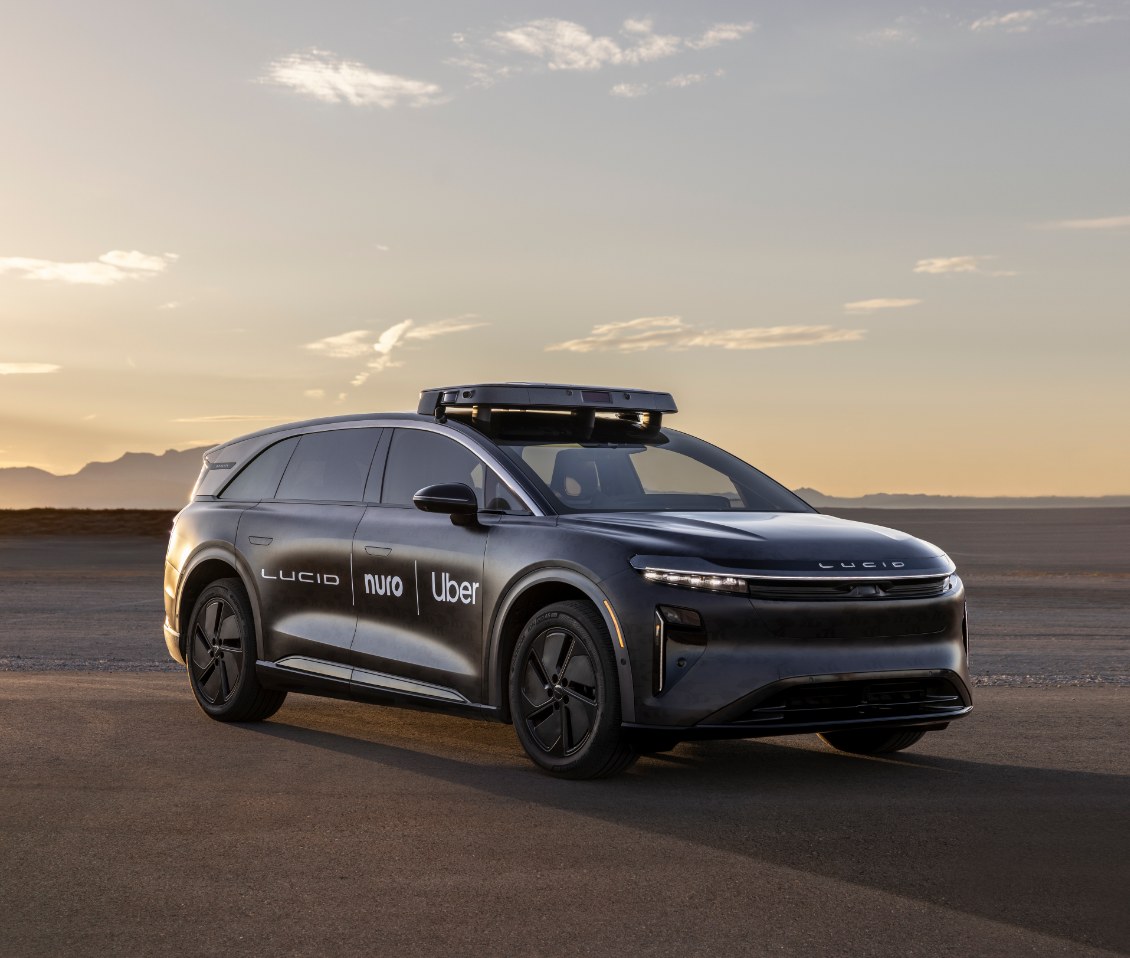
Lucid Expands Driverless Vehicle Partnership with Uber

- Strategic Partnership Upgrade: Lucid's agreement with Uber integrates Nuro's autonomous technology, aiming to provide over 20,000 Lucid Gravity SUVs for Uber's platform over six years, backed by a $300 million investment from Uber, despite significant challenges in achieving commercial scale delivery.
- Model Expansion Plan: Lucid's upcoming midsize EV platform is set to be deployed as robotaxis, with plans to double the program's scope to about 40,000 vehicles; however, while Lucid has achieved eight consecutive quarters of record deliveries, scaling production remains a time-consuming process.
- Product Line Innovation: New models from Lucid include Cosmos, Earth, and Lunar, with Lunar being a dedicated two-seat robotaxi concept designed to optimize economic efficiency, although its market positioning still requires further validation.
- Market Competition Pressure: Despite Lucid's strategic expansion appearing positive, Uber's existing partnerships with over 20 driverless vehicle companies, without manufacturing involvement, may make it more attractive to investors, prompting Lucid to focus on improving the unit economics of the Gravity SUV to maintain competitiveness.
See More

Lucid Expands Driverless Partnership with Uber
- Strategic Partnership Upgrade: Lucid's partnership with Uber expands to include its upcoming midsize EV platform, doubling the vehicle count from 20,000 to 40,000, showcasing both companies' ambitions in the driverless sector, although achieving commercial scale remains a significant challenge.
- Investment and Technology Integration: Uber's $300 million investment in Lucid aims to integrate Nuro's autonomous technology into Lucid Gravity SUVs, enhancing operational efficiency and driving future driverless vehicle economics.
- Product Line Innovation: Lucid's new midsize platform will introduce several models, including the Lunar, specifically designed as a robotaxi to optimize economic viability, marking further innovation in Lucid's electric vehicle offerings.
- Market Outlook Analysis: Despite the intriguing expansion into driverless vehicles, analysts suggest that investors should focus on improving unit economics of the Gravity SUV until Lucid can significantly scale production, which is crucial for enhancing overall gross profits.
See More
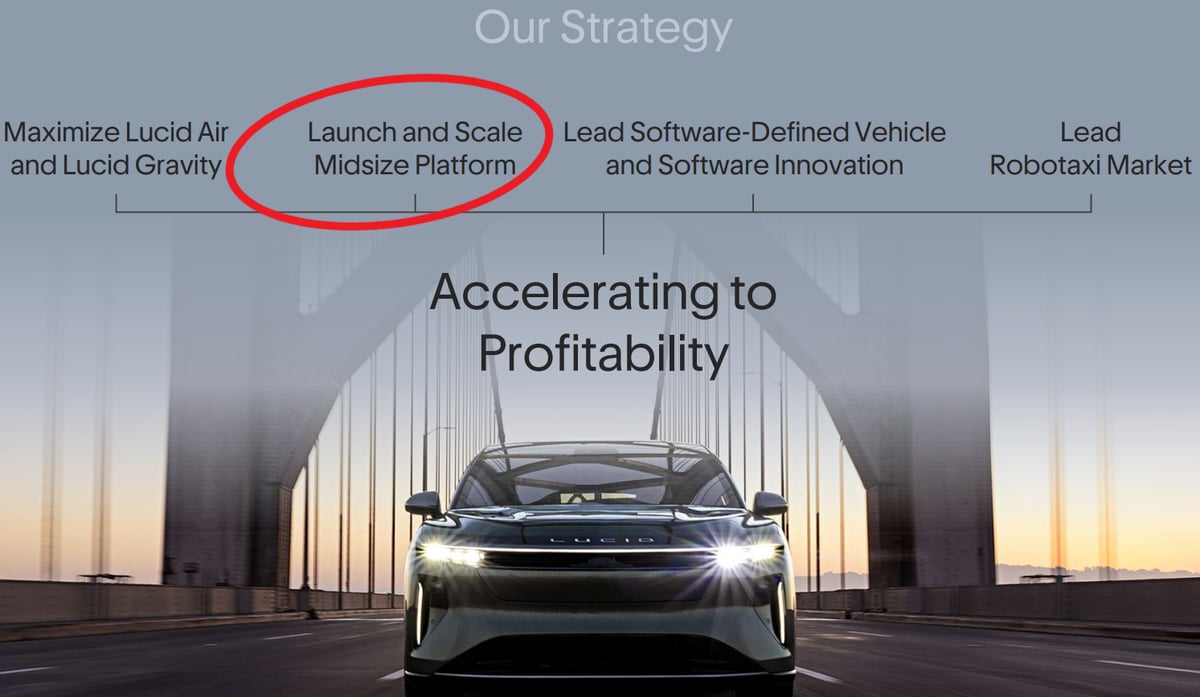
Lucid Group Achieves Eighth Consecutive Quarter of Record Deliveries

- Delivery Milestone: Lucid Group achieved its eighth consecutive quarter of record deliveries in Q4 2025, driven by improved manufacturing execution and ramp-up of the Gravity SUV, indicating the company's potential for stable growth after overcoming early supply chain challenges.
- Profitability Strategy: Lucid's profitability strategy revolves around four key components, with the current focus on optimizing the existing Lucid Air and ramping up Gravity production, aiming for higher efficiency and profitability in 2026.
- Midsize Platform Development: Lucid's new midsize platform is engineered to deliver technologically advanced EVs at a price point below $50,000, expected to launch later this year, marking a shift from high-cost luxury production to profitable high-volume models.
- Market Challenges: Despite progress in deliveries, Lucid must address cash burn and production inefficiencies to demonstrate its ability to consistently improve gross margins over the next year and a half, which is crucial for attracting investor confidence.
See More

Lucid Accelerates Delivery Momentum, Midsize Platform Launch Critical
- Record Deliveries: Lucid achieved its eighth consecutive quarter of record deliveries in Q4 2025, driven by improved manufacturing execution and the ramp-up of the Gravity SUV, which not only boosts investor confidence but also lays the groundwork for future profitability.
- Midsize Platform Strategy: Lucid plans to launch its new midsize platform later this year, aiming to deliver technologically advanced EVs starting below $50,000, which is expected to significantly enhance unit economics and drive high-volume production, thereby improving overall profitability.
- Efficiency Improvements: Lucid is optimizing the production efficiency of its existing Lucid Air and Gravity SUVs, and while it still lags behind competitor Rivian, its ongoing record deliveries indicate progress in production capabilities, making the next year and a half a critical period for the company.
- Cost Control Challenges: Lucid faces significant challenges with high cash burn and production inefficiencies, and it must consistently improve gross margins without sacrificing performance and technology to prove its viability as a long-term investment.
See More

Uber Partners with Rivian in $1.25 Billion Robotaxi Deal

- Partnership Details: Uber has inked a deal with Rivian to purchase 50,000 R2 autonomous taxis over the next five years, with an initial investment of up to $1.25 billion aimed at enhancing both companies' competitive edge through achieving autonomous performance milestones.
- Data Collection Advantage: Rivian will leverage Uber's investment and vehicle deployment to gather substantial real-world driving data, which is expected to accelerate the development of its self-driving technology, significantly enhancing its market position and technical capabilities.
- AI Investment Confidence: Uber's investment not only acknowledges Rivian's heavy investments in artificial intelligence but also signals growing market confidence in the imminent adoption of fully autonomous vehicles, anticipated to become a reality in the coming years.
- Diverse Collaboration Strategy: The agreement with Rivian is not exclusive, as Uber has also formed similar partnerships with other EV manufacturers like Lucid Group, demonstrating its diversified approach in the electric vehicle market and strategic flexibility in responding to competition.
See More

Uber Partners with Rivian in $1.25 Billion Robotaxi Deal
- Strategic Partnership: Uber has signed a $1.25 billion deal with EV maker Rivian to aggressively expand its robotaxi capabilities, indicating strong confidence in Rivian's AI ambitions and positioning Uber for a significant role in the future robotaxi market.
- Massive Market Potential: Experts estimate that the global opportunity in the robotaxi market could reach between $5 trillion and $10 trillion, making the collaboration between Uber and Rivian not just a technological alliance but a strategic move for future market competition.
- Data-Driven Autonomous Tech: Rivian will invest over $1 billion to meet self-driving milestones and assist up to 50,000 Rivian vehicles on the road to gather data, which will accelerate the advancement of its self-driving models and strengthen its competitive edge in the autonomous driving sector.
- Investment Return Risks: Despite the substantial investment from Uber, the agreement stipulates that the purchase volume will depend on Rivian achieving specific milestones, and Uber could ultimately take delivery of anywhere from zero to 50,000 vehicles, introducing uncertainty for investors.
See More
Lucid Expands Driverless Vehicle Partnership with Uber
- Strategic Partnership Upgrade: Lucid's agreement with Uber integrates Nuro's autonomous technology, aiming to provide over 20,000 Lucid Gravity SUVs for Uber's platform over six years, backed by a $300 million investment from Uber, despite significant challenges in achieving commercial scale delivery.
- Model Expansion Plan: Lucid's upcoming midsize EV platform is set to be deployed as robotaxis, with plans to double the program's scope to about 40,000 vehicles; however, while Lucid has achieved eight consecutive quarters of record deliveries, scaling production remains a time-consuming process.
- Product Line Innovation: New models from Lucid include Cosmos, Earth, and Lunar, with Lunar being a dedicated two-seat robotaxi concept designed to optimize economic efficiency, although its market positioning still requires further validation.
- Market Competition Pressure: Despite Lucid's strategic expansion appearing positive, Uber's existing partnerships with over 20 driverless vehicle companies, without manufacturing involvement, may make it more attractive to investors, prompting Lucid to focus on improving the unit economics of the Gravity SUV to maintain competitiveness.
See More
Lucid Expands Driverless Partnership with Uber
- Strategic Partnership Upgrade: Lucid's partnership with Uber expands to include its upcoming midsize EV platform, doubling the vehicle count from 20,000 to 40,000, showcasing both companies' ambitions in the driverless sector, although achieving commercial scale remains a significant challenge.
- Investment and Technology Integration: Uber's $300 million investment in Lucid aims to integrate Nuro's autonomous technology into Lucid Gravity SUVs, enhancing operational efficiency and driving future driverless vehicle economics.
- Product Line Innovation: Lucid's new midsize platform will introduce several models, including the Lunar, specifically designed as a robotaxi to optimize economic viability, marking further innovation in Lucid's electric vehicle offerings.
- Market Outlook Analysis: Despite the intriguing expansion into driverless vehicles, analysts suggest that investors should focus on improving unit economics of the Gravity SUV until Lucid can significantly scale production, which is crucial for enhancing overall gross profits.
See More
Lucid Group Achieves Eighth Consecutive Quarter of Record Deliveries
- Delivery Milestone: Lucid Group achieved its eighth consecutive quarter of record deliveries in Q4 2025, driven by improved manufacturing execution and ramp-up of the Gravity SUV, indicating the company's potential for stable growth after overcoming early supply chain challenges.
- Profitability Strategy: Lucid's profitability strategy revolves around four key components, with the current focus on optimizing the existing Lucid Air and ramping up Gravity production, aiming for higher efficiency and profitability in 2026.
- Midsize Platform Development: Lucid's new midsize platform is engineered to deliver technologically advanced EVs at a price point below $50,000, expected to launch later this year, marking a shift from high-cost luxury production to profitable high-volume models.
- Market Challenges: Despite progress in deliveries, Lucid must address cash burn and production inefficiencies to demonstrate its ability to consistently improve gross margins over the next year and a half, which is crucial for attracting investor confidence.
See More
Lucid Accelerates Delivery Momentum, Midsize Platform Launch Critical
- Record Deliveries: Lucid achieved its eighth consecutive quarter of record deliveries in Q4 2025, driven by improved manufacturing execution and the ramp-up of the Gravity SUV, which not only boosts investor confidence but also lays the groundwork for future profitability.
- Midsize Platform Strategy: Lucid plans to launch its new midsize platform later this year, aiming to deliver technologically advanced EVs starting below $50,000, which is expected to significantly enhance unit economics and drive high-volume production, thereby improving overall profitability.
- Efficiency Improvements: Lucid is optimizing the production efficiency of its existing Lucid Air and Gravity SUVs, and while it still lags behind competitor Rivian, its ongoing record deliveries indicate progress in production capabilities, making the next year and a half a critical period for the company.
- Cost Control Challenges: Lucid faces significant challenges with high cash burn and production inefficiencies, and it must consistently improve gross margins without sacrificing performance and technology to prove its viability as a long-term investment.
See More
Uber Partners with Rivian in $1.25 Billion Robotaxi Deal
- Partnership Details: Uber has inked a deal with Rivian to purchase 50,000 R2 autonomous taxis over the next five years, with an initial investment of up to $1.25 billion aimed at enhancing both companies' competitive edge through achieving autonomous performance milestones.
- Data Collection Advantage: Rivian will leverage Uber's investment and vehicle deployment to gather substantial real-world driving data, which is expected to accelerate the development of its self-driving technology, significantly enhancing its market position and technical capabilities.
- AI Investment Confidence: Uber's investment not only acknowledges Rivian's heavy investments in artificial intelligence but also signals growing market confidence in the imminent adoption of fully autonomous vehicles, anticipated to become a reality in the coming years.
- Diverse Collaboration Strategy: The agreement with Rivian is not exclusive, as Uber has also formed similar partnerships with other EV manufacturers like Lucid Group, demonstrating its diversified approach in the electric vehicle market and strategic flexibility in responding to competition.
See More
Uber Partners with Rivian in $1.25 Billion Robotaxi Deal
- Strategic Partnership: Uber has signed a $1.25 billion deal with EV maker Rivian to aggressively expand its robotaxi capabilities, indicating strong confidence in Rivian's AI ambitions and positioning Uber for a significant role in the future robotaxi market.
- Massive Market Potential: Experts estimate that the global opportunity in the robotaxi market could reach between $5 trillion and $10 trillion, making the collaboration between Uber and Rivian not just a technological alliance but a strategic move for future market competition.
- Data-Driven Autonomous Tech: Rivian will invest over $1 billion to meet self-driving milestones and assist up to 50,000 Rivian vehicles on the road to gather data, which will accelerate the advancement of its self-driving models and strengthen its competitive edge in the autonomous driving sector.
- Investment Return Risks: Despite the substantial investment from Uber, the agreement stipulates that the purchase volume will depend on Rivian achieving specific milestones, and Uber could ultimately take delivery of anywhere from zero to 50,000 vehicles, introducing uncertainty for investors.
See More