Intensifying Competition in AI Chip Market
Written by Emily J. Thompson, Senior Investment Analyst
Updated: 7 hours ago
0mins


Should l Buy NVDA?
Source: Yahoo Finance
- Market Growth Potential: Grandview Research projects a 29% compound annual growth rate for the AI chip industry from 2024 to 2030, indicating significant upside potential that attracts investor interest in related stocks.
- Deepening Partnerships: AMD has partnered with Meta Platforms to deploy 6 gigawatts of AMD GPUs, which is expected to yield “substantial multiyear revenue growth,” showcasing its competitive edge in a high-demand market.
- Financial Performance Comparison: In Q4 of fiscal year 2025, Broadcom achieved a 28% year-over-year revenue growth, while AMD led with a 34% growth, suggesting AMD's stronger performance in revenue growth may attract more investors.
- Margin Discrepancies: Although Broadcom excels in profit margins with a net profit margin of 47.3% in Q4 2025 compared to AMD's 14.7%, AMD has greater room for margin improvement, which could lead to significant profit growth if realized.
Trade with 70% Backtested Accuracy
Stop guessing "Should I Buy NVDA?" and start using high-conviction signals backed by rigorous historical data.
Sign up today to access powerful investing tools and make smarter, data-driven decisions.
Analyst Views on NVDA
Wall Street analysts forecast NVDA stock price to rise
41 Analyst Rating
39 Buy
1 Hold
1 Sell
Strong Buy
Current: 198.350

Low
200.00
Averages
264.97
High
352.00
Current: 198.350
Low
200.00
Averages
264.97
High
352.00
About NVDA
NVIDIA Corporation is an artificial intelligence (AI) infrastructure company. The Company is engaged in accelerated computing to help solve the challenging computational problems. Its segments include Compute & Networking and Graphics. The Compute & Networking segment includes its Data Center accelerated computing and networking platforms and AI solutions and software, and automotive platforms and autonomous and electric vehicle solutions, including software. The Graphics segment includes GeForce GPUs for gaming and personal computers (PCs), and Quadro/NVIDIA RTX GPUs for enterprise workstation graphics. Its technology stack includes the foundational NVIDIA CUDA development platform that runs on all NVIDIA GPUs, as well as hundreds of domain-specific software libraries, frameworks, algorithms, software development kits (SDKs), and application programming interfaces (APIs). Its platforms address four markets, which include Data Center, Gaming, Professional Visualization, and Automotive.
About the author

Emily J. Thompson
Emily J. Thompson, a Chartered Financial Analyst (CFA) with 12 years in investment research, graduated with honors from the Wharton School. Specializing in industrial and technology stocks, she provides in-depth analysis for Intellectia’s earnings and market brief reports.

Nvidia's Stock Underperformance Despite Rapid Revenue Growth

- Significant Revenue Growth: Nvidia reported $68.1 billion in revenue for Q4 FY2026, a 73% increase year-over-year, with data center sales contributing $62.3 billion, up 75%, highlighting strong demand and market position in the AI sector.
- Capital Expenditure Commitments: The 'Magnificent Seven', including Alphabet, Microsoft, Amazon, and Meta, announced up to $700 billion in capital expenditures for 2023, which, while not all directed to Nvidia, will drive demand for its GPUs and impact future performance.
- Market Capitalization vs. Valuation: Despite Nvidia's market capitalization soaring to the highest in the past two years, its forward P/E ratio stands at 23.9, significantly below the three-year average of 79, indicating that the market may be underestimating its future growth potential, presenting a possible investment opportunity.
- Future Growth Expectations: CEO Jensen Huang forecasts that Nvidia could achieve $1 trillion in AI revenue by 2027, compared to just $215.9 billion in 2025, suggesting the company is on a trajectory of rapid growth that investors should closely monitor.
See More

Amazon vs Nvidia: Competitive Landscape in AI Chips

- Custom Chip Advantage: Amazon's recent shareholder letter reveals that its custom Graviton chips outperform Intel's by 40% in price performance, allowing Amazon to rapidly gain market share in cloud computing, with expectations for a similar trend in the AI market.
- Trainium Chip Performance: Amazon's Trainium2 chip offers 30% better price performance than GPUs and is nearly sold out, while the next-generation Trainium3 is in development, showcasing Amazon's strong competitive position in the AI training market.
- Collaboration with Nvidia: Despite Amazon's competitive edge in chip performance, it must maintain a strong relationship with Nvidia to ensure resource availability and prevent client losses to competitors, highlighting the importance of collaboration in the tech landscape.
- Sustained Market Demand: While Amazon's custom chips excel, Nvidia's growth rates are accelerating, with projected year-over-year growth rates of 79% and 85% for Q1 and Q2, respectively, indicating robust demand for AI computing power and a potential landscape with multiple winners in the chip market.
See More

Amazon and Nvidia's Intensifying Competition
- Custom Chip Advantage: Amazon's recent shareholder letter highlights its custom chip Graviton's performance, which offers a 40% better price-performance ratio than Intel's chips, rapidly capturing the cloud computing market and demonstrating strong competitiveness in the AI sector.
- Trainium Chip Performance: Amazon's Trainium2 chip provides a 30% better price-performance ratio than GPUs, with capacity nearly sold out, indicating significant potential in the AI training market, while future Trainium3 and Trainium4 chips will further enhance its market position.
- Relationship with Nvidia: Despite the superior performance of Amazon's custom chips, the company will continue to support Nvidia chips to maintain a good partnership, avoiding resource shortages that could lead to client losses, illustrating the complexity of market competition.
- Sustained Market Demand: While Amazon poses a challenge to Nvidia with its chip performance, Nvidia's growth rates are still accelerating, with Q1 and Q2 expected to reach 79% and 85% respectively, reflecting strong demand for AI computing power and suggesting a future market landscape of multiple winners.
See More

Palantir Technologies Stock Outlook Analysis

- Significant Revenue Growth: Palantir reported a 70% year-over-year revenue increase last quarter, reaching $1.4 billion, showcasing strong performance in the U.S. commercial market and boosting investor confidence in future growth.
- Exceptional Rule of 40 Score: The company's Rule of 40 score stands at 127%, combining sales growth and profit margin, which far exceeds industry averages, indicating Palantir's competitive edge and profitability in the enterprise software sector.
- Optimistic Market Expectations: Wall Street analysts are generally bullish on Palantir's future, with Wedbush analyst Dan Ives predicting the company could reach a $1 trillion valuation within two to three years, driven by accelerating commercial adoption of its AI platform.
- Significant Valuation Risks: Despite Palantir's strong financial health, with free cash flow margins above 50%, its price-to-earnings ratio exceeds 230, suggesting that market expectations for future growth are already priced in, necessitating careful risk assessment by investors.
See More

Investment Opportunities Amid Tech Stock Pullback

- Tech Stock Recovery: During the 'Great Rotation', defensive sectors like consumer staples have outperformed tech stocks, leading to declines in top tech shares; however, history suggests that such periods are prime for acquiring quality growth stocks, as evidenced by the iShares S&P 500 Growth ETF nearly doubling the returns of the iShares S&P 500 Value ETF over the past decade.
- Nvidia's Growth Potential: Nvidia estimates that cumulative orders for its Blackwell and upcoming Rubin chips will exceed $1 trillion by 2026, with analysts projecting a 71% revenue increase this year to $369 billion, underscoring its critical role and profitability in the global economy.
- Microsoft's Cloud Revenue Growth: Despite a 30% drop from recent highs, Microsoft’s cloud revenue grew 26% year-over-year, with Microsoft 365 Copilot reaching 15 million paid users, indicating strong demand for its AI services and a solid foundation for future growth.
- Google's Advertising and Cloud Services: Google is achieving double-digit growth in advertising and cloud services by integrating its Gemini model, generating $73 billion in free cash flow over the past year, which enhances its appeal as a high-quality growth stock.
See More
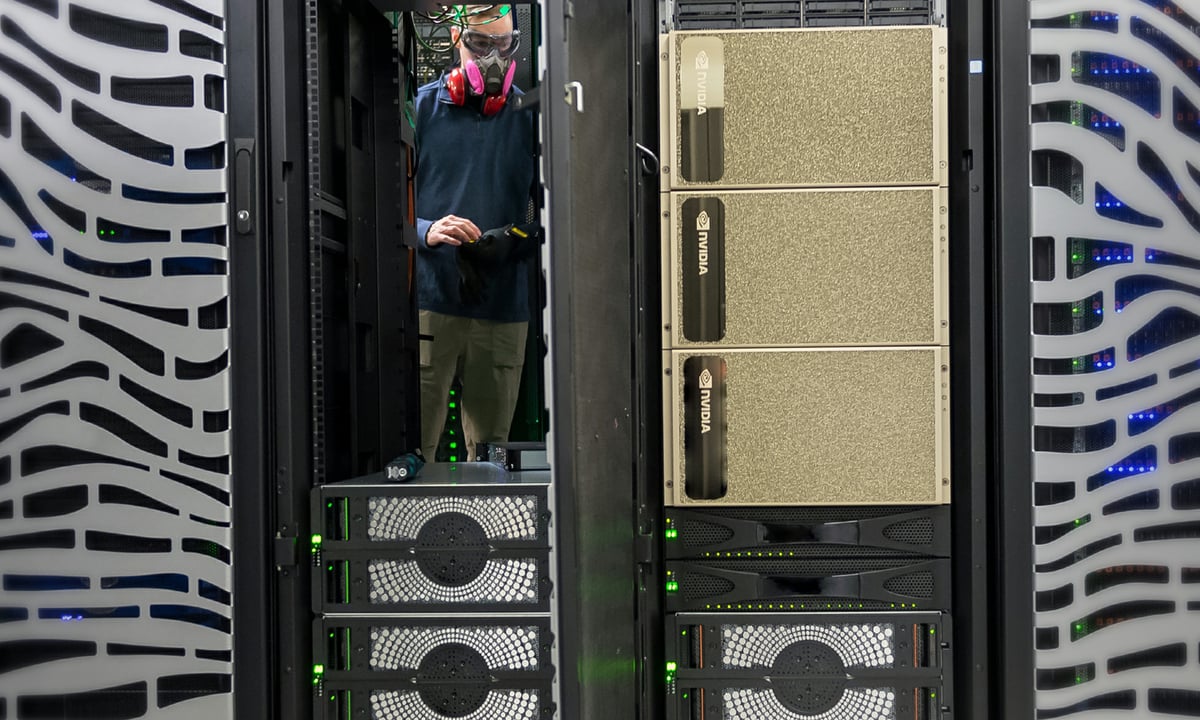
Nvidia's Stock Underperforms but Future Looks Bright
- Capex Commitments: The 'Magnificent Seven,' including Alphabet, Microsoft, Amazon, and Meta, have announced capital expenditures of up to $700 billion in 2024, which, while not all directed to Nvidia, will drive infrastructure development for data centers and AI platforms, enhancing market demand.
- Data Center Sales Surge: Nvidia reported $68.1 billion in revenue for Q4 FY2026, a 73% increase year-over-year, with data center sales reaching $62.3 billion, up 75%, reflecting strong customer investment in AI compute and solidifying Nvidia's market leadership.
- Chip Innovation Launch: Nvidia's rollout of the next-generation Rubin chips this year, which are more powerful and efficient than the Blackwell chips, ensures the company remains at the forefront of hardware and chip development, catering to the growing AI demand.
- Future Growth Projections: CEO Jensen Huang forecasts Nvidia could achieve $1 trillion in AI revenue by 2027, a significant leap from the $215.9 billion revenue in 2025, indicating that Nvidia is in the midst of a massive growth phase, with the market still underestimating its future potential.
See More
Nvidia's Stock Underperformance Despite Rapid Revenue Growth
- Significant Revenue Growth: Nvidia reported $68.1 billion in revenue for Q4 FY2026, a 73% increase year-over-year, with data center sales contributing $62.3 billion, up 75%, highlighting strong demand and market position in the AI sector.
- Capital Expenditure Commitments: The 'Magnificent Seven', including Alphabet, Microsoft, Amazon, and Meta, announced up to $700 billion in capital expenditures for 2023, which, while not all directed to Nvidia, will drive demand for its GPUs and impact future performance.
- Market Capitalization vs. Valuation: Despite Nvidia's market capitalization soaring to the highest in the past two years, its forward P/E ratio stands at 23.9, significantly below the three-year average of 79, indicating that the market may be underestimating its future growth potential, presenting a possible investment opportunity.
- Future Growth Expectations: CEO Jensen Huang forecasts that Nvidia could achieve $1 trillion in AI revenue by 2027, compared to just $215.9 billion in 2025, suggesting the company is on a trajectory of rapid growth that investors should closely monitor.
See More
Amazon vs Nvidia: Competitive Landscape in AI Chips
- Custom Chip Advantage: Amazon's recent shareholder letter reveals that its custom Graviton chips outperform Intel's by 40% in price performance, allowing Amazon to rapidly gain market share in cloud computing, with expectations for a similar trend in the AI market.
- Trainium Chip Performance: Amazon's Trainium2 chip offers 30% better price performance than GPUs and is nearly sold out, while the next-generation Trainium3 is in development, showcasing Amazon's strong competitive position in the AI training market.
- Collaboration with Nvidia: Despite Amazon's competitive edge in chip performance, it must maintain a strong relationship with Nvidia to ensure resource availability and prevent client losses to competitors, highlighting the importance of collaboration in the tech landscape.
- Sustained Market Demand: While Amazon's custom chips excel, Nvidia's growth rates are accelerating, with projected year-over-year growth rates of 79% and 85% for Q1 and Q2, respectively, indicating robust demand for AI computing power and a potential landscape with multiple winners in the chip market.
See More
Amazon and Nvidia's Intensifying Competition
- Custom Chip Advantage: Amazon's recent shareholder letter highlights its custom chip Graviton's performance, which offers a 40% better price-performance ratio than Intel's chips, rapidly capturing the cloud computing market and demonstrating strong competitiveness in the AI sector.
- Trainium Chip Performance: Amazon's Trainium2 chip provides a 30% better price-performance ratio than GPUs, with capacity nearly sold out, indicating significant potential in the AI training market, while future Trainium3 and Trainium4 chips will further enhance its market position.
- Relationship with Nvidia: Despite the superior performance of Amazon's custom chips, the company will continue to support Nvidia chips to maintain a good partnership, avoiding resource shortages that could lead to client losses, illustrating the complexity of market competition.
- Sustained Market Demand: While Amazon poses a challenge to Nvidia with its chip performance, Nvidia's growth rates are still accelerating, with Q1 and Q2 expected to reach 79% and 85% respectively, reflecting strong demand for AI computing power and suggesting a future market landscape of multiple winners.
See More
Palantir Technologies Stock Outlook Analysis
- Significant Revenue Growth: Palantir reported a 70% year-over-year revenue increase last quarter, reaching $1.4 billion, showcasing strong performance in the U.S. commercial market and boosting investor confidence in future growth.
- Exceptional Rule of 40 Score: The company's Rule of 40 score stands at 127%, combining sales growth and profit margin, which far exceeds industry averages, indicating Palantir's competitive edge and profitability in the enterprise software sector.
- Optimistic Market Expectations: Wall Street analysts are generally bullish on Palantir's future, with Wedbush analyst Dan Ives predicting the company could reach a $1 trillion valuation within two to three years, driven by accelerating commercial adoption of its AI platform.
- Significant Valuation Risks: Despite Palantir's strong financial health, with free cash flow margins above 50%, its price-to-earnings ratio exceeds 230, suggesting that market expectations for future growth are already priced in, necessitating careful risk assessment by investors.
See More
Investment Opportunities Amid Tech Stock Pullback
- Tech Stock Recovery: During the 'Great Rotation', defensive sectors like consumer staples have outperformed tech stocks, leading to declines in top tech shares; however, history suggests that such periods are prime for acquiring quality growth stocks, as evidenced by the iShares S&P 500 Growth ETF nearly doubling the returns of the iShares S&P 500 Value ETF over the past decade.
- Nvidia's Growth Potential: Nvidia estimates that cumulative orders for its Blackwell and upcoming Rubin chips will exceed $1 trillion by 2026, with analysts projecting a 71% revenue increase this year to $369 billion, underscoring its critical role and profitability in the global economy.
- Microsoft's Cloud Revenue Growth: Despite a 30% drop from recent highs, Microsoft’s cloud revenue grew 26% year-over-year, with Microsoft 365 Copilot reaching 15 million paid users, indicating strong demand for its AI services and a solid foundation for future growth.
- Google's Advertising and Cloud Services: Google is achieving double-digit growth in advertising and cloud services by integrating its Gemini model, generating $73 billion in free cash flow over the past year, which enhances its appeal as a high-quality growth stock.
See More
Nvidia's Stock Underperforms but Future Looks Bright
- Capex Commitments: The 'Magnificent Seven,' including Alphabet, Microsoft, Amazon, and Meta, have announced capital expenditures of up to $700 billion in 2024, which, while not all directed to Nvidia, will drive infrastructure development for data centers and AI platforms, enhancing market demand.
- Data Center Sales Surge: Nvidia reported $68.1 billion in revenue for Q4 FY2026, a 73% increase year-over-year, with data center sales reaching $62.3 billion, up 75%, reflecting strong customer investment in AI compute and solidifying Nvidia's market leadership.
- Chip Innovation Launch: Nvidia's rollout of the next-generation Rubin chips this year, which are more powerful and efficient than the Blackwell chips, ensures the company remains at the forefront of hardware and chip development, catering to the growing AI demand.
- Future Growth Projections: CEO Jensen Huang forecasts Nvidia could achieve $1 trillion in AI revenue by 2027, a significant leap from the $215.9 billion revenue in 2025, indicating that Nvidia is in the midst of a massive growth phase, with the market still underestimating its future potential.
See More